Introduction
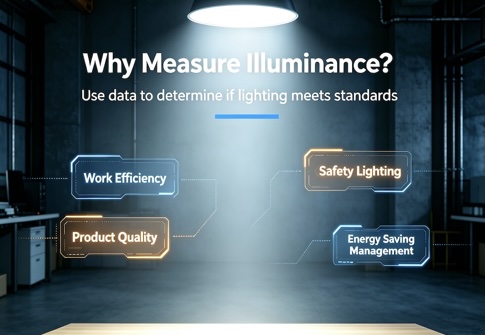
Illuminance is an important indicator used to evaluate whether a lighting environment provides sufficient light. It is measured in lux (lx). Different workplaces, public areas, and residential spaces require different levels of illumination to ensure safety, comfort, and productivity.
Insufficient illuminance can lead to eye strain, reduced work efficiency, and even safety risks in industrial environments. Excessive illuminance, on the other hand, may cause glare, visual discomfort, and unnecessary energy consumption. For this reason, recommended illuminance levels are widely referenced in architectural lighting design, industrial manufacturing, educational facilities, healthcare environments, commercial buildings, and many other applications.
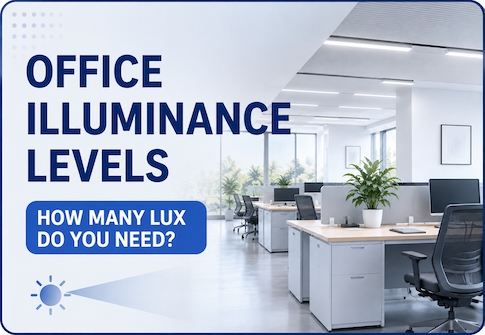
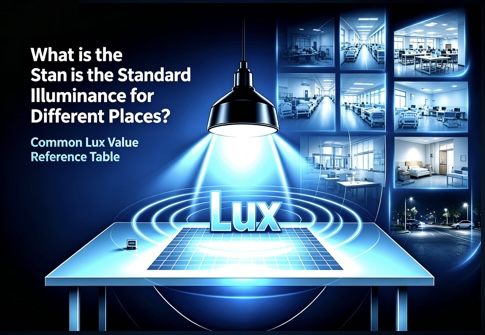
The following tables provide recommended illuminance ranges for common environments. These values can serve as practical references for lighting design, on-site inspections, facility maintenance, and routine lighting assessments.
Recommended Illuminance Levels for Offices and Commercial Areas
| Area | Recommended Illuminance (Lux) |
|---|---|
| Open-plan office | 300–500 |
| Precision office / Design office | 500–750 |
| Meeting room | 300–500 |
| Reception area | 200–300 |
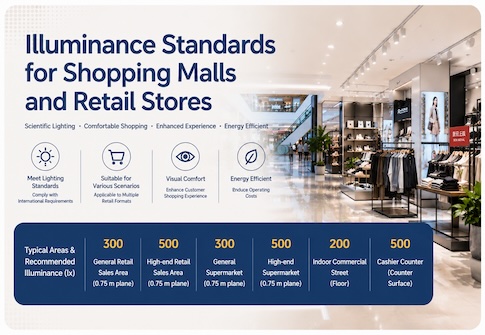
| Shopping mall public areas | 300–500 |
| Boutique retail store | 500–1000 |
| Supermarket | 500–750 |
| Checkout counter | 500 |
| Display showcase | 750–1500 |
| Bank service hall | 300–500 |
| Restaurant | 150–300 |
| Café | 100–300 |
| Hotel lobby | 200–500 |
Recommended Illuminance Levels for Educational Facilities
| Area | Recommended Illuminance (Lux) |
|---|---|
| Standard classroom | 300–500 |
| Laboratory | 500–750 |
| Library reading area | 500 |
| Library bookshelves | 200 |
| Art classroom | 500–750 |
| CAD / Design classroom | 500–750 |
| Multimedia classroom | 300 |
| Gymnasium | 300–500 |
| Examination room | 500 |
Recommended Illuminance Levels for Healthcare Facilities
| Area | Recommended Illuminance (Lux) |
|---|---|
| Hospital corridor | 100–200 |
| General patient room | 100–300 |
| Nurse station | 300–500 |
| Consultation room | 500 |
| Examination room | 500–1000 |
| Operating preparation area | 1000 |
| Operating room | 1000–10000 (depending on the surgical procedure) |
| Pharmacy | 300–500 |
Recommended Illuminance Levels for Factories and Industrial Environments
| Area | Recommended Illuminance (Lux) |
|---|---|
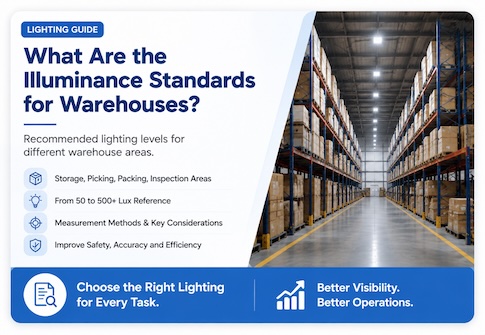
| Warehouse aisle | 100 |
| Warehouse storage area | 100–200 |
| General assembly | 300–500 |
| Precision assembly | 750–1500 |
| SMT production line | 1000 |
| Electronics inspection | 1000–1500 |
| QC inspection | 1000–2000 |
| Machining area | 300–500 |
| Welding area | 300–500 |
| Packaging workshop | 300 |
| Laboratory | 500–1000 |
Recommended Illuminance Levels for Buildings and Public Areas
| Area | Recommended Illuminance (Lux) |
|---|---|
| Stairway | 100 |
| Elevator lobby | 150–200 |
| Underground parking garage | 75–150 |
| Parking entrance | 300 |
| Pedestrian walkway | 20–50 |
| Public square | 30–100 |
| Park | 20–50 |
| Subway station | 150–300 |
| Airport departure lounge | 300–500 |
Recommended Illuminance Levels for Residential Areas
| Area | Recommended Illuminance (Lux) |
|---|---|
| Living room | 100–300 |
| Bedroom | 75–150 |
| Kitchen countertop | 500 |
| Dining room | 150–300 |
| Bathroom | 200 |
| Study desk | 500 |
| Children's reading area | 500 |
| Walk-in closet | 300 |
| Stairway | 100 |
Typical Outdoor Illuminance Levels
| Environment | Typical Illuminance (Lux) |
|---|---|
| Bright midday sunlight | 100000 |
| Overcast day | 1000–5000 |
| Sunrise / Sunset | 400 |
| Road illuminated by streetlights | 10–30 |
| Moonlight | 0.1–1 |
| Starlight | <0.01 |
Recommended Illuminance Levels for Different Industries
| Application | Recommended Illuminance (Lux) |
|---|---|
| General reading | 300–500 |
| Office work | 500 |
| CAD design | 750 |
| PCB inspection | 1000–2000 |
| Jewelry manufacturing | 1500–3000 |
| Watch repair | 1500–3000 |
| Precision electronics assembly | 1000–1500 |
| Textile inspection | 750–1000 |
| Print quality inspection | 1000 |
| Photography studio | Above 1000 |
How to Measure Illuminance Correctly
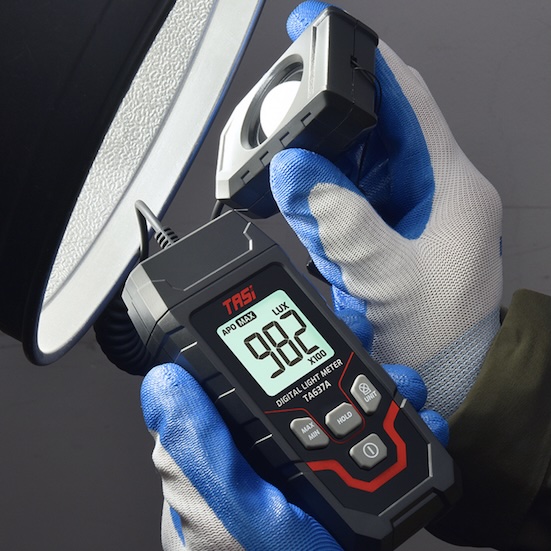
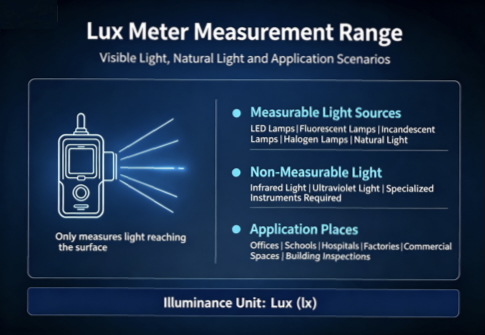
To obtain accurate and reliable illuminance measurements, follow these recommended practices:
1. Position the lux meter sensor at the actual working plane or task height.
2. Ensure the sensor faces the primary light source or the direction specified by the measurement standard.
3. Avoid blocking the light with your body or other objects during measurement.
4. Take measurements at multiple locations and calculate the average value.
5. For large spaces, use a grid-based multi-point measurement method to obtain a more representative assessment of the overall lighting condition.
Conclusion
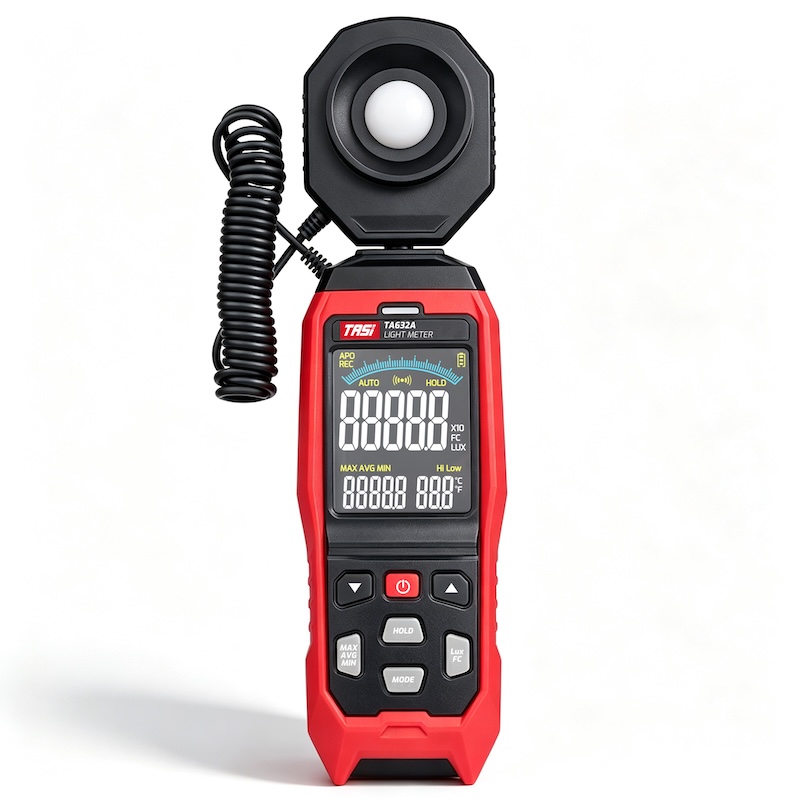
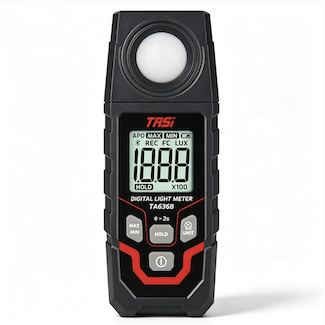
Recommended illuminance levels are essential not only for visual comfort but also for workplace productivity, operational safety, and energy efficiency. Whether in offices, schools, hospitals, factories, or residential buildings, regularly measuring lighting levels with a digital lux meter and comparing the results with recommended illuminance ranges helps optimize lighting performance and ensures that the environment meets practical application requirements.
Frequently Asked Questions (FAQ)
Are illuminance standards the same in every country?
Not exactly. Lighting standards vary slightly between countries and regions. Common references include ISO, EN, ANSI, IES, and national building lighting standards. Although specific requirements may differ, the recommended illuminance ranges are generally similar. The values provided in this guide are intended as practical references for general engineering applications and routine lighting inspections.
Why do actual illuminance measurements differ from the recommended values?
Measured illuminance can be affected by many factors, including the type of light source, installation height, lamp aging, surface reflectance, wall and ceiling colors, natural daylight, and the measurement location. As a result, slight differences between measured values and recommended standards are normal.
Is a higher illuminance level always better?
No. Insufficient illuminance can reduce visual comfort and work efficiency, while excessive illuminance may cause glare, increase energy consumption, and create visual discomfort. The appropriate illuminance level should always be selected based on the specific application and relevant lighting standards.