Introduction
In lighting design, construction engineering, industrial inspection, and photography, you will often encounter the terms illuminance and luminance. Although they are closely related, they describe two completely different physical quantities.
Simply put:
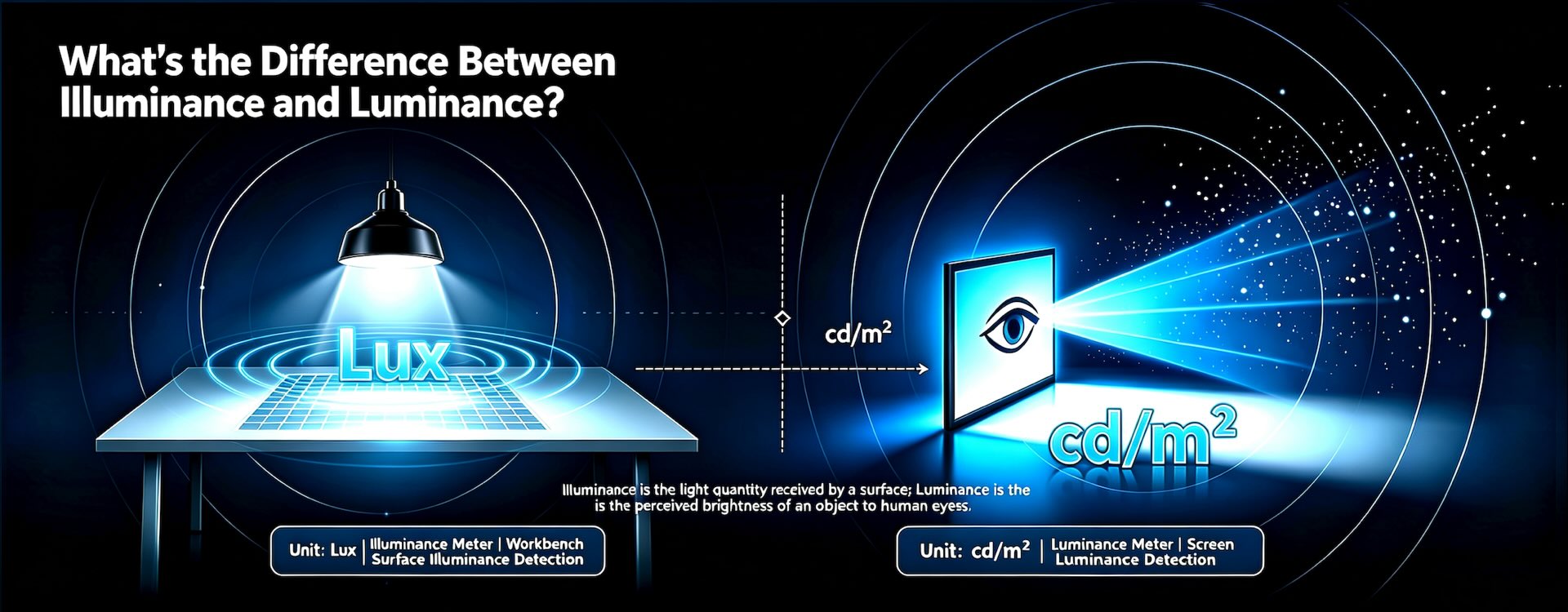
● Illuminance describes how much light falls onto a surface.
● Luminance describes how bright an object appears to the human eye.
Understanding the difference between these two concepts not only helps you interpret lighting standards correctly but also enables you to select the appropriate measuring instrument, such as a lux meter or a luminance meter.
This article explains the definitions, units, measurement methods, and practical applications of illuminance and luminance, helping you understand when each parameter should be measured.
What Is Illuminance?
Illuminance is the amount of luminous flux received per unit area of a surface.
In simple terms, it indicates how much light reaches a specific surface.
Typical measurement locations include:
● Office desks
● Classroom blackboards
● Factory workbenches
● Warehouse floors
Whether these areas have sufficient lighting is evaluated by measuring illuminance.
The higher the illuminance, the more light reaches the measured surface.
Unit of Illuminance
Illuminance is measured in lux (lx).
1 lux = 1 lumen per square meter (1 lm/m²)
This means that one lux is equal to one lumen of luminous flux uniformly distributed over one square meter.
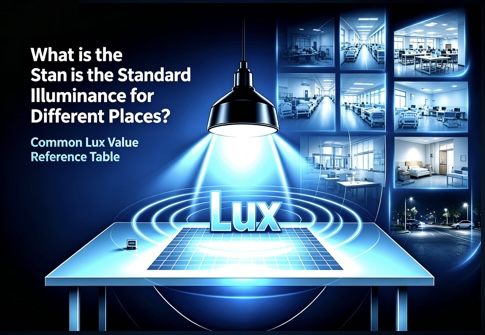
Typical Illuminance Levels
| Environment | Typical Illuminance |
|---|---|
| Moonlight | 0.2–1 lx |
| Residential living room | 100–300 lx |
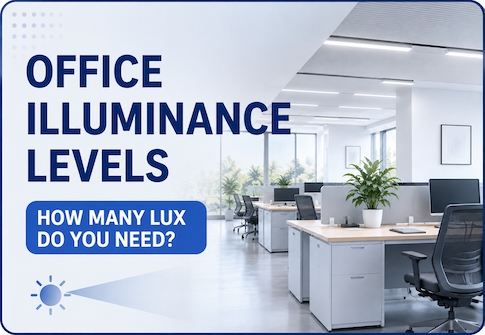
| Office | 300–500 lx |
| Classroom | 300–500 lx |
| Precision assembly | Over 1,000 lx |
What Is Luminance?
Luminance describes the intensity of light emitted or reflected from a surface in a specific viewing direction.
In other words, it represents how bright an object appears to the human eye.
For example, consider the same sheet of white paper:
● It appears very bright under direct sunlight.
● It looks much dimmer in a poorly lit room.
The paper itself has not changed, but its luminance has.
Luminance is influenced not only by illuminance but also by several other factors, including:
● Surface color
● Material reflectance
● Surface finish (gloss)
● Viewing angle
● Self-emission characteristics
For example, a black car and a white car parked under the same sunlight receive the same illuminance, but the white car appears significantly brighter because it reflects much more light.
What Is the Unit of Luminance?
Luminance is measured in candela per square meter (cd/m²).
Typical Luminance Values
| Object | Typical Luminance |
|---|---|
| Smartphone display | 400–1,000 cd/m² |
| HDR monitor | 1,000–2,000 cd/m² |
| Office monitor | 250–350 cd/m² |
| Road surface at night | A few cd/m² |
| White paper under direct sunlight | Several thousand cd/m² |
What Is the Biggest Difference Between Illuminance and Luminance?
The most common point of confusion is that:
● Illuminance measures where the light falls.
● Luminance measures what the human eye sees.
Illuminance Focuses on the Incoming Light
For example, an LED lamp illuminates an office desk.
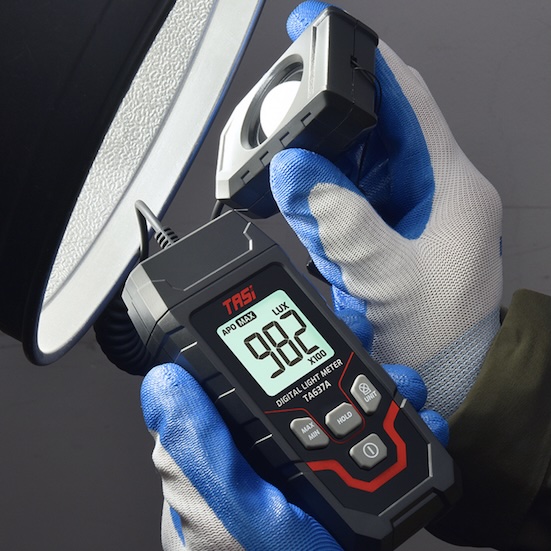
A lux meter placed on the desk measures 500 lux.
This means the desk surface is receiving 500 lux of illumination.
Luminance Focuses on the Object
Now consider three desks with identical lighting:
● White desktop
● Black desktop
● Wood-grain desktop
Even if all three surfaces receive 500 lux, they will not appear equally bright because different materials reflect different amounts of light.
Illuminance vs. Luminance Comparison
| Comparison | Illuminance | Luminance |
|---|---|---|
| Definition | Amount of light reaching a surface | Brightness of a surface as perceived by the human eye |
| Unit | Lux (lx) | Candela per square meter (cd/m²) |
| Measurement Target | Illuminated surface | Light-emitting or light-reflecting object |
| Affected by Surface Color | Minimal | Significant |
| Affected by Reflectance | No | Yes |
| Affected by Viewing Angle | No | Yes |
| Typical Instrument | Digital Lux Meter | Luminance Meter |
| Common Applications | Building lighting, office lighting, factory lighting | Displays, LED screens, automotive dashboards, traffic signs |
Why Can Two Surfaces Have the Same Illuminance but Different Luminance?
This is one of the most frequently asked questions.
The answer lies in the reflectance of different materials.
For example, both surfaces receive 500 lux:
● White paper has a reflectance of approximately 80%.
● Black paper has a reflectance of approximately 5%.
As a result, the white paper appears much brighter, while the black paper still looks dark.
Therefore, the same illuminance does not necessarily produce the same luminance.
Can a Lux Meter Measure Luminance?
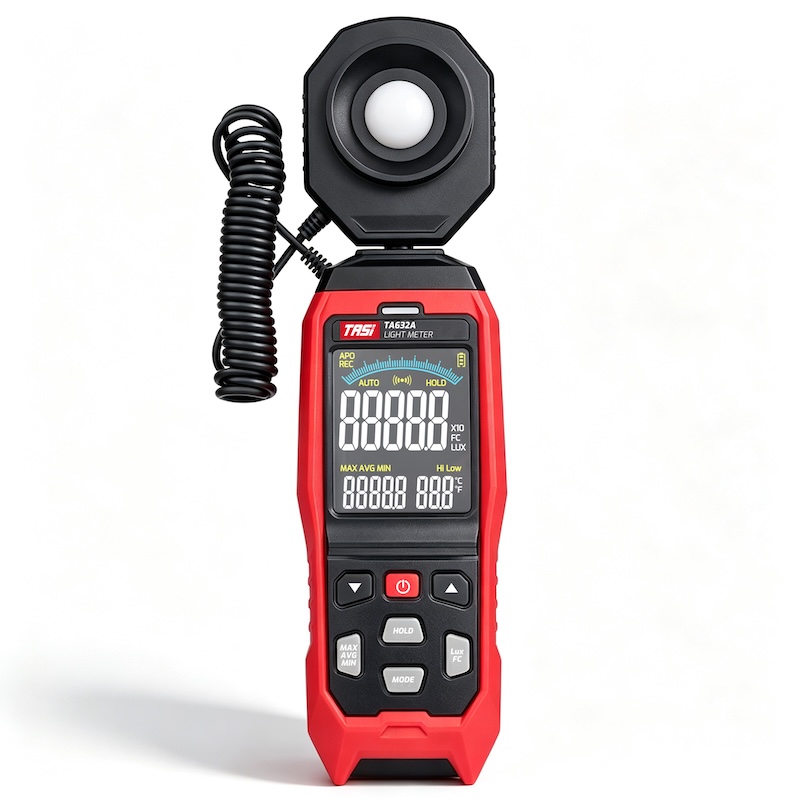
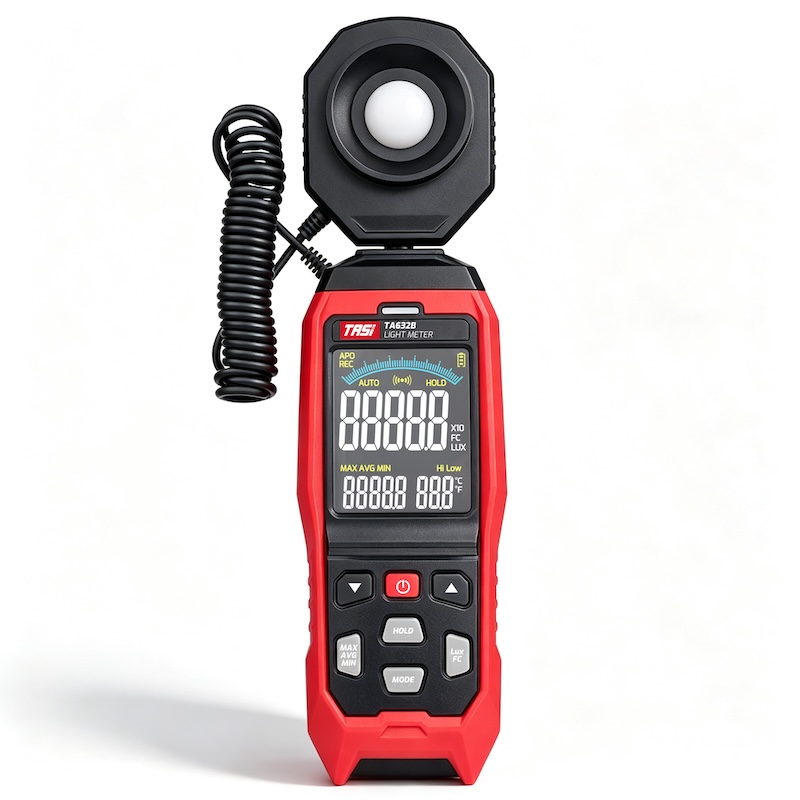
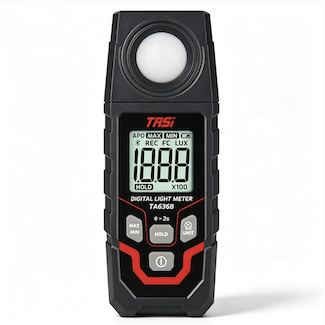
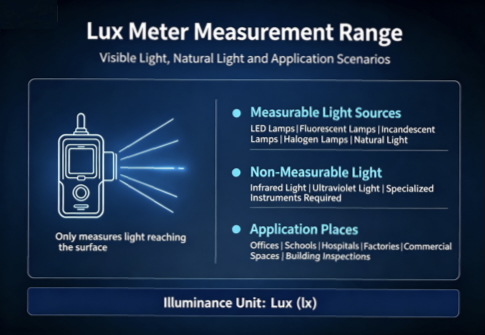
No.A lux meter measures only the illuminance (lux) reaching the sensor.
It cannot measure:
● Display brightness
● LED brightness
● Luminous surface brightness
● Traffic sign luminance
● Monitor luminance
These applications require a luminance meter.
Therefore, a lux meter and a luminance meter are designed for different purposes and cannot replace one another.
When Should You Measure Illuminance?
Illuminance measurement is commonly used to evaluate:
● Office lighting
● Classroom lighting
● Hospital lighting
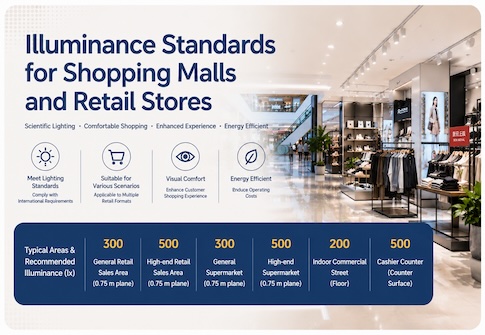
● Shopping mall lighting
● Factory lighting
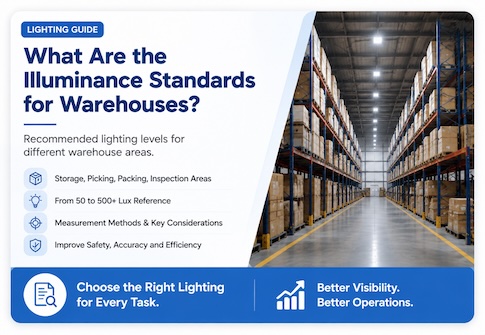
● Warehouse lighting
● Sports facilities
● Building commissioning and acceptance
● Energy-saving lighting upgrades
● Public area lighting inspections
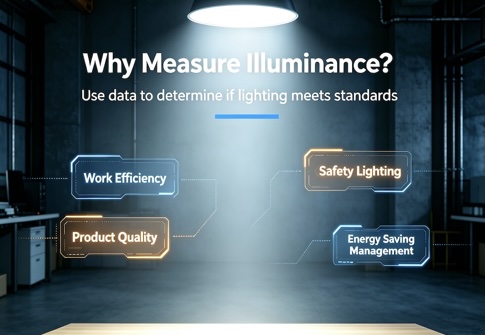
These applications typically rely on illuminance standards to determine whether lighting conditions comply with regulations and design requirements.
When Should You Measure Luminance?
Luminance measurement is commonly used for:
● LCD displays
● OLED displays
● LED display panels
● Digital advertising displays
● Automotive instrument clusters
● Head-Up Displays (HUDs)
● Traffic signs
● Aircraft instrumentation
● Medical display equipment
● Photography and cinematography
These applications focus on visual perception and display performance, making luminance the more relevant parameter.
How to Choose the Right Measuring Instrument
If your goal is to evaluate:
● Whether an office is adequately illuminated
● Whether factory lighting meets standards
● Classroom illuminance
● Building lighting acceptance
● Ambient lighting conditions
You should use a Digital Lux Meter.
If you need to measure:
● Display brightness
● LED screen luminance
● Billboard luminance
● Luminous materials
● Optical products
You should use a Luminance Meter.
Choosing the correct instrument according to the measurement target is essential for obtaining accurate, reliable, and meaningful results.
Conclusion
Although illuminance and luminance both describe aspects of a lighting environment, they represent fundamentally different concepts.
Illuminance measures the amount of light reaching a surface and is expressed in lux (lx). It is widely used in building lighting, industrial inspections, schools, hospitals, and office environments.
Luminance measures the perceived brightness of a surface as viewed by the human eye and is expressed in candela per square meter (cd/m²). It is commonly used for evaluating displays, LED screens, traffic signs, automotive electronics, and optical products.
Understanding the distinction between illuminance and luminance enables engineers, technicians, and facility managers to interpret lighting standards correctly, assess lighting quality accurately, and select the most appropriate measuring instrument for each application.