Introduction
Lighting conditions in offices, schools, hospitals, factories, warehouses, and commercial buildings can directly affect visual comfort, work efficiency, and operational safety. Visual inspection alone is usually not sufficient to determine whether a space is adequately illuminated, which is why a lux meter is used to measure actual illuminance levels.
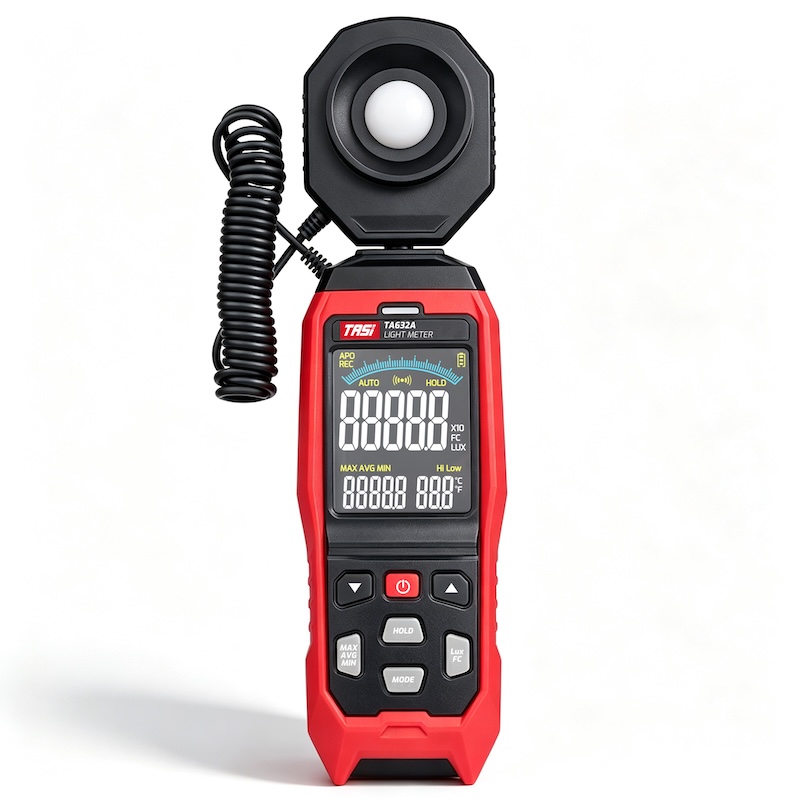
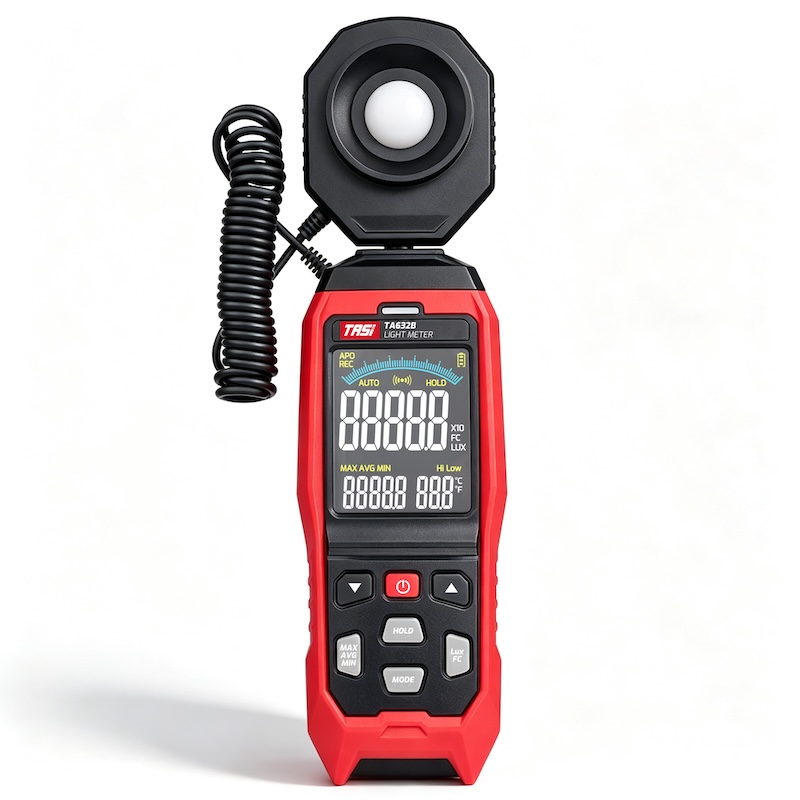
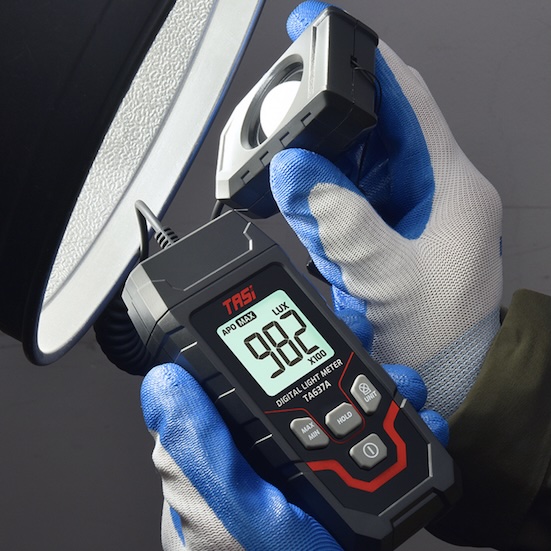
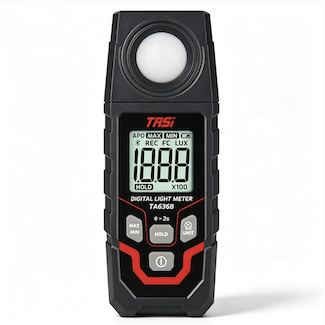
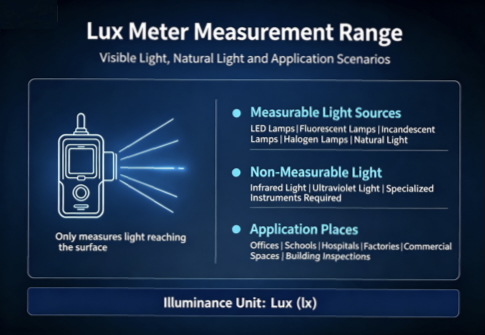
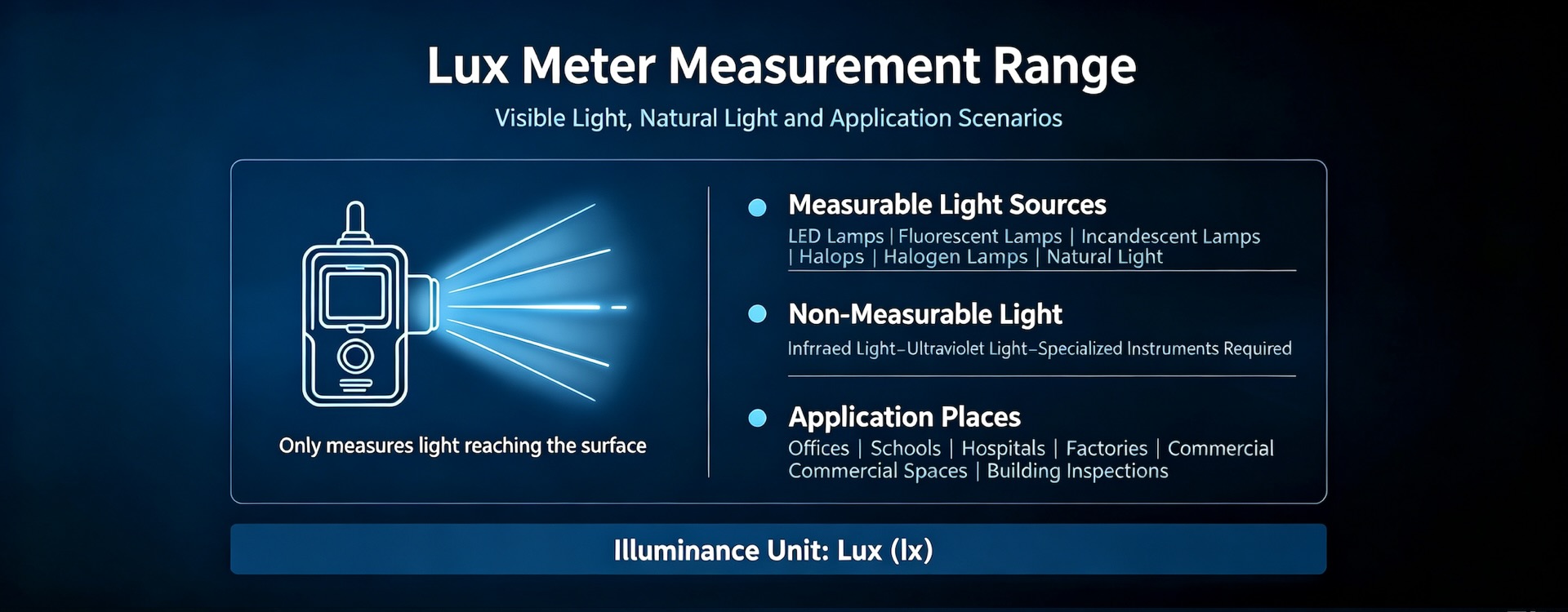
A lux meter measures the illuminance produced by visible light on a defined surface. Common sources such as LED lighting, fluorescent lamps, incandescent lamps, halogen lamps, industrial lighting, and natural daylight can generally be measured with a digital lux meter.
However, different light sources vary in spectral characteristics, installation methods, and operating conditions. Measurement technique and instrument performance can therefore affect the results. This article explains which light sources can be measured with a lux meter and the main factors to consider in practical testing.
Key Points
● A lux meter measures illuminance rather than the intrinsic brightness of a lamp;
● Common visible light sources such as LED, fluorescent, incandescent, and halogen lamps can be measured;
● Lux meters can also be used to measure sunlight, overcast daylight, and indoor natural light;
● Standard lux meters are not intended for professional ultraviolet or infrared radiation measurement;
● Sensor position, obstruction, source stabilization, and measurement-point selection can affect results;
● Offices, schools, factories, hospitals, warehouses, and commercial spaces are common applications for illuminance measurement.
What Does a Lux Meter Measure?
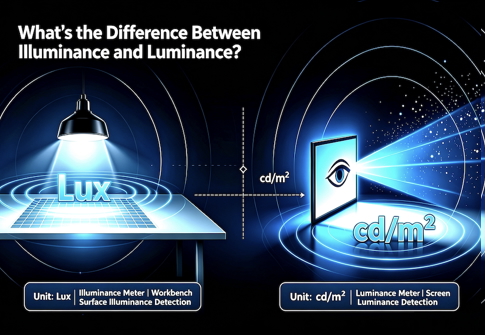
A lux meter measures illuminance, which describes the amount of luminous flux received per unit area. The standard unit is lux (lx).
In practical terms, illuminance indicates how much visible light reaches a particular surface.
Examples include:
● Illuminance on an office desk;
● Illuminance on a factory production workstation;
● Illuminance on classroom desks;
● Illuminance in warehouse aisles and shelving areas;
● Illuminance on retail display surfaces.
A lux meter does not directly measure how “bright” a lamp itself is. Instead, it measures the amount of light that reaches the selected measurement position.
For this reason, the same luminaire can produce significantly different lux readings at different distances, angles, and positions.
What Light Sources Can a Lux Meter Measure?
Modern digital lux meters are designed primarily for visible-light illuminance measurement and can be used with a wide range of artificial and natural light sources.
LED Lighting
LED lighting is now widely used in offices, commercial buildings, industrial facilities, and public lighting systems, making it one of the most common light sources measured with a lux meter.
Typical LED applications include:
● LED panel lights;
● LED downlights;
● LED spotlights;
● LED high-bay lights;
● LED street lights;
● LED office lighting;
● LED display lighting.
A lux meter can be used to determine whether a work area reaches the required illuminance, whether lighting is evenly distributed, and how lighting performance changes after installation or replacement.
Different LEDs can have different spectral distributions. For higher-accuracy measurements, the spectral response of the lux meter and its suitability for the specific LED source should be considered.
Fluorescent Lamps
Fluorescent lamps have long been used in offices, schools, laboratories, factories, and commercial buildings. Although many facilities are replacing them with LEDs, fluorescent lighting is still widely encountered.
Lux meters can be used to:
● Check actual illuminance in fluorescent-lit areas;
● Identify significant light-output reduction as lamps age;
● Compare conditions before and after lighting replacement;
● Check whether a work area reaches the intended lighting level.
Incandescent Lamps
Incandescent lamps are traditional visible-light sources. Although their use has declined considerably, they can still be found in residential, decorative, and certain specialized applications.
A standard digital lux meter can generally measure the illuminance produced by an incandescent lamp at a specified location.
Halogen Lamps
Halogen lamps are known for good color rendering and are still used in display, stage, photography, and some specialized lighting applications.
Illuminance measurement can help assess:
● Actual illuminance on a work or display surface;
● Differences between measurement locations;
● Whether luminaire placement and aiming are appropriate.
High-Pressure Sodium and Metal Halide Lamps
High-pressure sodium and metal halide lamps are discharge light sources that remain in use in some industrial and outdoor installations.
Typical applications include:
● Factory workshops;
● Large warehouses;
● Roads and outdoor areas;
● Sports facilities;
● Large industrial sites.
A lux meter can measure the illuminance produced by these lighting systems on floors, working planes, or other defined measurement surfaces.
Natural Light
Lux meters can measure natural as well as artificial light.
Examples include:
● Outdoor sunlight;
● Daylight under overcast conditions;
● Daylight entering through windows;
● Naturally lit areas inside buildings.
Daylight measurement is commonly used for building daylight assessment, office-space evaluation, indoor environmental studies, and lighting-energy analysis.
Because daylight changes with time, weather, season, and building orientation, these environmental conditions should be recorded when comparing measurements.
Other Visible Light Sources
Other visible light sources that can generally be measured include:
● Photography lights;
● Stage lights;
● Display-case lighting;
● Advertising light boxes;
● Laboratory visible-light sources;
● Visible light from certain display devices.
If the objective is to evaluate the luminance, chromaticity, or other optical characteristics of a display itself, illuminance measurement alone is usually not sufficient. Appropriate photometric or colorimetric instruments should be selected according to the test objective.
What Types of Light Are Not Directly Measured by a Lux Meter?
Standard lux meters are designed around the human visual response to visible light. They are therefore not suitable for every type of optical radiation.
Infrared Light
Infrared radiation lies outside the visible spectrum, and a standard lux meter is not a professional instrument for measuring infrared irradiance.
Applications involving infrared radiation require suitable instruments such as infrared radiometers or spectral measurement equipment, depending on the wavelength range and test objective.
Ultraviolet Light
Ultraviolet radiation is also outside the visible spectrum.
Typical examples include:
● UV curing systems;
● UV germicidal lamps;
● UV inspection sources.
These applications generally require a UV radiometer, UV intensity meter, or another instrument designed for the relevant ultraviolet wavelength range.
A lux meter displaying a reading does not mean that it can accurately measure every type of optical radiation. The instrument must match both the quantity being measured and the relevant spectral range.
What Should Be Considered When Measuring Different Light Sources?
Most visible light sources can be measured with a lux meter, but correct measurement technique is essential for reliable results.
Position the Sensor Correctly
When measuring illuminance on a working plane, place the sensor at the actual point of interest and orient the sensing surface according to the direction from which light is received.
Changes in sensor angle or position can affect the reading.
Avoid Obstruction and Reflection Errors
The operator's body, hands, or other objects should not block light from reaching the sensor. Nearby objects that significantly alter reflected light can also influence the measurement.
Allow the Light Source to Stabilize
Some light sources may not reach stable output immediately after switching on, including certain fluorescent and discharge lamps.
For formal measurements, allow the lighting system to reach normal operating conditions before recording values.
Use Multiple Measurement Points
A single reading is rarely sufficient to represent a large office, workshop, warehouse, or classroom.
Depending on the application, measure several locations and record:
● Individual measurement-point values;
● Average illuminance;
● Differences between areas.
This provides a more representative view of overall lighting performance.
Keep Measurement Conditions Consistent
For repeat measurements or before-and-after comparisons, keep the sensor location, orientation, luminaire operating condition, and relevant environmental conditions as consistent as possible.
Where Is Illuminance Measurement Required?
Illuminance measurement is used wherever lighting conditions, working-plane illuminance, or lighting-system performance need to be evaluated.
● Offices: Desks, meeting rooms, reception areas, and corridors for evaluating task lighting and visual comfort;
● Schools and educational facilities: Classrooms, laboratories, libraries, and training rooms for evaluating learning and teaching environments;
● Factories and production areas: Production lines, assembly stations, machining areas, and inspection stations to support safe and accurate visual tasks;
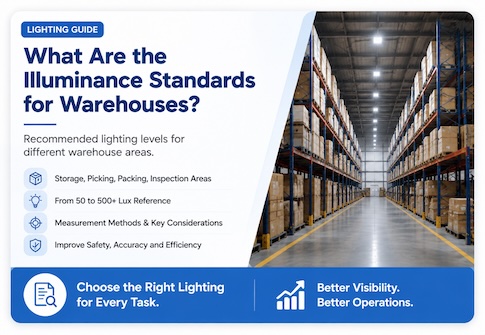
● Warehouses: Shelving, picking areas, packing areas, loading zones, and aisles;
● Hospitals and healthcare facilities: Examination rooms, patient rooms, pharmacies, and other medical work areas;
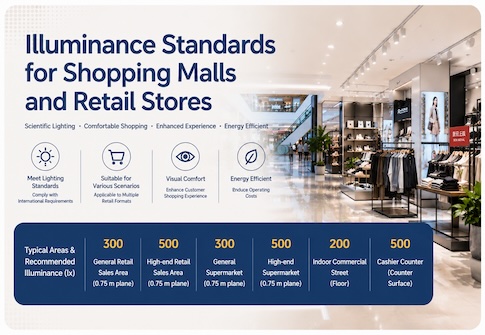
● Shopping malls and retail stores: Product displays, shelving, checkout areas, and circulation spaces;
● Hotels and restaurants: Lobbies, guest rooms, dining areas, and public spaces;
● Building and lighting projects: Lighting commissioning, acceptance testing, retrofit comparisons, and energy-efficiency evaluation;
● Laboratories and R&D facilities: Benches, inspection zones, and other work areas requiring controlled visual conditions;
● Outdoor and public lighting: Roads, parking areas, plazas, and other public spaces.
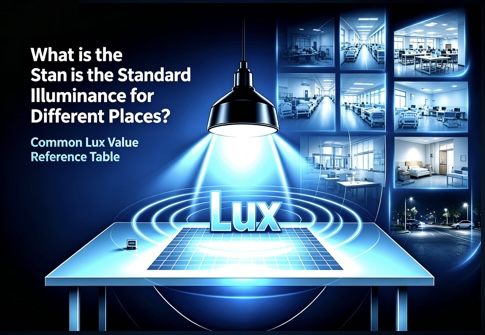
Illuminance requirements vary by application. Compliance should therefore be assessed according to the applicable standards, regulations, building use, and visual task requirements in the relevant market.
What Should You Consider When Choosing a Lux Meter?
Although most digital lux meters can measure common visible light sources, instrument performance can vary.
Important factors include:
● Measurement range;
● Accuracy;
● Spectral response;
● Cosine response;
● Suitability for modern LED lighting;
● Data hold, maximum/minimum, or data-logging functions;
● Calibration capability and calibration status.
For general environmental lighting checks, a digital lux meter with a suitable range and accuracy is usually sufficient. Professional lighting engineering, laboratory work, or higher-accuracy assessments require closer attention to optical performance and calibration.
FAQ
Can a lux meter measure LED lights?
Yes. LED lighting is one of the most common applications for a digital lux meter. For higher-accuracy measurements, the lux meter's spectral response should be suitable for the LED source being tested.
Can a lux meter measure sunlight?
Yes. A lux meter can measure sunlight and other daylight conditions as long as the illuminance remains within the instrument's measuring range. Time and weather conditions should be recorded when measurements are compared.
Can all LED colors be measured with a standard lux meter?
A standard lux meter can measure visible LED light, but different colors and spectral distributions can influence accuracy. Professional measurements should consider the instrument's spectral response.
Can a lux meter measure UV lamps?
A standard lux meter is not intended for professional UV radiation measurement. UV curing and germicidal lamps normally require a UV radiometer or other instrument designed for the relevant wavelength range.
Can a lux meter measure infrared light?
Standard lux meters are intended for visible-light illuminance measurement and are not suitable for measuring infrared radiation intensity.
Why does the same lamp produce different lux readings at different locations?
Illuminance varies with distance, incidence angle, luminaire light distribution, reflections, and obstructions. Different readings at different positions are therefore normal.
Do different light sources require different lux meters?
For general LED, fluorescent, incandescent, and daylight measurement, one suitable lux meter is normally sufficient. Special spectral conditions, UV or IR measurement, or higher-accuracy applications may require a different instrument.
Summary
A lux meter is primarily used to measure the illuminance produced by visible light on a defined surface. Common sources such as LED, fluorescent, incandescent, halogen, high-pressure sodium, metal halide lighting, and natural daylight can generally be measured with a digital lux meter.
Ultraviolet and infrared radiation require instruments designed for those specific measurement quantities and wavelength ranges.
Correct sensor positioning, stable source conditions, appropriate measurement-point selection, and a suitable instrument are essential for obtaining reliable data for lighting design, commissioning, environmental assessment, and routine maintenance.