How to Properly Use a Digital Lux Meter?

Publisher: Amy Published: 2026-01-21 Last Updated: 2026-08-18 Reading Time: 8min. 0sec.
Tags: Digital Lux MeterIlluminance MeasurementLux MeasurementLighting InspectionLux Meter UsageLight Intensity Testing

Introduction

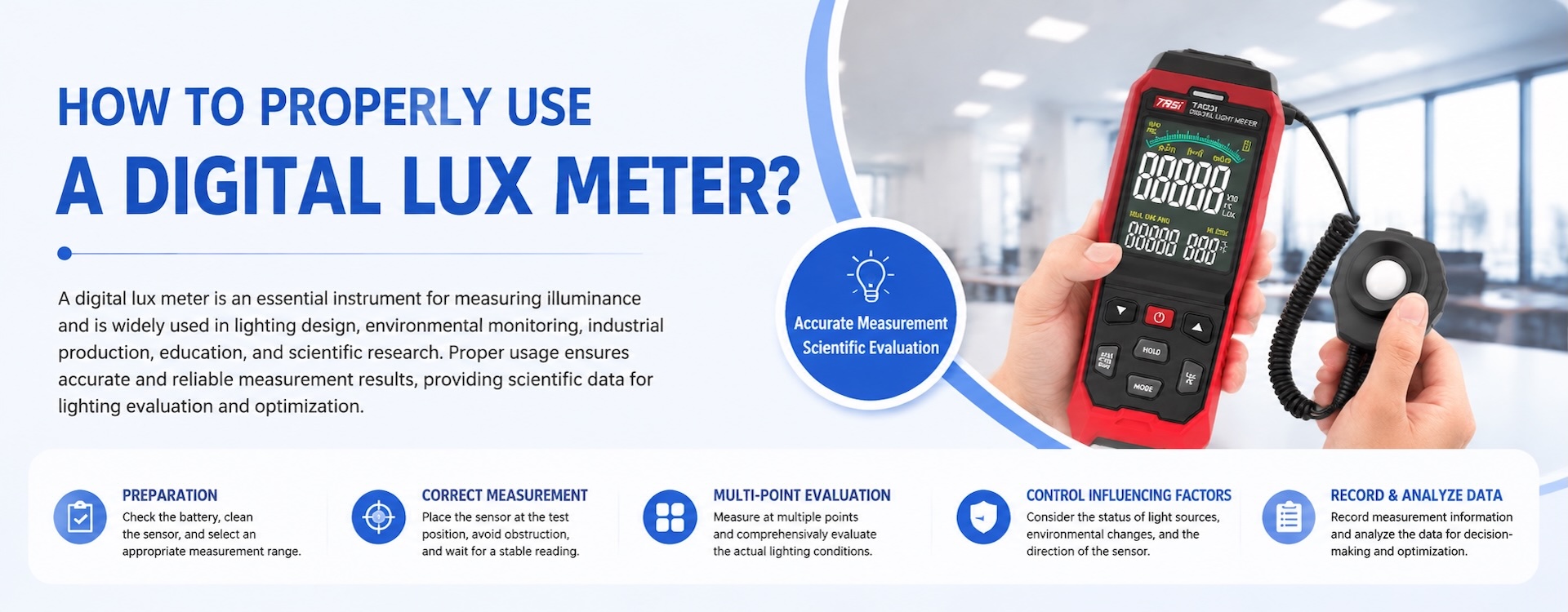
With increasing requirements for lighting quality, digital lux meters have become important measurement tools for lighting inspection, industrial environment evaluation, workplace assessment, and laboratory applications.

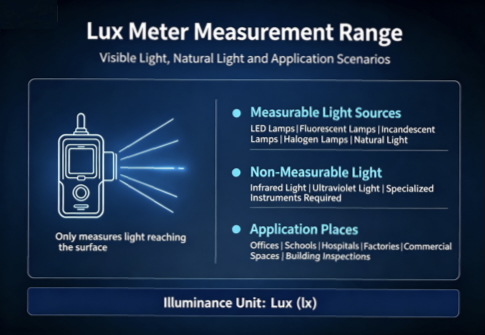
● A digital lux meter measures the amount of visible light received on a surface and displays the illuminance value in lux (lx).

● However, measurement accuracy can be affected by factors such as sensor position, operating method, environmental conditions, and instrument status.

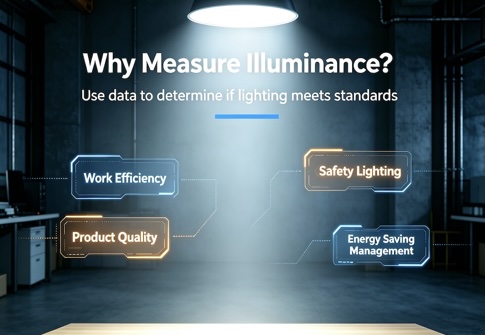
● Proper usage methods help ensure reliable measurement data for lighting design, energy management, and environmental improvement.


Key Points

● Understand the preparation steps before measurement.

● Learn the correct operating procedures for digital lux meters.

● Avoid common measurement errors and improve data reliability.

● Understand the major factors affecting illuminance measurement accuracy.


Preparation Before Using a Digital Lux Meter

Before measurement, the digital lux meter should be checked to ensure proper operation and measurement stability.

● Check the battery level to prevent interruptions or abnormal readings during measurement.

● Ensure the optical sensor is clean and free from dust, oil, or other contaminants that may affect light reception.

● Select an appropriate measurement range according to the application requirements. Some models provide automatic ranging, while manual range models require proper range selection.

● Allow the instrument to stabilize in the measurement environment before recording data.

● For high-accuracy applications or instruments that have not been used for a long period, calibration status should be verified.


Correct Measurement Procedures

Although operating a digital lux meter is simple, following standardized procedures helps minimize measurement errors.

Start the Instrument and Select Measurement Mode

● Turn on the lux meter and confirm that the display operates normally.

● Select the illuminance measurement mode according to the instrument functions.

● Confirm that the measurement unit is suitable for the application, such as lux (lx) or foot-candle (fc).

Position the Light Sensor Correctly

● Place the sensor horizontally at the measurement location.

● When measuring workplace lighting, the sensor position should correspond to the actual working plane.

● Avoid blocking the sensor with hands, body parts, or other objects.

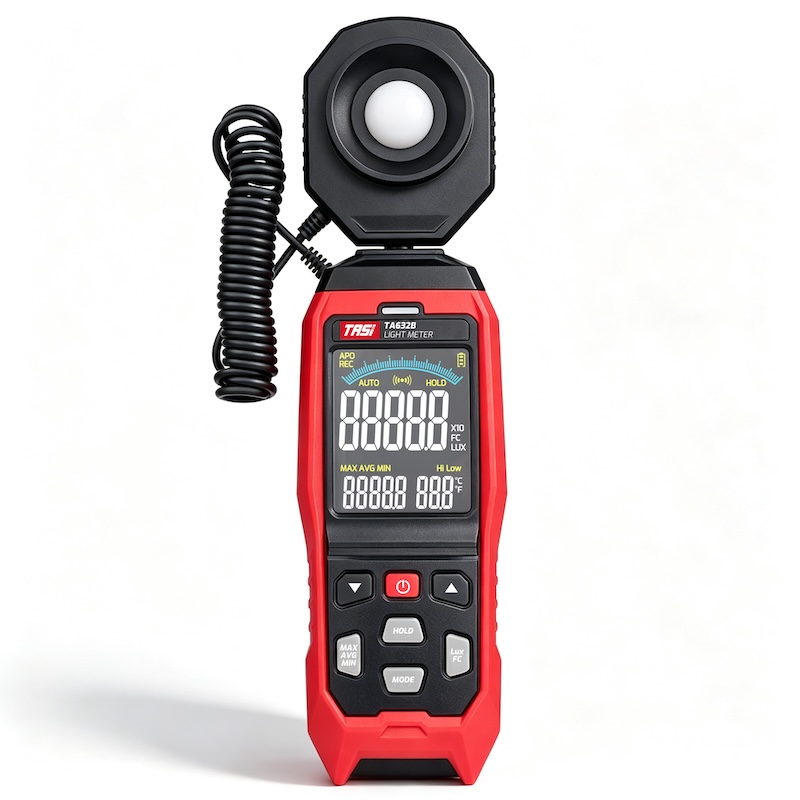
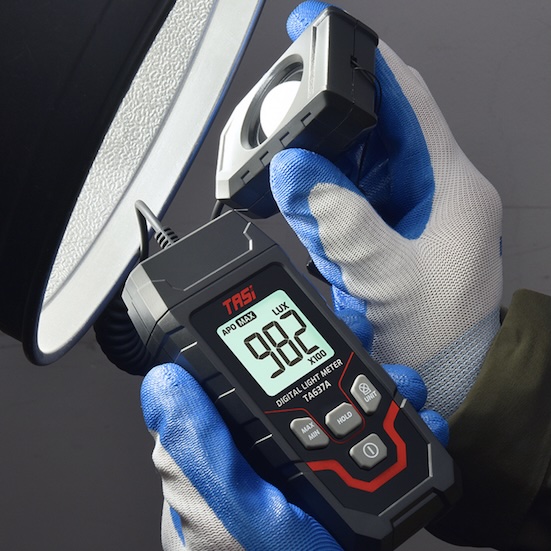
● For split-type lux meters, place the sensor probe at the testing point while keeping the main unit stable.

Read and Record Measurement Data

● Wait until the reading becomes stable before recording the result.

● For environments with changing light conditions, perform multiple measurements and calculate an average value when necessary.

● Record measurement information such as location, time, lighting condition, and environmental factors for future analysis.


Selecting the Correct Measurement Position

The measurement position directly affects the accuracy and representativeness of illuminance results.

● In offices, classrooms, and indoor environments, measurements should be performed at multiple points instead of relying on a single location.

● In industrial facilities, focus on work areas, equipment operation zones, and inspection areas.

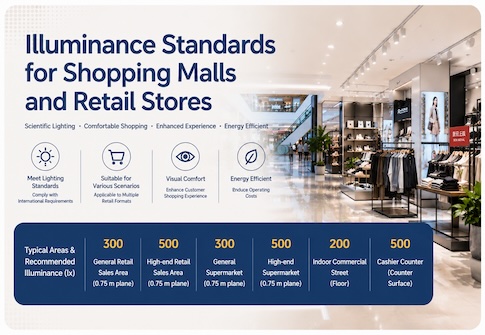
● In commercial spaces, evaluate different areas such as display zones, aisles, and counters.

● For outdoor measurements, consider weather conditions, measurement time, and surrounding obstructions.

● Applications requiring high lighting uniformity should use more measurement points for comprehensive evaluation.


Environmental Factors Affecting Measurement

Illuminance measurement can be influenced by both lighting sources and surrounding conditions.

Light Source Conditions

● Ensure lighting fixtures are operating normally during measurement.

● Newly installed or recently switched-on lights may require stabilization time before reaching consistent output.

● Different light sources, including LED, fluorescent, and halogen lamps, may have different spectral characteristics.

Environmental Changes

● Avoid frequent movement of people during measurement.

● Minimize interference from direct sunlight, reflected light, or additional light sources.

● For outdoor measurements, record weather conditions to reduce errors caused by changing natural light.

Sensor Direction

● Position the optical sensor according to the instrument design requirements.

● Avoid placing the sensor at an incorrect angle, as this may affect the amount of received light.


Common Mistakes When Using a Digital Lux Meter

Incorrect operation may lead to inaccurate measurement results.

● Dirty sensor surface: Dust or contamination reduces the amount of light received by the sensor.

● Incorrect measurement location: Data may not represent actual lighting conditions.

● Improper handling: Blocking the sensor may cause lower readings.

● Reading values too early: Insufficient stabilization time may create measurement deviations.

● Ignoring environmental changes: Natural light and reflected light may influence results.

● Lack of calibration: Long-term use without calibration may reduce measurement reliability.


How to Improve Illuminance Measurement Accuracy

To obtain reliable measurement results, a standardized measurement process should be followed.

● Use a professional digital lux meter suitable for the application.

● Regularly inspect and calibrate the instrument.

● Establish reasonable measurement points according to the environment.

● Perform multiple measurements and analyze data variations.

● Record complete measurement information, including time, location, light source type, and environmental conditions.

● Apply standardized measurement procedures for important projects.


Applications of Digital Lux Meters

Digital lux meters are widely used for lighting assessment across various industries.

● Building engineering: Lighting acceptance, indoor environment evaluation, and energy-saving improvement.

● Industrial manufacturing: Lighting inspection in production areas and equipment operation zones.

● Commercial spaces: Lighting optimization for stores, exhibition areas, and retail environments.

● Education and healthcare: Illuminance evaluation in classrooms, laboratories, and medical facilities.

● Photography and video production: Light analysis and lighting adjustment.

● Agriculture: Monitoring light conditions for plant growth environments.


Maintenance Recommendations

Proper maintenance helps extend instrument service life and maintain measurement performance.

● Turn off the instrument after use to reduce unnecessary battery consumption.

● Clean the sensor surface with a soft cloth and avoid corrosive cleaning agents.

● Protect the instrument from impact, excessive temperature, and high humidity.

● Remove batteries during long-term storage or regularly check battery condition.

● Perform periodic calibration and performance checks according to usage frequency.


FAQ

What is the measurement unit of a digital lux meter?

A digital lux meter mainly uses lux (lx) as the measurement unit, representing the amount of luminous flux received per unit area.

Why should the sensor be kept horizontal during measurement?

The sensor needs to receive light accurately. Changes in sensor angle may affect the received light intensity and cause measurement errors.

Does a digital lux meter require calibration?

Yes. Regular calibration is recommended for long-term use, high-accuracy measurement, or professional inspection applications.

How many measurement points are required for illuminance testing?

The required number depends on the size of the area and application requirements. Larger spaces usually require multiple measurement points.

Why do readings change at the same location?

Possible causes include changing natural light, lighting fluctuations, people blocking the light, or insufficient sensor stabilization time.

Can a digital lux meter measure LED lighting?

Yes. Professional digital lux meters can measure illuminance from various light sources, including LED, fluorescent, and incandescent lighting.

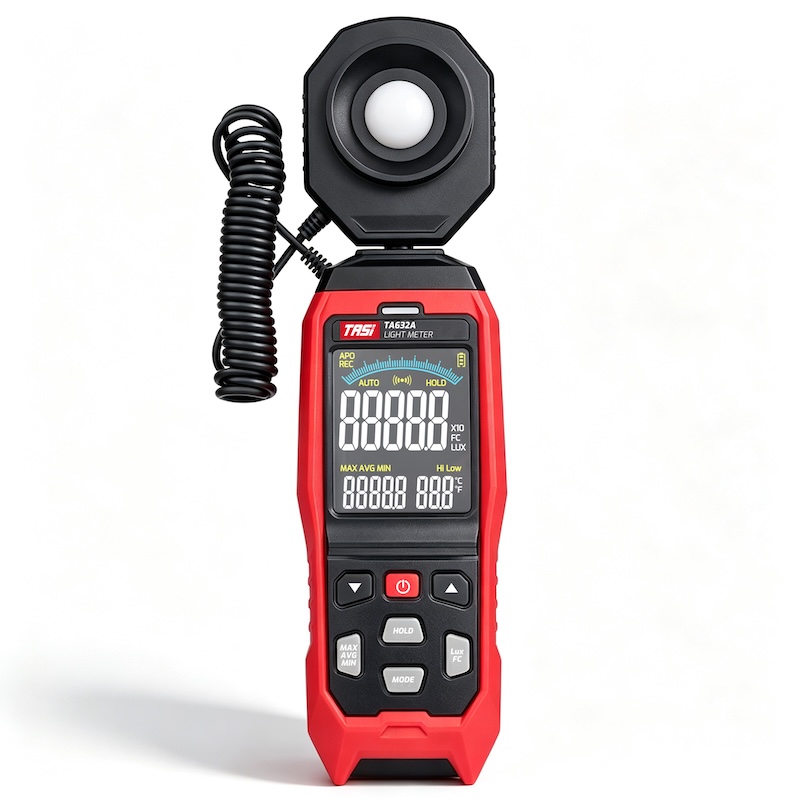
Related Products
TA632A TA632 Series Professional Digital Lux Meter

TA632A

TA632 Series
Professional Digital Lux Meter
Integrated / Separate Sensor Des | 200,000 Lux
Abstract:
The TA632 Series is a professional Digital Lux Meter, also known as an Illuminance Meter, Light Meter, Lux Measurement Instrument, or Photometric Testing Device, designed for accurate visible light measurement and lighting environment evaluation. Equipped with a high-precision silicon photodiode sensor with optical filter technology, the instrument provides excellent spectral response characteristics close to human vision, covering the 400–700nm visible light range. It delivers fast and stable illuminance measurement with support for both Lux (lx) and Foot-Candle (FC) units, meeting different lighting measurement requirements worldwide. The TA632 Series integrates advanced measurement functions including data hold, maximum/minimum recording, average value calculation, delayed measurement mode, high/low illuminance alarm settings, and customized light source correction coefficients. These features make it suitable for professional lighting inspection, engineering acceptance, environmental assessment, and laboratory optical testing. The TA632B model is equipped with USB communication capability, allowing connection to a computer for real-time data acquisition, historical data storage, measurement curve generation, and test report management. It is especially suitable for quality control, compliance inspection, long-term monitoring, and professional measurement applications. With a portable handheld design, wide measurement range, and reliable performance, the TA632 Series Digital Lux Meter is widely used in architectural lighting, commercial buildings, schools, hospitals, industrial manufacturing, photography studios, agricultural lighting, laboratories, and third-party inspection services, providing engineers, lighting designers, and quality professionals with an efficient solution for illuminance measurement and lighting evaluation.
View More ›
TA632B TA632 Series Professional Digital Lux Meter

TA632B

TA632 Series
Professional Digital Lux Meter
Integrated / Separate Sensor Des | USB PC Communication
Abstract:
The TA632 Series is a professional Digital Lux Meter, also known as an Illuminance Meter, Light Meter, Lux Measurement Instrument, or Photometric Testing Device, designed for accurate visible light measurement and lighting environment evaluation. Equipped with a high-precision silicon photodiode sensor with optical filter technology, the instrument provides excellent spectral response characteristics close to human vision, covering the 400–700nm visible light range. It delivers fast and stable illuminance measurement with support for both Lux (lx) and Foot-Candle (FC) units, meeting different lighting measurement requirements worldwide. The TA632 Series integrates advanced measurement functions including data hold, maximum/minimum recording, average value calculation, delayed measurement mode, high/low illuminance alarm settings, and customized light source correction coefficients. These features make it suitable for professional lighting inspection, engineering acceptance, environmental assessment, and laboratory optical testing. The TA632B model is equipped with USB communication capability, allowing connection to a computer for real-time data acquisition, historical data storage, measurement curve generation, and test report management. It is especially suitable for quality control, compliance inspection, long-term monitoring, and professional measurement applications. With a portable handheld design, wide measurement range, and reliable performance, the TA632 Series Digital Lux Meter is widely used in architectural lighting, commercial buildings, schools, hospitals, industrial manufacturing, photography studios, agricultural lighting, laboratories, and third-party inspection services, providing engineers, lighting designers, and quality professionals with an efficient solution for illuminance measurement and lighting evaluation.
View More ›
TA637A TA637 Series Split Type Bluetooth Digital Lux Meter

TA637A

TA637 Series
Split Type Bluetooth Digital Lux Meter
Separate Sensor Design | 200,000 Lux
Abstract:
The TA637 Series Digital Lux Meter is a professional illuminance measurement instrument, also known as a Lux Meter, Illuminance Meter, Light Meter, Light Intensity Tester, and Light Environment Analyzer. Featuring a separate optical sensor design with a high-sensitivity silicon photodiode and precision optical filter, the meter provides accurate visible light measurement across a spectral range of 400–700nm. It supports both Lux (LUX) and Foot Candle (FC) units to meet different international lighting measurement requirements. With a wide measuring range of 0.1–200,000 Lux, the TA637 Series Digital Light Meter is suitable for various lighting environments and professional illumination testing applications. The TA637B Bluetooth Lux Meter integrates wireless data transmission, allowing users to connect the meter with a mobile APP for remote data viewing, recording, analysis, and measurement management. Designed with high accuracy, fast response, stable readings, and portable operation, the TA637 Series Illuminance Meter is widely used in industrial manufacturing, electronics production, precision machining, automotive factories, warehouses, construction projects, lighting engineering, LED development, commercial retail, office buildings, schools, hospitals, photography studios, research laboratories, plant lighting, and facility management applications. The TA637 Digital Lux Meter is ideal for lighting installation acceptance, indoor lighting assessment, workplace illumination inspection, LED lamp performance testing, office and commercial lighting optimization, educational and medical lighting evaluation, factory lighting compliance inspection, and smart lighting system adjustment, providing reliable measurement data for improving working environments, enhancing productivity, and ensuring lighting safety standards.
View More ›
TA637B TA637 Series Split Type Bluetooth Digital Lux Meter

TA637B

TA637 Series
Split Type Bluetooth Digital Lux Meter
Separate Sensor Design | Bluetooth Communication
Abstract:
The TA637 Series Digital Lux Meter is a professional illuminance measurement instrument, also known as a Lux Meter, Illuminance Meter, Light Meter, Light Intensity Tester, and Light Environment Analyzer. Featuring a separate optical sensor design with a high-sensitivity silicon photodiode and precision optical filter, the meter provides accurate visible light measurement across a spectral range of 400–700nm. It supports both Lux (LUX) and Foot Candle (FC) units to meet different international lighting measurement requirements. With a wide measuring range of 0.1–200,000 Lux, the TA637 Series Digital Light Meter is suitable for various lighting environments and professional illumination testing applications. The TA637B Bluetooth Lux Meter integrates wireless data transmission, allowing users to connect the meter with a mobile APP for remote data viewing, recording, analysis, and measurement management. Designed with high accuracy, fast response, stable readings, and portable operation, the TA637 Series Illuminance Meter is widely used in industrial manufacturing, electronics production, precision machining, automotive factories, warehouses, construction projects, lighting engineering, LED development, commercial retail, office buildings, schools, hospitals, photography studios, research laboratories, plant lighting, and facility management applications. The TA637 Digital Lux Meter is ideal for lighting installation acceptance, indoor lighting assessment, workplace illumination inspection, LED lamp performance testing, office and commercial lighting optimization, educational and medical lighting evaluation, factory lighting compliance inspection, and smart lighting system adjustment, providing reliable measurement data for improving working environments, enhancing productivity, and ensuring lighting safety standards.
View More ›
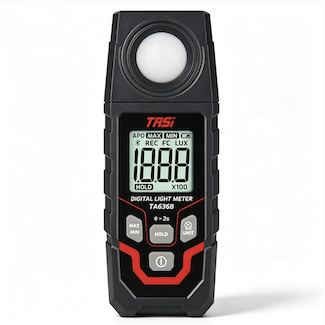
TA636A TA636 Series Integrated Digital Lux Meter

TA636A

TA636 Series
Integrated Digital Lux Meter
Integrated Design | 200,000 Lux
Abstract:
The TA636 Series Digital Illuminance Meter is a professional handheld light measurement instrument designed for accurate visible light intensity testing. Also known as a Lux Meter, Illuminance Tester, Light Meter, or Light Intensity Meter, it adopts a high-sensitivity silicon photodiode sensor with an optical filter system to provide reliable measurement across the 400–700nm visible light spectrum, matching human eye response characteristics. The TA636 Series includes the basic TA636A model and the Bluetooth-enabled TA636B model. The TA636B supports wireless connection with a mobile APP, allowing users to remotely view, record, and manage measurement data. With LUX and FC unit switching, automatic range selection, data hold, maximum/minimum value recording, and backlight display functions, the meter provides efficient solutions for professional lighting inspection and environmental evaluation. Featuring accurate measurement performance, compact design, and easy operation, the TA636 Series Digital Illuminance Meter is widely used in industrial manufacturing, electronic assembly, precision workshops, warehouses, logistics centers, hospitals, healthcare facilities, schools, laboratories, offices, shopping malls, hotels, exhibition halls, photography studios, architectural lighting projects, and residential lighting applications. It is an ideal tool for lighting acceptance testing, workplace illumination assessment, safety management, and indoor light environment analysis.
View More ›
Related Technical Articles