Introduction
Lighting conditions are closely related to work efficiency, occupational safety, and quality of life.
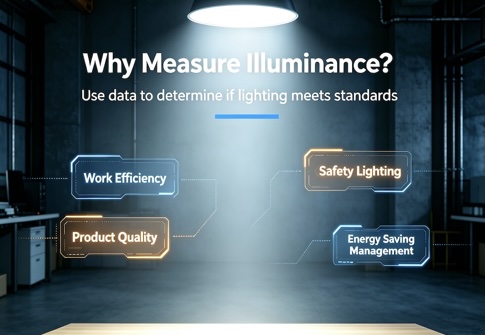
In offices, appropriate lighting can reduce visual fatigue and support productivity. In schools and laboratories, suitable lighting helps create appropriate conditions for teaching and research. In industrial environments, reliable lighting affects not only operator safety but also production quality and efficiency. Human perception of light, however, is subjective. Two people may perceive the same environment differently, making visual assessment alone unsuitable for determining actual illuminance levels.
For this reason, professional instruments are used to quantify illuminance in lighting design, environmental assessment, project acceptance, and routine maintenance.
A digital lux meter is an important instrument for measuring illuminance. It uses a photoelectric sensor to detect incident light and processes the resulting signal into a numerical measurement, providing objective and reliable illuminance data.
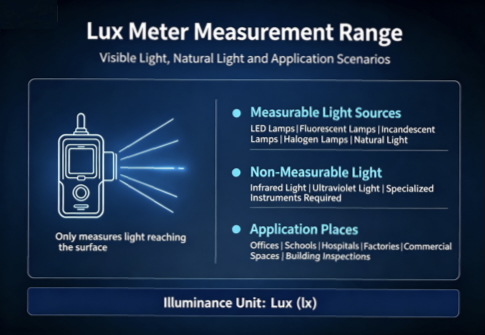
Digital lux meters are widely used in building inspection, industrial manufacturing, workplace management, school lighting assessment, healthcare facilities, photography, and scientific research.
This guide explains the basic principles, operating method, main components, applications, selection criteria, and proper use of digital lux meters.
Key Takeaways
By reading this guide, you will learn:
✔ What a digital lux meter is and what it measures;
✔ What illuminance and lux mean;
✔ How a digital lux meter works;
✔ The main components of a digital lux meter;
✔ Common applications and industries;
✔ How to select an illuminance meter for your requirements.
What Is a Digital Lux Meter?
Definition of a Digital Lux Meter
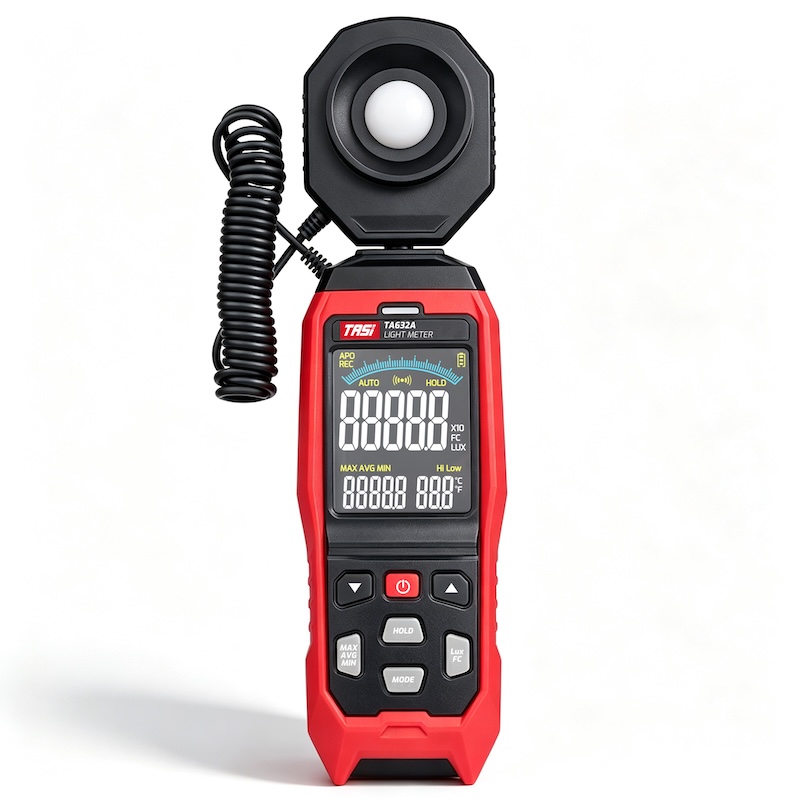
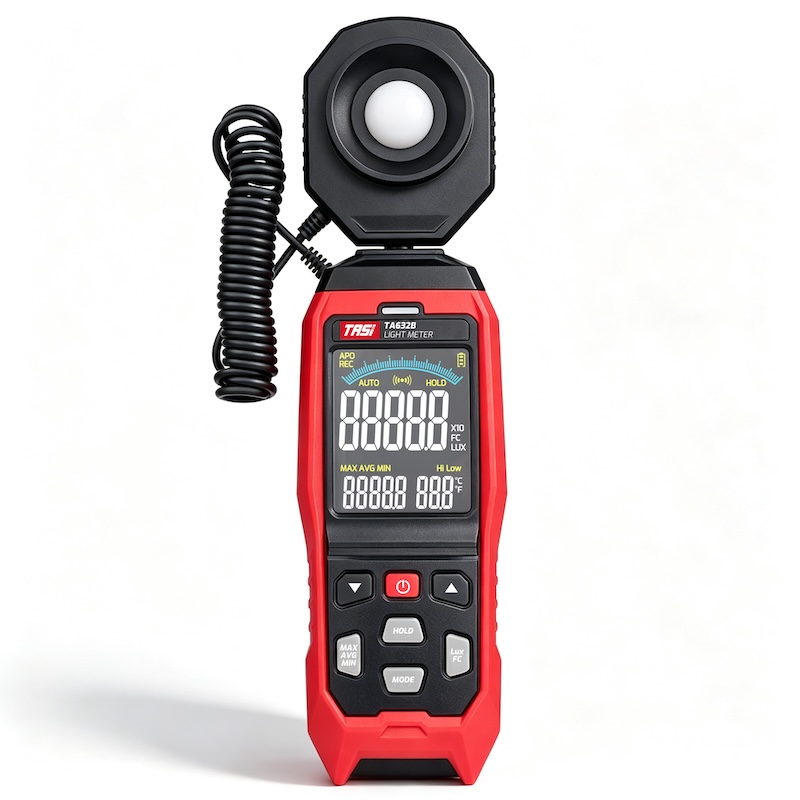
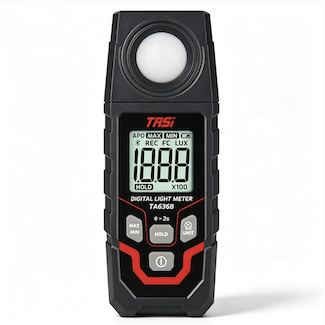
A digital lux meter, also referred to as an illuminance meter or light meter, is an electronic measuring instrument designed to measure illuminance. Its optical sensor receives incident light and converts the detected optical signal into an electrical signal. After internal processing, the measurement is displayed digitally.
In simple terms, a digital lux meter helps determine whether the lighting at a particular location is adequate for its intended purpose.
Typical questions include:
● Is there sufficient illumination on an office desk?
● Does a classroom provide appropriate lighting for reading and study?
● Is there adequate task lighting on an industrial production line?
● Are there underlit areas in a warehouse?
● Is the lighting arrangement in a commercial space appropriate?
Such conditions cannot be evaluated accurately by visual perception alone. Objective measurements require a suitable lux meter.
What Does a Digital Lux Meter Measure?
A common question among first-time users is:
Does a lux meter measure how “bright” a light appears?
Strictly speaking, no. A digital lux meter measures illuminance—the amount of light incident on a surface.
For example, with the same luminaire, a work surface positioned closer to the light source will generally receive more light and therefore have higher illuminance. As the distance increases, the illuminance generally decreases.
Illuminance is affected by several factors, including:
● Distance from the light source;
● Mounting height;
● Angle of incidence;
● Reflections from surrounding surfaces;
● Obstructions and shading.
Why Use a Digital Lux Meter?
The human eye can distinguish between brighter and darker environments, but it cannot reliably determine numerical illuminance levels.
Consider two offices:
● Office A: Employees perceive the room as “quite bright.”
● Office B: Employees feel that the lighting is “about the same.”
Actual measurements, however, might show:
Office A: 450 lx
Office B: 180 lx
Although the difference may not always be obvious to occupants, prolonged work under insufficient lighting can contribute to:
● Visual fatigue;
● Reduced work efficiency;
● Difficulty reading;
● Increased risk of operational errors.
Where lighting requirements or consistent working conditions must be verified, objective measurement with a suitable lux meter is therefore important.
What Is Illuminance?
Basic Concept of Illuminance
Illuminance is a photometric quantity used to describe the amount of luminous flux incident on a surface per unit area.
Its SI unit is the lux (lx).
In practical terms, the more light that reaches a given surface, the higher its illuminance.
For example:
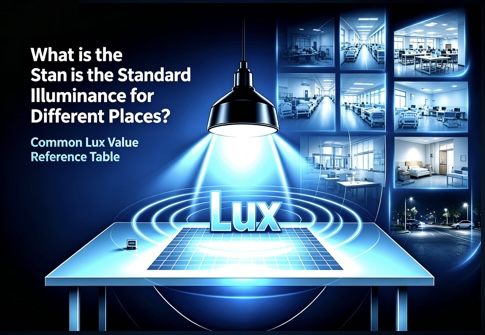
● Outdoor illuminance in strong daylight can reach tens of thousands of lux;
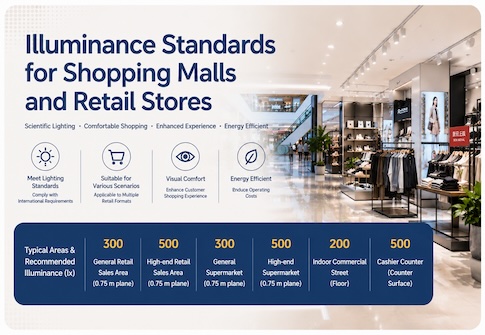
● A typical office may have illuminance levels of several hundred lux;
● Road lighting at night may provide only a few tens of lux.
What Is the Difference Between Illuminance and Luminance?
These two quantities are often confused.
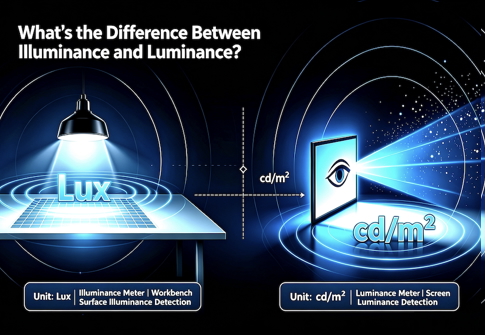
Illuminance
Describes how much light reaches a surface.
For example: the illuminance on a desktop.
Luminance
Describes the luminous intensity emitted or reflected by a surface in a given direction and is closely related to how bright that surface appears to an observer.
For example: the apparent brightness of a display.
Consider a white wall. Increasing the light falling on the wall increases its illuminance and will generally make it appear brighter. However, its luminance also depends on factors such as surface color, reflectance, material properties, and viewing direction.
Illuminance is measured with a lux meter, while luminance normally requires a dedicated luminance meter.
Why Is Illuminance Measurement Increasingly Important?
The development of modern buildings, smart lighting, and energy-management systems has increased the need for objective lighting assessment.
Illuminance measurements can help organizations:
● Verify lighting requirements;
● Optimize luminaire placement;
● Reduce unnecessary energy consumption;
● Improve working environments;
● Support visual comfort.
Illuminance measurement is particularly relevant to smart buildings, green buildings, industrial automation, and lighting retrofit projects.
What Does Lux Mean?
What Is Lux?
The lux (lx) is the SI unit of illuminance. One lux represents one lumen of luminous flux distributed over one square metre.
Digital lux meters normally display measurements directly in lux, allowing users to evaluate the illuminance at a specific location.
For example:
Measurement: 100 lx
This means the illuminance at the measurement point is 100 lux.
How Does a Digital Lux Meter Work?
The basic operating principle of a digital lux meter is to convert incident light into an electrical signal, process that signal electronically, and display the resulting illuminance value.
The measurement process generally consists of the following stages.
Light Detection
When light reaches the meter's sensor, the sensor responds to optical radiation at different wavelengths and intensities. Professional lux meters use spectral correction designed to approximate the photopic spectral luminous efficiency function V(λ), helping the instrument respond to visible light in a way that corresponds more closely to human visual sensitivity.
Photoelectric Conversion
A high-sensitivity silicon photodiode is commonly used as the photosensitive element. Incident light generates a small electrical signal related to the amount of light received.
Signal Processing
The electrical signal is amplified, filtered, compensated as required, and converted from analog to digital form. A microprocessor then calculates the illuminance value using the instrument's calibration parameters.
Data Display
The processed measurement is displayed in real time on an LCD, TFT, or similar display. Depending on the model, additional functions may include automatic ranging, MAX/MIN recording, Data Hold, peak measurement, data logging, USB connectivity, or Bluetooth data transfer.
Measurement Tip:
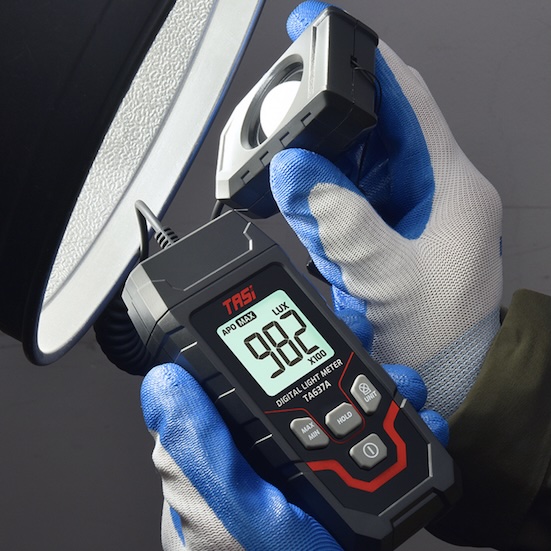
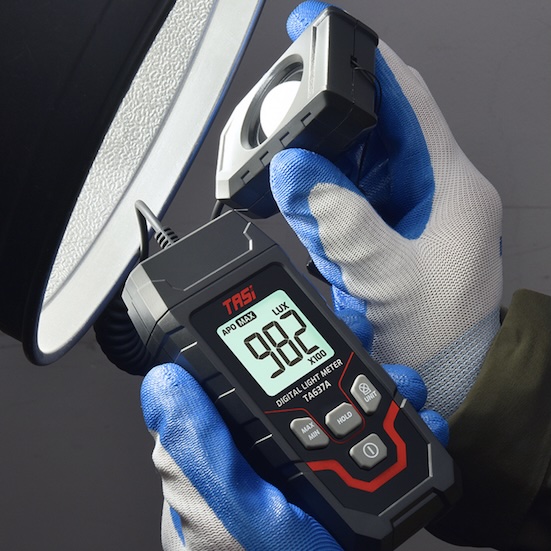
For reliable measurements, position the sensor correctly for the measurement plane and avoid shading it with your body, the instrument, or other objects. Changes in ambient light during measurement should also be minimized.
Main Components of a Digital Lux Meter
Although specifications and functions vary between models, most digital lux meters contain several basic components.
Light Sensor
The light sensor is a key component affecting measurement performance. It detects incident light and converts it into an electrical signal. Sensor linearity, stability, and spectral response all contribute to overall measurement accuracy.
Display
The display presents illuminance readings and relevant operating information. Modern meters commonly use LCDs with backlighting, while some professional instruments provide graphical displays, trend information, or statistical data.
Control Buttons
Controls are used to select ranges or measurement modes, activate Data Hold, review maximum and minimum readings, and configure instrument settings.
Microcontroller (MCU)
The microcontroller handles data acquisition, calculations, calibration parameters, range selection, and other instrument functions.
Power Supply
Portable lux meters are commonly powered by AA or AAA batteries or rechargeable lithium batteries. Some models support USB Type-C charging. Low-power designs can extend operating time during field measurements.
Housing and Mechanical Design
Portable meters are generally designed for convenient handling in field applications. Depending on the intended use, some professional instruments may also provide enhanced protection against dust or splashing water.
Common Applications of Lux Meters
Digital lux meters are widely used wherever lighting conditions need to be evaluated objectively.
Building Lighting and Project Acceptance
During building inspection and commissioning, illuminance may be measured in offices, meeting rooms, corridors, underground parking areas, and public spaces to verify that lighting meets applicable design requirements.
Industrial Manufacturing and Production Areas
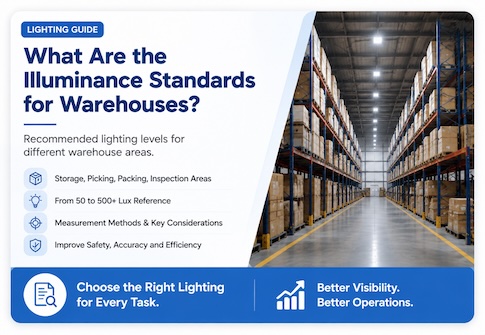
Adequate and uniform lighting can support safe and efficient industrial operations. Lux meters are used to assess lighting on production floors, assembly lines, warehouses, and quality-inspection areas.
Education and Research
Classrooms, laboratories, libraries, and research facilities require suitable lighting for different visual tasks. Illuminance measurement helps evaluate and optimize these environments.
Office Environment Management
Lighting affects visual comfort and working conditions. Facility managers and maintenance personnel can periodically measure workplace illuminance to identify insufficient or excessive lighting.
Healthcare Facilities
Patient rooms, examination rooms, treatment areas, operating rooms, and nursing areas have different lighting requirements. Illuminance measurements can support the assessment and maintenance of suitable lighting conditions.
Commercial Lighting
Retail stores, hotels, exhibition spaces, museums, and showrooms use carefully planned lighting to support presentation and visual comfort. Lux meters help lighting professionals evaluate luminaire layouts and balance lighting performance with energy efficiency.
Photography and Film Production
Studios, livestreaming environments, and film sets require controlled lighting. Illuminance measurements can assist with lighting setup and consistency.
Agriculture and Plant Lighting
Greenhouses, plant factories, and agricultural research facilities increasingly use artificial lighting. Lux meters can provide useful illuminance measurements for certain lighting assessments, although plant-lighting applications that require evaluation of photosynthetically active radiation may require dedicated PAR or PPFD instruments.
How to Choose the Right Illuminance Measuring Instrument
Digital lux meters vary in measurement range, accuracy, functions, and intended application. Consider the following factors when selecting an instrument.
Define the Application
General workplace lighting assessments may not require the same performance as laboratory measurements, professional lighting design, or research applications. Start by defining the intended measurement environment and required accuracy.
Measurement Range
Indoor lighting can often be measured with a range of several tens of thousands of lux, while daylight, sports facilities, and other high-illuminance applications may require a considerably wider range.
Accuracy and Resolution
For project acceptance, quality control, and research applications, select an instrument with suitable accuracy, resolution, stability, and repeatability.
Data Logging Requirements
For long-term monitoring, consider models with internal data storage, USB export, Bluetooth connectivity, or other data-transfer functions.
Measurement Characteristics and Applicable Requirements
For professional measurements, pay particular attention to spectral response relative to V(λ) and cosine response. These characteristics influence how accurately an instrument responds to different light spectra and angles of incidence.
Manufacturer and Technical Support
A manufacturer with established product development, quality management, calibration support, and technical service capabilities can provide greater confidence throughout the instrument's service life.
Important Considerations When Using a Digital Lux Meter
Correct measurement practice is essential for obtaining reliable illuminance readings.
Position the Sensor Correctly
Place the sensor at the required measurement point and orient its photosensitive surface according to the measurement plane. For horizontal working surfaces such as desks and laboratory benches, the sensor is generally positioned horizontally. Vertical measurements should follow the applicable measurement method or project requirements.
Avoid Shading the Sensor
Do not allow your body, hands, the instrument itself, or nearby objects to obstruct the incident light. Even partial shading can significantly affect readings, particularly when measuring daylight.
Select Representative Measurement Points
Illuminance varies with position, distance, angle, and surrounding conditions. Measurement points should therefore be selected according to the relevant method or standard.
For example:
● Offices are commonly assessed at the working plane;
● Classrooms may be assessed at student desk level;
● Industrial areas are measured at relevant workstations or task planes.
For large areas, multiple measurement points and average illuminance calculations can provide a more representative assessment.
Allow the Reading to Stabilize
After switching on the instrument or changing measurement conditions, allow sufficient time for the reading and range selection to stabilize before recording the result.
Where illuminance fluctuates, multiple readings or appropriate averaging may improve the representativeness of the measurement.
Calibrate the Instrument Regularly
Optical sensors and electronic components may drift over time. Calibration intervals should therefore be determined according to measurement requirements, usage frequency, quality procedures, and applicable regulations or standards.
For quality control, project acceptance, and scientific applications, calibrated instruments with appropriate calibration documentation may be required.
Measurement Tip:
When assessing overall lighting across a room or work area, avoid relying on a single measurement point. Measurements taken at multiple representative locations provide a more meaningful picture of lighting conditions.
Conclusion
Digital lux meters are important instruments for objectively measuring illuminance. They provide quantitative lighting data for applications including lighting design, building inspection, industrial production, education and research, facility management, and environmental assessment.
As smart buildings, energy-efficient lighting, and lighting-management systems continue to develop, reliable illuminance measurement is becoming increasingly important. Selecting an instrument with an appropriate measurement range, accuracy, spectral response, cosine response, and data functions can improve measurement efficiency and provide more dependable results.
When selecting a professional digital lux meter for building inspection, industrial maintenance, education, research, environmental monitoring, or lighting engineering, evaluate the instrument according to the actual measurement task rather than relying on a single specification.