Introduction
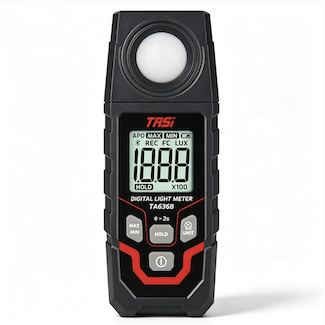
As lighting quality becomes increasingly important across industries—including commercial buildings, industrial manufacturing, schools, hospitals, photography studios, horticultural lighting, and laboratories—digital lux meters have become indispensable tools for lighting inspections and illuminance assessments.
Many users assume that measuring illuminance is as simple as placing a lux meter at the measurement point and recording the displayed value. In reality, even minor operational mistakes can cause measurement results to deviate from the actual illuminance by 10%, 20%, or even more.
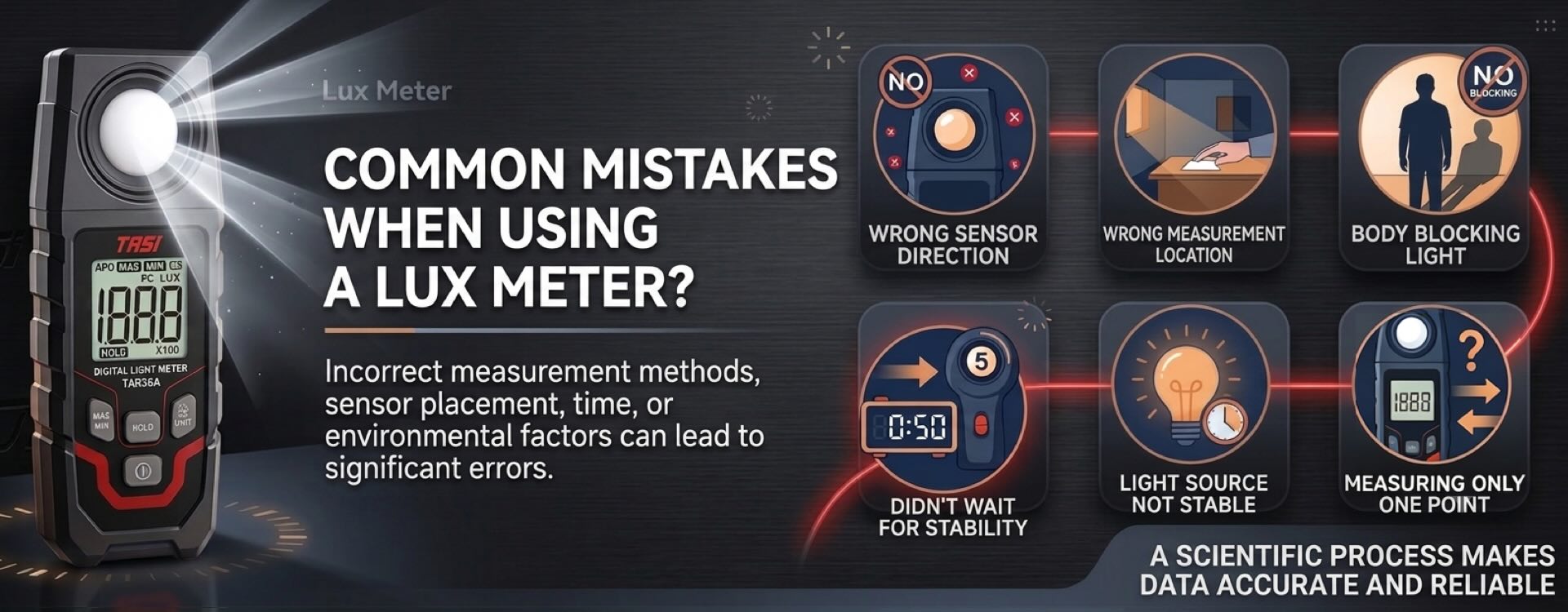
Common examples include:
● Incorrect sensor orientation
● Measuring at the wrong location
● Blocking the light with your body
● Recording the reading before it stabilizes
● Measuring before the light source has stabilized
● Ignoring environmental reflections
Selecting the wrong measurement range
These are among the most common mistakes encountered during real-world measurements.
This article explains the most common errors when using a digital lux meter and provides practical guidance on proper measurement techniques to help you obtain more accurate and reliable illuminance readings.
Key Takeaways
After reading this article, you will understand:
● Why illuminance readings can vary at the same location
● The ten most common mistakes when using a lux meter
● How to minimize measurement errors
● Best practices for measuring illuminance in different applications
● How to improve the consistency and accuracy of your measurements
Why Is Proper Lux Meter Usage So Important?
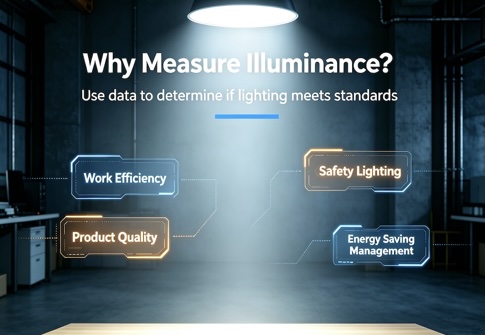
Accurate illuminance measurements are essential not only for verifying lighting compliance but also for supporting a wide range of applications, including:
● Building lighting inspections
● Energy efficiency evaluations
● Product quality testing
● Workplace safety assessments
● Occupational health evaluations
● Photography and exposure control
● Horticultural lighting analysis
Even a high-accuracy lux meter cannot provide reliable results if it is used incorrectly.
Where Is Illuminance Measurement Required?
| Application | Measurement Purpose |
|---|---|
| Offices | Verify compliance with workplace lighting standards |
| Classrooms | Ensure adequate lighting for reading and learning |
| Hospitals | Meet healthcare lighting requirements |
| Manufacturing Facilities | Improve workplace safety and operational efficiency |
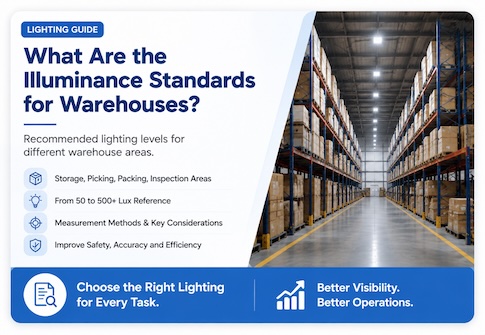
| Warehouses | Ensure sufficient illumination for operations |
| Shopping Malls & Supermarkets | Optimize product display lighting |
| Hotels | Enhance visual comfort for guests |
| Museums | Control lighting levels for artifact protection |
| Photography Studios | Maintain consistent exposure conditions |
| Television Studios | Ensure stable lighting performance |
| Sports Arenas | Meet competition lighting requirements |
| Parking Lots | Improve nighttime safety |
| Roadways | Evaluate outdoor lighting performance |
| Plant Factories | Optimize supplemental lighting conditions |
| Greenhouses | Monitor lighting for plant growth |
| Laboratories | Meet laboratory lighting requirements |
| Data Centers | Inspect maintenance lighting conditions |
| Commercial Buildings | Support lighting commissioning and acceptance |
| Residential Homes | Improve indoor lighting quality |
| Public Areas | Comply with public lighting safety standards |
Common Mistakes When Using a Lux Meter
1. Incorrect Sensor Orientation
This is one of the most common mistakes. Many users hold the lux meter casually during measurement or position the sensor at an angle instead of keeping it level. In reality, a lux meter measures the amount of light falling directly onto the sensor surface. Changing the sensor angle reduces the amount of incident light, resulting in lower illuminance readings.
Best Practice
● Keep the sensor level.
● Point the sensing surface toward the primary light source.
● Do not tilt the sensor.
● Do not rotate the sensor during measurement.
2. Measuring at the Wrong Location
Many users simply take measurements while standing in the center of a room.
However, illuminance should be measured on the actual working plane.
For example:
● Offices: Measure at desk height.
● Classrooms: Measure on the desktop surface.
● Factories: Measure at the workbench.
● Photography studios: Measure at the subject position.
Illuminance can vary by several hundred lux between different locations within the same space.
3. Blocking the Light During Measurement
Many users unintentionally block the light by:
● Standing between the light source and the sensor
● Blocking the sensor with an arm
● Allowing the instrument itself to cast a shadow
As a result, the measured illuminance is significantly lower than the actual value.
Best Practice
Stand slightly behind and to the side of the sensor, and ensure that nothing obstructs the light path.
4. Reading the Value Immediately After Powering On
Some users record the measurement immediately after turning on the instrument.
In practice, a digital lux meter typically requires several seconds for sampling and stabilization, particularly when illuminance changes rapidly.
Recommendation
Wait 2–5 seconds until the reading stabilizes before recording the measurement.
5. Measuring Before the Light Source Has Stabilized
Light sources such as LEDs, fluorescent lamps, and metal halide lamps may require time to reach stable light output after being switched on.
For example:
● LED drivers require a short stabilization period.
● Fluorescent lamps and HID lamps require warm-up time.
Recommendation
Always wait until the light source reaches stable output before taking measurements.
6. Ignoring Environmental Reflections
White walls, glass, mirrors, and metal surfaces can reflect light.
This may cause measured illuminance to be higher than the effective illuminance on the working surface.
Best Practice
Take measurements at the specified measurement points and avoid locations with strong reflective surfaces whenever possible.
7. Selecting the Wrong Measurement Range
Although many modern digital lux meters feature auto-ranging, some models still require manual range selection.
● A range that is too low may result in an overload indication (OL).
● A range that is too high reduces measurement resolution.
Always select an appropriate range based on the expected illuminance level, or use Auto Range whenever available.
8. Measuring with a Dirty Sensor
Dust, oil, fingerprints, and other contaminants reduce the amount of light reaching the sensor, causing consistently low readings.
Recommendation
● Clean the sensor regularly.
● Use a soft lens-cleaning cloth.
● Avoid corrosive cleaning agents.
9. Measuring Only One Point
Many users measure illuminance at only one location.
However, illuminance is not uniformly distributed across a space.
International lighting standards generally recommend taking measurements at multiple locations and calculating the average illuminance.
For example, offices are commonly evaluated using a nine-point method or a grid measurement method to accurately represent overall lighting conditions.
10. Neglecting Instrument Calibration
Like any precision measuring instrument, a lux meter may gradually drift over time.
Without regular calibration, measurement errors increase progressively.
Recommendation
● Calibrate the instrument regularly.
● Follow the manufacturer's recommended annual calibration schedule.
● Maintain calibration records for high-accuracy applications.
How to Improve Illuminance Measurement Accuracy
Follow these best practices to achieve reliable measurement results:
1. Use a digital lux meter with suitable accuracy for your application.
2. Measure only after the light source has stabilized.
3. Keep the sensor level and correctly oriented.
4. Avoid blocking the light with your body or nearby objects.
5. Measure on the designated working plane.
6. Take measurements at multiple locations and calculate the average.
7. Keep the sensor clean.
8. Calibrate the instrument regularly.
9. Follow applicable lighting standards during testing.
10. Maintain complete measurement records for future analysis and comparison.
Conclusion
While the accuracy of the lux meter itself is important, proper measurement technique is equally critical to obtaining reliable results. In practice, most illuminance measurement errors are caused not by the instrument, but by improper operation—such as incorrect sensor orientation, measuring at the wrong location, blocking the light, measuring before the light source stabilizes, or relying on a single measurement point.
By following standardized measurement procedures, performing regular calibration, and applying correct testing practices, you can significantly improve the consistency and accuracy of illuminance measurements while providing dependable data for building lighting inspections, industrial testing, educational lighting assessments, and energy-efficiency projects.