Introduction
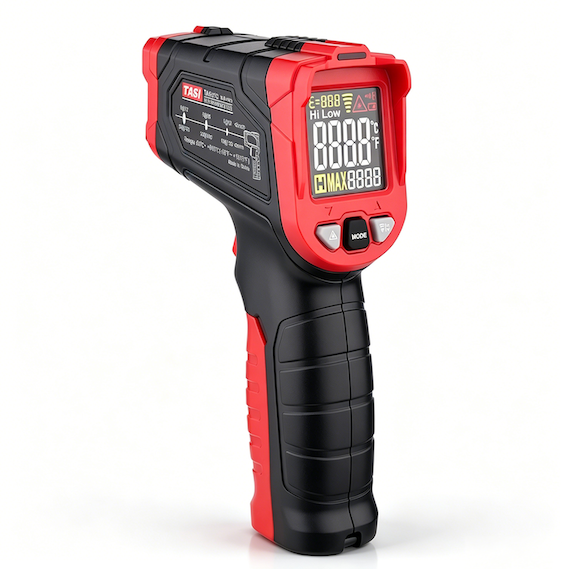
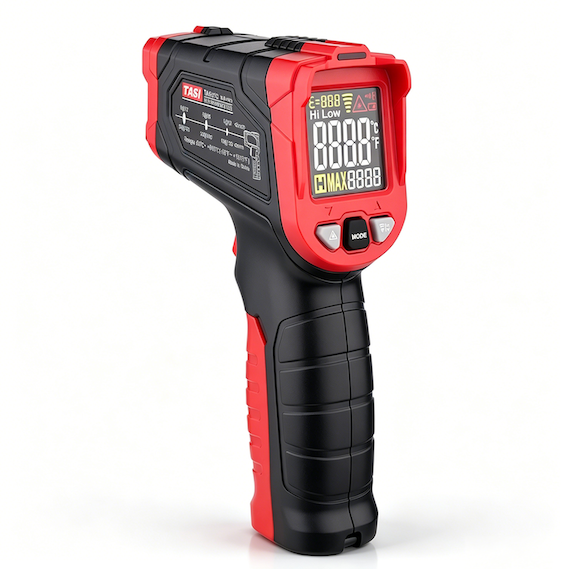
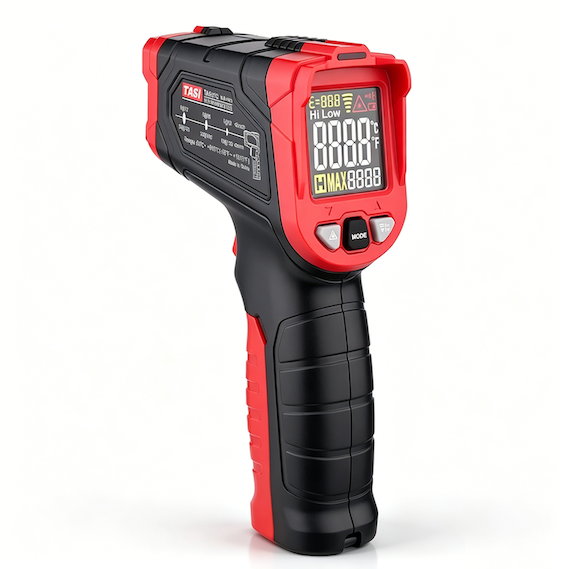
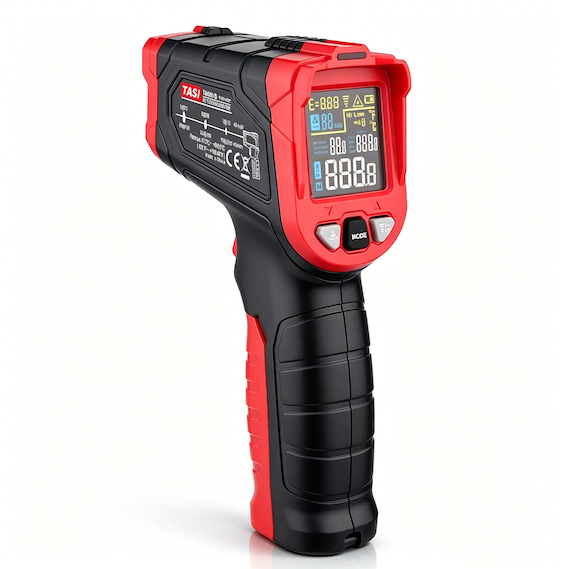
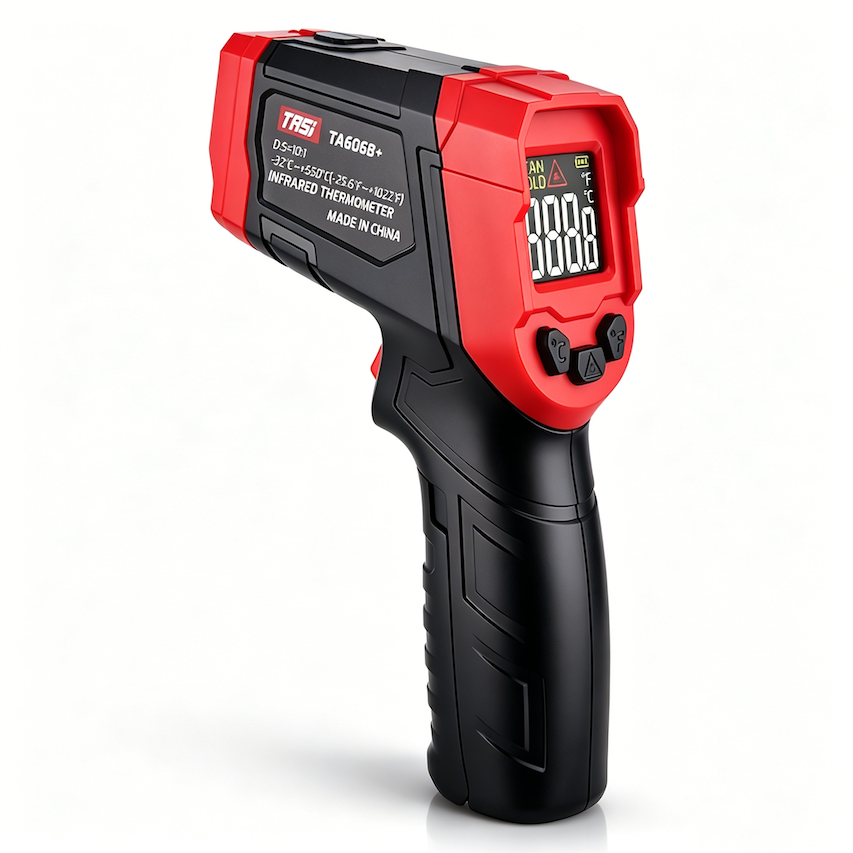
An infrared thermometer is a non-contact temperature measurement instrument that determines the surface temperature of an object by detecting infrared radiation. Due to its fast response and convenient operation, it is widely used in electrical inspection, industrial maintenance, mechanical equipment monitoring, HVAC systems, food processing, and building inspection.
During actual measurement, users may find that infrared thermometer readings differ from the actual temperature. In many cases, this does not necessarily indicate poor instrument performance. Measurement errors may result from multiple factors, including target material properties, measurement distance, environmental conditions, parameter settings, and operating methods.
Understanding these factors and applying correct measurement techniques are essential for obtaining accurate and reliable temperature data.
Key Points
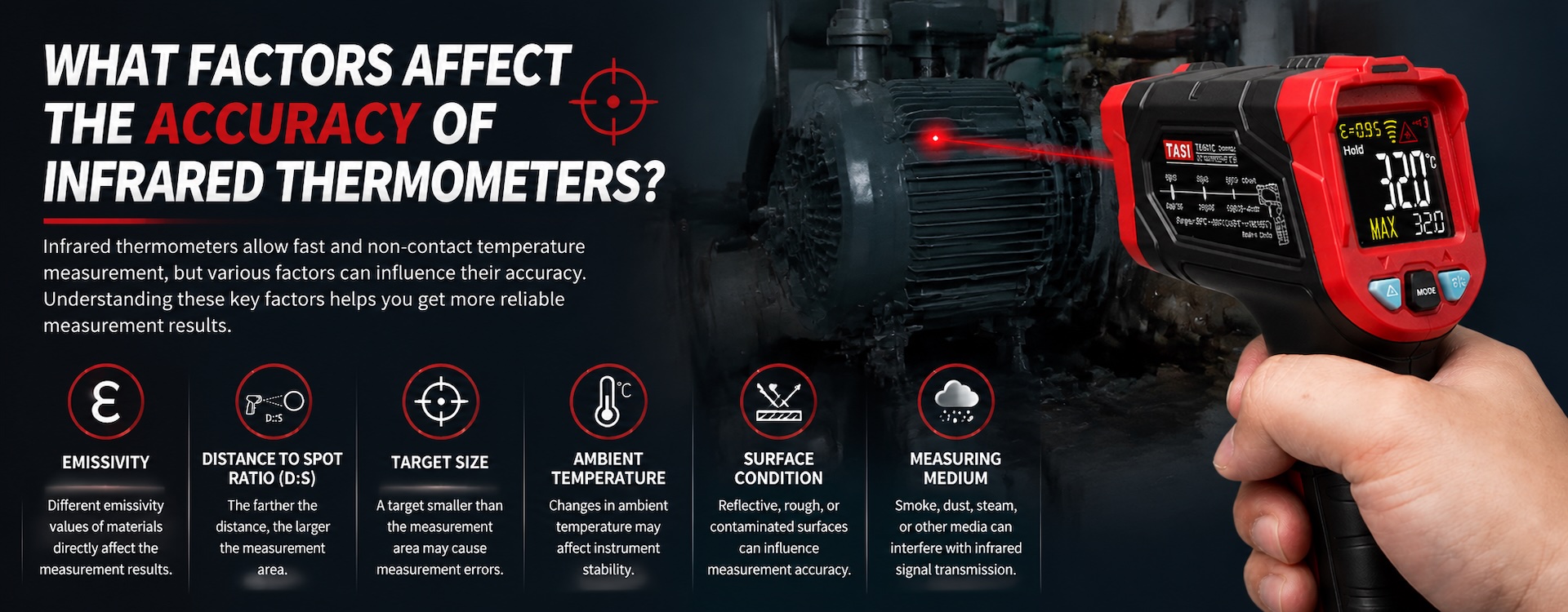
● Infrared thermometer accuracy is affected by emissivity, distance-to-spot ratio, ambient temperature, target size, and other factors.
● The surface characteristics of the measured object directly influence infrared radiation detection.
● Correct emissivity adjustment and proper measurement distance are critical for improving accuracy.
● Understanding instrument specifications and application conditions helps reduce measurement errors.
Relationship Between Infrared Measurement Principle and Accuracy
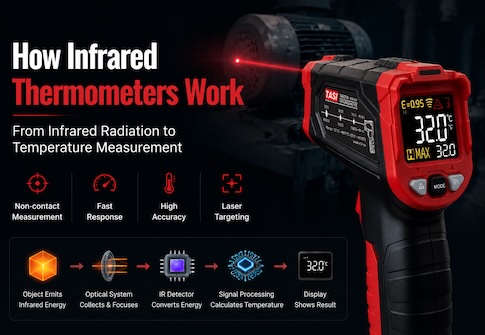
Infrared thermometers measure temperature by detecting infrared energy emitted from an object's surface and converting the received radiation into temperature data.
Different materials emit different levels of infrared radiation depending on their surface properties, temperature, and material characteristics. Therefore, measurement accuracy depends not only on the instrument itself but also on the measured object and surrounding environment.
● The main components of an infrared thermometer include an infrared sensor, optical system, signal processing circuit, and display module.
● High-performance infrared thermometers generally provide better sensor sensitivity, more stable data processing, and optimized optical design.
● Even a high-precision infrared thermometer may produce inaccurate readings if measurement conditions are inappropriate.
Effect of Emissivity on Infrared Measurement Accuracy
Emissivity is one of the most important factors affecting infrared temperature measurement accuracy.
Emissivity describes the ability of an object to emit infrared radiation and is usually represented by a value between 0 and 1. Objects with higher emissivity emit infrared energy more effectively, while low-emissivity materials are more difficult to measure accurately.
● Non-metal materials such as plastics, rubber, wood, and concrete usually have relatively high emissivity and are easier to measure.
● Metal surfaces, especially polished metals, generally have low emissivity and are more affected by reflected infrared radiation.
● If the emissivity setting does not match the actual material characteristics, the measured temperature may be higher or lower than the true value.
When measuring different materials, users should adjust the emissivity setting according to surface characteristics or use suitable methods to improve measurement reliability.
Influence of Measurement Distance and Distance-to-Spot Ratio (D:S)
Infrared thermometers are usually specified with a Distance-to-Spot Ratio (D:S), which describes the relationship between measurement distance and the size of the measured area.
For example, a D:S ratio of 12:1 means that the instrument can measure an approximately 1 cm diameter area when positioned 12 cm away from the target.
● The farther the measurement distance, the larger the measured area becomes.
● If the target area is smaller than the measurement spot, the thermometer may detect surrounding temperatures and cause measurement errors.
● The target should completely cover the measurement area to achieve reliable results.
Therefore, selecting an infrared thermometer with an appropriate D:S ratio is important for different application distances and target sizes.
Effect of Target Size on Measurement Results
Infrared thermometers measure the average temperature within a specific area rather than a single point.
When the target object is too small, the instrument may receive infrared radiation from surrounding areas, affecting the final reading.
● Large equipment surfaces usually do not create significant target-size problems.
● Small components such as electronic parts, electrical terminals, and mechanical elements require instruments with higher optical resolution.
● For small targets, reducing measurement distance or selecting a model with a higher D:S ratio can improve accuracy.
Influence of Ambient Temperature on Measurement Accuracy
The operating environment can also affect infrared thermometer performance.
Large changes in ambient temperature may affect the sensor, electronics, and optical components inside the instrument until thermal stability is reached.
● When moving between environments with significant temperature differences, allow the instrument sufficient time to adapt.
● Extreme temperatures, strong airflow, and high humidity may affect measurement stability.
● Avoid prolonged use outside the specified operating temperature range.
For industrial applications, the infrared thermometer should be selected according to the actual working environment.
Effect of Target Surface Conditions
Surface characteristics influence infrared radiation emission and therefore affect measurement results.
● Highly reflective metal surfaces may reflect surrounding infrared radiation and introduce errors.
● Oxidized or rough surfaces are usually easier to measure with infrared thermometers.
● Surface coatings, contamination, and oil residues may also affect readings.
For low-emissivity materials, measurement reliability can be improved by increasing surface emissivity, such as applying high-emissivity tape or coating to the target area before measurement.
Influence of Transmission Media
Infrared thermometers are designed to measure surface temperature rather than internal temperature through transparent materials.
For example:
● Glass surfaces may reflect surrounding radiation and have their own infrared characteristics.
● Measuring through transparent plastic or glass may not provide accurate temperature results.
● Steam, smoke, dust, and other particles may affect infrared energy transmission.
In environments with obstacles or complex conditions, an appropriate measurement method should be selected.
Influence of Instrument Performance
The design and manufacturing quality of an infrared thermometer directly affect measurement accuracy.
Important factors include:
● Infrared sensor performance;
● Optical system design;
● Signal processing algorithms;
● Temperature compensation technology;
● Calibration accuracy.
High-quality infrared thermometers are typically calibrated and tested under different temperature conditions to ensure stable and reliable performance.
How to Use an Infrared Thermometer Correctly
To achieve more accurate measurement results, users should follow these practices:
● Check instrument condition and battery status before use.
● Set the correct emissivity according to the target material.
● Maintain an appropriate measurement distance based on the D:S ratio.
● Ensure the target area is larger than the measurement spot.
● Avoid measuring highly reflective, transparent, or heavily contaminated surfaces directly.
● Allow the instrument to stabilize when moving between different temperature environments.
● For critical inspections, take multiple measurements and calculate average values when necessary.
How to Improve Infrared Temperature Measurement Accuracy
Improving infrared measurement accuracy requires proper instrument selection, parameter adjustment, and correct operation.
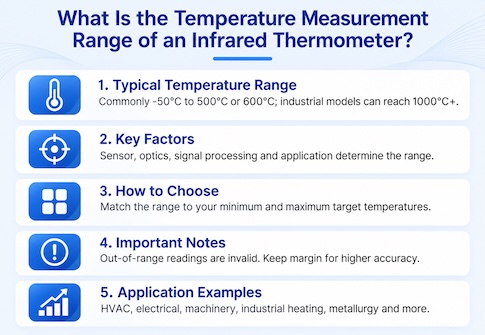
● Select an infrared thermometer with suitable temperature range, accuracy level, and D:S ratio.
● Configure the correct emissivity for different materials.
● Maintain a suitable measurement distance and ensure sufficient target coverage.
● Keep measurement conditions as stable as possible.
● Perform regular calibration and maintenance.
For critical applications such as industrial equipment inspection and electrical system monitoring, infrared measurements should be combined with other inspection methods when necessary to ensure reliable results.
FAQ
Why is my infrared thermometer inaccurate?
● Common causes include incorrect emissivity settings, excessive measurement distance, insufficient target size, temperature changes, and reflective surfaces.
Does an infrared thermometer need emissivity adjustment?
● Yes. Different materials have different emissivity values, and incorrect settings can affect measurement accuracy.
Does measuring closer always improve accuracy?
● Generally, shorter distances help ensure the target fills the measurement area, but the recommended distance should still follow the instrument's D:S specification.
Can infrared thermometers measure the temperature inside glass?
● Generally no. Standard infrared thermometers measure surface temperature, and transparent materials may cause measurement errors.
Do infrared thermometers require regular calibration?
● Yes. For industrial inspection and quality control applications, regular calibration should be performed according to accuracy requirements and usage frequency.
Conclusion
Infrared thermometers are efficient and convenient tools for non-contact temperature measurement, but their accuracy depends on many factors.
Emissivity, distance-to-spot ratio, target size, environmental conditions, surface characteristics, and instrument performance all influence measurement results. By understanding these factors and applying proper measurement methods, users can maximize infrared thermometer performance and obtain more accurate and reliable temperature data.