Introduction
Infrared thermometers are widely used in industrial inspection, equipment maintenance, electrical testing, HVAC systems, building inspection, laboratory research, and other applications. Unlike traditional contact thermometers, infrared thermometers do not require direct contact with the measured object. Instead, they detect infrared radiation emitted from the object's surface and calculate its temperature.
● Due to their fast response, safe measurement distance, and convenient operation, infrared thermometers have become essential tools for modern temperature measurement.
● Understanding how infrared thermometers work helps users select suitable instruments, improve measurement methods, and obtain more reliable temperature data.
Key Points
● Infrared thermometers measure temperature by detecting infrared radiation emitted from objects.
● Infrared detectors convert received thermal radiation into electrical signals.
● The instrument processes signals and calculates temperature values through internal algorithms.
● Factors such as emissivity, measurement distance, and environmental conditions can affect measurement accuracy.
What Is an Infrared Thermometer?
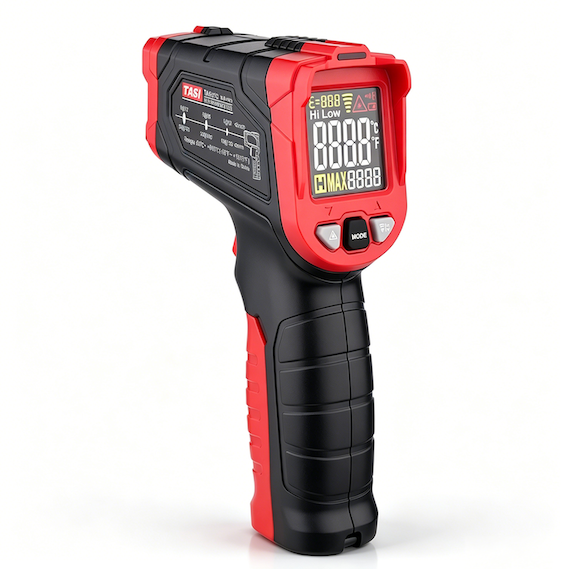
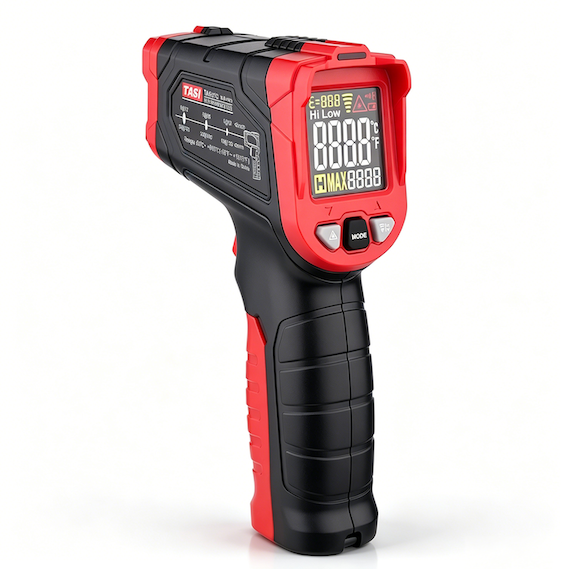
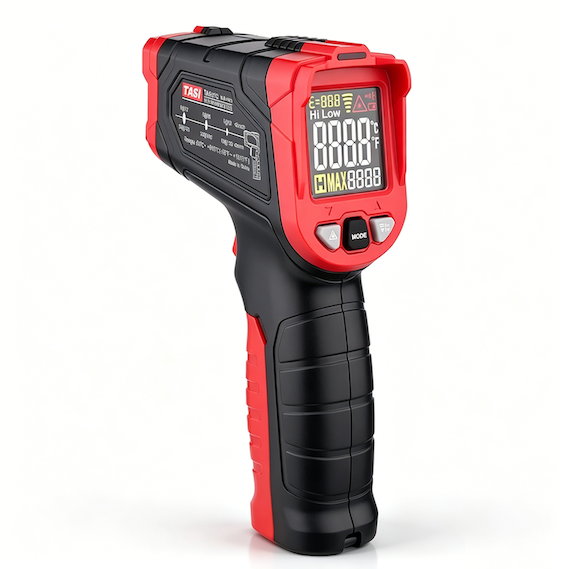
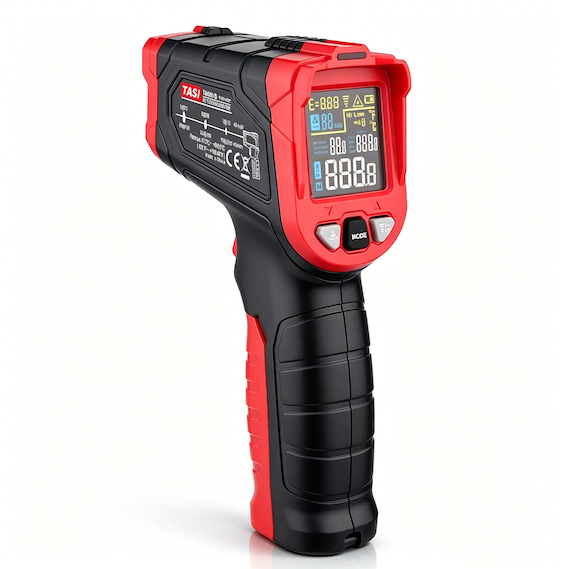
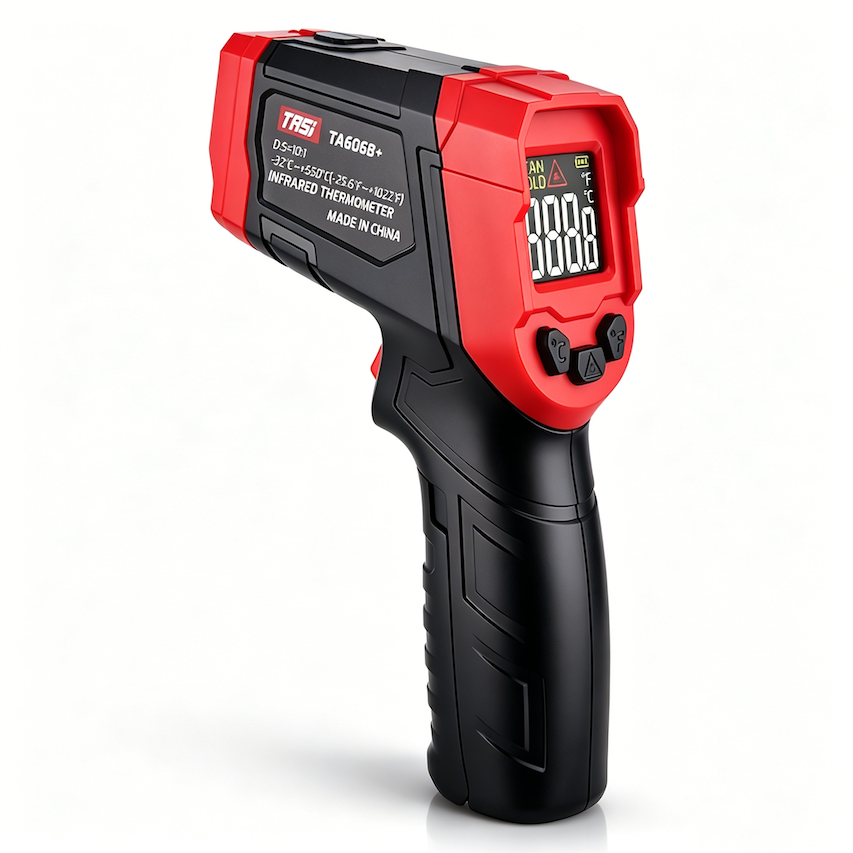
An infrared thermometer, also known as an infrared temperature gun or non-contact thermometer, is a temperature measurement device that uses infrared radiation principles to measure temperature without physical contact.
● All objects with a temperature above absolute zero (-273.15°C) continuously emit infrared radiation. Generally, the higher the temperature, the stronger the infrared energy emitted.
● An infrared thermometer collects this radiation through an optical system and converts it into temperature data through an internal sensor and processing circuit.
● Compared with contact thermometers, infrared thermometers can measure high-temperature equipment, moving components, hazardous areas, and hard-to-reach surfaces without direct contact.
Basic Working Principle of Infrared Thermometers
The fundamental principle of an infrared thermometer is based on the relationship between an object's thermal radiation and its temperature.
● When an object's temperature increases, the thermal movement of atoms and molecules becomes stronger, causing more infrared radiation to be emitted.
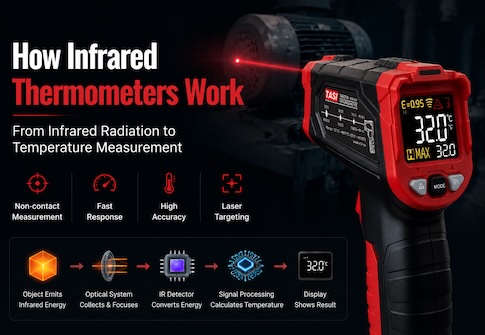
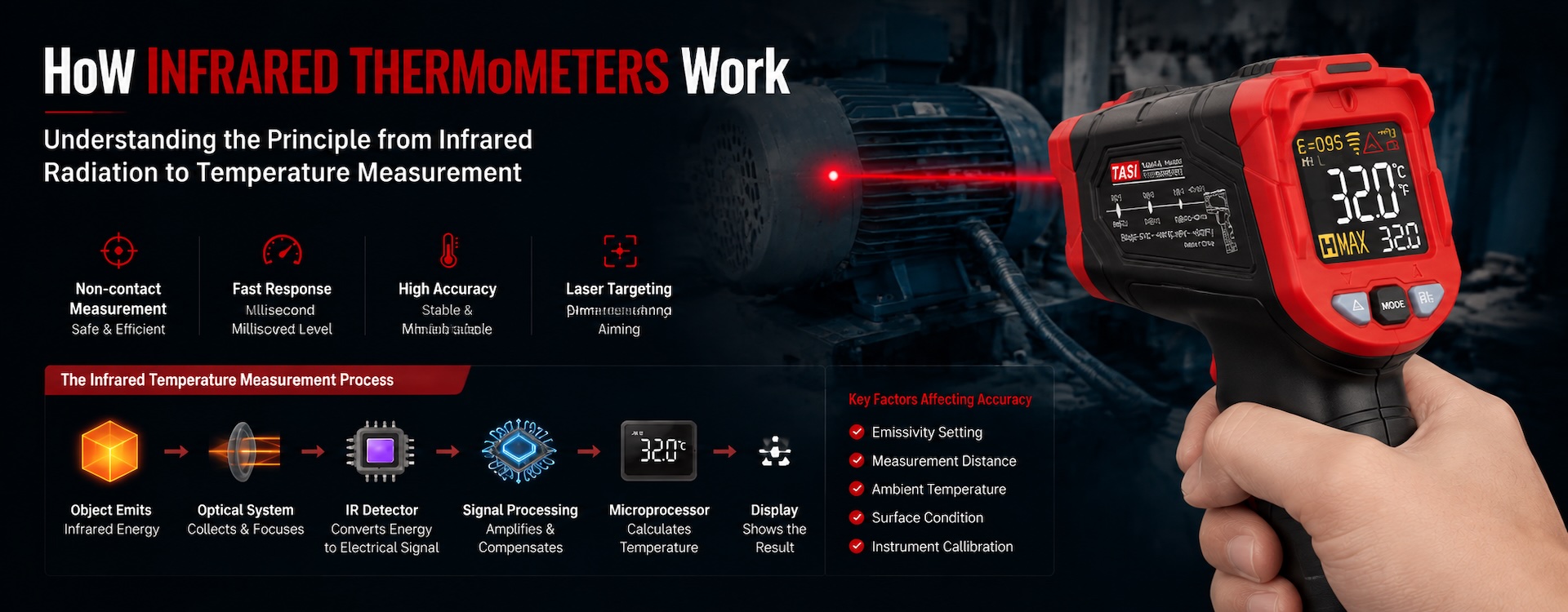
● The optical system inside the thermometer collects infrared radiation from the target surface and focuses the energy onto the infrared detector.
● The infrared detector converts the received radiation energy into an electrical signal.
● The microprocessor amplifies, compensates, and processes the signal, then calculates the temperature value according to built-in measurement algorithms.
● The final temperature result is displayed on the LCD screen for the user.
Main Components of an Infrared Thermometer
Although infrared thermometers are compact devices, they contain several key components that work together to complete temperature measurement.
Optical System
● The optical system collects infrared radiation emitted from the target object and directs the energy accurately to the infrared detector.
● High-performance infrared thermometers may use specially designed lenses to improve long-distance measurement capability and reduce environmental interference.
● Optical performance directly affects measurement distance and target area size, and is closely related to the distance-to-spot ratio (D:S ratio).
Infrared Detector
● The infrared detector is one of the most important components of an infrared thermometer. Its main function is converting invisible infrared radiation into electrical signals.
● Common detectors include thermopile sensors, which generate output signals according to changes in received infrared energy.
● Detector sensitivity and stability directly influence measurement accuracy.
Signal Processing System
● The electrical signal generated by the infrared detector is usually weak and requires amplification, filtering, and environmental compensation.
● The microprocessor combines sensor data, ambient temperature compensation, and emissivity settings to improve measurement reliability.
Display and Control System
● After signal processing, the calculated temperature value is displayed through the instrument screen.
● Some infrared thermometers also include laser targeting, data storage, alarm functions, and Bluetooth communication for more efficient field inspection and data management.
How Infrared Thermometers Calculate Temperature
An infrared thermometer does not directly measure temperature. Instead, it calculates temperature by measuring the amount of infrared radiation emitted from the target surface.
● The intensity of infrared radiation emitted by an object is related to its surface temperature.
● After receiving infrared signals through the detector, the instrument converts the radiation energy into temperature values using an internal calibration model.
● During the measurement process, the instrument must also consider the emissivity of the target material.
● Different materials emit infrared energy differently. Materials such as metals, plastics, glass, and ceramics have different emissivity values, so proper emissivity adjustment is essential for accurate measurement.
The Influence of Emissivity on Infrared Measurement
Emissivity is one of the most important factors affecting infrared temperature measurement accuracy.
● Emissivity describes the ability of a material surface to emit infrared radiation compared with an ideal blackbody. Its value typically ranges from 0.10 to 1.00.
● Materials with high emissivity, such as non-metal surfaces and painted surfaces, are generally easier to measure accurately.
● Smooth metal surfaces usually have lower emissivity and reflect surrounding infrared radiation, which may introduce measurement errors.
● Therefore, when measuring different materials, users should select an appropriate emissivity setting according to the surface characteristics of the target.
Infrared Temperature Measurement Process
A complete infrared temperature measurement process usually includes the following steps:
● Step 1: The target object emits infrared radiation.
● Step 2: The optical system collects and focuses the infrared energy.
● Step 3: The infrared detector converts thermal radiation into electrical signals.
● Step 4: The electronic circuit processes and analyzes the signals.
● Step 5: The microprocessor calculates the temperature value based on measurement algorithms.
● Step 6: The display shows the final temperature reading.
The entire process can usually be completed within milliseconds, making infrared thermometers ideal for rapid inspection and continuous monitoring.
Factors Affecting Infrared Thermometer Accuracy
Although infrared thermometers provide fast and convenient measurements, several factors may influence measurement accuracy during actual use.
● Measurement Distance: The farther the distance from the target, the larger the measurement area becomes. If the target area is too small, surrounding objects may affect the reading.
● Emissivity Setting: Incorrect emissivity values can directly cause temperature measurement errors.
● Ambient Temperature: Extreme environmental conditions may influence sensor performance and require temperature compensation.
● Surface Condition: Reflective, transparent, or special material surfaces may reduce measurement accuracy.
● Instrument Condition: Sensor performance, battery level, and calibration status can also affect measurement reliability.
Applications of Infrared Thermometers
Due to their fast response, safe operation, and non-contact measurement capability, infrared thermometers are widely used across various industries.
● Electrical Inspection: Used for detecting abnormal heating in transformers, electrical cabinets, cable connections, and power equipment.
● Industrial Maintenance: Used to monitor motors, bearings, mechanical equipment, and other components for preventive maintenance.
● HVAC Inspection: Used for measuring surface temperatures of air-conditioning systems, pipelines, heat exchangers, and ventilation equipment.
● Building Inspection: Used for evaluating temperature differences in walls, windows, insulation structures, and building components.
● Laboratory Research: Used for temperature monitoring, material testing, and experimental analysis.
● Food and Medical Applications: Used for rapid surface temperature checking and process monitoring.
How to Use an Infrared Thermometer Correctly
To achieve more accurate measurement results, users should follow these guidelines:
● Confirm that the instrument is functioning properly before measurement and set an appropriate emissivity value according to the target material.
● Maintain a suitable measurement distance according to the instrument's distance-to-spot ratio (D:S ratio).
● Avoid measuring through glass, steam, dust, or other obstacles that may interfere with infrared radiation.
● For highly reflective metal surfaces, use appropriate compensation methods or alternative measurement approaches.
● For critical equipment inspections, perform multiple measurements and analyze the results comprehensively.
Conclusion
Infrared thermometers use infrared radiation emitted from objects to achieve fast and non-contact temperature measurement through optical collection, infrared detection, signal conversion, and temperature calculation.
● Their core technologies include infrared radiation detection, sensor conversion, signal processing, and emissivity compensation.
● Understanding the measurement principle and applying correct measurement methods can significantly improve temperature detection accuracy.
● With increasing demand for industrial automation and condition monitoring, infrared thermometers will continue to play an important role in electrical inspection, industrial maintenance, building inspection, and environmental monitoring.
Frequently Asked Questions (FAQ)
Why can infrared thermometers measure temperature without touching an object?
● Infrared thermometers detect infrared radiation naturally emitted from objects and calculate temperature based on the received energy, so direct contact is not required.
Do infrared thermometers measure the internal temperature of an object?
● No. Standard infrared thermometers mainly measure surface temperature and cannot directly measure the internal temperature of an object.
Why are measurements on metal surfaces sometimes inaccurate?
● Metal surfaces often have low emissivity and can reflect surrounding infrared radiation, which may cause measurement errors. Proper emissivity adjustment or alternative measurement methods may be required.
What is the purpose of the laser in an infrared thermometer?
● The laser is used only for target positioning and helps users identify the measurement area. It does not perform the temperature measurement itself.
Does measuring from a greater distance provide better accuracy?
● Not necessarily. The measurement distance should follow the instrument's D:S ratio requirements. Excessive distance may enlarge the measurement area and reduce accuracy.