Introduction
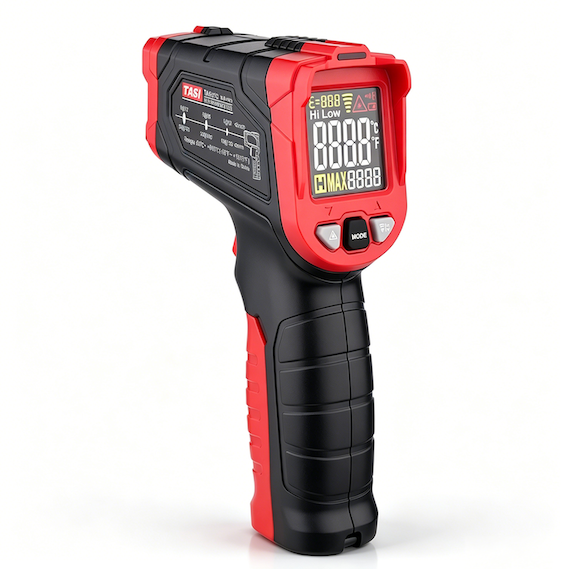
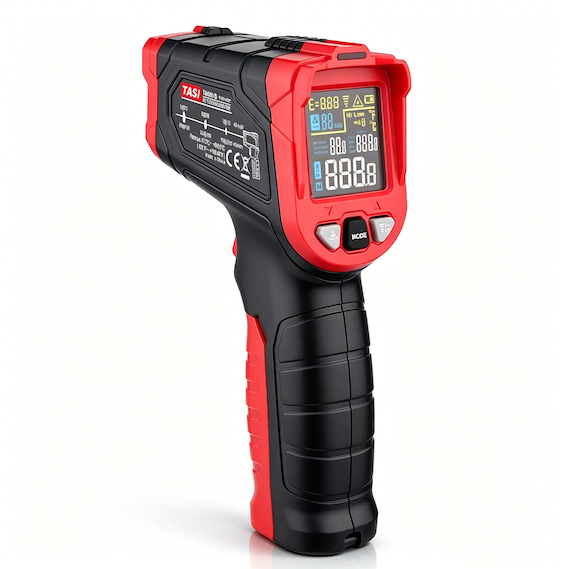
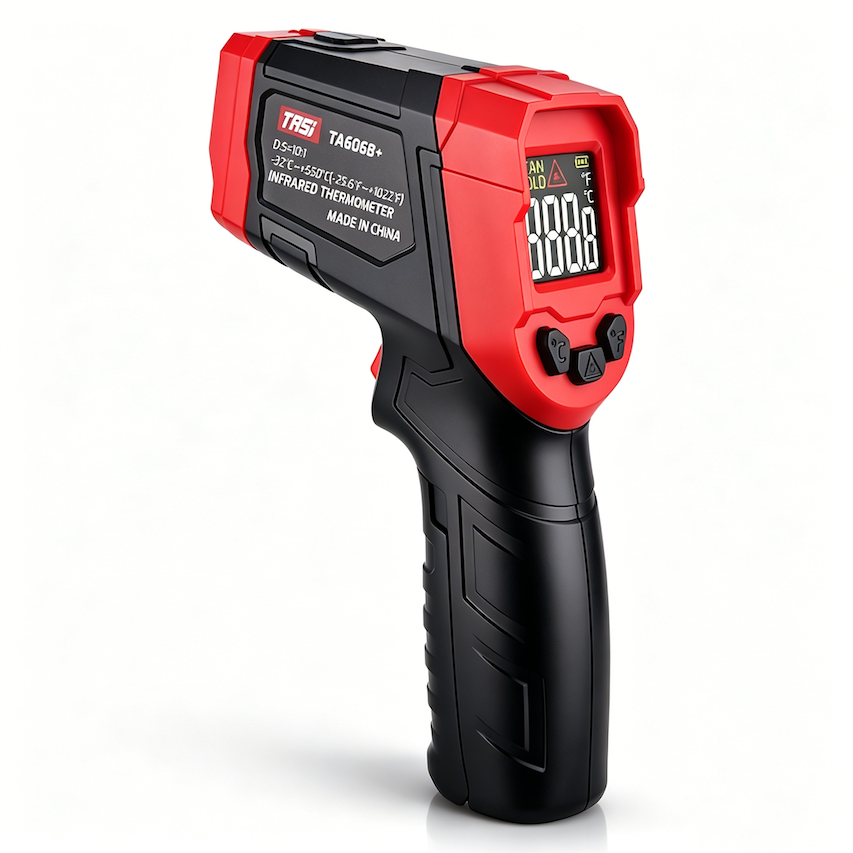
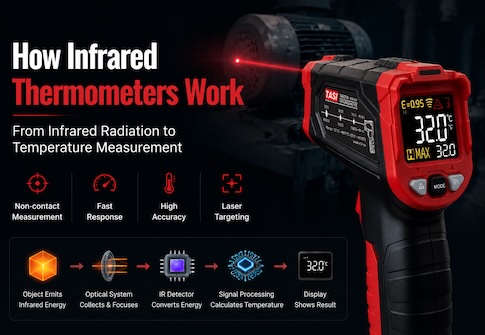
Infrared thermometers determine temperature by detecting infrared radiation emitted from the surface of an object. This allows fast, non-contact temperature measurement. However, the available temperature range can vary significantly depending on the instrument design, infrared sensor, optical system, and intended application.
General-purpose handheld infrared thermometers typically cover the temperatures encountered in equipment maintenance, HVAC, electrical inspection, and industrial troubleshooting. Instruments designed for furnaces, metal processing, and other high-temperature applications can measure substantially higher temperatures.
For this reason, there is no single answer to the question “How hot or cold can an infrared thermometer measure?” The actual range must always be confirmed from the specifications of the individual model.
Key Points
● The measurement range of an infrared thermometer depends on the specific model and sensor design; not all infrared thermometers have the same range.
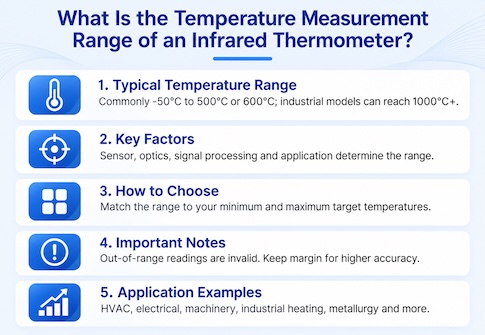
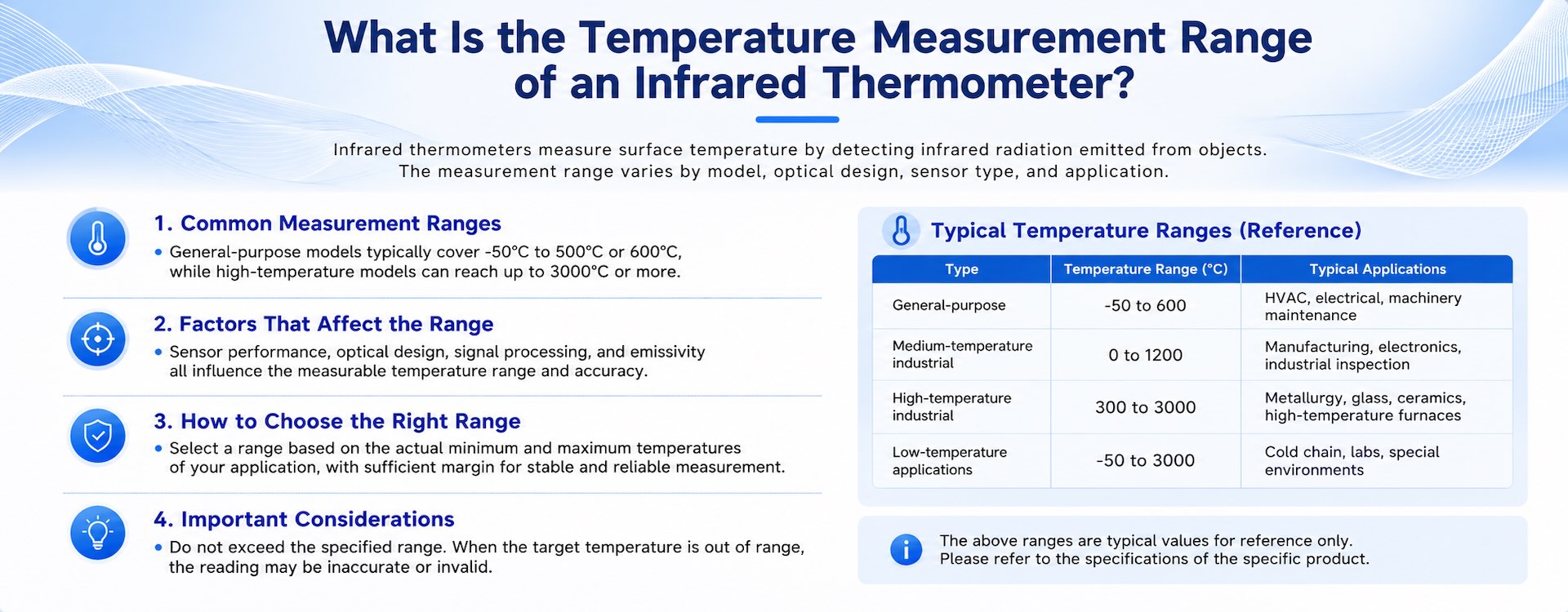
● General-purpose handheld infrared thermometers commonly cover approximately -50°C to 500°C or 600°C, although specifications vary by model.
● Medium- and high-temperature industrial infrared thermometers may measure 1,000°C, 1,500°C, or higher.
● A wider temperature range does not automatically mean better measurement performance. Accuracy, D:S ratio, emissivity settings, and optical characteristics must also be considered.
● When the target temperature exceeds the specified measurement range, the displayed result may indicate an over-range condition and should not be treated as a valid temperature reading.
Typical Temperature Ranges of Infrared Thermometers
Infrared thermometers can generally be grouped into several categories according to their intended temperature range.
● General-purpose infrared thermometers: Common ranges include approximately -50°C to 380°C, -50°C to 500°C, or -50°C to 600°C. These instruments are suitable for electrical equipment, HVAC systems, machinery, pipes, engines, and general industrial surface-temperature checks.
● Medium- and high-temperature industrial infrared thermometers: Upper limits may reach 800°C, 1,000°C, or higher. Typical applications include high-temperature machinery, heating equipment, furnaces, and industrial processes.
● Specialized high-temperature infrared instruments: Some instruments can measure 1,500°C, 2,000°C, or even higher temperatures and are mainly used in metallurgy, steel production, foundries, glass manufacturing, and other high-temperature industrial applications.
● Low-temperature infrared instruments: Certain models designed for cold-chain, refrigeration, or specialized laboratory applications can measure lower temperature ranges.
These figures represent typical product categories rather than universal specifications. The actual capability of an instrument should always be verified under Measurement Range or Temperature Range in its technical data.
Why Do Infrared Thermometers Have Different Measurement Ranges?
Infrared thermometers do not determine temperature through physical contact. Instead, they detect infrared radiation emitted from the target surface and convert that signal into a temperature reading. The measurable temperature range is therefore closely related to the instrument’s infrared detection system.
● Infrared sensor performance: Different sensors respond to different levels and wavelengths of infrared radiation, directly affecting the minimum and maximum measurable temperatures.
● Optical system design: The lens, spectral filters, and detection wavelength range influence how effectively the instrument collects infrared energy at different temperatures.
● Signal-processing electronics: Sensor signals must be amplified, compensated, and processed before a temperature value can be displayed. Different electronic designs support different measurement ranges.
● Intended application: General equipment inspection rarely requires temperatures above several hundred degrees Celsius, while steelmaking and metallurgical processes may require measurements above 1,000°C. Instruments are therefore optimized for different applications.
For this reason, an infrared thermometer’s temperature range cannot be determined from its appearance alone.
Is a Wider Measurement Range Always Better?
No.
For example, consider two infrared thermometers with measurement ranges of -50°C to 500°C and -50°C to 1,500°C. If the intended application is limited to air-conditioning outlets, motor housings, electrical cabinets, pipes, and machinery, a 500°C upper limit will normally cover most requirements.
A wider measurement range mainly means that the instrument can accommodate higher target temperatures. It does not necessarily provide better accuracy within normal temperature ranges.
When selecting an infrared thermometer, the following specifications should also be considered:
● Measurement accuracy: Determines the permissible deviation between the displayed value and the actual target temperature.
● D:S ratio: Determines the size of the measurement spot at a given distance.
● Emissivity range: Correct emissivity settings are important when measuring different materials such as metals, plastics, coatings, and ceramics.
● Optical resolution: Particularly important when measuring small targets from longer distances.
● Response time: Determines how quickly the instrument can respond to temperature changes.
● Operating ambient temperature: The allowable operating temperature of the instrument itself is different from the target temperature it can measure.
The correct approach is therefore to select a temperature range that suits the application rather than simply choosing the widest available range.
Measurement Range and Operating Temperature Are Different Specifications
These two parameters are often confused.
For example, an infrared thermometer may have a measurement range of -50°C to 600°C, while its specified operating ambient temperature may only be 0°C to 50°C.
The difference is straightforward:
● Measurement temperature range: The range of target surface temperatures that the instrument can measure.
● Operating ambient temperature: The environmental temperature range in which the infrared thermometer itself is designed to operate properly.
An infrared thermometer can therefore measure a 500°C target while the instrument itself remains in a normal ambient environment. This does not mean that the thermometer can be placed in a 500°C environment.
When measuring furnaces, boilers, or other high-temperature equipment, maintain an appropriate distance and avoid exposing the instrument body to excessive radiant heat or hot airflow for extended periods.
Measurement Range and Display Resolution Are Also Different
Infrared thermometer specifications often include a display resolution such as 0.1°C.
A resolution of 0.1°C does not mean that the instrument has an accuracy of ±0.1°C, nor does it indicate a wider measurement range.
For example, an instrument may display:
235.6°C
The 0.1°C resolution means that the display can show changes in increments of 0.1°C. The actual measurement accuracy may still be ±1.5°C, ±2°C, or specified as a percentage of the reading.
These specifications should therefore be considered separately:
● Measurement range;
● Measurement accuracy;
● Display resolution.
Each represents a different aspect of instrument performance.
Can an Infrared Thermometer Measure Near the Upper Limit of Its Range?
As long as the target temperature remains within the specified measurement range, measurement is generally possible. However, the accuracy specifications for different parts of the range should also be reviewed.
Some infrared thermometers do not use the same accuracy specification across their entire range. Low-, medium-, and high-temperature sections may have different error limits or calculation methods.
If an application regularly requires measurements close to 500°C, selecting an instrument whose maximum range is exactly 500°C may not be ideal.
It is generally preferable to retain some measurement-range margin. For example, if the normal target temperature is around 450°C, choosing an instrument with an upper limit significantly above 450°C can provide a more suitable operating margin.
What Happens If the Target Temperature Exceeds the Measurement Range?
If the target temperature exceeds the specified range, the infrared thermometer normally cannot provide a valid temperature reading.
Depending on the instrument, the display may show:
● HI;
● LO;
● OL;
● An over-range symbol;
● A value that no longer changes normally.
These indications generally mean that the target is outside the instrument’s valid measurement range.
The displayed value should not be interpreted as the actual target temperature. Increasing the measurement distance or changing the emissivity setting cannot extend the instrument’s specified temperature range. If the target regularly exceeds the available range, a higher-temperature instrument should be selected.
What Measurement Range Is Suitable for Different Applications?
The first step is to estimate the lowest and highest temperatures that may occur in the actual application.
● HVAC and air-conditioning maintenance: Measurements are generally concentrated in low- and medium-temperature ranges, so a general-purpose infrared thermometer is usually sufficient.
● Electrical inspection: Electrical cabinets, terminals, circuit breakers, cables, and motors are typically checked for abnormal temperature rise. Standard industrial handheld infrared thermometers cover most applications.
● Mechanical maintenance: Bearings, motors, gearboxes, and hydraulic systems generally do not require extremely high upper limits. Measurement stability and repeatability are often more important.
● Engine and automotive maintenance: When inspecting engines, exhaust components, and braking systems, an instrument with a relatively high upper temperature limit may be more appropriate.
● Industrial heating equipment: Furnaces, heat-treatment systems, and high-temperature production equipment require a range selected according to the actual process temperature.
● Steel, metallurgy, and foundry applications: Target temperatures may exceed 1,000°C, requiring infrared instruments specifically designed for high-temperature measurement.
A practical principle is to ensure that the instrument’s valid measurement range fully covers the normal application temperature while retaining a reasonable margin for temperature fluctuations.
Factors That Affect Actual Temperature Measurement
Even when the target temperature is within the specified range, accurate measurement is not automatically guaranteed.
Infrared measurement can also be affected by:
● Incorrect emissivity setting: Different materials emit infrared radiation differently.
● Excessive measurement distance: If the distance is too great, the instrument may also detect surrounding surfaces.
● Insufficient target size: The target should be larger than the measurement spot corresponding to the current distance.
● Reflective metal surfaces: Low-emissivity metals may reflect infrared radiation from surrounding objects, causing significant measurement errors.
● Glass, steam, smoke, or dust: Materials between the thermometer and the target may interfere with infrared transmission.
● Rapid changes in ambient temperature: When the instrument is moved between substantially different environments, allow sufficient time for thermal stabilization.
Measurement range is therefore only the first factor in determining whether an infrared thermometer is suitable for a particular application. It is not the sole factor that determines measurement accuracy.
FAQ
What is the maximum temperature an infrared thermometer can measure?
There is no universal maximum. General-purpose handheld models typically measure up to several hundred degrees Celsius, while specialized industrial infrared instruments may measure 1,000°C, 1,500°C, or higher. Always refer to the specifications of the specific instrument.
Can a standard infrared thermometer measure 500°C?
Yes, provided that 500°C is within the instrument’s specified measurement range. If 500°C is close to the maximum limit and such temperatures are measured regularly, a model with a higher upper limit is generally preferable.
Can infrared thermometers measure temperatures below 0°C?
Yes. Many general-purpose infrared thermometers can measure down to approximately -50°C, although the actual lower limit varies by model.
If the range is -50°C to 600°C, is the accuracy the same throughout the entire range?
Not necessarily. Some instruments specify different accuracy limits for different temperature intervals. The accuracy specifications should therefore be reviewed together with the measurement range.
Can measuring an over-range target damage the infrared thermometer?
Simply pointing the instrument at an over-range target does not necessarily cause immediate damage. However, if the thermometer is positioned too close to a hot object and the instrument itself exceeds its permitted operating temperature, performance may be affected and damage may occur.
Can an infrared thermometer measure objects above 1,000°C?
Yes, but only with a specialized high-temperature infrared instrument whose specified range covers those temperatures. A standard handheld infrared thermometer cannot exceed its designed range through settings or increased measurement distance.
Conclusion
Infrared thermometers do not have a universal temperature measurement range. General-purpose handheld models commonly cover temperatures from several tens of degrees below zero to several hundred degrees Celsius, while specialized industrial instruments can measure 1,000°C or considerably higher.
When selecting an infrared thermometer, first determine the lowest and highest temperatures expected in the application. The instrument should cover the required range while providing a reasonable operating margin.
Measurement range, however, is only one selection criterion. Accuracy, D:S ratio, emissivity, target size, and environmental conditions must also be considered. In infrared temperature measurement, selecting a range appropriate to the actual application is more important than simply choosing the instrument with the widest possible range.