Introduction
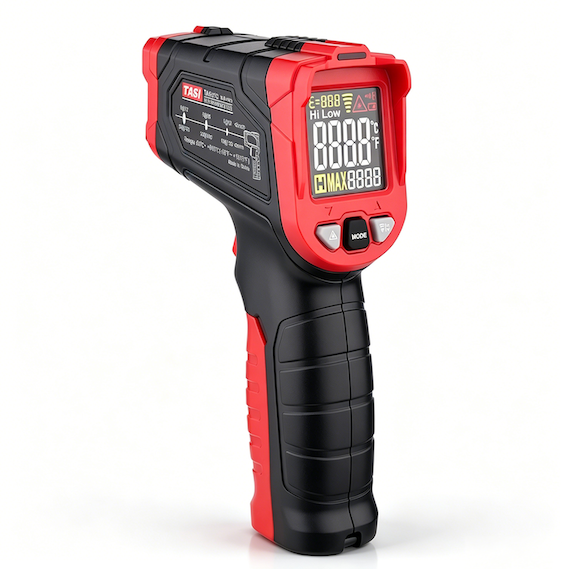
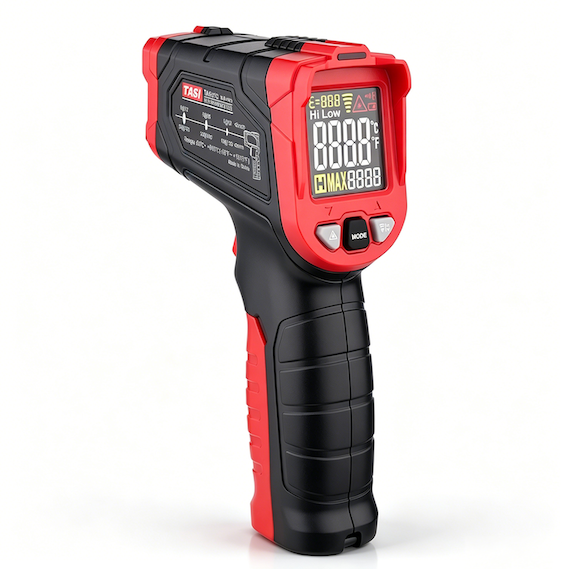
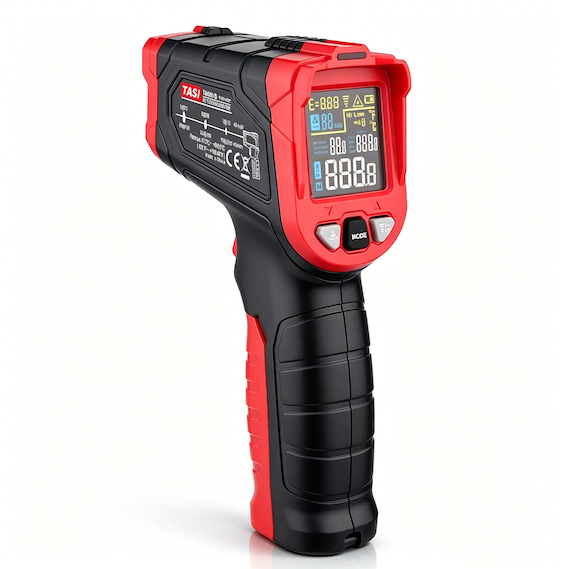
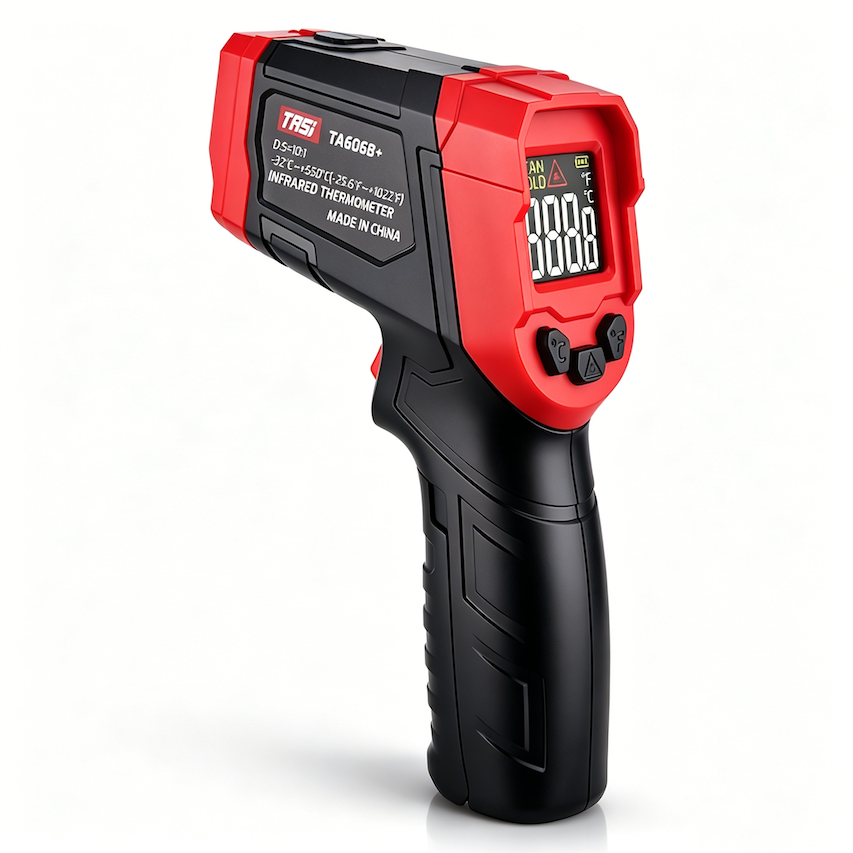
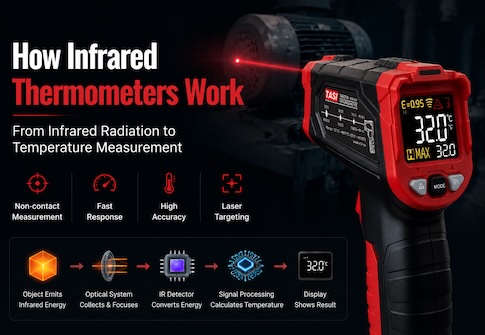
Infrared thermometers measure surface temperature without physical contact by detecting infrared radiation emitted from the target. The measurement itself is very fast. On many handheld infrared thermometers, holding the trigger continuously causes the temperature reading to update repeatedly. Some models also offer measurement lock, continuous scanning, or data logging functions.
However, being capable of continuous measurement does not necessarily mean that every infrared thermometer is designed for unlimited continuous operation. As measurement duration increases, ambient temperature, internal instrument temperature, battery condition, measurement distance, and target surface characteristics can all influence measurement stability.
Key Points
● Most infrared thermometers can perform continuous scanning while the measurement trigger is held.
● Some models provide LOCK, continuous measurement, or data logging modes for longer observation periods.
● During extended operation, the thermal stability of the instrument and changes in ambient temperature should be considered.
● Battery condition, lens contamination, measurement distance, and target emissivity can still affect continuous measurement results.
● For monitoring lasting several hours or requiring 24/7 operation, a fixed infrared temperature sensor designed for continuous power and long-term operation is generally more suitable than a standard handheld thermometer.
Can an Infrared Thermometer Measure Continuously?
In most cases, yes.
Once measurement is activated, a handheld infrared thermometer continuously receives infrared radiation from the target surface and updates the calculated temperature according to its response and display refresh characteristics. Holding the trigger therefore provides a form of continuous scanning.
Some instruments also feature a measurement lock function. When enabled, the thermometer can continue measuring without the operator holding the trigger, which is useful for observing heating, cooling, or temperature trends.
However, product designs vary. Some models are primarily intended for quick spot checks, while others are specifically designed for continuous measurement. The permitted operating method and duration should therefore always be verified in the product specifications or operating instructions.
Continuous Measurement and Long-Term Monitoring Are Not the Same
Continuous measurement usually refers to repeatedly updating temperature readings over a limited period, for example when checking motors, pipes, heating equipment, or mechanical components.
Long-term monitoring may involve continuous operation for several hours, days, or even permanently.
A standard handheld infrared thermometer is mainly designed for portable inspection and short-duration continuous scanning. Even if it supports continuous measurement, this does not automatically mean it is suitable for uninterrupted 24-hour operation.
Applications requiring long-term unattended monitoring generally benefit from equipment that supports:
● Continuous external power;
● Fixed installation;
● Long-duration operation;
● Temperature data output or recording;
● Stable operation under changing ambient conditions;
● Alarm or communication functions when required.
Why Can Extended Continuous Measurement Affect Stability?
Infrared temperature measurement is influenced not only by the target temperature but also by the conditions surrounding the instrument.
During prolonged operation, changes in the thermometer's internal temperature or rapid changes in ambient temperature can affect the thermal state of the infrared detector and compensation circuitry. The instrument may require time to stabilize as these conditions change.
Typical examples include:
● Moving the instrument from a cold outdoor environment into a warm room;
● Operating close to a high-temperature furnace for an extended period;
● Direct sunlight continuously heating the instrument housing;
● Strong thermal radiation from nearby equipment;
● Rapid increases or decreases in ambient temperature.
Under these conditions, measurement variation may increase even if the target temperature itself remains relatively stable.
For long-duration continuous measurements, the thermometer should therefore be operated in as stable an environment as possible, and the instrument body should not be exposed to unnecessary heating or cooling.
Why Is Thermal Equilibrium of the Instrument Important?
An infrared thermometer contains more than an infrared detector. It also includes ambient temperature sensing and electronic compensation circuitry.
When the instrument is moved from one thermal environment to another, the housing, optical system, detector, and internal electronics do not immediately reach the new ambient temperature.
If precision measurements are made while the instrument temperature is still changing rapidly, the compensation system must continuously correct for these changes, which may reduce measurement stability.
After a significant environmental temperature change, allowing the instrument sufficient time to acclimatize before carrying out precision continuous measurements is recommended.
Battery Condition Should Also Be Considered
Continuous measurement keeps the display, infrared detector, signal-processing electronics, and potentially the laser sight operating for longer periods. Power consumption is therefore generally higher than during occasional spot measurements.
As long as the battery voltage remains within the instrument's specified operating range, continuous use should not significantly reduce measurement accuracy.
When the battery approaches depletion, however, the following may occur:
● Low-battery indication;
● Abnormal display behavior;
● Reduced laser brightness;
● Automatic shutdown;
● Inability to perform measurements correctly.
Before extended continuous measurement, ensure that the battery has sufficient capacity. For permanent monitoring, an instrument designed for external power is more appropriate.
The Target Itself May Change During Continuous Measurement
A changing temperature reading does not necessarily indicate a problem with the thermometer.
The actual surface temperature may be changing, for example:
● A motor gradually heats up after starting;
● A heater cycles on and off;
● Fluid temperature inside a pipe changes;
● Airflow cools part of the target surface;
● Moisture, oil, or condensation appears on the surface;
● The measurement position shifts slightly.
An infrared thermometer detects the infrared radiation within its field of view. Changes in the target condition can therefore produce genuine changes in the displayed temperature.
Keep the Measurement Position Consistent
Measurement position is particularly important during extended measurements.
Infrared thermometers have a specified distance-to-spot ratio, or D:S ratio. As measurement distance increases, the measured spot generally becomes larger.
If a handheld thermometer moves during prolonged measurement, the field of view may cover different parts of the target. This is especially important when the target is small or has a significant temperature gradient.
For more consistent results:
● Keep the measurement distance constant;
● Ensure the target is larger than the measurement spot;
● Aim at the same measurement area;
● Prevent background surfaces from entering the field of view;
● Consider a fixed mounting bracket for extended monitoring.
Emissivity Remains Important During Continuous Measurement
Continuous measurement does not eliminate errors caused by incorrect emissivity settings.
Painted surfaces, plastics, rubber, and many other high-emissivity materials are generally easier to measure reliably. Shiny stainless steel, aluminum, copper, and other low-emissivity or highly reflective surfaces can be strongly affected by reflected thermal radiation from the surroundings.
Even if the displayed temperature appears stable during continuous measurement, an incorrect emissivity setting can still produce a stable but inaccurate result.
The emissivity setting should therefore be matched to the target material and surface condition before continuous measurement begins.
Does the Laser Need to Remain On Continuously?
Not necessarily.
The laser on an infrared thermometer is primarily an aiming aid. It does not perform the infrared temperature measurement itself.
Once the measurement position has been established, the laser can be switched off on models that allow independent laser control while temperature measurement continues. This can reduce unnecessary battery consumption and avoid unnecessary laser exposure.
The laser should never be directed toward a person's eyes or other inappropriate locations.
When Is a Standard Handheld Thermometer Not Recommended for Long-Term Continuous Operation?
● The thermometer must remain close to a furnace or strong radiant heat source;
● Ambient temperature exceeds the instrument's specified operating range;
● Steam, smoke, or heavy dust repeatedly obstructs the optical path;
● The lens is likely to become contaminated or affected by condensation;
● 24/7 unattended monitoring is required;
● Temperature data must be stored automatically for long periods;
● The system must communicate with other equipment or trigger alarms and control actions.
For these applications, a fixed infrared temperature sensor, online infrared thermometer, or dedicated temperature data acquisition system is generally more appropriate.
How to Improve Reliability During Extended Continuous Measurement
● Confirm that the specific model supports continuous or locked measurement;
● Keep the thermometer within its specified ambient operating temperature range;
● Allow the instrument to acclimatize after significant environmental temperature changes;
● Ensure sufficient battery capacity;
● Keep the optical lens clean;
● Maintain a consistent measurement distance, angle, and target area;
● Ensure the target is larger than the measurement spot;
● Set emissivity correctly for the target surface;
● Avoid exposing the thermometer body to prolonged direct sunlight or strong radiant heat;
● For unattended long-term monitoring, use equipment specifically designed for continuous operation.
FAQ
Can I keep holding the trigger on an infrared thermometer for continuous measurement?
Generally, yes. Most handheld infrared thermometers continuously update the displayed temperature while the trigger is held. The exact operating method depends on the specific model.
Will continuous measurement cause the infrared sensor to overheat?
Under normal conditions and within the specified operating temperature range, continuous scanning is generally a normal operating mode. However, prolonged exposure of the instrument itself to strong heat sources or direct sunlight can affect internal temperature and measurement stability.
Can an infrared thermometer measure continuously for several hours?
This depends on the model. Some instruments can operate continuously for extended periods, but standard handheld thermometers are primarily intended for spot checks and relatively short scanning periods. For measurements lasting several hours or longer, confirm that the product is designed for this operating mode.
Is it normal for the temperature to fluctuate during continuous measurement?
Small variations can be normal. Actual target temperature changes, movement of the measurement area, non-uniform surface temperatures, reflected thermal radiation, and instrument resolution can all affect the displayed value. Large fluctuations should prompt a review of the measurement conditions.
Does the laser need to remain on during continuous measurement?
No. The laser normally serves only as an aiming aid and does not perform the infrared temperature measurement. It can be switched off after alignment if the instrument supports independent laser control.
Should a handheld infrared thermometer be used for permanent online temperature monitoring?
Usually not. For fixed, unattended, long-duration monitoring, data transmission, or alarm control, a dedicated fixed or online infrared temperature measurement system is normally the better choice.
Conclusion
Infrared thermometers can generally perform continuous scanning, and some models also offer measurement lock or continuous data recording. These functions are useful for equipment inspection, observing heating processes, and short-term temperature trend monitoring.
For extended operation, however, measurement reliability depends on ambient temperature, instrument thermal equilibrium, battery condition, measurement distance, target size, and emissivity settings.
Where monitoring must continue for several hours, around the clock, or without an operator present, a fixed or online infrared temperature measurement system designed for continuous operation is usually preferable to keeping a standard handheld infrared thermometer permanently active.