How to Choose a Drop-Resistant Infrared Thermometer for Frequent Field Use

Publisher: Amy Published: 2026-03-30 Reading Time: 6min. 20sec.
Tags: drop-resistant infrared thermometerinfrared thermometer selectionindustrial infrared thermometerportable infrared thermometernon-contact thermometerinfrared temperature gun

Introduction

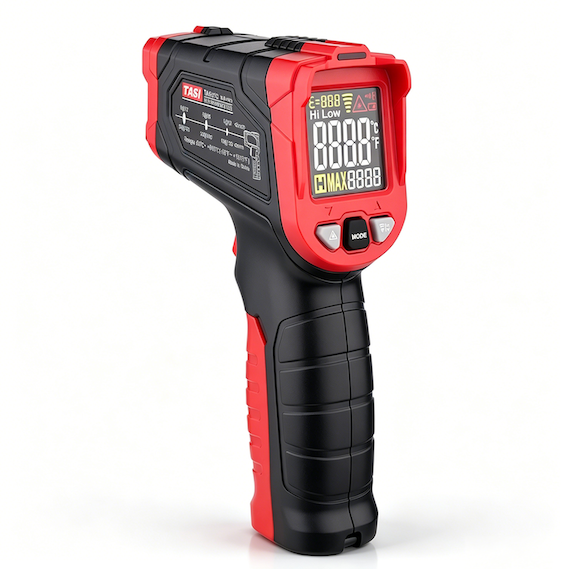
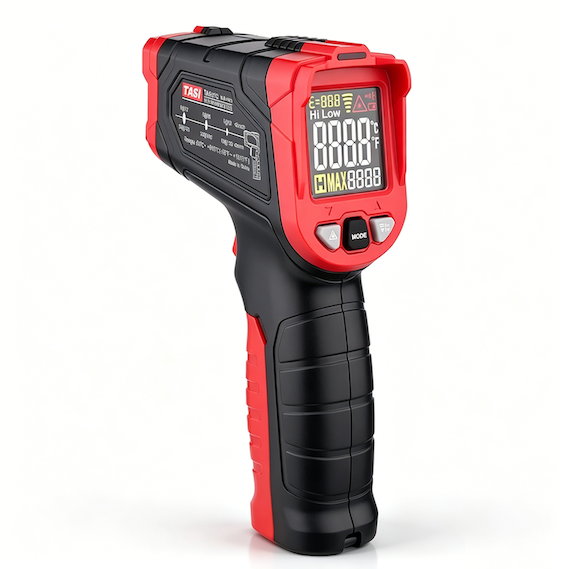
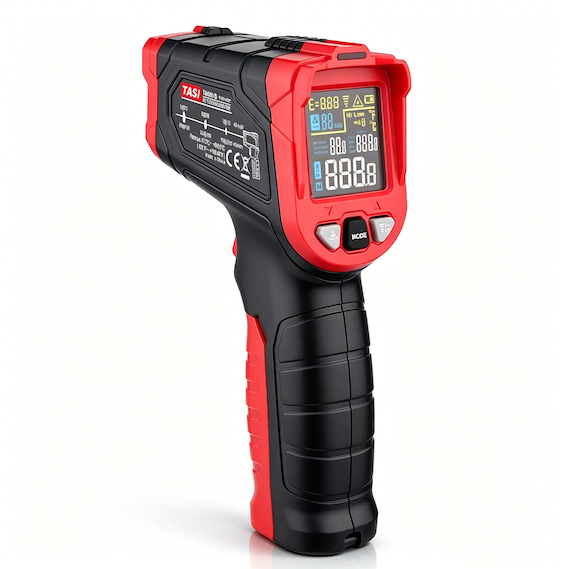
Infrared thermometers are inherently portable measuring instruments. In equipment inspection, electrical maintenance, HVAC servicing, mechanical repair, building inspection, and field service, they are often carried in toolboxes, tool bags, or directly by technicians throughout the working day.

In these applications, the instrument is exposed not only to normal wear but also to accidental drops from workbenches, ladders, tool carts, or the operator's hand. Therefore, when an infrared thermometer is carried frequently, selection should consider not only temperature range, accuracy, D:S ratio, and emissivity, but also the mechanical design and resistance to impact.

“Drop-resistant” does not mean that an instrument can withstand every drop height or impact angle. It means that the product is designed to provide better mechanical protection and long-term reliability under reasonably demanding field conditions.


Key Takeaways

● For an infrared thermometer that is carried frequently, give preference to models with clearly specified drop protection or documented drop testing.
● Rubber overmolding, reinforced corners, and impact-absorbing structures can help reduce shock transferred to the housing and internal components.
● The infrared optical system is a critical measurement component, so lens protection is more important than simply increasing housing thickness.
● The battery compartment, display, buttons, and trigger should also be evaluated for long-term mechanical durability.
● An IP rating and drop resistance describe different types of protection and should not be treated as equivalent.
● Rugged construction does not replace measurement performance. Temperature range, accuracy, D:S ratio, and emissivity settings must still match the application.


Why Does Frequent Carrying Require Greater Durability?

An instrument kept primarily in a laboratory or equipment room experiences relatively little mechanical stress. A field infrared thermometer, by contrast, may be repeatedly handled, placed in a tool bag, used while working at height, or transported between service locations.

This exposes the instrument to several mechanical risks:

● Accidental drops from the hand or a work surface;
● Contact with pliers, wrenches, and other metal tools inside a toolbox;
● Repeated vibration during transportation;
● Frequent use of the trigger and function buttons;
● Continuous abrasion around housing edges and corners;
● Dust, tools, or other objects contacting the lens area.

For technicians performing multiple inspections every day, mechanical reliability can therefore be just as important as measurement capability.


Look for Clearly Specified Drop Protection

When selecting a drop-resistant infrared thermometer, first check whether the manufacturer provides a specified drop height, drop-test information, or other mechanical-protection data.

Some industrial models, for example, may state that they have been tested against drops from a specified height. This provides more useful selection information than general claims such as “rugged” or “heavy-duty.”

However, drop testing is normally conducted under defined conditions, including a specified height, surface, and test procedure. It does not mean that the instrument will remain undamaged after a drop from any height or at any impact angle.

Drop-test information should therefore be treated as an indicator of structural robustness rather than an unconditional guarantee against damage.


Check for Impact-Absorbing Housing and Overmolding

For infrared thermometers that are frequently transported, models with soft rubber overmolding, TPE protective sections, or reinforced corners can offer practical advantages.

These features can absorb part of the impact energy during a drop and reduce the likelihood of the rigid plastic housing striking a hard surface directly.

Key design details to inspect include:

● Impact-absorbing protection around the housing;
● Reinforcement at the bottom of the handle;
● A recessed display or raised protective bezel;
● Secure housing joints and assembly;
● Anti-slip texture around the grip.

For users wearing industrial gloves, a secure grip can also reduce the probability of accidental drops.


Lens Protection Is More Important Than Simply Having a Thick Housing

The infrared sensor and optical system are usually located at the front of the instrument.

If the optical assembly receives a direct impact, the housing may remain visibly intact while the lens, optical alignment, or measurement performance is affected.

For frequent field use, check whether the lens is recessed or whether the front housing extends beyond the lens surface to provide physical protection.

A well-designed protective front section can reduce the possibility of direct lens contact when the instrument lands face-first.

In addition, avoid storing the infrared thermometer with screwdrivers, wrenches, or other metal tools positioned directly against the lens area.


Evaluate the Display, Buttons, and Trigger

Drop resistance is not limited to the outer housing.

The trigger, function buttons, and display are among the most frequently used components of an infrared thermometer. If these parts are mechanically weak, reliability may deteriorate over time even without a severe drop.

When evaluating a model, consider:

● Whether the trigger feels loose or unstable;
● Whether the buttons return consistently after operation;
● Whether the display has a protective bezel;
● Whether function buttons can easily be pressed accidentally inside a tool bag;
● Whether the housing shows looseness or abnormal movement.

For technicians performing large numbers of measurements every day, the durability of high-cycle operating components is particularly important.


Do Not Overlook the Battery Compartment

One commonly overlooked issue after a drop is temporary battery disconnection or a battery cover coming loose.

Unstable battery contact can cause unexpected shutdowns, display interruptions, or instrument restarts.

For frequently transported instruments, check:

● Whether the battery cover is securely retained;
● Whether the latch is resistant to accidental opening;
● Whether the installed battery moves inside the compartment;
● Whether the battery contacts provide sufficient spring pressure.

For models using rechargeable lithium batteries, also check the position of the charging port and whether the surrounding housing provides adequate mechanical protection.


An IP Rating Is Not the Same as Drop Resistance

A higher IP rating is sometimes assumed to mean that an instrument is also more resistant to drops. These are separate performance characteristics.

An IP rating primarily describes protection against solid foreign objects and water, such as dust and moisture. Drop resistance depends more on housing materials, impact-absorbing structures, internal mounting, and overall mechanical design.

Therefore:

● A higher IP rating does not necessarily mean greater drop resistance;
● Good drop resistance does not necessarily indicate a high level of water protection.

If the infrared thermometer will also be used in dusty, damp, or outdoor environments, both IP protection and mechanical durability should be evaluated.


D:S Still Matters When Choosing a Rugged Instrument

Frequent transportation does not reduce the importance of infrared measurement performance.

The D:S ratio, or distance-to-spot ratio, remains a key selection parameter.

For example, with a D:S ratio of 12:1, the measurement spot becomes larger as the distance from the target increases. When inspecting electrical panels, HVAC piping, motors, bearings, or production equipment, the target should be large enough to fully contain the measurement spot.

If small targets must be measured from greater distances, a higher D:S ratio may be required rather than simply selecting a more rugged housing.

Mechanical durability and optical performance should both match the application.


Which Other Measurement Specifications Should Be Considered?

A durable infrared thermometer is still, first and foremost, a measuring instrument.

In addition to mechanical construction, consider:

● Whether the temperature range covers the intended targets;
● Whether the specified accuracy meets inspection or maintenance requirements;
● Whether the D:S ratio suits typical measurement distances;
● Whether emissivity is fixed or adjustable;
● Whether the response time is suitable for rapid inspections;
● Whether high/low alarms, MAX/MIN, or data hold functions are required;
● Whether the display remains easy to read in dark equipment rooms or outdoor environments.

When measuring stainless steel, aluminum, copper, or other low-emissivity and highly reflective surfaces, an adjustable-emissivity model may be preferable, together with appropriate surface preparation and measurement techniques.


Who Benefits Most from a Drop-Resistant Infrared Thermometer?

Drop-resistant construction may not be essential for occasional indoor measurements, but it can provide significant value for frequent field use.

Typical applications include:

● Electrical maintenance personnel inspecting panels, breakers, busbars, and terminals;
● HVAC technicians checking air outlets, piping, compressors, and refrigeration equipment;
● Industrial maintenance personnel inspecting motors, bearings, rollers, and machinery;
● Building inspectors moving between floors and construction areas;
● Field service engineers who travel regularly with measurement equipment;
● Plant inspection personnel checking large numbers of temperature points every day.

For these users, reducing damage caused by drops, impacts, and repeated transportation can lower replacement costs and instrument downtime.


Does a Heavier Instrument Mean Better Drop Resistance?

Not necessarily.

A thicker housing and additional rubber may improve mechanical protection, but excessive weight also increases the burden of frequent carrying and prolonged one-handed operation.

A heavier instrument may also generate greater impact energy when dropped.

Effective drop protection depends on structural design, materials, impact-absorbing areas, and internal component mounting rather than weight alone.

For field inspection work, the better choice is usually a balanced design combining portability, comfortable handling, and appropriate mechanical protection.


How Should an Infrared Thermometer Be Checked After a Drop?

Even if an instrument is designed for drop resistance, a significant impact should be followed by a basic inspection rather than relying only on visible housing condition.

Check:

● The housing, lens, and display for cracks;
● The lens for looseness, scratches, or contamination;
● The trigger and buttons for normal operation;
● The battery compartment for looseness;
● The laser indicator for normal operation;
● Measurement readings against a known stable target for any obvious deviation.

If the instrument has suffered a severe impact or the readings have changed noticeably, verify its performance against a stable reference target with a known temperature. For measurement applications with higher accuracy requirements, further calibration or verification should be performed according to the applicable quality procedures.


FAQ

Will a drop-resistant infrared thermometer always survive a fall?

No. Drop-resistant construction is intended to reduce the risk of damage from accidental falls during normal field use. It does not mean the instrument can withstand every drop height or repeated severe impacts.

Should I prioritize drop height or IP rating?

They address different risks. If the main concern is frequent transportation and accidental drops, focus first on drop protection and mechanical construction. If the environment also includes dust or water exposure, consider the IP rating as well.

Is thicker rubber overmolding always better?

No. Rubber can absorb some impact energy, but overall structural design, optical protection, internal mounting, and housing materials are equally important.

If the thermometer still reads normally after a drop, does it still need checking?

Yes. Some mechanical changes may not be immediately visible. Lens alignment, internal connections, or battery contacts can be affected, so basic functional verification is recommended before critical measurements.

Should an infrared thermometer be carried in a protective case inside a toolbox?

If the toolbox contains metal tools, a protective case or separate compartment can help protect the lens, display, and housing and reduce long-term damage caused by repeated contact during transportation.


Conclusion

When an infrared thermometer is carried frequently, selection should not be based only on temperature range and accuracy, nor should drop resistance be judged from appearance alone.

A more reliable approach is to evaluate drop protection, protective overmolding, reinforced corners, lens protection, display construction, trigger durability, battery compartment design, and overall mechanical reliability, while also selecting the appropriate D:S ratio, temperature range, accuracy, and emissivity capability.

For electrical inspection, HVAC maintenance, industrial servicing, building inspection, and field service applications, an infrared thermometer that combines appropriate mechanical durability with suitable measurement performance can provide more reliable long-term operation and reduce the risk of damage caused by drops and repeated transportation.

Related Technical Articles
What Is the Temperature Measurement Range of an Infrared Thermometer?
How Does Target Size Relate to the Measurement Spot of an Infrared Thermometer?
Detailed Explanation of How Infrared Thermometers Work
Introduction to the Optical System of an Infrared Thermometer
Why Does Surface Roughness Affect Infrared Temperature Measurement?
What Is the Relationship Between Emissivity, Reflectivity, and Transmissivity?
What Is Emissivity in an Infrared Thermometer? How to Set It Correctly?
What Is the Difference Between an Infrared Thermometer and a Contact Thermometer?
How Do Dust and Oil Mist Affect Infrared Temperature Measurements?
What Is the Difference Between an Infrared Thermometer and a Thermal Imaging Camera?
How to Properly Use an Infrared Thermometer for Temperature Measurement?
How to Measure Surfaces That Heat Up or Cool Down Rapidly with an Infrared Thermometer
What Does the Spectral Response Range of an Infrared Thermometer Mean?
How to Evaluate the Quality of an Infrared Thermometer
What Does Measurement Uncertainty Mean in Infrared Temperature Measurement?
Why Does Reflected Background Temperature Affect Infrared Temperature Measurements?
How Does a Thermopile Sensor Work in an Infrared Thermometer?
What Objects Can an Infrared Thermometer Measure?
Infrared Thermometer Measurement Range, Response Time and Resolution Explained
Why Do Infrared Thermometers Need Laser Aiming?
What Does Resolution Mean on an Infrared Thermometer?
What Is the Relationship Between Blackbody Radiation and Infrared Temperature Measurement?
How Is Infrared Thermometer Accuracy Defined?
Why Can’t an Infrared Thermometer Measure Temperature Through Glass?
Why Do Infrared Thermometers Use Infrared Radiation to Measure Temperature?
How Does Measurement Angle Affect Infrared Thermometer Readings?
What Materials Can an Infrared Thermometer Measure?
What Factors Affect the Accuracy of Infrared Thermometers?
How to Measure Moving Objects with an Infrared Thermometer
Do Air, Steam, and Smoke Affect Infrared Temperature Measurement?
How Do Temperature Gradients Affect Infrared Temperature Measurements?
Infrared Thermometer Calibration Principles Explained
Why Doesn’t the Laser Dot on an Infrared Thermometer Represent the Actual Measurement Area?
What Is the Difference Between Repeatability and Accuracy in an Infrared Thermometer?
What Does Response Time Mean on an Infrared Thermometer?
What Does Thermal Equilibrium Mean in Infrared Temperature Measurement?
How Does Response Time Affect Temperature Measurement of Fast-Moving Objects?
How to Calculate the Measurement Spot Size of an Infrared Thermometer at Different Distances
What Does the D:S Distance-to-Spot Ratio Mean on an Infrared Thermometer?
How Do Infrared Thermometers Account for Ambient Background Radiation?
What Is an Infrared Thermometer? Working Principle and Applications
How Does Ambient Temperature Affect Infrared Temperature Measurement?
Common Functions of Infrared Thermometers
What Does Field of View (FOV) Mean on an Infrared Thermometer?
Types of Sensors Used in Infrared Thermometers
Related FAQs
Why Can’t an Infrared Thermometer Measure Transparent Objects?
Can an Infrared Thermometer Still Be Used After Being Dropped?
Why Does an Infrared Thermometer Give Different Readings on Different Colors?
Why Does Black Tape Improve the Accuracy of Infrared Temperature Measurement?
How to Calibrate an Infrared Thermometer
Why Does an Infrared Thermometer Show Different Temperatures at Different Points on the Same Object?
Common Mistakes When Using an Infrared Thermometer
Can an Infrared Thermometer Measure Objects in a Steam Environment?
Why Do Two Infrared Thermometers Give Different Readings on the Same Object?
Why Are Infrared Thermometer Readings Unstable on Stainless Steel Surfaces?
What Does “OL” Mean on an Infrared Thermometer Display?
Can an Infrared Thermometer Measure Liquid Temperature?
What Do HI and LO Mean on an Infrared Thermometer?
Why Does an Infrared Thermometer Show the Laser but No Temperature Reading?
Why Does an Infrared Thermometer Need a Stable Environment?
Does an Infrared Thermometer Need Regular Performance Verification?
Why Is the Infrared Thermometer Inaccurate?
Why Should an Infrared Thermometer Be Allowed to Stabilize After Moving from Outdoors to Indoors?
What Happens If You Measure from Too Far Away with an Infrared Thermometer?
How to Clean the Lens of an Infrared Thermometer
Does Low Battery Power Affect the Measurement Accuracy of an Infrared Thermometer?
Why Does an Infrared Thermometer Reading Fluctuate When Measuring a Moving Belt or Roller?
How to Maintain and Care for an Infrared Thermometer
Does Condensation on an Infrared Thermometer Lens Affect Temperature Measurement?
Does an Infrared Thermometer Measure the Glass Temperature or the Object Behind the Glass?
Can an Infrared Thermometer Measure Metal Surfaces?
Does an Infrared Thermometer Need Calibration?
Can an Infrared Thermometer Be Used for Continuous Long-Term Measurement?
Can an Infrared Thermometer Be Used in Bright Light or Direct Sunlight?
Can an Infrared Thermometer Measure Human Body Temperature?
Why Do Infrared Thermometers Often Read Too Low on Metal Surfaces?
Are Infrared Thermometers Accurate When Measuring Black Objects?
Why Is My Infrared Thermometer Showing the Wrong Temperature?
Can an Infrared Thermometer Measure Transparent Objects?
What Are the Common Mistakes When Using an Infrared Thermometer?
Can an Infrared Thermometer Measure Highly Reflective Metals Such as Aluminum and Copper?
What to Do If an Infrared Thermometer Is Inaccurate in Winter
What Is the Alarm Function on an Infrared Thermometer Used For?
Can an Infrared Thermometer Measure Temperature Through Plastic Film?
Related Products
TA601A TA601 Series Non-Contact Infrared Thermometers

TA601A

TA601 Series
Non-Contact Infrared Thermometers
-50 to 480°C | 12:1
Abstract:
The TA601 Series Infrared Thermometers are professional non-contact temperature measurement instruments, also known as infrared temperature guns, laser thermometers, handheld infrared thermometers, IR temperature testers, and industrial infrared temperature meters. By detecting the infrared energy emitted from the surface of an object, these devices provide fast, accurate, and safe temperature measurements without physical contact, making them ideal for measuring high-temperature, hazardous, or hard-to-reach areas. Featuring a 12:1 distance-to-spot ratio, the TA601 Series infrared thermometer combines laser targeting technology with fast response performance to accurately identify the measurement area even from a distance. The adjustable emissivity range from 0.10 to 1.00 allows the instrument to measure different surface materials including metal, plastic, rubber, glass, stone, and wood. Additional functions include high/low temperature alarms, audible alerts, data hold, maximum value recording, and ℃/℉ unit conversion, providing reliable temperature monitoring for various professional applications. With its compact design, quick measurement capability, and easy operation, the TA601 Series handheld infrared thermometer is widely used in electrical maintenance, industrial equipment inspection, manufacturing, automotive repair, HVAC systems, building inspection, food processing, cold chain management, laboratories, chemical equipment monitoring, and energy management applications. In electrical applications, it helps detect overheating issues in distribution cabinets, cables, terminals, circuit breakers, and transformers. In industrial environments, it supports temperature monitoring of motors, bearings, gearboxes, molds, production lines, and mechanical equipment. For HVAC applications, it is suitable for checking air conditioners, heating systems, pipelines, and underfloor heating systems. In automotive maintenance, it assists with temperature diagnosis of engines, exhaust systems, brake systems, and vehicle components. In food processing and cold storage industries, it helps monitor processing temperatures, refrigeration systems, and quality control procedures. The TA601 Series infrared thermometer provides maintenance engineers, technicians, and inspectors with an efficient solution for fast temperature diagnosis, preventive maintenance, and safety inspection, helping improve operational efficiency and reduce equipment failure risks.
View More ›
TA601B TA601 Series Non-Contact Infrared Thermometers

TA601B

TA601 Series
Non-Contact Infrared Thermometers
-50 to 680°C | 12:1
Abstract:
The TA601 Series Infrared Thermometers are professional non-contact temperature measurement instruments, also known as infrared temperature guns, laser thermometers, handheld infrared thermometers, IR temperature testers, and industrial infrared temperature meters. By detecting the infrared energy emitted from the surface of an object, these devices provide fast, accurate, and safe temperature measurements without physical contact, making them ideal for measuring high-temperature, hazardous, or hard-to-reach areas. Featuring a 12:1 distance-to-spot ratio, the TA601 Series infrared thermometer combines laser targeting technology with fast response performance to accurately identify the measurement area even from a distance. The adjustable emissivity range from 0.10 to 1.00 allows the instrument to measure different surface materials including metal, plastic, rubber, glass, stone, and wood. Additional functions include high/low temperature alarms, audible alerts, data hold, maximum value recording, and ℃/℉ unit conversion, providing reliable temperature monitoring for various professional applications. With its compact design, quick measurement capability, and easy operation, the TA601 Series handheld infrared thermometer is widely used in electrical maintenance, industrial equipment inspection, manufacturing, automotive repair, HVAC systems, building inspection, food processing, cold chain management, laboratories, chemical equipment monitoring, and energy management applications. In electrical applications, it helps detect overheating issues in distribution cabinets, cables, terminals, circuit breakers, and transformers. In industrial environments, it supports temperature monitoring of motors, bearings, gearboxes, molds, production lines, and mechanical equipment. For HVAC applications, it is suitable for checking air conditioners, heating systems, pipelines, and underfloor heating systems. In automotive maintenance, it assists with temperature diagnosis of engines, exhaust systems, brake systems, and vehicle components. In food processing and cold storage industries, it helps monitor processing temperatures, refrigeration systems, and quality control procedures. The TA601 Series infrared thermometer provides maintenance engineers, technicians, and inspectors with an efficient solution for fast temperature diagnosis, preventive maintenance, and safety inspection, helping improve operational efficiency and reduce equipment failure risks.
View More ›
TA601C TA601 Series Non-Contact Infrared Thermometers

TA601C

TA601 Series
Non-Contact Infrared Thermometers
-50 to 880°C | 12:1
Abstract:
The TA601 Series Infrared Thermometers are professional non-contact temperature measurement instruments, also known as infrared temperature guns, laser thermometers, handheld infrared thermometers, IR temperature testers, and industrial infrared temperature meters. By detecting the infrared energy emitted from the surface of an object, these devices provide fast, accurate, and safe temperature measurements without physical contact, making them ideal for measuring high-temperature, hazardous, or hard-to-reach areas. Featuring a 12:1 distance-to-spot ratio, the TA601 Series infrared thermometer combines laser targeting technology with fast response performance to accurately identify the measurement area even from a distance. The adjustable emissivity range from 0.10 to 1.00 allows the instrument to measure different surface materials including metal, plastic, rubber, glass, stone, and wood. Additional functions include high/low temperature alarms, audible alerts, data hold, maximum value recording, and ℃/℉ unit conversion, providing reliable temperature monitoring for various professional applications. With its compact design, quick measurement capability, and easy operation, the TA601 Series handheld infrared thermometer is widely used in electrical maintenance, industrial equipment inspection, manufacturing, automotive repair, HVAC systems, building inspection, food processing, cold chain management, laboratories, chemical equipment monitoring, and energy management applications. In electrical applications, it helps detect overheating issues in distribution cabinets, cables, terminals, circuit breakers, and transformers. In industrial environments, it supports temperature monitoring of motors, bearings, gearboxes, molds, production lines, and mechanical equipment. For HVAC applications, it is suitable for checking air conditioners, heating systems, pipelines, and underfloor heating systems. In automotive maintenance, it assists with temperature diagnosis of engines, exhaust systems, brake systems, and vehicle components. In food processing and cold storage industries, it helps monitor processing temperatures, refrigeration systems, and quality control procedures. The TA601 Series infrared thermometer provides maintenance engineers, technicians, and inspectors with an efficient solution for fast temperature diagnosis, preventive maintenance, and safety inspection, helping improve operational efficiency and reduce equipment failure risks.
View More ›
TA601D TA601 Series Non-Contact Infrared Thermometers

TA601D

TA601 Series
Non-Contact Infrared Thermometers
Abstract:
The TA601 Series Infrared Thermometers are professional non-contact temperature measurement instruments, also known as infrared temperature guns, laser thermometers, handheld infrared thermometers, IR temperature testers, and industrial infrared temperature meters. By detecting the infrared energy emitted from the surface of an object, these devices provide fast, accurate, and safe temperature measurements without physical contact, making them ideal for measuring high-temperature, hazardous, or hard-to-reach areas. Featuring a 12:1 distance-to-spot ratio, the TA601 Series infrared thermometer combines laser targeting technology with fast response performance to accurately identify the measurement area even from a distance. The adjustable emissivity range from 0.10 to 1.00 allows the instrument to measure different surface materials including metal, plastic, rubber, glass, stone, and wood. Additional functions include high/low temperature alarms, audible alerts, data hold, maximum value recording, and ℃/℉ unit conversion, providing reliable temperature monitoring for various professional applications. With its compact design, quick measurement capability, and easy operation, the TA601 Series handheld infrared thermometer is widely used in electrical maintenance, industrial equipment inspection, manufacturing, automotive repair, HVAC systems, building inspection, food processing, cold chain management, laboratories, chemical equipment monitoring, and energy management applications. In electrical applications, it helps detect overheating issues in distribution cabinets, cables, terminals, circuit breakers, and transformers. In industrial environments, it supports temperature monitoring of motors, bearings, gearboxes, molds, production lines, and mechanical equipment. For HVAC applications, it is suitable for checking air conditioners, heating systems, pipelines, and underfloor heating systems. In automotive maintenance, it assists with temperature diagnosis of engines, exhaust systems, brake systems, and vehicle components. In food processing and cold storage industries, it helps monitor processing temperatures, refrigeration systems, and quality control procedures. The TA601 Series infrared thermometer provides maintenance engineers, technicians, and inspectors with an efficient solution for fast temperature diagnosis, preventive maintenance, and safety inspection, helping improve operational efficiency and reduce equipment failure risks.
View More ›
TA606B+ TA606 Series Non-contact Infrared Thermometer

TA606B+

TA606 Series
Non-contact Infrared Thermometer
-32 to 550℃ | 10:1
Abstract:
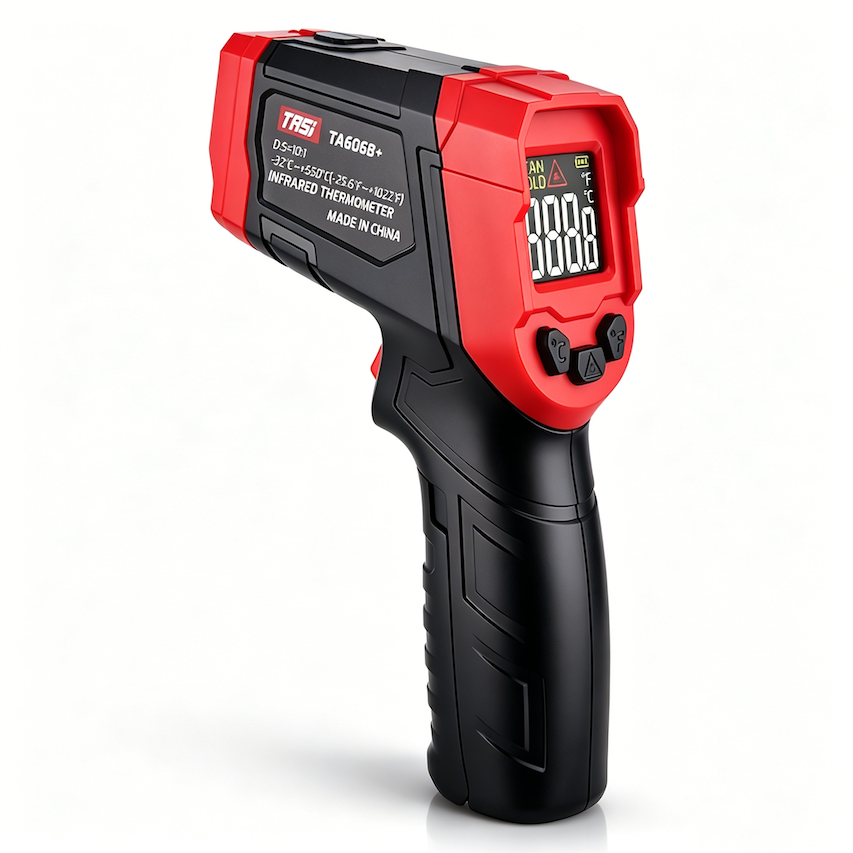
The TA606 Series Infrared Thermometer is a professional non-contact temperature measurement tool, also known as an infrared temperature gun, laser thermometer, infrared temperature meter, industrial thermometer, or handheld infrared thermometer. It measures surface temperature by detecting infrared energy emitted from target objects, providing fast, safe, and accurate temperature readings without physical contact, reducing risks when measuring hot surfaces, moving equipment, or energized components. The TA606 Series includes two models: TA606A+ with a temperature range of -32℃ to 400℃, and TA606B+ with an extended range up to -32℃ to 550℃, meeting various industrial temperature inspection requirements. Equipped with a 10:1 distance-to-spot ratio and laser aiming guidance, the infrared thermometer allows users to quickly identify measurement areas and improve inspection efficiency. The fixed 0.95 emissivity setting enables direct measurement on most common solid materials without complicated configuration. Featuring ℃/℉ temperature unit switching, data hold function, and a compact handheld design, the TA606 infrared thermometer is easy to operate and suitable for daily field temperature testing. It is widely used in electrical inspection, industrial maintenance, HVAC systems, automotive repair, food processing, building inspection, facility management, and engineering applications. In electrical and industrial environments, the infrared temperature gun can be used for checking switchgear, cables, terminals, circuit breakers, motors, bearings, and mechanical equipment, helping technicians quickly identify abnormal heat conditions. In HVAC applications, it supports temperature inspection of air conditioners, refrigeration systems, heating pipes, and underfloor heating systems. For automotive maintenance, it enables temperature diagnosis of engines, exhaust systems, brake components, and vehicle parts. It is also suitable for food production temperature monitoring, cold chain management, building insulation inspection, and energy efficiency testing, making it an ideal handheld infrared thermometer for professional field measurements.
View More ›
Related Technical Articles
Related FAQs