Introduction
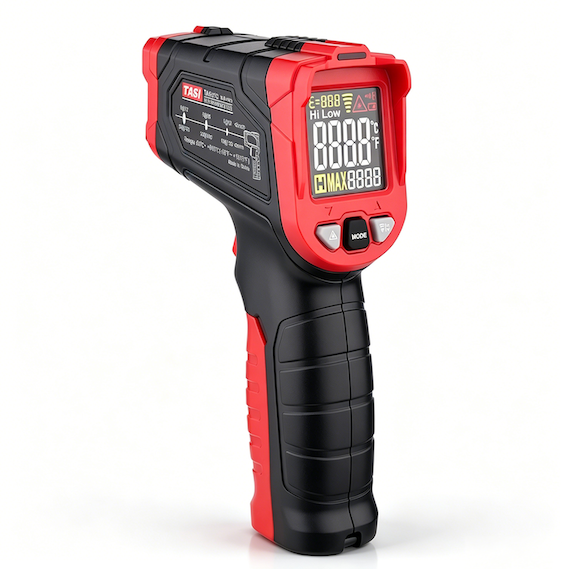
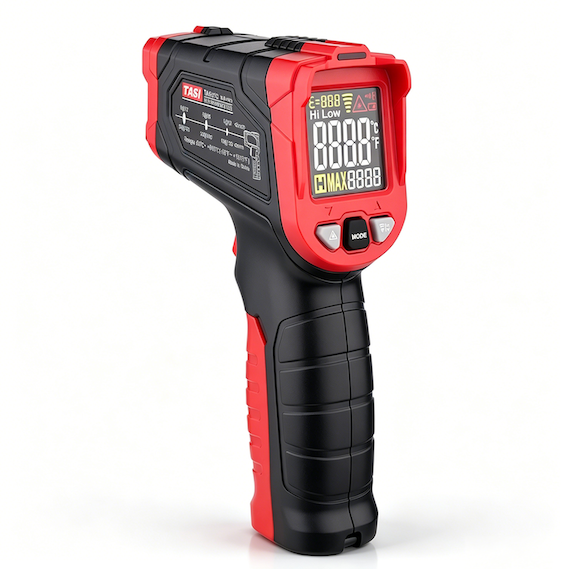
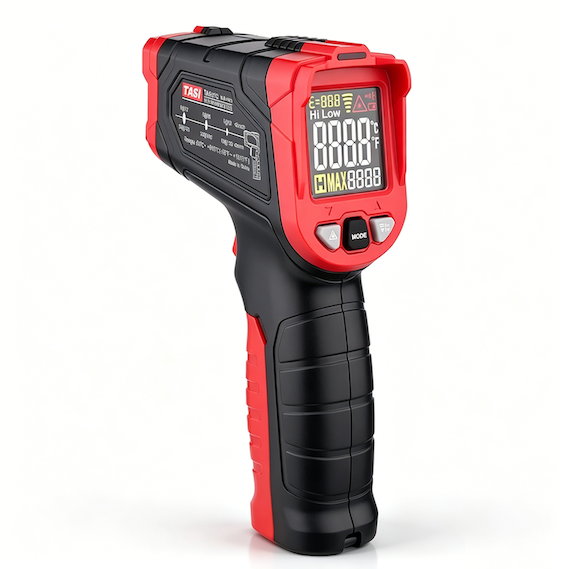
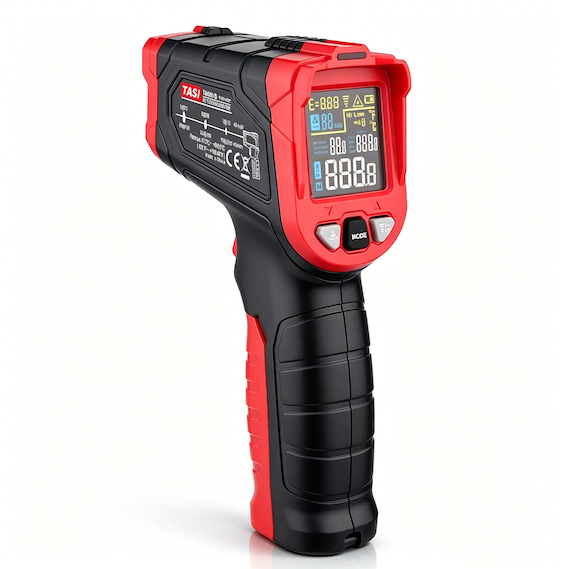
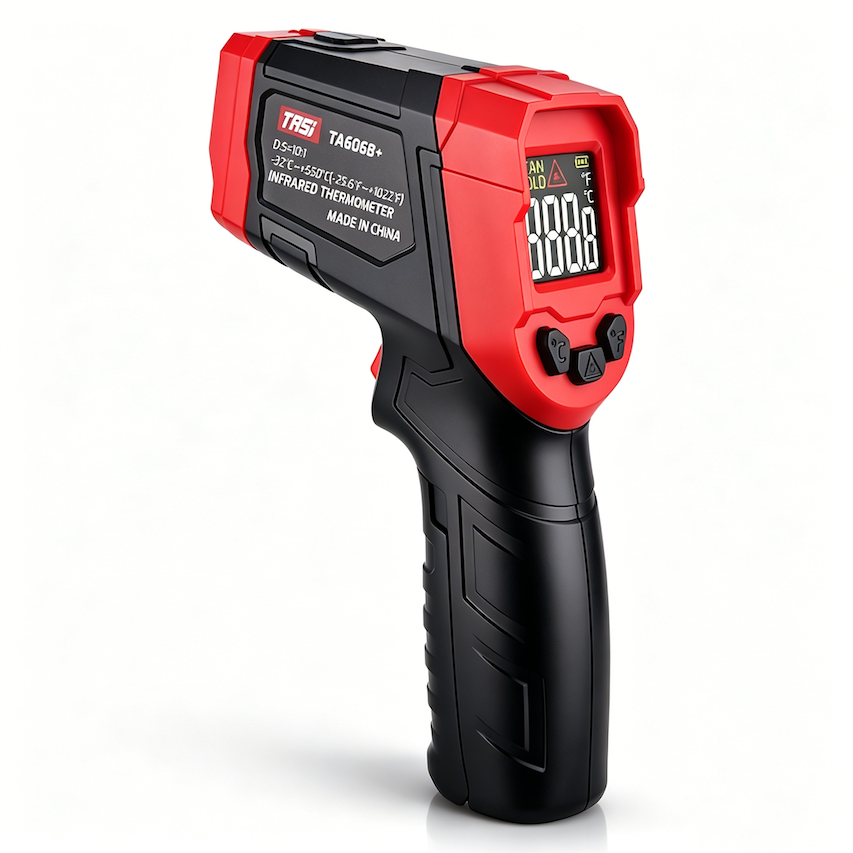
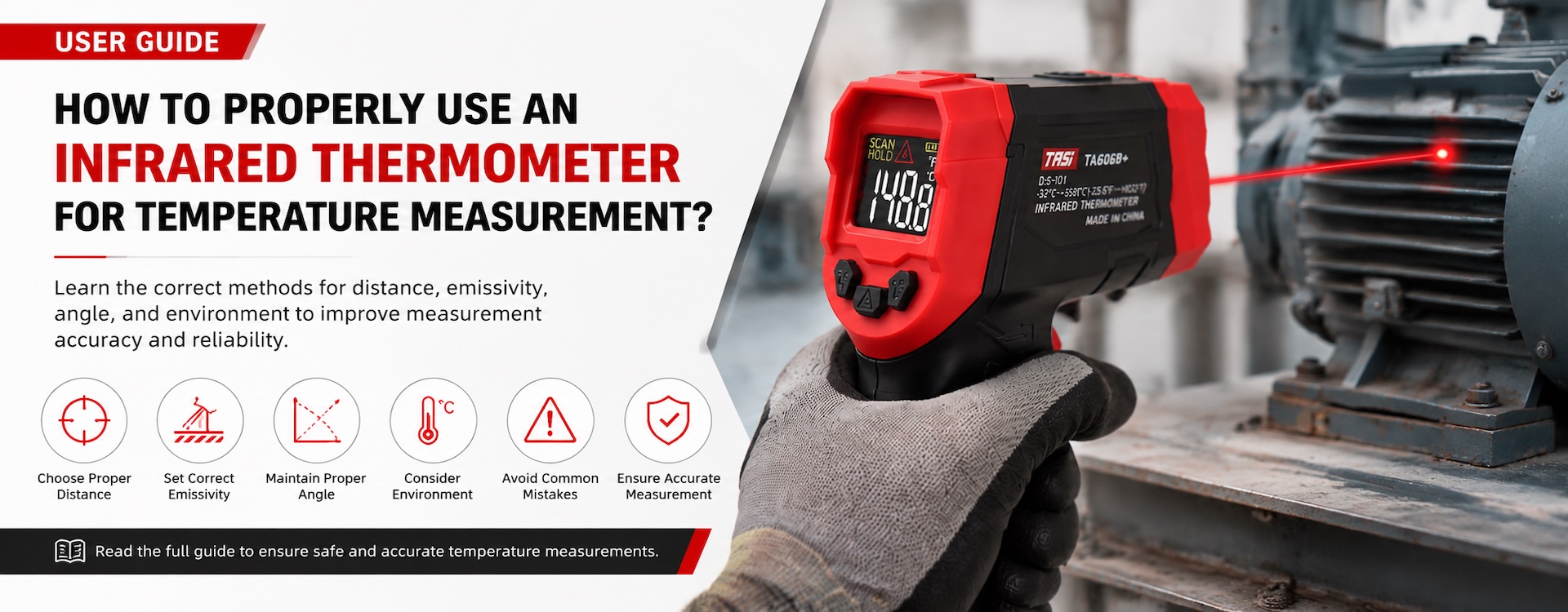
An infrared thermometer is a non-contact temperature measurement device that detects infrared radiation emitted from an object's surface and converts the energy into a temperature reading.
Because it can measure temperature without physical contact, an infrared thermometer enables fast and safe measurements of high-temperature equipment, moving components, and hard-to-reach areas. It is widely used in industrial manufacturing, electrical inspection, HVAC maintenance, automotive repair, and building diagnostics.
However, measurement accuracy can be affected by various factors, including the material properties of the target surface, emissivity settings, measuring distance, angle, and environmental conditions.
Understanding the correct operating methods is essential to ensure reliable infrared temperature measurement results.
Key Points
● Understand the basic measurement principle of infrared thermometers;
● Select the correct measuring distance according to the instrument’s distance-to-spot ratio;
● Adjust emissivity according to the characteristics of the target material;
● Maintain the correct measurement angle to reduce reflection interference;
● Consider environmental factors that may affect measurement accuracy;
● Avoid common operating mistakes to improve measurement reliability.
Basic Operating Principle of an Infrared Thermometer
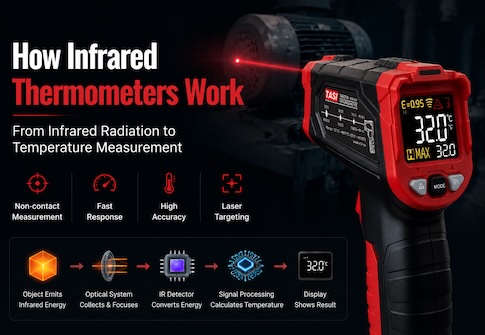
An infrared thermometer measures temperature by detecting infrared energy emitted from an object's surface and converting it into a temperature value.
All objects with a temperature above absolute zero (-273.15°C) emit infrared radiation. The amount of infrared energy varies depending on the object's temperature and surface characteristics.
An infrared thermometer collects this radiation through its optical system, processes the signal through an infrared sensor and internal algorithms, and displays the calculated temperature.
Since infrared measurement detects surface radiation, the reading represents the surface temperature of the object rather than the internal temperature.
Preparation Before Measurement
Before using an infrared thermometer, ensure that the instrument and measurement environment are suitable.
● Check the battery level to ensure stable operation;
● Confirm the correct measurement mode and temperature unit settings (°C or °F);
● Select an appropriate emissivity value according to the target material;
● Ensure the infrared lens is clean and free from dust or contamination;
● Allow the thermometer to adapt to the ambient temperature before measurement.
When moving the instrument between environments with significant temperature differences, allow sufficient stabilization time to reduce measurement deviation.
Maintain the Correct Measuring Distance
Infrared thermometers are typically specified with a Distance-to-Spot ratio (D:S), which defines the relationship between measurement distance and the size of the measured area.
For example:
● A 10:1 D:S ratio means that at a distance of 10 meters, the thermometer measures an area approximately 1 meter in diameter;
● At a distance of 1 meter, it measures an area of approximately 10 centimeters.
If the measuring distance is too far, the measurement area may include surrounding objects or background temperatures, causing inaccurate readings.
During practical measurements, ensure that the target surface completely covers the measurement spot.
Proper Emissivity Adjustment
Emissivity is one of the most important factors affecting infrared temperature measurement accuracy.
Different materials emit infrared radiation at different levels, so the emissivity setting should be adjusted according to the surface characteristics of the target object.
Examples:
● Black matte surfaces such as rubber, plastic, and painted surfaces usually have high emissivity and are easier to measure accurately;
● Shiny metal surfaces such as stainless steel, aluminum, and copper have high reflectivity, which may introduce measurement errors;
● For reflective materials, adjusting emissivity or using additional measurement methods can improve accuracy.
If the infrared thermometer supports adjustable emissivity, select an appropriate value based on the material being measured.
Maintain the Correct Measurement Angle
The infrared thermometer should be positioned as perpendicular as possible to the target surface.
A large measurement angle may allow reflected infrared radiation from surrounding objects to enter the sensor, affecting the reading.
Recommended operation:
● Aim the thermometer directly at the target area;
● Keep the lens close to perpendicular to the surface;
● Ensure the measurement spot is fully within the target area;
● Avoid measuring beyond the actual target surface.
Special attention should be given when measuring curved surfaces, irregular objects, or small targets.
Reduce Environmental Effects During Measurement
Although infrared thermometers provide fast and convenient measurements, environmental conditions can influence accuracy.
Consider the following factors:
● Avoid strong light sources, such as direct sunlight or intense lamps;
● Avoid measurement through steam, smoke, dust, or other particles that may interfere with infrared transmission;
● Prevent direct exposure of the thermometer to hot or cold air streams;
● Allow equipment temperature to stabilize before measurement.
For industrial inspections, measurements should ideally be performed after equipment reaches a stable operating condition.
Common Mistakes When Using Infrared Thermometers
Many measurement errors are caused by incorrect operation rather than instrument performance.
Common mistakes include:
● Measuring without adjusting emissivity according to the material;
● Measuring from too far away, causing the target area to be smaller than the measurement spot;
● Measuring reflective metal surfaces without considering infrared reflection;
● Using an infrared thermometer to measure internal temperatures;
● Using the instrument with a contaminated lens;
● Changing measurement positions frequently without maintaining consistent conditions.
Following proper measurement procedures can significantly improve repeatability and accuracy.
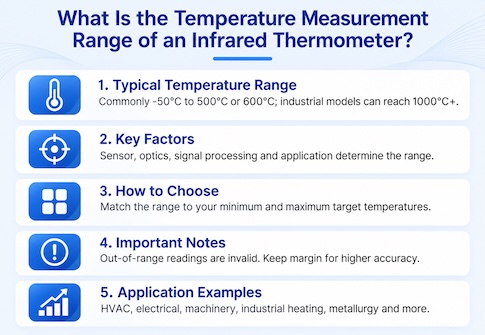
Applications of Infrared Thermometers
Due to their fast response, safety, and non-contact measurement capability, infrared thermometers are widely used in various industries.
● Electrical inspection: Used for detecting abnormal heat generation in electrical panels, motors, cables, and connection points;
● Industrial maintenance: Used for checking bearings, machinery, pipelines, and production equipment temperatures;
● HVAC inspection: Used for measuring air outlets, pipes, heating and cooling systems;
● Automotive repair: Used for checking engine components, brake systems, and cooling systems;
● Building inspection: Used for identifying temperature differences in walls, windows, and building structures.
FAQ
Can an infrared thermometer measure liquid temperature?
An infrared thermometer measures surface temperature only. For liquids, it measures the surface and may be affected by reflection. For internal liquid temperature measurement, a contact temperature probe is recommended.
Why do different areas show different temperature readings?
Possible causes include different measuring distances, surface materials, incorrect emissivity settings, unstable target temperatures, or changing environmental conditions.
Can an infrared thermometer measure human body temperature?
Some infrared thermometers are specifically designed for body temperature measurement. However, industrial infrared thermometers are mainly intended for equipment and environmental temperature inspection and should not replace medical temperature devices.
Why are measurements inaccurate on metal surfaces?
Some metal surfaces have high reflectivity and may reflect infrared radiation from the surroundings. Proper emissivity adjustment or alternative measurement methods may be required.
Does an infrared thermometer require calibration?
For applications requiring high accuracy, regular calibration or performance verification is recommended according to usage conditions and measurement requirements.
Summary
Proper use of an infrared thermometer requires careful consideration of measuring distance, emissivity settings, measurement angle, and environmental conditions.
By selecting suitable measurement methods for different applications and avoiding common operating mistakes, users can fully utilize the advantages of infrared thermometers, including fast response, safe operation, and non-contact temperature measurement.
Accurate infrared temperature measurement provides reliable data support for industrial inspection, equipment maintenance, and engineering applications.