Introduction
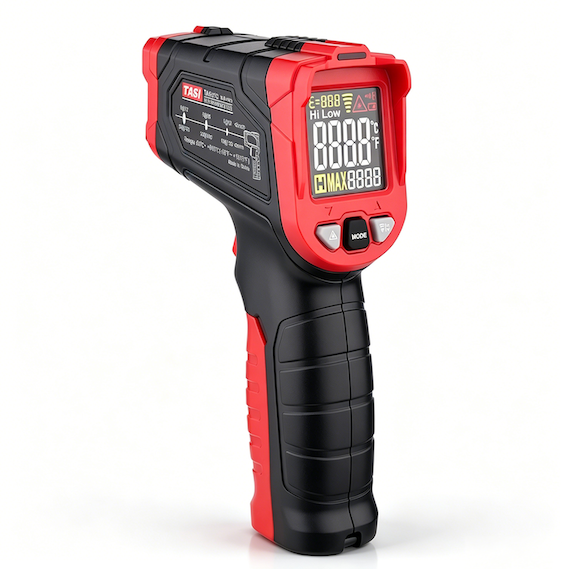
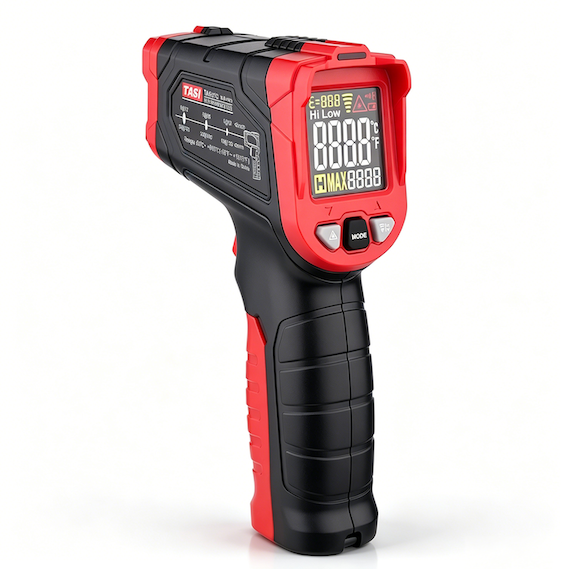
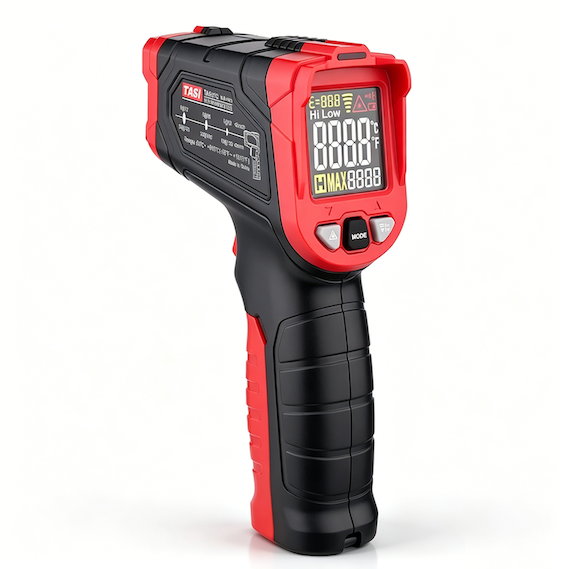
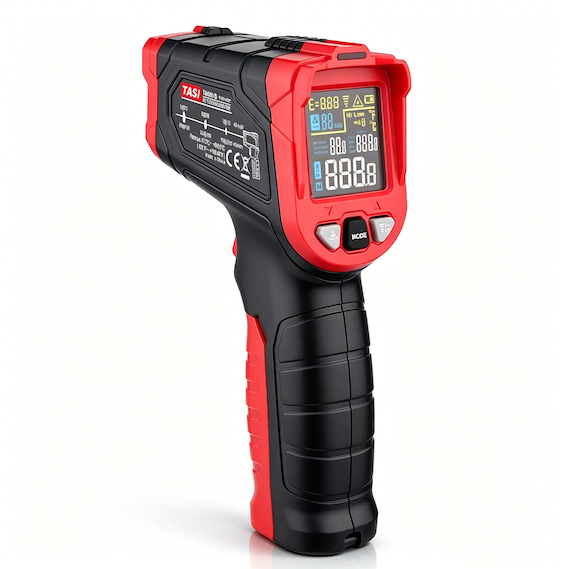
When measuring surface temperature with an infrared thermometer, the display may occasionally show “HI” or “LO” instead of a numerical temperature value. This can easily be mistaken for an instrument fault, but in most cases, HI and LO are status indications rather than error codes.
In general, HI indicates that the detected temperature is above the instrument’s measurable range, while LO indicates that it is below the measurable range. However, display logic varies between models. Some infrared thermometers with high- and low-temperature alarm functions also use HI, LO, or similar indicators for alarm settings or alarm status.
For this reason, HI or LO should be interpreted together with the instrument’s measurement range, target temperature, alarm settings, and actual measuring conditions.
Key Points
● HI usually indicates that the measured temperature is above the infrared thermometer’s maximum measurement range.
● LO usually indicates that the measured temperature is below the instrument’s minimum measurement range.
● On some models, HI and LO may relate to high- and low-temperature alarm functions rather than an out-of-range condition.
● Incorrect emissivity settings, an oversized measurement spot, or highly reflective surfaces may indirectly contribute to abnormal readings.
● If the target temperature is clearly within the specified measurement range but HI or LO remains displayed, check the measuring conditions, instrument settings, and instrument condition.
● Display conventions vary by manufacturer and model. Always refer to the operating manual for the specific instrument.
What Does HI Mean on an Infrared Thermometer?
On most infrared thermometers, HI stands for “High” and usually indicates that the detected temperature exceeds the upper limit that the instrument can measure or display reliably.
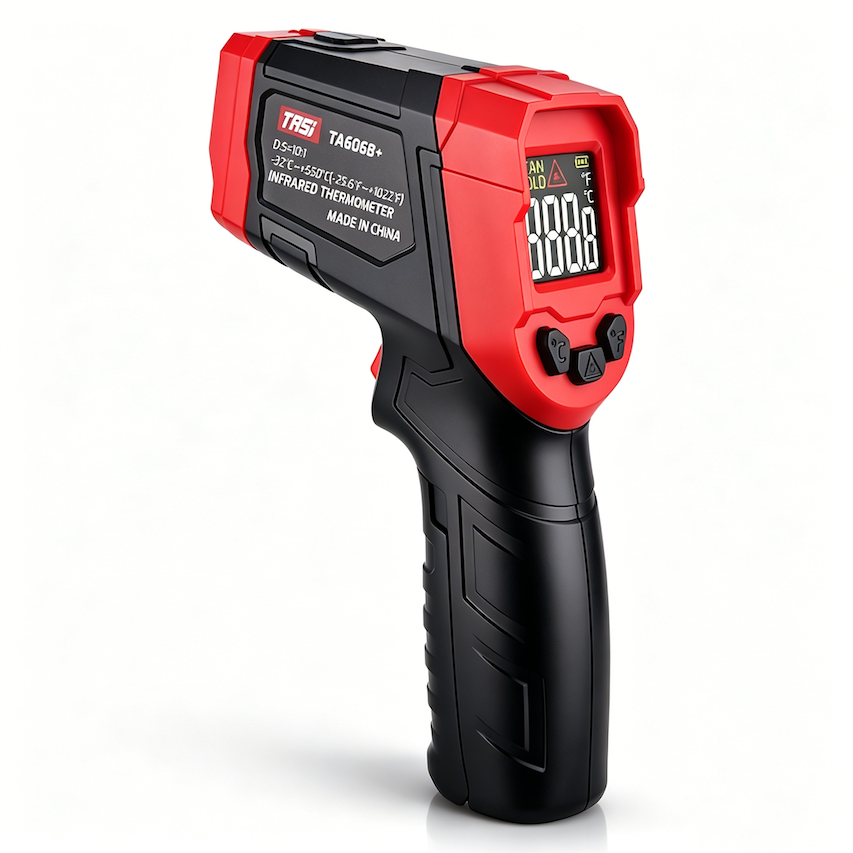
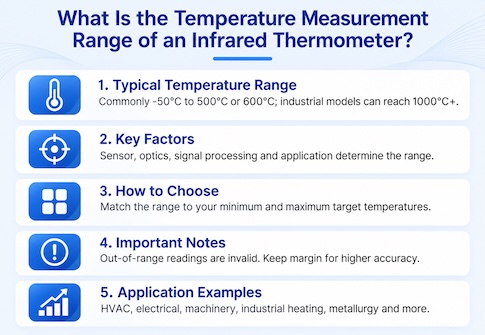
For example, if an infrared thermometer has a measurement range of -50°C to 550°C and the target temperature, or the temperature calculated by the instrument, exceeds 550°C, the display may show HI instead of a numerical value.
This does not mean that the target temperature is exactly 550°C. It means that the detected temperature is above the instrument’s valid measurement range and that the thermometer cannot provide a reliable numerical result.
If temperatures above the instrument’s upper limit must be measured regularly, use an infrared thermometer with a higher temperature range and spectral response suitable for the intended application.
What Does LO Mean on an Infrared Thermometer?
LO generally stands for “Low” and indicates that the detected temperature is below the instrument’s minimum valid measurement range.
For example, if the minimum specified temperature is -50°C and the target is below that limit, the thermometer may display LO rather than a numerical temperature.
However, LO does not always mean that the target is actually at an extremely low temperature. If the target is clearly above the minimum specified range but LO is still displayed, other factors such as target characteristics, emissivity, measuring distance, environmental conditions, or instrument condition should be investigated.
Do HI and LO Always Mean That the Temperature Is Out of Range?
Not always.
On many basic infrared thermometers, HI and LO primarily indicate that the detected temperature is outside the measurement range. On some models with temperature alarm functions, however, the same terms may also appear in the alarm settings or alarm display.
For example:
● HI may refer to the High Alarm threshold.
● LO may refer to the Low Alarm threshold.
● HI or LO may appear together with a temperature value while alarm limits are being configured.
● When the measured temperature exceeds a preset alarm limit, some instruments may indicate the condition using HI, LO, an icon, an audible alarm, or a change in display backlight.
If a numerical temperature remains visible or HI/LO appears only in a settings menu, it may refer to an alarm function rather than an out-of-range measurement.
The most reliable method is to check the display-symbol description in the operating manual for the specific model.
Why Does HI or LO Appear Even When the Target Temperature Seems Normal?
If the target temperature is clearly within the thermometer’s specified range but HI or LO still appears, check the following factors.
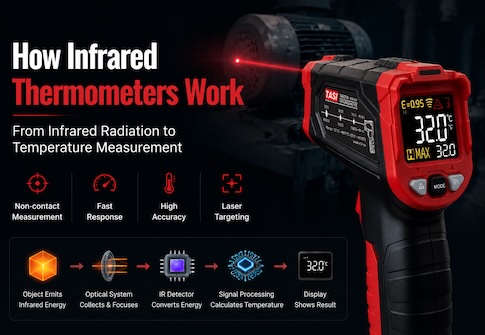
● The target is too small. An infrared thermometer measures a spot area rather than the laser point itself. If the measuring distance is too great, the measurement spot may extend beyond the target and include background radiation, affecting the result.
● The wrong area is being measured. The laser is generally an aiming aid and does not define the entire measurement area. Aiming near an edge, opening, background surface, or adjacent hot area can produce an abnormal result.
● Incorrect emissivity setting. On models with adjustable emissivity, a setting that differs substantially from the actual surface characteristics of the target can cause significant measurement error.
● Highly reflective target surface. Polished metals such as aluminum, stainless steel, and copper have low emissivity and can strongly reflect infrared radiation from surrounding heat sources. The detected radiation may therefore not accurately represent the target’s own surface temperature.
● Rapid changes in ambient temperature. When an instrument is moved from a cold outdoor environment into a warm room, or vice versa, its detector and optical system may require time to reach thermal equilibrium.
● Contaminated optical lens. Dust, oil, moisture, or condensation on the infrared optics can affect the radiation reaching the detector.
● Abnormal instrument settings or operating condition. Low battery voltage, incorrect settings, or damage caused by impact or dropping may also contribute to abnormal display behavior.
How Should You Troubleshoot an HI Indication?
First, determine whether the expected target temperature is close to or above the thermometer’s maximum measurement range.
When measuring furnaces, heating elements, exhaust components, hot metal, or industrial heating equipment, the actual target temperature may exceed the range of a standard handheld infrared thermometer. In this situation, HI can be a normal indication.
If the target should be within range, check the following:
● Make sure that no nearby high-temperature source is included in the measurement spot.
● Confirm that the measuring distance is not excessive.
● Check whether the target is a highly reflective metallic surface.
● Verify that the emissivity setting is appropriate.
● Confirm whether HI represents a high-temperature alarm rather than an over-range condition.
● Test the thermometer on another ordinary target with a known or expected temperature.
If HI remains displayed when measuring room-temperature walls, paper, wood, or other high-emissivity surfaces, the instrument may require further inspection.
How Should You Troubleshoot an LO Indication?
When measuring cold-storage equipment, refrigeration systems, low-temperature pipes, or other cold targets, first check whether the actual target temperature is below the instrument’s minimum measurement range.
If the target is at approximately room temperature, check the following:
● Make sure the infrared optics are not covered by dirt, condensation, moisture, or another obstruction.
● Reduce the measuring distance so that the target fully covers the measurement spot.
● Check whether the target surface is excessively shiny or reflective.
● Verify that the emissivity setting is appropriate for the target material.
● Allow the instrument to stabilize in the current environment before measuring again.
● Test a room-temperature, high-emissivity surface such as a wall, paper, or suitable tape for comparison.
● Confirm whether LO is simply identifying the low-temperature alarm setting.
If several normal room-temperature targets all produce LO, further instrument inspection may be necessary.
How Can You Tell Whether the Problem Is the Measurement or the Instrument?
A simple comparison test can be performed using a stable, sufficiently large, non-reflective target such as an indoor wall, cardboard, or another non-metallic surface.
Measure the target from an appropriate distance. If the thermometer returns to a normal numerical temperature reading, the previous HI or LO indication was probably related to the original target or measuring conditions.
If HI or LO remains displayed regardless of the target, check:
● Battery condition.
● Lens cleanliness and condensation.
● Emissivity and alarm settings.
● Whether the instrument has recently experienced a major ambient temperature change.
● Whether it has been dropped, impacted, exposed to water, or operated for an extended period in excessive heat.
If normal operation cannot be restored after these checks, professional inspection, calibration, or repair may be required.
Can You Continue Measuring After HI or LO Appears?
The instrument can usually still be operated, but a result indicated only as HI or LO should generally not be treated as a valid numerical temperature measurement.
If HI or LO indicates an out-of-range condition, the target lies outside the range in which the instrument can provide a reliable measurement. Continuing to aim at the same target does not extend the thermometer’s measurement capability.
For higher-temperature targets, use an infrared thermometer with a suitable higher range. For extremely cold targets, select a model whose lower measurement limit covers the required temperature.
If HI or LO is only an alarm indication and the display still shows a numerical temperature, refer to the operating manual to determine whether the displayed value remains valid.
How Can You Reduce Abnormal HI or LO Indications?
Correct measuring technique can reduce abnormal readings caused by measurement conditions.
● Confirm before measurement that the expected target temperature is within the thermometer’s specified range.
● Use the instrument’s D:S ratio to select an appropriate measuring distance and make sure the target fully covers the measurement spot.
● Do not assume that the laser spot represents the actual measurement area.
● On models with adjustable emissivity, set an appropriate emissivity value for the target material.
● Take particular care when measuring shiny or polished metals because of low emissivity and reflected background radiation.
● Avoid measuring through ordinary glass, dense smoke, significant steam, or other media that may affect infrared transmission.
● After a large change in ambient temperature, allow the instrument to stabilize before taking critical measurements.
● Keep the infrared optics clean and avoid touching the optical window directly.
FAQ
Does HI mean that the infrared thermometer is faulty?
Not necessarily. In most cases, HI means that the detected temperature is above the instrument’s maximum measurement range. A fault should be considered only if HI continues to appear when measuring normal-temperature targets.
Does LO mean the temperature is zero?
No. LO normally indicates that the detected temperature is below the instrument’s minimum measurement range. It does not mean 0°C.
What temperature does HI represent?
There is no universal value. HI depends on the upper measurement limit of the specific infrared thermometer. For example, on a model with a maximum range of 550°C, HI may indicate that the detected temperature is above the valid upper limit.
What temperature does LO represent?
There is also no universal value. It depends on the minimum measurement range of the specific model. For example, a thermometer with a lower limit of -50°C may show LO when the detected temperature falls below that range.
Why does the thermometer show LO when measuring a room-temperature object?
Check the measuring distance, target size, optical lens condition, emissivity setting, ambient temperature changes, and battery condition. If LO appears on all room-temperature targets, further instrument inspection may be required.
Is HI the same as a high-temperature alarm?
Not necessarily. Some instruments use HI to indicate an over-range measurement, while others also use HI for a high-temperature alarm threshold. Check the display condition and the operating manual for the specific model.
Can replacing the battery solve an HI or LO indication?
It may help if the abnormal display is caused by low battery voltage or unstable power. However, changing the battery will not eliminate HI or LO if the target is genuinely outside the measurement range.
Should the thermometer be calibrated immediately after HI or LO appears?
Usually not. First check the measurement range, target surface, measuring distance, emissivity, alarm settings, and environmental conditions. Calibration or professional inspection should be considered if the indication remains abnormal under normal measuring conditions.
Conclusion
When an infrared thermometer displays HI or LO, it should not immediately be assumed that the instrument is faulty. On most models, HI indicates a temperature above the upper measurement limit, while LO indicates a temperature below the lower limit. On instruments with alarm functions, HI and LO may also refer to high- or low-temperature alarm settings.
For effective troubleshooting, first check the specified measurement range, then review the target temperature, measuring distance, spot size, emissivity, surface reflectivity, ambient conditions, and alarm settings.
If HI or LO remains displayed when measuring several large, non-reflective objects at normal room temperature under stable conditions, there may be an incorrect setting, sensor issue, or other hardware problem. In that case, follow the instrument manual and arrange calibration, inspection, or repair if necessary.