Introduction
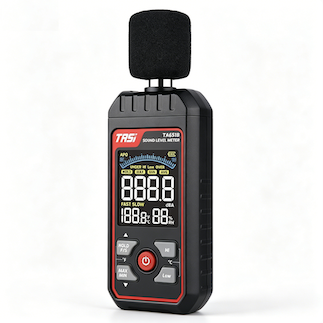
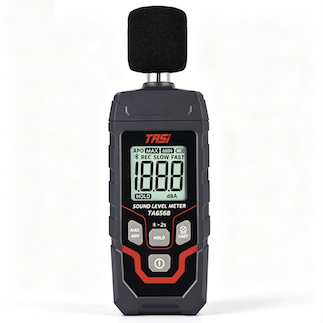
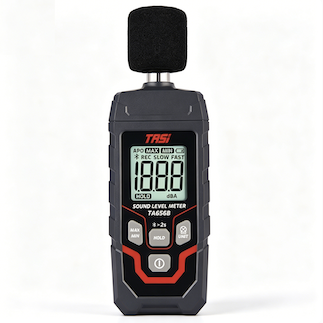
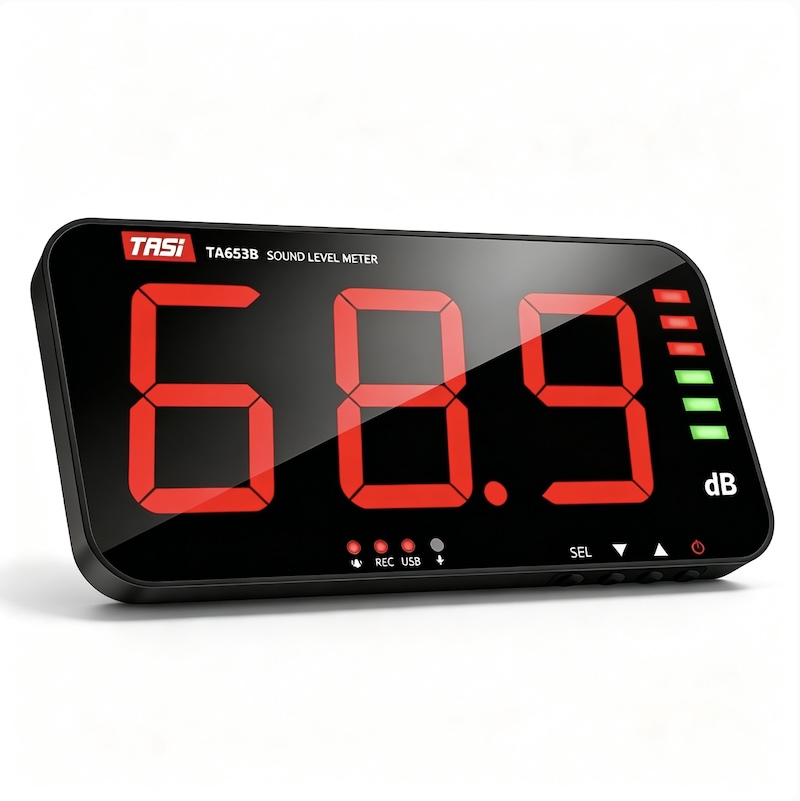
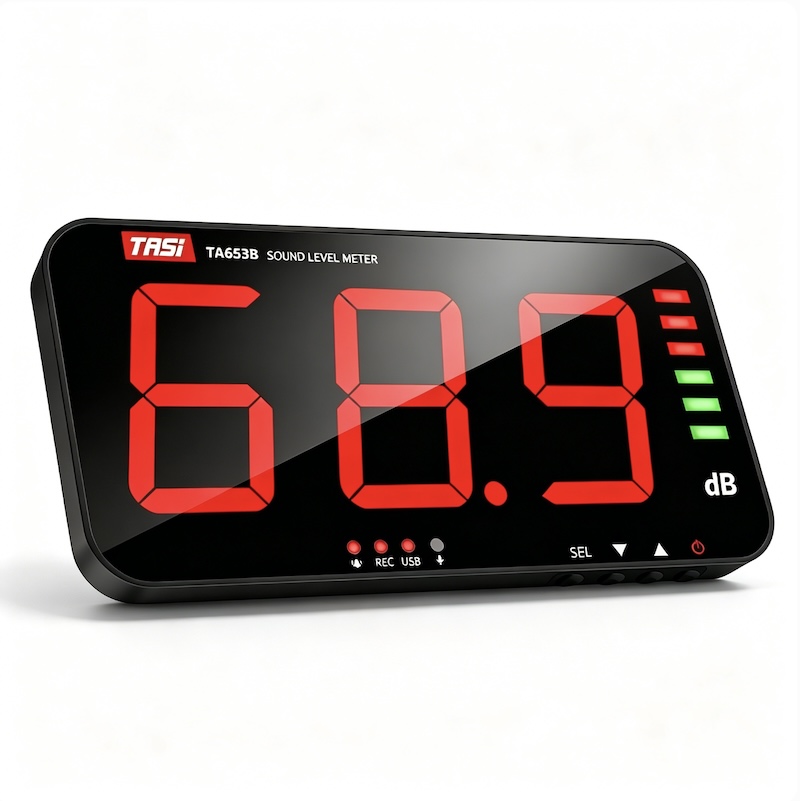
A sound level meter, sometimes referred to as a noise meter or decibel meter, is an instrument used to measure sound pressure level. Depending on the internal signal-processing architecture and display method, sound level meters can broadly be divided into traditional analog instruments and modern digital instruments.
Both types ultimately express measurement results in decibels (dB), but they differ considerably in signal processing, indication, functional capabilities, data storage, and practical operation.
Most portable sound level meters available today use digital technology. However, analog instruments remain relevant from both a historical and technical perspective. Understanding the differences also helps avoid a common misconception: a digital sound level meter is not inherently more accurate than an analog one. Actual measurement performance depends on the complete instrument design, calibration status, and applicable sound level meter specifications.
Key Takeaways
● Digital sound level meters generally process and display measurement results digitally, whereas analog meters mainly rely on analog circuitry and a mechanical pointer.
● Both types measure variations in acoustic pressure and convert them into sound level values expressed in decibels.
● Digital instruments can more easily integrate A/C/Z frequency weighting, FAST/SLOW time weighting, MAX, MIN, Data Hold, and data logging functions.
● Analog pointers provide an intuitive indication of continuous sound level changes, but exact values are generally less convenient to read.
● “Digital” does not automatically mean “more accurate.” Performance also depends on the microphone, preamplifier, filters, analog-to-digital conversion, algorithms, calibration, and overall instrument design.
● For environmental noise, industrial machinery, and general field measurements, modern digital sound level meters are usually more practical.
Basic Differences Between Digital and Analog Sound Level Meters
The most obvious difference lies in how the detected acoustic signal is processed and how the final result is presented.
An analog sound level meter mainly uses analog circuitry to amplify the microphone signal and apply frequency weighting and time response characteristics. The result is then indicated by a mechanical pointer moving across a graduated scale.
A digital sound level meter also begins by converting acoustic pressure into an electrical signal through a microphone. After analog front-end conditioning, the signal is typically converted into digital data by an analog-to-digital converter (ADC), after which a microprocessor performs the necessary calculations and displays the result.
Therefore, even a “digital” sound level meter normally begins with an analog signal generated by the microphone. The main difference is that subsequent processing and calculation are largely performed digitally.
How Do the Displays Differ?
A traditional analog sound level meter typically uses a pointer and graduated scale. As the sound level changes, the pointer moves accordingly.
This provides an intuitive way to observe trends. A gradual increase or decrease in sound level can be recognized quickly from the pointer movement.
However, pointer displays also have limitations. Exact numerical readings require careful interpretation of the scale, rapidly changing sound can be difficult to read, and the result may be affected by viewing angle and scale resolution.
Digital sound level meters normally show the measurement directly on an LCD or other numerical display, for example:
● 65.3 dBA
● 82.7 dBA
● 104.2 dBC
This makes readings easier to interpret and record, particularly during routine field measurements.
How Does Signal Processing Differ?
Analog sound level meters primarily use resistors, capacitors, operational amplifiers, filters, and other analog circuitry to amplify the signal and implement frequency weighting and time response characteristics.
Digital sound level meters generally use a combination of analog front-end circuitry and digital processing.
A typical signal path can be described as follows:
● Sound reaches the microphone;
● The microphone converts acoustic pressure variations into an electrical signal;
● A preamplifier amplifies the signal;
● The signal undergoes the required filtering and conditioning;
● An ADC converts the analog signal into digital data;
● A microprocessor calculates the sound pressure level;
● The measurement result is shown on the display.
Digital processing makes it easier to implement more advanced measurement algorithms, data storage, communications, and subsequent analysis.
Is There a Difference in Measurement Accuracy?
It is incorrect to assume that a digital sound level meter is always more accurate than an analog one.
Overall measurement performance depends on several factors, including:
● Microphone sensitivity and frequency response;
● Preamplifier performance;
● Frequency-weighting network;
● Time-weighting characteristics;
● ADC performance;
● Internal calculation algorithms;
● Electronic noise;
● Environmental temperature and humidity;
● Calibration condition.
A well-designed and correctly calibrated analog sound level meter can provide high measurement performance. Likewise, a low-cost digital meter is not necessarily highly accurate simply because it has a digital display.
When selecting an instrument, users should therefore consider its specifications, accuracy class, measurement range, and calibration capability rather than judging performance solely by whether it is digital or analog.
How Do They Differ in Frequency Weighting?
Human hearing does not respond equally to all frequencies, so sound level measurements often use frequency-weighting networks.
Common weightings found in modern digital instruments include:
● A-weighting (dBA): approximates the frequency sensitivity of human hearing and is widely used for environmental and occupational noise measurements;
● C-weighting (dBC): applies less attenuation to low-frequency sound and is useful for higher sound levels or noise with significant low-frequency content;
● Z-weighting (dBZ): provides an approximately flat frequency response over the specified range.
Traditional analog sound level meters can also implement A- or C-weighting through analog filter networks. Frequency weighting is therefore not exclusive to digital instruments.
Digital signal processing, however, makes it easier to integrate several weighting networks and switch between them.
What Is the Difference Between FAST and SLOW Time Weighting?
Noise is often variable rather than steady. Sound pressure level can fluctuate continuously, so sound level meters apply defined time-weighting characteristics.
Common settings include:
● FAST: provides a faster response and is useful for observing rapidly changing sound;
● SLOW: produces a more stable indication and reduces rapid fluctuations in the displayed value.
Analog sound level meters can implement FAST and SLOW response using analog circuitry.
Digital meters normally implement or assist these functions through digital processing, which makes switching between measurement modes and displaying results more convenient.
FAST and SLOW should not be confused with simple display refresh rates. They are defined time-response characteristics used in sound level measurement.
Why Do Digital Sound Level Meters Usually Offer More Functions?
One major advantage of digital processing is that acquired measurement data can be calculated, stored, and managed more easily.
Modern digital sound level meters may therefore include:
● MAX value;
● MIN value;
● Data Hold;
● FAST/SLOW time weighting;
● A/C frequency weighting;
● Automatic or manual range selection;
● Over-range indication;
● Backlit display;
● Data storage;
● USB or wireless communication;
● Connection to computers or mobile devices.
More advanced digital sound level meters may also calculate equivalent continuous sound level (Leq), peak sound level, and other acoustic parameters.
Traditional analog instruments generally focus on real-time sound level indication and therefore tend to offer fewer additional functions.
What Advantages Do Analog Sound Level Meters Still Offer?
Although digital instruments have become dominant, analog pointer displays retain some useful characteristics.
When monitoring continuously varying sound, pointer movement gives a very direct visual indication of rising, falling, and fluctuating sound levels.
Some users familiar with traditional instrumentation may also find the visual feedback of an analog pointer intuitive.
In addition, certain traditional analog instruments have relatively simple operating structures and can perform basic sound level measurements without complex interfaces.
However, digital instruments are generally more convenient when exact readings must be recorded, measurement data stored, or multiple field measurements documented.
What Applications Are Digital Sound Level Meters Best Suited For?
Modern digital sound level meters are suitable for most routine noise measurement applications, including:
● Factory and production-area noise checks;
● Noise measurements on motors, fans, pumps, and machinery;
● Environmental noise measurements in offices, schools, and public areas;
● Construction-site noise checks;
● HVAC system noise measurements;
● Comparative noise testing of household and electromechanical products;
● General environmental sound level surveys.
When multiple measurement points must be documented, maximum values retained, or data processed afterwards, digital sound level meters provide clear practical advantages.
How Should You Choose Between a Digital and an Analog Sound Level Meter?
For most modern field applications, a digital sound level meter is usually the more practical choice.
Important selection criteria include:
● Whether the measurement range covers the expected sound levels;
● Whether A-weighting is available;
● Whether FAST and SLOW time weighting are supported;
● Whether the specified accuracy meets the measurement requirement;
● Whether MAX, MIN, or Data Hold functions are required;
● Whether data logging is needed;
● Whether USB, Bluetooth, or other communications are required;
● Whether the instrument can be acoustically calibrated.
Analog instruments remain suitable for studying traditional instrumentation, observing continuous sound-level trends, or continuing to use an existing analog meter that meets the required measurement performance.
The key issue is not whether the display is digital or analog, but whether the instrument measures sound correctly according to the required acoustic characteristics.
Common Misconception: Does More Display Resolution Mean Higher Accuracy?
No.
For example, a sound level meter may display:
72.6 dBA
This does not mean that its measurement accuracy is ±0.1 dB.
Display resolution describes the smallest increment shown on the screen, whereas measurement accuracy describes the possible deviation between the measured result and a reference value.
A sound level meter with 0.1 dB display resolution may still have a specified accuracy of ±1 dB, ±1.5 dB, or another value.
Measurement performance should therefore be evaluated according to the manufacturer’s accuracy specification or relevant sound level meter class, rather than the number of decimal places shown.
FAQ
● Is a digital sound level meter always more accurate than an analog one?
No. Digital and analog mainly describe processing and display methods. Actual accuracy depends on the microphone, circuit design, frequency response, time weighting, calibration, and overall instrument performance.
● Can an analog sound level meter measure dBA?
Yes. If the instrument includes an appropriate A-weighting network, an analog sound level meter can also measure A-weighted sound pressure level.
● What do FAST and SLOW mean on a digital sound level meter?
FAST and SLOW are time-weighting characteristics that define how the instrument responds to changing sound levels. They are not simply display refresh settings.
● Why are digital sound level meters more common today?
Digital processing makes it easier to integrate functions such as MAX, MIN, Data Hold, automatic ranging, data logging, and computer or wireless communication, while numerical displays are also easier to read.
● If a digital meter displays 0.1 dB resolution, does that mean its accuracy is 0.1 dB?
No. A 0.1 dB increment usually refers to display resolution. Actual measurement accuracy must be determined from the instrument specifications or accuracy class.
● Should I focus on digital or analog when selecting a sound level meter?
Display technology should not be the primary criterion. Measurement range, frequency weighting, time weighting, accuracy, calibration capability, and required functions are more important.
Conclusion
Digital and analog sound level meters have the same fundamental purpose: converting acoustic pressure variations into readable sound level values. Their main differences lie in signal processing, indication, and functional capabilities.
Analog instruments generally use analog circuitry and a mechanical pointer, providing an intuitive indication of changing sound levels. Digital instruments use digital processing and numerical displays, making readings easier to interpret while supporting functions such as MAX, MIN, FAST/SLOW, A/C frequency weighting, data storage, and communications.
For modern environmental noise measurement, industrial maintenance, and general field sound-level testing, digital instruments are usually more convenient. However, digital technology alone does not determine measurement accuracy. Selection should be based on accuracy, measurement range, frequency weighting, time weighting, calibration capability, and the requirements of the intended application.