Introduction
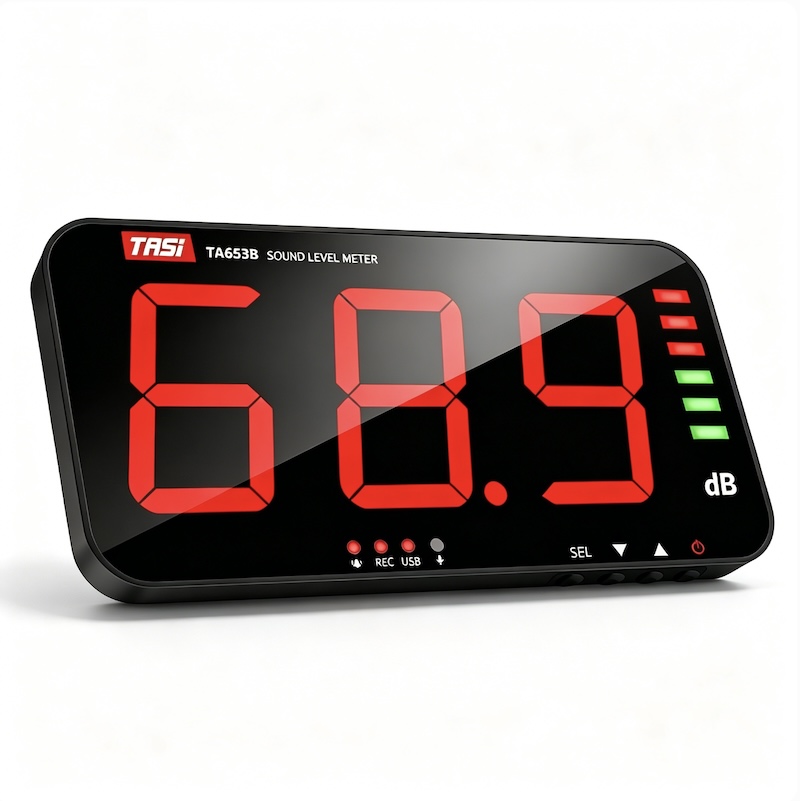
Noise dosimeters and sound level meters (SLMs) are two widely used instruments in industrial facilities, occupational hygiene, environmental monitoring, and equipment maintenance.
Although both use microphones to capture sound and express results in decibels, they are designed to answer different measurement questions.
In simple terms, a sound level meter is mainly used to determine how loud it is at a particular location, while a noise dosimeter is mainly used to determine how much noise a person is exposed to over a defined period.
Instrument selection should therefore not be based only on measurement range or accuracy. The measurement subject, duration, working pattern, and required evaluation parameters are equally important.
Key Takeaways
● A sound level meter primarily measures sound levels at a specific location, area, or near a particular noise source.
● A noise dosimeter primarily records an individual's cumulative noise exposure over a defined period.
● Sound level meters are normally handheld, tripod-mounted, or fixed at a measurement point, while noise dosimeters are generally worn by workers.
● Both instruments can perform long-duration measurements, but long-term logging alone does not make a sound level meter equivalent to a noise dosimeter.
● In occupational noise assessments, the two instruments are often used together rather than as direct substitutes.
What Is a Noise Dosimeter?
A noise dosimeter is an instrument designed primarily to measure personal noise exposure. It may also be referred to as a personal sound exposure meter.
During measurement, the instrument is normally worn by the worker, with the microphone positioned close to the ear or within the specified hearing zone. As the worker moves between locations and performs different tasks, the instrument continuously records the noise exposure experienced throughout the measurement period.
IEC standards describe personal sound exposure meters as wearable instruments intended to measure sound exposure close to a person. Occupational noise exposure assessment is one of their principal applications, and IEC 61252 specifies performance requirements for this type of instrument.
For example, a worker may:
● Spend the morning in a relatively quiet assembly area;
● Enter a high-noise machining area later;
● Leave the production area during a break;
● Operate different machines during the afternoon;
● Experience brief periods of very high noise.
A short measurement at only one workstation may not adequately represent the worker's total exposure.
The key advantage of a noise dosimeter is therefore that it moves with the worker and continuously records exposure across different locations and activities.
What Is a Sound Level Meter?
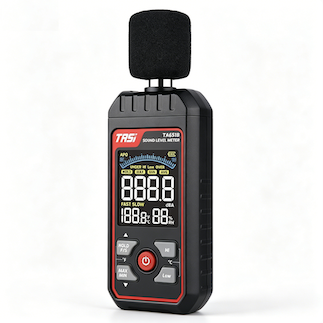
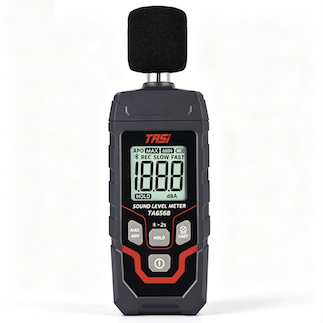
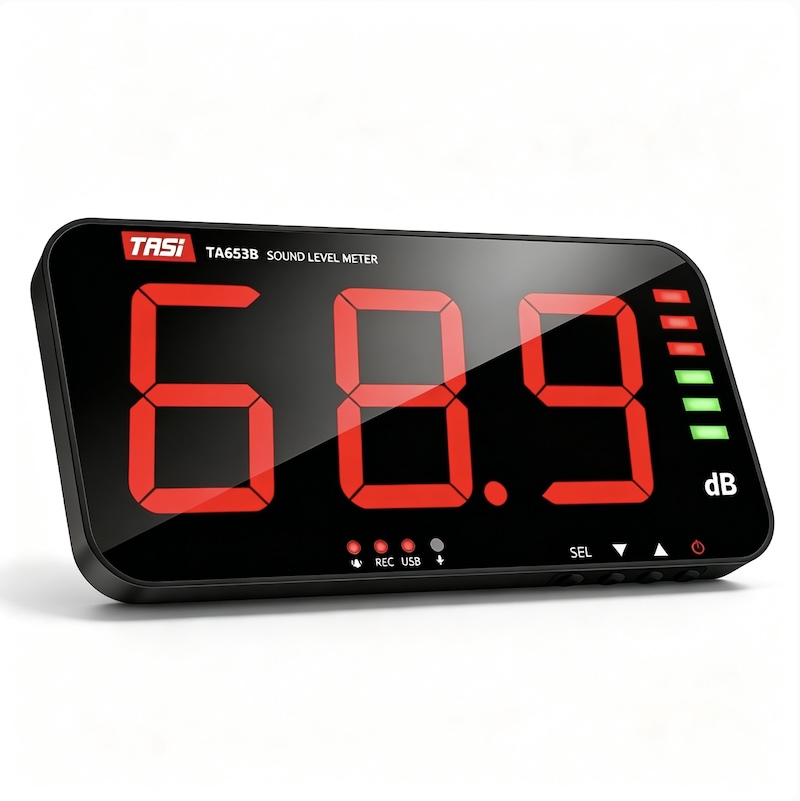
A sound level meter is primarily used to measure sound pressure level and related acoustic parameters at a defined location.
IEC 61672 specifies electroacoustic performance requirements for sound level meters, including time-weighting sound level meters, integrating-averaging sound level meters, and integrating sound level meters. It also defines Class 1 and Class 2 performance categories.
Typical applications include:
● Measuring machinery noise;
● Checking sound levels in different workshop areas;
● Measuring noise in offices, schools, buildings, and other environments;
● Comparing multiple measurement points;
● Identifying significant noise sources;
● Comparing equipment or environments before and after noise-control measures.
A sound level meter therefore focuses mainly on measurement location, sound source, and local acoustic conditions.
What Is the Main Difference Between a Noise Dosimeter and a Sound Level Meter?
The most important difference is not the physical design of the instruments, but their measurement purpose.
| Comparison | Noise Dosimeter | Sound Level Meter |
|---|---|---|
| Primary purpose | Assess personal noise exposure | Measure noise at a location or source |
| Main measurement subject | Worker | Environment, area, equipment, or sound source |
| Typical use | Worn on the person | Handheld, fixed, or tripod-mounted |
| Microphone position | Usually close to the worker's ear | Defined according to the measurement method |
| Measurement duration | Typically continuous over longer periods | Instantaneous, short-term, or long-term |
| Typical results | Noise dose, average exposure level, peak values, duration | SPL, LAF, LAS, Leq, maximum and minimum values, depending on the instrument |
| Moves with the person | Yes | Usually no |
| Typical application | Occupational noise exposure | Environmental, machinery, and workplace noise measurements |
It is therefore inaccurate to say that “a dosimeter measures for a long time while a sound level meter measures for a short time.”
The fundamental distinction is that one is primarily centered on personal exposure, while the other is primarily centered on a location or sound source.
They Measure Different Subjects
This is the most important concept when distinguishing the two instruments.
When using a sound level meter, the operator normally defines a measurement point, for example:
● At a specified distance from a machine;
● At an operator workstation;
● At multiple points across a production area;
● At a building boundary or defined indoor location.
The result describes the sound environment at the measurement point.
A noise dosimeter, by contrast, is attached to the worker.
When the worker moves from one area to another, the instrument moves as well. The final data therefore reflects the changing noise exposure experienced during actual work activities.
In practical terms:
● A sound level meter answers: “How loud is it here?”
● A noise dosimeter answers: “What noise exposure did this person experience over this period?”
They Are Used Differently
When using a sound level meter, microphone position is determined by the measurement method.
Factors that may need to be controlled include:
● Distance between the microphone and the sound source;
● Microphone height;
● Instrument orientation;
● Reflections from walls, floors, and other surfaces;
● Acoustic influence of the operator's body;
● Wind and other environmental conditions.
For repeat measurements, maintaining a consistent measurement position is particularly important.
A noise dosimeter is normally attached to the worker, with the microphone positioned close to the hearing zone in accordance with the applicable procedure.
The instrument then follows the worker throughout the measurement period.
Dosimetry therefore places particular emphasis on correct wearing position and consistency throughout the entire measurement period.
They Focus on Different Measurement Parameters
Common sound level meter parameters may include:
● Instantaneous sound level;
● A-weighted or C-weighted sound level;
● FAST or SLOW time weighting;
● Maximum and minimum sound level;
● Equivalent continuous sound level, Leq;
● On more advanced instruments, peak level, sound exposure level, or frequency analysis.
Actual functions depend on the instrument.
Noise dosimeters focus more strongly on parameters associated with cumulative exposure, such as:
● Time-averaged sound level;
● Cumulative sound exposure;
● Noise dose;
● Peak sound level;
● Measurement duration;
● Exposure changes over different periods.
Different countries, industries, and occupational noise programs may use different evaluation criteria and calculation methods.
Therefore, when interpreting a noise dose percentage, it is important to verify the instrument settings, including the selected criterion level, threshold, exchange rate, and other applicable parameters.
What Is Noise Dose?
Noise dose describes a person's cumulative noise exposure under a defined evaluation method.
It does not simply represent how loud the environment was at one moment.
For example, two workers may both be exposed to noise around 90 dB, but:
● One may be exposed only briefly;
● The other may remain exposed for a much longer period.
Their cumulative exposures can therefore be very different.
This is why occupational noise exposure cannot be evaluated solely from a single instantaneous sound level.
Sound level describes the magnitude of sound at a particular time or over a defined period, while noise dose combines sound level and exposure duration into a cumulative exposure value.
Can a Sound Level Meter Measure for Long Periods?
Yes.
An integrating-averaging sound level meter can measure over extended periods and calculate parameters such as Leq.
Therefore, long-duration measurement is not unique to a noise dosimeter.
However, there is an important distinction:
● A sound level meter can record long-term sound variation at a defined measurement point;
● A noise dosimeter can follow a person and record the individual's actual exposure over time.
For example, placing a sound level meter in Area A for eight hours provides information about the acoustic conditions in Area A during that period.
If the worker repeatedly moves between Areas A, B, and C, however, the Area A measurement alone may not represent that worker's complete exposure.
This is one of the main reasons noise dosimeters are used.
Can a Noise Dosimeter Be Used as a Sound Level Meter?
Some noise dosimeters display real-time sound levels, so their functionality may overlap with that of a sound level meter.
However, the ability to display a dB value does not mean that a dosimeter can replace a sound level meter in every application.
Professional sound level meters are generally better suited to:
● Standardized measurement points;
● Comparing different machines;
● Identifying specific noise sources;
● Environmental noise measurement;
● Frequency analysis;
● More advanced acoustic investigations.
Noise dosimeters, by contrast, are designed primarily around wearable measurement and personal exposure assessment.
Whether one instrument can substitute for another depends on its performance specifications, measurement parameters, and the applicable measurement method.
Can a Sound Level Meter Replace a Noise Dosimeter?
In some fixed workstations with relatively stable noise conditions, a sound level meter can provide valuable information for estimating exposure.
However, if workers:
● Move frequently;
● Work in multiple areas;
● Operate different machines;
● Perform changing tasks;
● Experience highly variable noise conditions;
a limited number of fixed-point measurements may not adequately represent actual personal exposure.
In such situations, a wearable noise dosimeter is generally more effective for recording the complete work period.
The question should therefore not be answered simply with “yes” or “no.” The correct instrument depends on the measurement objective and the worker's activity pattern.
When Is a Sound Level Meter More Suitable?
A sound level meter is generally preferable when the main question is “Where is the noise high?” or “How noisy is this machine?”
Typical applications include:
● Measuring motors, fans, compressors, and other machinery;
● Comparing noise levels from different machines;
● Surveying noise levels across production areas;
● Measuring noise in offices, schools, and commercial environments;
● Locating abnormal noise sources;
● Comparing noise before and after control measures;
● Mapping sound levels at different locations.
In these applications, the operator needs to determine where the sound originates, which location is louder, and what the measured sound level is.
When Is a Noise Dosimeter More Suitable?
A noise dosimeter is generally more appropriate when the key question is how much noise a worker experiences during an entire work period.
Typical examples include:
● Workers entering several production areas during a shift;
● Maintenance personnel moving between different machines;
● Warehouse or logistics staff with continuously changing work routes;
● Processes that generate high noise only during specific periods;
● Work activities with irregular or variable exposure.
A single fixed measurement point cannot easily represent exposure under these conditions.
A wearable dosimeter can continuously record the changing noise levels experienced by the worker throughout the work period.
Why Are Both Instruments Often Used in Occupational Noise Surveys?
Noise dosimeters and sound level meters are complementary rather than competing instruments.
For example, a worker may first wear a noise dosimeter to determine personal exposure over the entire shift.
If the recorded data shows a significant increase during a certain period, a sound level meter can then be used to investigate:
● Which machine caused the high noise;
● Which workstation has the highest sound level;
● How far the worker was from the source;
● How sound level changes with distance;
● Whether a noise-control measure has been effective.
In practical terms:
A noise dosimeter is better at determining “how much noise the person was exposed to,” while a sound level meter is better at determining “where the noise is and what is causing it.”
Occupational noise guidance from organizations such as NIOSH similarly recognizes sound level meters and noise dosimeters as two commonly used instrument types, with instrument selection depending on the measurement objective and workplace conditions.
Why Is Microphone Position Important?
Microphone position directly affects measurement results.
For a sound level meter, changing the measurement position may change:
● Distance from the sound source;
● Reflection conditions;
● Contributions from sound arriving from different directions;
● Comparability between measurements.
Consistent positioning is therefore essential for comparative measurements.
For a noise dosimeter, the microphone should be worn according to the instrument instructions and applicable measurement procedure.
Potential problems include:
● Clothing covering the microphone;
● Continuous rubbing against clothing;
● Hats or other objects obstructing the microphone;
● Incorrect positioning outside the specified area;
● Significant movement of the microphone during the work period.
Correct microphone placement is essential for reliable exposure data.
Do Both Instruments Require Calibration?
Yes. Instrument condition and calibration should be considered for both sound level meters and noise dosimeters.
Professional measurement procedures commonly include checking the instrument with a suitable acoustic calibrator before and after measurement, together with periodic calibration according to applicable procedures and manufacturer requirements.
If there is a significant difference between pre- and post-measurement checks, investigate:
● Possible microphone damage;
● Incorrect instrument settings;
● Battery condition;
● Environmental conditions outside the instrument's operating limits;
● Shock or other disturbance during measurement.
Where measurements are used for formal occupational exposure assessment or regulatory reporting, the instrument and calibration procedure should comply with the applicable standards, regulations, and organizational requirements.
How Should You Choose Between a Noise Dosimeter and a Sound Level Meter?
A useful first question is:
Are you measuring a person, or a location and sound source?
If the primary objective is to determine:
● How noisy a machine is;
● How noisy a workstation is;
● Which area has the highest sound level;
● Whether a noise-control measure is effective;
a sound level meter is generally the better choice.
If the objective is to determine:
● A worker's total noise exposure during a shift;
● Actual exposure while the worker moves between areas;
● Cumulative exposure produced by different work activities;
a noise dosimeter is generally more appropriate.
If both personal exposure and specific noise sources need to be investigated, using both instruments together can provide a more complete assessment.
FAQ
Are a noise dosimeter and a sound level meter the same instrument?
No. Both measure sound, but their primary purposes differ. A sound level meter measures noise at a location or source, while a noise dosimeter records personal noise exposure over time.
Does a noise dosimeter also display dB?
Many dosimeters can display sound-level-related values, but their primary purpose is continuous measurement and cumulative assessment of personal noise exposure.
If a sound level meter measures for eight hours, is it equivalent to a dosimeter?
Not necessarily. An eight-hour fixed-position measurement describes the acoustic conditions at that location. If the worker moves between different areas, it may not represent the worker's actual eight-hour exposure.
Is a noise dosimeter necessary for a fixed workstation?
It depends on the measurement objective. If the workstation and noise conditions are stable, sound level meter measurements may provide useful information. A dosimeter is useful when the objective is to directly characterize personal exposure over the full work period.
What does a noise dose of 100% mean?
It must be interpreted according to the evaluation method and instrument settings. Different systems may use different criterion levels, exchange rates, thresholds, and time bases. A value of 100% should therefore never be interpreted without checking the applicable settings.
Where should a noise dosimeter microphone be worn?
The microphone is generally positioned close to the worker's ear within the specified hearing zone, according to the instrument instructions and applicable measurement procedure. Clothing, rubbing, and obstruction should be avoided.
Which instrument should be used for machinery noise?
A sound level meter is generally more appropriate for measuring a machine's sound level, comparing equipment, or identifying noise sources.
Which instrument should be used for occupational noise exposure?
A noise dosimeter is generally more suitable for determining a worker's actual personal noise exposure over an entire work period. Sound level meters can also be used to investigate workplace areas and specific noise sources.
Conclusion
Noise dosimeters and sound level meters are both essential sound measurement tools, but they are designed for different purposes.
● A sound level meter primarily measures noise from a defined location, area, or piece of equipment and is well suited to environmental noise, machinery noise, workplace surveys, and noise-source investigation.
● A noise dosimeter follows the worker and is designed to measure personal noise exposure over a defined work period.
● Both can perform continuous measurements, so measurement duration alone does not distinguish the two instruments.
● Instrument selection should begin by determining whether the objective is to evaluate a location or sound source or personal exposure.
● In occupational noise surveys, using both instruments together often provides the most complete understanding of personal exposure and the sources responsible for it.
The correct choice is therefore not simply a matter of comparing instrument features. It should be based on the measurement objective, measurement subject, work pattern, and required evaluation data.