Introduction
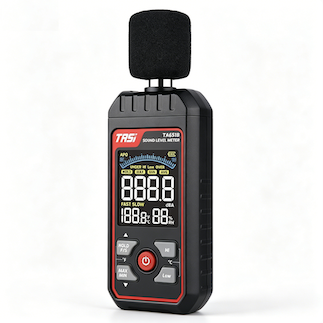
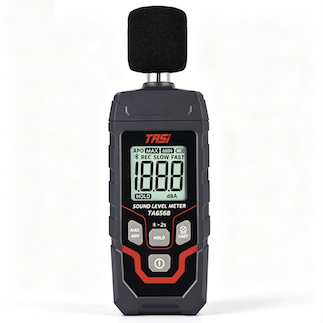
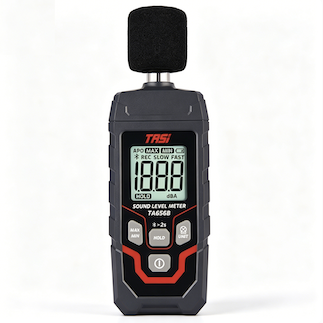
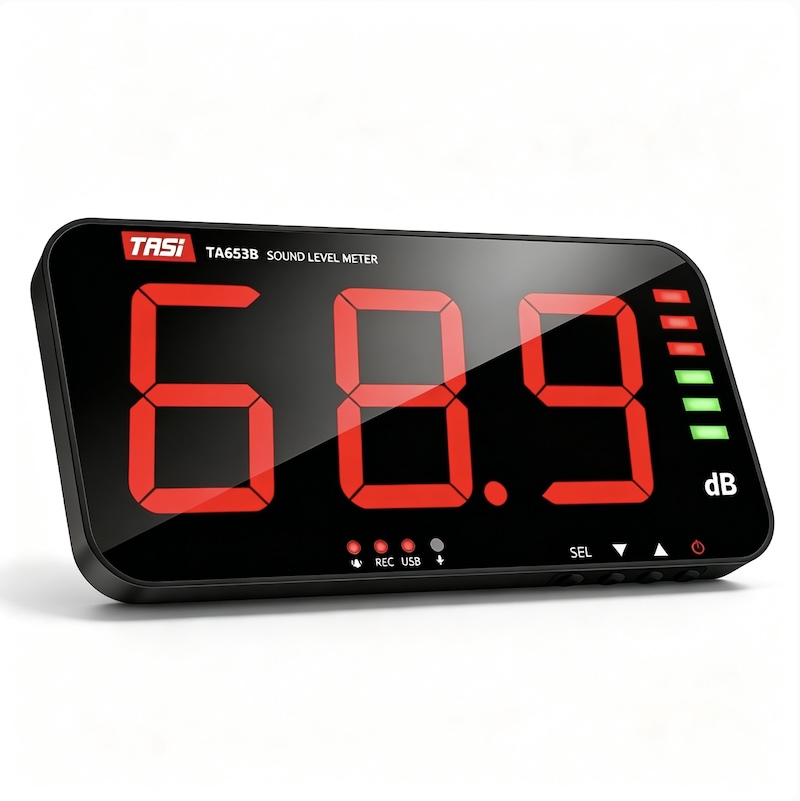
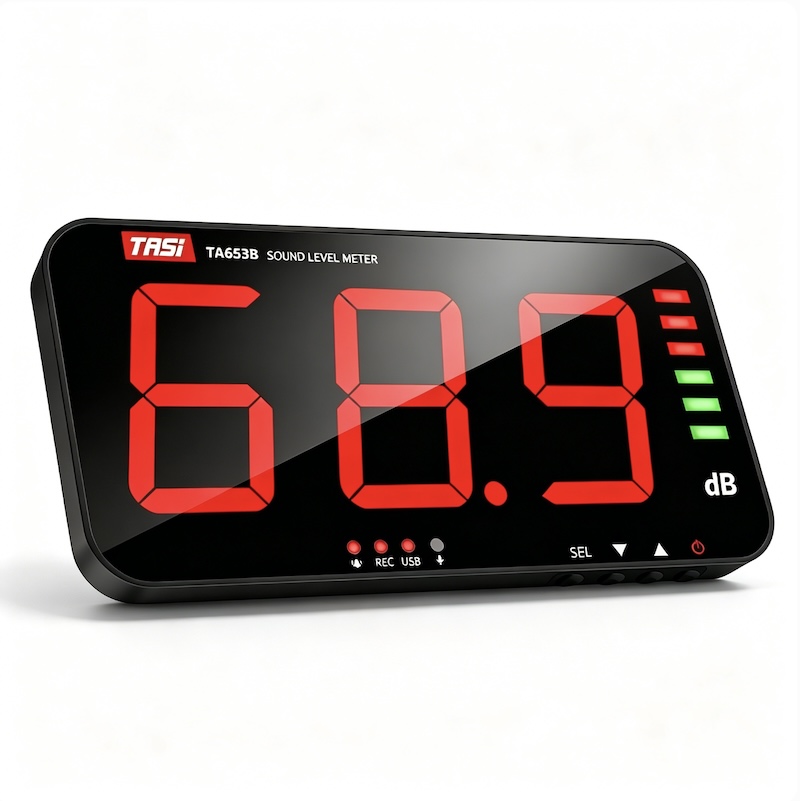
A sound level meter is used to measure sound pressure level in environments or around equipment, with results generally expressed in decibels (dB). Specifications such as “30–130 dB” or “35–130 dB” are commonly found on sound level meters.
So, what range can a sound level meter actually measure? Do all meters cover the same sound levels? In practice, the measurement range depends on the instrument design, microphone performance, measurement circuitry, and specific model. For many general-purpose handheld digital sound level meters, approximately 30–130 dB is a common range, while professional applications may require a lower minimum level or a wider overall range.
Key Takeaways
● The measurement range defines the sound pressure levels that a sound level meter can measure within its specified performance limits.
● A typical handheld digital sound level meter often covers approximately 30–130 dB.
● Different models may offer ranges such as 35–130 dB or other values; always check the technical specifications.
● Below the lower measurement limit, instrument self-noise and background noise may affect the reading.
● Above the upper measurement limit, the meter may indicate an overload condition and the displayed result should not be treated as valid measurement data.
● When selecting a sound level meter, both the upper and lower limits should be considered.
What Does the Measurement Range of a Sound Level Meter Mean?
The measurement range is the sound pressure level interval over which the meter is designed to perform within its specified characteristics. It is normally expressed in dB.
For example:
Measurement Range: 30–130 dB
This indicates that the instrument is primarily designed to measure sound levels from approximately 30 dB to 130 dB.
In this example, 30 dB is the lower measurement limit and 130 dB is the upper limit. If the actual sound level falls significantly outside this range, the instrument may no longer provide a reliable result.
It is also important to distinguish measurement range from accuracy. Two sound level meters may both have a 30–130 dB range while differing considerably in accuracy, frequency response, time weighting, frequency weighting, and instrument class.
What Is a Typical Sound Level Meter Measurement Range?
For handheld digital sound level meters used for general environmental measurements, equipment maintenance, and routine noise checks, approximately 30–130 dB is a common measurement range.
Depending on the intended application, other ranges may include:
● 30–130 dB: common for general-purpose digital sound level meters;
● 35–130 dB: used by some standard handheld models;
● Lower minimum measurement levels: suitable for quiet environments, laboratories, or low-noise measurements;
● Higher maximum measurement levels: suitable for high-level industrial noise or specialized acoustic measurements.
There is therefore no single measurement range that applies to every sound level meter. The specification of the individual instrument should always be checked.
What Types of Sounds Fall Within 30–130 dB?
A 30–130 dB measurement range covers many common residential, commercial, and industrial sound environments.
As a general reference:
● 30–40 dB: relatively quiet indoor environments;
● 50–60 dB: typical offices or sound levels around normal conversation;
● 70–80 dB: busy environments, some machinery, or traffic noise;
● 90–100 dB: relatively high-noise machinery or production environments;
● Above 110 dB: very high sound levels;
● Approaching 130 dB: extremely high sound pressure levels.
These values are approximate. Actual sound levels can vary significantly depending on the sound source, measurement distance, reflections, equipment operating conditions, and surrounding environment.
Why Do Some Sound Level Meters Not Measure from 0 dB?
This is a common misunderstanding.
0 dB does not mean “no sound.” It represents a defined acoustic reference level. Accurately measuring very low sound pressure levels requires a highly sensitive microphone, low-noise preamplifier, low-noise electronics, and carefully designed measurement circuitry.
Every practical sound level meter also produces a certain amount of internal electrical and acoustic noise. When the sound being measured approaches this internal noise floor, the instrument can no longer reliably distinguish the external sound from its own noise.
For this reason, many general-purpose handheld sound level meters have a lower measurement limit around 30 dB rather than starting at 0 dB.
What Happens If the Sound Level Is Below the Measurement Range?
If the actual sound level is below the specified lower limit, the reading may be influenced by the instrument’s own noise floor.
For example, a sound level meter with a specified range of 30–130 dB is not suitable for precise measurements of extremely quiet acoustic environments.
When the sound level approaches or falls below the lower limit, you may observe:
● Readings that do not decrease further;
● Increased fluctuations in the displayed value;
● An under-range indication on some instruments;
● Displayed values that do not accurately represent the true sound pressure level.
For quiet laboratories, acoustic test rooms, or other low-noise applications, an instrument with a lower measurement limit and lower self-noise should be selected.
What Happens If the Sound Level Exceeds the Upper Limit?
If the actual sound pressure level exceeds the maximum measurement range, the input signal may be too large for the instrument’s measurement circuitry to process correctly.
Some sound level meters may display an overload indication such as “OVER” or “OL,” while others may show a value close to the upper limit.
Once an overload condition occurs, the displayed result should not be treated as an accurate sound pressure level. For example, if the maximum specified range is 130 dB, the meter cannot reliably determine whether an actual sound level above this limit is 132 dB or 138 dB.
For applications involving very high sound levels, select a meter with sufficient upper-range margin.
Is a Wider Measurement Range Always Better?
Not necessarily.
A wider range allows the instrument to cover a broader span of sound pressure levels, but this alone does not mean that the sound level meter has better overall performance.
Other important specifications include:
● Measurement accuracy;
● Frequency response;
● Frequency weighting such as A or C weighting;
● Time weighting such as FAST and SLOW;
● Instrument self-noise;
● Resolution;
● Applicable sound level meter class and required standards.
If the expected sound levels in an application are mainly between 50 and 100 dB, a stable and accurate meter that reliably covers this range may already be fully suitable.
How Should You Select a Sound Level Meter Based on Measurement Range?
Start by estimating the lowest and highest sound levels likely to occur in the intended application. Then select an instrument whose specified range provides sufficient margin.
● General environmental noise measurement: A range around 30–130 dB is usually suitable for offices, schools, commercial premises, and many general environmental measurements.
● Machinery noise measurement: In addition to the upper limit, consider accuracy and response performance within the sound level range produced by the equipment.
● Workplace noise assessment: Select an instrument according to the applicable occupational noise assessment requirements rather than relying on measurement range alone.
● Low-noise environments: Pay particular attention to the lower measurement limit and the instrument’s self-noise.
● High sound level environments: Ensure that the upper limit provides enough margin to avoid frequent overload conditions.
The objective is not simply to select the instrument with the widest range, but to choose a sound level meter that covers the expected sound levels while meeting the required accuracy and performance specifications.
What Is the Difference Between Measurement Range and Display Resolution?
Measurement range and resolution are different specifications.
For example:
Measurement Range: 30–130 dB
Resolution: 0.1 dB
The measurement range describes the span of sound levels the instrument can measure, while 0.1 dB resolution means that the display can typically indicate changes in increments of 0.1 dB.
Importantly, 0.1 dB display resolution does not mean the instrument has an accuracy of ±0.1 dB. Accuracy must be checked separately in the product specifications.
FAQ
What is the typical measurement range of a sound level meter?
Many handheld digital sound level meters cover approximately 30–130 dB, although the exact range depends on the model.
Is a 30–130 dB sound level meter sufficient for general use?
For general environmental noise, equipment maintenance, offices, schools, commercial premises, and many industrial applications, this range normally covers commonly encountered sound levels. Specialized acoustic applications may require different specifications.
Can a sound level meter measure 0 dB?
Most general-purpose handheld meters cannot reliably measure from 0 dB. Very low-level acoustic measurements require professional equipment with a substantially lower self-noise floor.
Can a meter still measure above 130 dB?
If 130 dB is the specified upper limit, measurements above this level may cause an overload condition and should not be considered reliable.
Does a wider measurement range mean higher accuracy?
No. Measurement range and accuracy are separate specifications. Frequency response, weighting functions, self-noise, instrument class, and other performance characteristics must also be considered.
Should I focus more on the maximum or minimum measurement limit?
Both are important. High-noise applications require sufficient upper-range capability, while low-noise measurements depend heavily on the lower limit and the instrument’s self-noise.
Conclusion
The measurement range of a sound level meter depends on its design and intended application. Approximately 30–130 dB is a common range for general-purpose handheld digital sound level meters, covering many everyday environmental, commercial, and industrial noise measurement applications.
Measurement range, however, is only one selection criterion. Low-noise, high-level, or professional acoustic measurements may also require consideration of the lower measurement limit, self-noise, upper limit, accuracy, frequency response, weighting functions, and instrument class.
Before taking measurements, always confirm the technical specifications of the sound level meter and make sure that the expected sound pressure level falls within its valid measurement range.