Introduction
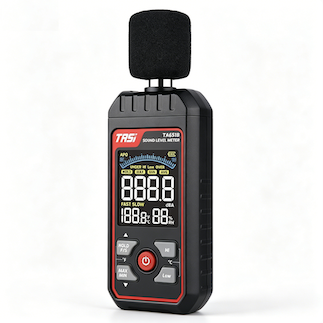
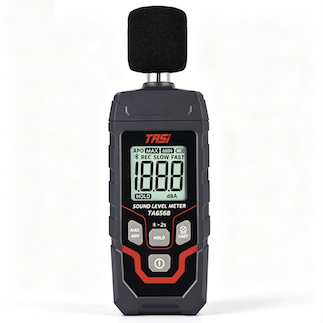
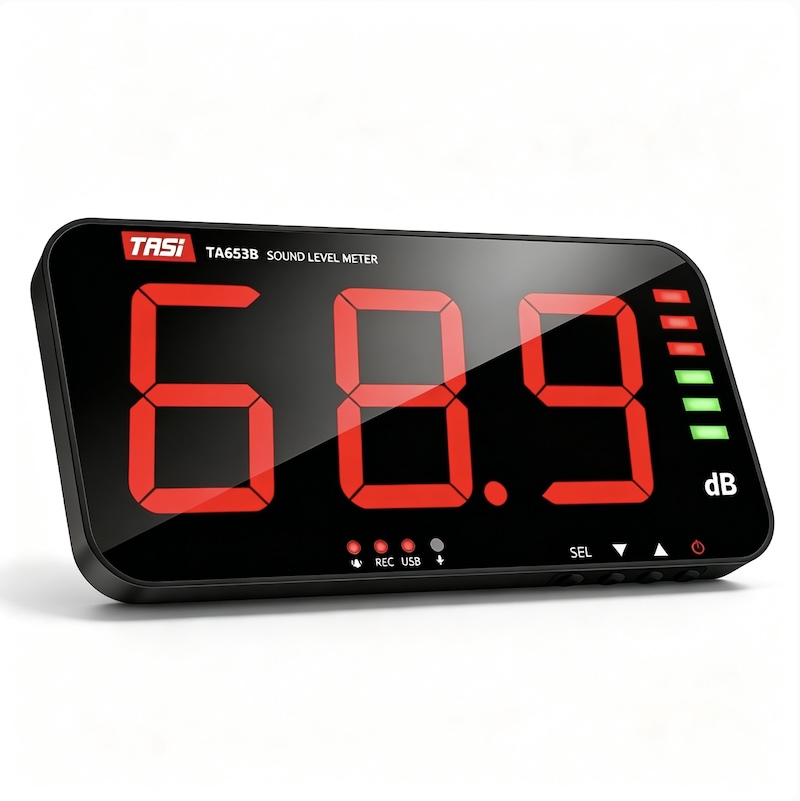
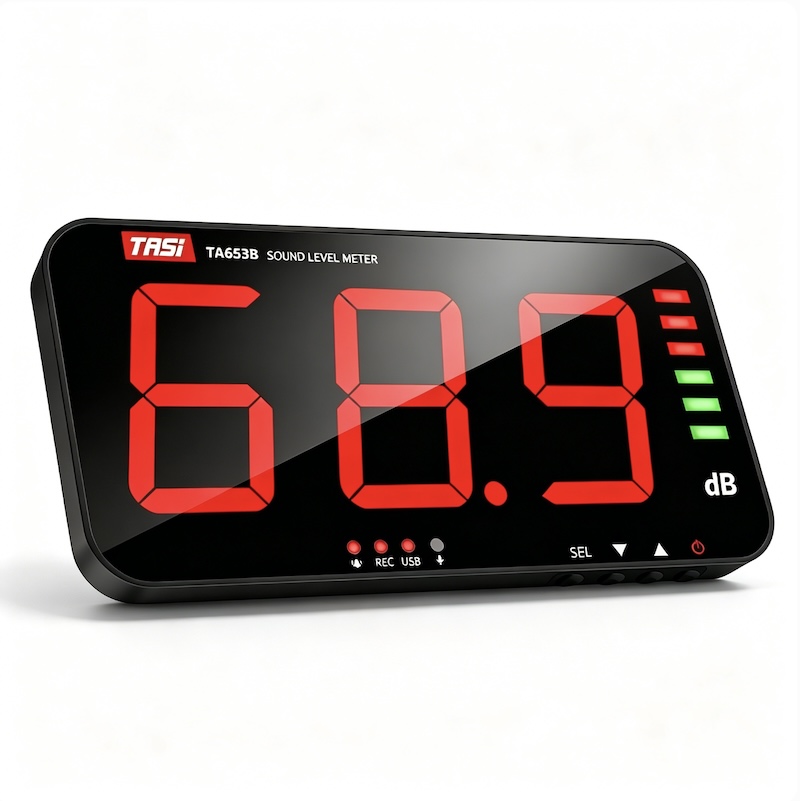
A sound level meter is an instrument designed to measure sound pressure level. In general, any airborne sound can be measured provided that its level and frequency fall within the specified operating range of the instrument.
For this reason, a sound level meter is not limited to measuring sounds that are considered “noise.” Machinery, moving vehicles, speech, office environments, schools, factories, and many other sound sources can all be measured.
However, different sounds vary in frequency content, duration, and sound pressure level. The appropriate measurement range, frequency weighting, and time weighting should therefore be selected according to the application.
Key Takeaways
● A sound level meter primarily measures the sound pressure level of airborne sound, typically displaying results in dB or dBA.
● Common applications include environmental noise, machinery noise, traffic noise, construction noise, workplace noise, and everyday sounds.
● Sound level meters can measure both relatively steady sounds and sounds that fluctuate over time.
● Measurement accuracy depends on the instrument’s measurement range, frequency response, weighting settings, response characteristics, and measurement method.
● A basic sound level meter measures overall sound level. Detailed analysis of frequency content generally requires an instrument with octave-band or spectrum analysis capabilities.
Measuring Environmental Sounds
Environmental noise measurement is one of the most common applications for a sound level meter. Measurements taken at different locations can be used to evaluate existing sound levels and compare conditions between areas or time periods.
Typical examples include:
● Sound in residential areas;
● Noise from commercial areas, people, and equipment;
● Sound levels in parks, public spaces, and communities;
● Background noise near roads;
● Indoor background noise from air-conditioning, ventilation, and other building systems.
When measuring environmental sound, factors such as microphone position, nearby reflective surfaces, wind, and temporary noise sources should be considered.
Measuring Machinery and Equipment Noise
Sound level meters are widely used in factories, workshops, and maintenance applications to measure noise generated by operating machinery.
Typical sound sources include:
● Electric motors;
● Fans and blowers;
● Air compressors;
● Pumps;
● Generators;
● Machine tools and production equipment;
● Fans, compressors, and ventilation equipment in HVAC systems.
Repeated measurements taken at the same position and under comparable operating conditions can help identify significant changes in equipment sound levels and support routine condition monitoring.
However, a change in sound level alone does not identify the cause of a mechanical fault. If the frequency components of an abnormal sound need to be investigated, spectrum analysis may also be required.
Measuring Traffic Noise
Sound from road traffic, railways, and other transportation systems can also be measured with a sound level meter.
Typical examples include:
● Passenger vehicles;
● Trucks and heavy vehicles;
● Motorcycles;
● Trains and rail systems;
● Combined road traffic noise.
Traffic noise can vary considerably over time. Measurement results may be affected by traffic volume, vehicle type, speed, distance from the sound source, and measurement duration. Comparative measurements should therefore be carried out under similar conditions whenever possible.
Measuring Construction Noise
Construction sites contain many types of machinery, power tools, and impact noise sources, making sound level meters useful for construction noise assessment.
Typical examples include:
● Electric drills and rotary hammers;
● Cutting equipment;
● Concrete construction equipment;
● Excavators and loaders;
● Generators and air compressors;
● Other construction machinery.
Construction noise often fluctuates significantly, and some activities generate short-duration high sound levels. FAST, SLOW, or other appropriate time-weighting settings should therefore be selected according to the measurement objective.
Measuring Workplace Noise
In factories, production areas, maintenance facilities, and other workplaces, a sound level meter can be used to determine the sound level at a specific location or around a particular machine.
Typical examples include:
● Production lines;
● Machining areas;
● Packaging equipment;
● Ventilation systems;
● Power tools;
● Combined noise from multiple operating machines.
A standard sound level meter normally indicates the sound level at a particular location and time. If the objective is to evaluate a worker’s cumulative noise exposure over an entire work shift, a noise dosimeter or an integrating sound level meter with suitable functions may be required.
Measuring Everyday Sounds
Sound level meters are also suitable for many everyday measurement applications outside industrial environments.
Examples include:
● Speech;
● Television and audio systems;
● Vacuum cleaners;
● Air conditioners and fans;
● Household appliances;
● Animal sounds;
● Indoor background noise;
● Sound transmitted from adjacent rooms or surrounding areas.
These measurements can provide a useful indication of approximate sound pressure levels. However, measurements intended for regulatory assessment, occupational noise evaluation, or professional acoustic testing should be carried out with an appropriate instrument and measurement procedure.
Can Both Steady and Fluctuating Sounds Be Measured?
Yes, although the measurement method may differ.
For relatively steady continuous sounds, such as those produced by fans or motors, the displayed value is generally stable and can be read directly or recorded over a defined period.
For rapidly changing sounds, such as passing vehicles, machine start-up noise, or impact sounds, the displayed value may fluctuate significantly. FAST time weighting can be used to observe faster variations, while functions such as MAX Hold can capture the maximum sound level reached during the measurement period.
If measurements such as equivalent continuous sound level (Leq) or more comprehensive noise exposure assessments are required, an instrument with integrating measurement capability should be selected.
Can a Sound Level Meter Measure Any Sound?
Not every sound can be reliably measured with a standard sound level meter.
First, the sound pressure level must fall within the specified measurement range of the instrument. Sounds below the lower measurement limit may not be measured reliably, while levels above the upper limit may cause an overload indication or inaccurate results.
The frequency response of the instrument must also be considered. Standard sound level meters are designed to measure sound within a defined frequency range. They should not automatically be considered suitable for dedicated ultrasonic or infrasonic measurements if those frequencies fall outside the instrument’s specifications.
In addition, a sound level meter measures sound pressure level at the microphone position. A single dB value does not by itself identify the frequency composition, direction, or exact source of a sound.
Which Parameters Matter When Measuring Different Sounds?
Different applications may require different sound level meter settings. Important parameters include:
● Measurement Range: The expected sound pressure level should fall within the specified operating range of the instrument.
● A-Weighting: Commonly used to approximate the frequency sensitivity of human hearing. Results are typically expressed in dBA.
● C-Weighting: Applies less attenuation to low-frequency sound and can be useful in some high-level or low-frequency measurement applications.
● FAST Time Weighting: Responds more quickly to changes in sound level and is useful for fluctuating sound sources.
● SLOW Time Weighting: Produces a more stable display and can make relatively steady sounds easier to read.
● MAX Hold: Records the highest sound level detected during a measurement period.
The appropriate settings should be selected according to the measurement objective and the specifications of the instrument.
What Can a Sound Level Meter Not Tell You Directly?
Although a sound level meter can measure many types of sound, a basic sound level reading provides limited information.
For example, a reading of 80 dB alone does not indicate whether the sound is dominated by low or high frequencies, nor does it identify which machine component is producing the sound.
A basic sound level meter generally cannot directly:
● Determine detailed frequency content;
● Identify the precise location of a mechanical fault;
● Automatically identify a sound source;
● Measure ultrasonic or infrasonic sound outside its specified frequency range;
● Represent an entire work shift’s cumulative noise exposure using a single instantaneous reading.
Applications requiring this information may require a spectrum analyzer, integrating sound level meter, noise dosimeter, or another specialized acoustic measurement instrument.
FAQ
Can a sound level meter measure human speech?
Yes. Speech is airborne sound and can be measured as long as its sound pressure level falls within the instrument’s specified measurement range.
Can a sound level meter measure machinery noise?
Yes. Motors, fans, pumps, compressors, machine tools, and many other machines are common sound level measurement applications.
Can a sound level meter measure vehicle noise?
Yes. Cars, motorcycles, trucks, and other vehicles can be measured. Results can vary depending on distance, vehicle speed, environmental conditions, and microphone position.
Can a sound level meter measure very quiet sounds?
It depends on the instrument’s lower measurement limit and inherent noise floor. If the sound level is below the effective measurement range, the reading may not be reliable.
Can a sound level meter measure ultrasound?
A standard sound level meter is generally not intended for dedicated ultrasonic measurement. Always check the specified frequency response and use specialized equipment when required.
Can a sound level meter measure sound frequency?
A basic sound level meter primarily measures sound pressure level and is not the same as a frequency analyzer. Some professional instruments provide octave-band or spectrum analysis functions.
Does a dB reading directly indicate how loud a sound feels?
Not completely. A dB value represents sound pressure level, while perceived loudness and annoyance are also influenced by frequency, duration, sound characteristics, and individual perception.
Conclusion
A sound level meter can measure a wide range of airborne sounds, including environmental noise, machinery noise, traffic noise, construction noise, workplace noise, and everyday sounds.
Its primary function is to determine the sound pressure level at a specific measurement position and show how that level changes over time.
Reliable measurements require the sound to fall within the instrument’s specified level and frequency ranges, together with appropriate frequency weighting, time weighting, and measurement procedures. Applications involving frequency analysis, long-term noise exposure, or advanced acoustic assessment may require instruments with additional specialized functions.