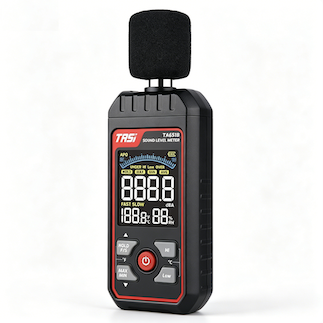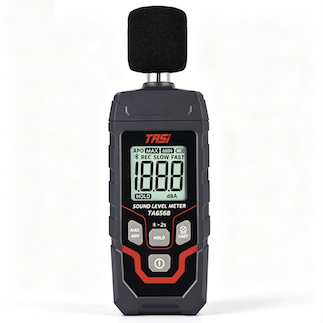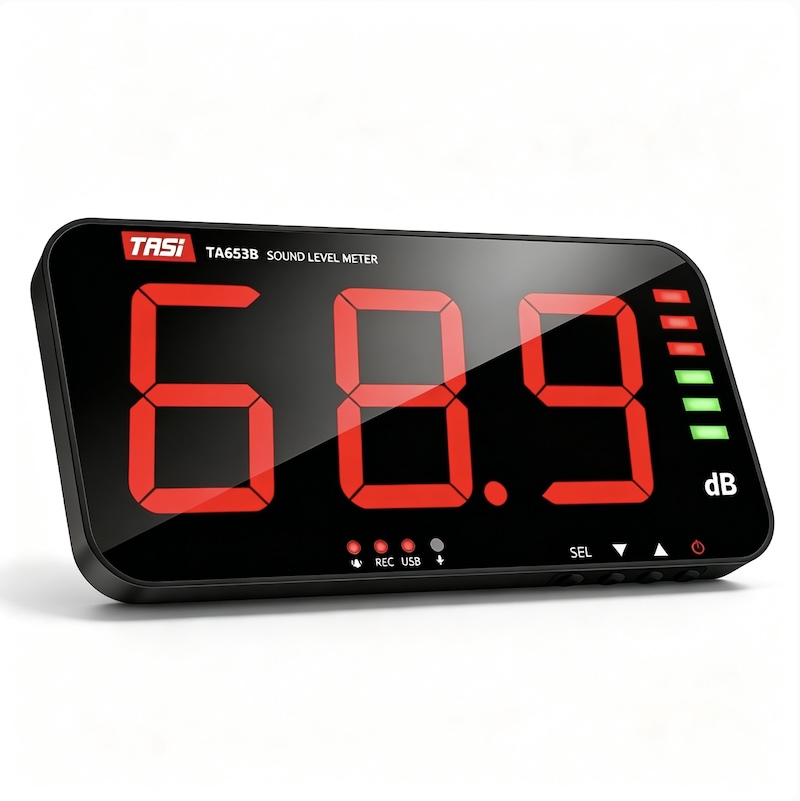
Introduction
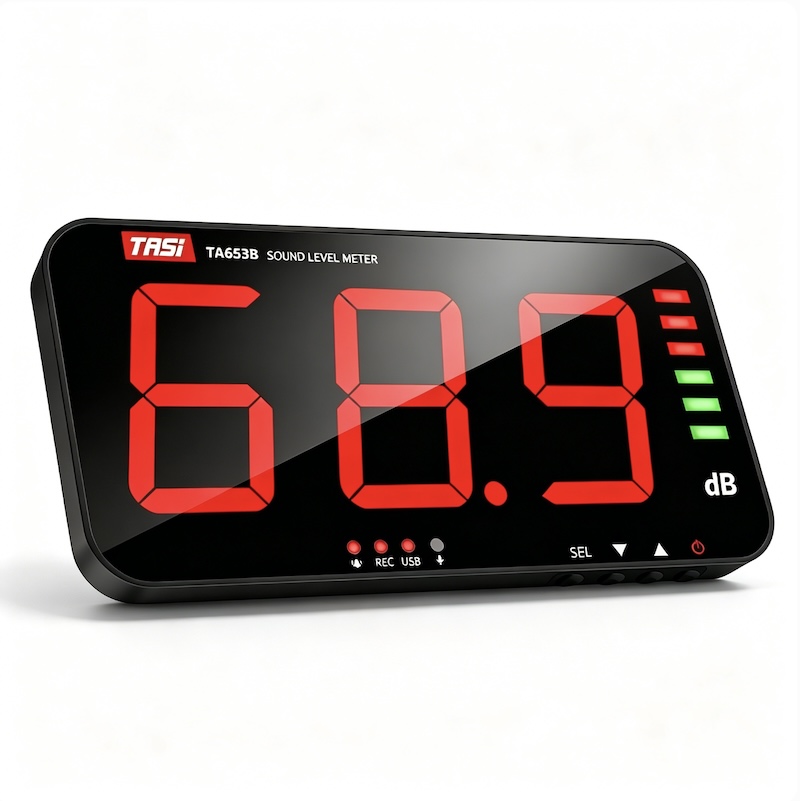
Sound level meters may gradually drift over time as microphone sensitivity, electronic components, and other measurement elements are affected by ageing, temperature and humidity changes, mechanical shock, and operating conditions. Regular calibration is therefore an important part of maintaining reliable noise measurement performance.
So, how often should a sound level meter be calibrated? There is no universal interval that applies to every instrument and every application. For professional measurement equipment, a 12-month periodic calibration interval is commonly adopted as a practical baseline, although the actual interval should be determined according to the manufacturer’s recommendations and the conditions of use. OSHA guidance also describes annual periodic calibration as a common practice for professional sound measurement instruments.
Key Takeaways
● There is no single calibration interval that applies to all sound level meters and applications.
● For professional measurements, 12 months is a commonly used periodic calibration interval.
● Instruments used frequently, operated in harsh environments, or used for critical measurements may require shorter intervals.
● A sound level meter should be checked or recalibrated after significant impact, repair, component replacement, or abnormal readings.
● Periodic laboratory calibration and field acoustic calibration checks are different procedures.
● The acoustic calibrator used to check the sound level meter must also remain within its valid calibration status.
How Often Should a Sound Level Meter Normally Be Calibrated?
For sound level meters used in occupational noise assessment, industrial measurements, environmental noise evaluation, engineering testing, or other applications where measurement reliability is important, a defined calibration schedule should be established.
Common practices include:
● Every 12 months: Suitable as a general baseline for many professional sound level meters and one of the most widely used periodic calibration intervals.
● Every 6 months or more frequently: Appropriate for instruments used intensively, exposed to harsh environments, transported frequently, or used where particularly high measurement confidence is required.
● According to the manufacturer’s specification: If the manufacturer, quality management procedure, contract, or project requirement specifies a particular interval, that requirement should take priority.
IEC 61672-3 specifies procedures for periodic testing of sound level meters designed to comply with the relevant Class 1 and Class 2 requirements. The purpose of periodic testing is to determine whether the instrument continues to meet specified performance requirements.
A one-year interval should therefore be regarded as a common management reference rather than an absolute rule for every sound level meter.
When Should the Calibration Interval Be Shortened?
A sound level meter may require earlier inspection or recalibration even if its scheduled calibration date has not yet been reached.
Typical situations include:
● The instrument is used daily or very frequently.
● It is regularly exposed to high temperatures, high humidity, dust, or significant vibration.
● It is frequently transported between different measurement locations.
● The meter or microphone has been dropped or subjected to mechanical shock.
● The instrument has been repaired or a microphone or other critical measurement component has been replaced.
● Measurement results show unusual drift or reduced repeatability.
● A field check with an acoustic calibrator shows an unexpected deviation.
● Measurement results are used for occupational noise assessment, engineering acceptance, compliance-related work, or other applications requiring high data reliability.
In practice, the calibration interval should reflect the risk of measurement drift. The more demanding the operating conditions and the more critical the measurement results, the stronger the case for a shorter calibration interval.
Is Periodic Calibration the Same as Calibration Before Every Measurement?
No.
Two different procedures are commonly referred to as “calibration” in sound level measurement: periodic calibration and field acoustic calibration checks.
● Periodic calibration: Usually performed by a competent calibration laboratory or the manufacturer. The instrument’s key acoustic and electronic performance characteristics are evaluated, and a calibration report or certificate is typically issued.
● Field calibration check: An acoustic calibrator generates a known sound pressure level at the microphone to confirm that the sound level meter is responding correctly at the time of measurement.
For professional noise measurements, checking the instrument with an acoustic calibrator before the measurement and again after the measurement is widely regarded as good practice. OSHA guidance also recommends calibration checks before and after sound level measurements.
Therefore, even if a sound level meter has recently completed its annual laboratory calibration, field checks should still be performed when required by the measurement procedure.
Why Check the Instrument Again After Measurement?
A pre-measurement check confirms that the sound level meter is operating correctly before work begins. A post-measurement check helps confirm that no significant drift occurred during the measurement period.
During extended measurements, instrument performance may be influenced by:
● Significant temperature changes;
● Changes in humidity;
● Battery condition;
● Microphone contamination;
● Mechanical impact or vibration.
If the readings before and after the measurement remain consistent within the applicable acceptance criteria, confidence in the measurement data is increased.
If a significant difference is found, the instrument should be investigated and the validity of the measurement results may need to be reviewed.
Does a Sound Level Meter Still Need Calibration If It Has Not Been Used for a Long Time?
It depends on the intended application.
Even when a sound level meter is stored and not actively used, the microphone, electronics, and other components can still age over time. Lack of use does not guarantee that measurement performance has remained unchanged.
For general indicative measurements after a long storage period, the instrument can first be checked using a suitable acoustic calibrator.
For professional, engineering, occupational, or other accuracy-critical measurements, if the instrument’s previous calibration interval has expired, periodic calibration should normally be completed before returning it to formal service.
Calibration intervals should therefore not be determined only by operating hours. The elapsed time since the last formal calibration must also be considered.
Does the Acoustic Calibrator Also Need Calibration?
Yes.
Although an acoustic calibrator is used to verify the sound level meter, it is itself a reference instrument. If its sound pressure output has drifted, agreement between the calibrator and the sound level meter does not necessarily mean that the measurement system is accurate.
A calibration management system should therefore track not only the sound level meter but also the acoustic calibrator.
For professional applications, acoustic calibrators are also commonly calibrated periodically. Annual calibration is one widely used practice.
How Can You Establish a Suitable Calibration Schedule?
A company, laboratory, or measurement department can maintain a simple calibration record containing:
● Instrument model and serial number;
● Date of the most recent calibration;
● Next scheduled calibration date;
● Calibration certificate or report;
● Acoustic calibrator identification and calibration status;
● Results of pre- and post-measurement field checks;
● Records of repairs, drops, impacts, or abnormal behaviour.
For general professional applications, 12 months can be used as an initial periodic calibration interval. The interval can then be reviewed based on the instrument’s calibration history and actual stability.
If several consecutive calibrations show stable performance, the interval may be reviewed where permitted by the manufacturer, quality system, and applicable requirements. If repeated drift is observed, the interval should be shortened rather than maintaining an arbitrary annual schedule.
FAQ
Does a sound level meter have to be calibrated every year?
Not necessarily. A 12-month interval is a common practice for professional noise measurement, but the final interval should be based on manufacturer recommendations, application, frequency of use, operating environment, and applicable measurement requirements.
Does a new sound level meter need to be calibrated immediately?
If the instrument is supplied with valid factory inspection or calibration documentation suitable for the intended application, immediate laboratory recalibration is usually unnecessary. However, its operating condition should still be checked before use, and a field check with an acoustic calibrator should be performed where appropriate.
Should a sound level meter be recalibrated after being dropped?
At minimum, its operation and acoustic response should be checked immediately. If the instrument has suffered a significant impact, produces abnormal readings, or fails a field calibration check, it should not be used for critical measurements until it has been properly inspected or recalibrated.
Does a sound level meter need laboratory calibration before every use?
No. Laboratory calibration is normally performed at defined intervals. Field checks with a suitable acoustic calibrator can be performed before and after individual measurement sessions. These procedures serve different purposes.
Can an overdue sound level meter still be used?
The instrument may still display readings, but if measurement accuracy, traceability, or formal documentation is required, continued use after the specified calibration interval is generally not recommended until its calibration status has been confirmed.
Can the sound level meter be calibrated while the acoustic calibrator is not?
This is not recommended. The acoustic calibrator is also a reference instrument, and its output accuracy directly affects field verification. It should therefore remain within its own valid calibration interval.
Conclusion
There is no universal calibration interval for every sound level meter. For professional noise measurement, a 12-month periodic calibration interval is a practical and commonly used baseline, which can then be adjusted according to frequency of use, environmental conditions, instrument stability, manufacturer recommendations, and measurement requirements.
Periodic calibration should also not be treated as a substitute for field acoustic calibration checks. Combining periodic laboratory calibration, routine field verification, and effective instrument condition management provides a more reliable approach to maintaining accurate and dependable sound level measurements.