Introduction
When people say that a noise is “loud,” they are usually describing its overall perceived level. In professional acoustic measurement, however, sound level alone does not provide a complete picture. Two sounds measured at the same 80 dB can produce very different subjective impressions and behave differently during propagation if their frequency content is different.
Low-frequency noise is commonly perceived as a deep rumble, hum, or vibration, while high-frequency noise is more likely to sound sharp, hissy, squealing, or piercing. These differences are primarily related to sound frequency and the corresponding wavelength, propagation, and attenuation characteristics.
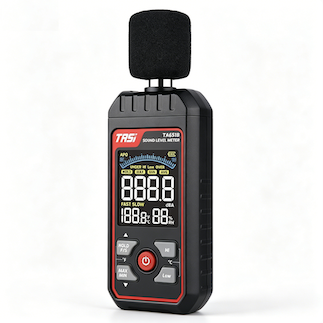
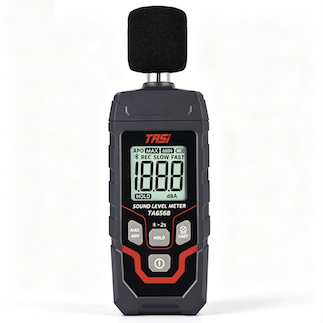
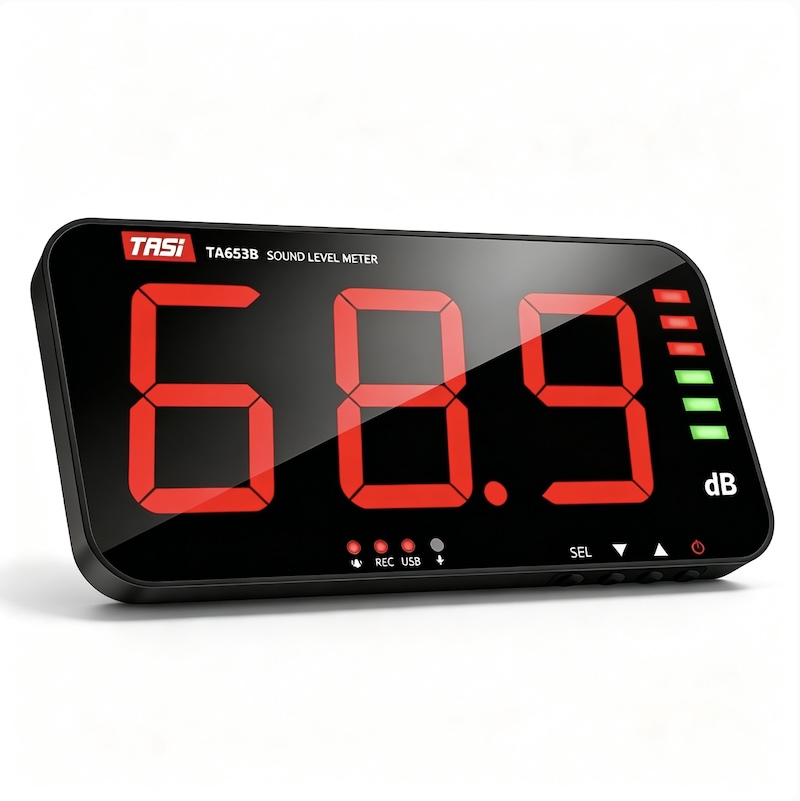
For industrial equipment, buildings, HVAC systems, transportation, and environmental noise assessment, it is therefore useful to consider not only the overall sound level displayed by a sound level meter, but also the frequency content of the noise.
Key Points
● Low-frequency and high-frequency noise are fundamentally distinguished by their vibration frequency.
● Low-frequency sound has a longer wavelength, stronger diffraction characteristics, and can often propagate effectively over longer distances.
● High-frequency sound has a shorter wavelength and is generally more affected by atmospheric absorption, barriers, and surface structures.
● Walls, windows, doors, and acoustic materials do not provide equal attenuation at all frequencies; low-frequency noise is often more difficult to control.
● Human hearing sensitivity varies with frequency, so identical sound pressure levels do not necessarily produce the same perceived loudness.
● A standard sound level meter can measure overall sound pressure level, but octave-band or one-third-octave-band analysis is normally required to identify the dominant frequency range.
What Is Low-Frequency Noise?
Sound frequency is measured in hertz (Hz), indicating the number of pressure oscillations occurring per second. Human hearing is commonly considered to extend from approximately 20 Hz to 20 kHz, although the actual audible range varies with age, individual hearing characteristics, and sound level.
There is no single universal frequency boundary for “low-frequency noise.” For general acoustic discussion, frequencies of approximately 20 to 250 Hz may be regarded as the low-frequency region, although different standards, measurement methods, and research fields may use different definitions.
Typical sources of low-frequency noise include:
● Large fans and ventilation systems;
● Air compressors;
● Diesel engines and large electric motors;
● Pumps, cooling towers, and mechanical drive systems;
● Heavy vehicles and rail traffic;
● Building service equipment and structure-borne vibration;
● Subwoofers and high-power sound systems.
Low-frequency sound is usually perceived as deep or rumbling and may sometimes be felt as vibration or pressure as well as heard.
At frequencies below approximately 20 Hz, the sound is generally referred to as infrasound. Infrasound is related to the low-frequency region but is normally treated as a separate acoustic category.
What Is High-Frequency Noise?
High-frequency noise consists primarily of sound energy at relatively high frequencies. As with low-frequency noise, there is no universally fixed starting point for the high-frequency range.
For general acoustic explanation, frequencies above approximately 2 kHz can be considered relatively high frequencies. The 2 to 20 kHz range remains part of the nominal human audible spectrum.
Common sources of high-frequency noise include:
● High-speed rotating bearings;
● Compressed-air leaks;
● Whistling caused by airflow through small openings;
● High-speed cutting and grinding equipment;
● Certain motors, power supplies, and electronic devices;
● Metal-on-metal friction;
● High-frequency alarms and buzzers.
High-frequency noise is often perceived as sharp, hissing, squealing, or piercing.
Frequencies above approximately 20 kHz are generally classified as ultrasound. Ultrasound is normally beyond the hearing range of most adults and should not simply be treated as ordinary audible high-frequency noise.
What Is the Fundamental Difference Between Low- and High-Frequency Noise?
The most fundamental difference is frequency. Frequency directly determines wavelength.
Sound wavelength can be expressed as:
λ = c / f
where:
● λ is wavelength;
● c is the speed of sound;
● f is frequency.
Under the same propagation conditions, lower frequencies have longer wavelengths, while higher frequencies have shorter wavelengths.
For example, in air:
● A 100 Hz sound has a wavelength of approximately 3.4 m;
● A 1 kHz sound has a wavelength of approximately 0.34 m;
● A 10 kHz sound has a wavelength of approximately 0.034 m.
These large differences in wavelength explain why low- and high-frequency sound behave differently in terms of propagation, diffraction, reflection, absorption, and sound insulation.
Why Does Low-Frequency Noise Often Propagate More Effectively?
Low-frequency sound has a relatively long wavelength. When it encounters an obstacle that is small compared with its wavelength, significant diffraction can occur.
As a result, low-frequency noise can bend around equipment, wall edges, and other obstacles and continue propagating even when there is no direct line of sight to the source.
Atmospheric absorption also generally affects high-frequency sound more strongly than low-frequency sound. Under comparable conditions, high-frequency components therefore tend to decrease more rapidly as propagation distance increases, while some low-frequency components can remain noticeable at greater distances.
This is why distant music, traffic, or industrial machinery may sometimes be heard mainly as a low-frequency rumble after much of the higher-frequency detail has attenuated.
Why Is Low-Frequency Noise Often More Difficult to Insulate Against?
Sound insulation performance depends on wall mass, construction, sealing, material combinations, and frequency.
For the same partition or building structure, attenuation is generally easier to achieve at higher frequencies than at very low frequencies.
Long-wavelength low-frequency sound can also be transmitted through building structures, ducts, floors, walls, or machine foundations. When mechanical vibration couples into the structure, structure-borne noise may result.
Low-frequency noise control may therefore require more than simply adding conventional sound-absorbing material. Possible measures include:
● Improving machine vibration isolation;
● Using vibration-isolating mounts or foundations;
● Increasing structural mass;
● Optimizing wall or enclosure construction;
● Avoiding rigid connections that transmit vibration;
● Reducing low-frequency vibration at the source.
This is one reason why low-frequency industrial noise can be more difficult to control than predominantly high-frequency noise.
How Does High-Frequency Noise Propagate?
High-frequency sound has a short wavelength. Its propagation tends to be more directional, and it is more strongly affected by obstacles, surface structures, and atmospheric absorption.
When high-frequency sound encounters a wall, machine housing, or another object whose dimensions are large compared with its wavelength, reflection and acoustic shielding can become significant.
Typical characteristics include:
● More pronounced directionality;
● Greater susceptibility to blockage by obstacles;
● Stronger atmospheric attenuation over distance;
● Better absorption by many porous acoustic materials;
● Greater effectiveness of enclosures and acoustic barriers.
For example, the sharp high-frequency sound generated by a compressed-air leak may be very noticeable near the source but often decreases more rapidly with distance than a low-frequency mechanical rumble.
Why Can Low- and High-Frequency Sounds at the Same dB Level Sound Different?
Human hearing sensitivity is frequency-dependent.
The ear is generally more sensitive in the mid-frequency region and less sensitive at very low frequencies and near the upper limit of the audible range.
Consequently, two sounds with the same physical sound pressure level may not produce the same perceived loudness.
For example, a low-frequency machinery rumble and a mid- or high-frequency warning alarm may have similar measured sound pressure levels, while the alarm is perceived as much more prominent or irritating.
This frequency dependence is one of the reasons frequency weighting is used in sound level measurement.
How Are A, C, and Z Frequency Weightings Related to Low- and High-Frequency Noise?
Sound level meters may process frequencies differently depending on the selected frequency weighting.
A-weighting (dBA) approximates the frequency sensitivity of human hearing under commonly encountered sound levels. It significantly attenuates low-frequency components and is widely used for environmental, occupational, and general noise assessment.
C-weighting (dBC) applies substantially less attenuation to low frequencies than A-weighting. It can therefore be useful when evaluating noise with strong low-frequency content, high sound levels, or certain peak-noise conditions.
Z-weighting (dBZ) is essentially flat within the specified operating frequency range of the instrument and provides a measurement with minimal frequency weighting.
If a noise source contains substantial low-frequency energy, the dBA value alone may not fully describe its spectral characteristics. The appropriate weighting should be selected according to the measurement objective and applicable test method.
Can You Identify Low- or High-Frequency Noise from the dB Reading Alone?
Usually not.
For example, a reading of 75 dBA indicates an overall A-weighted sound level of approximately 75 dBA, but it does not reveal whether the dominant sound energy is concentrated at 100 Hz, 1 kHz, or 8 kHz.
Two noises with very different spectra can produce nearly identical overall sound level readings.
For general checks of overall environmental sound levels, a standard sound level measurement may be sufficient. However, identifying a noise source, diagnosing machinery, or developing an effective noise-control solution normally requires additional frequency analysis.
How Can the Frequency Content of Noise Be Identified?
Professional acoustic analysis often uses octave-band or one-third-octave-band measurements. These methods divide the audible frequency range into bands and measure the sound pressure level within each band.
Typical octave-band center frequencies include:
● 63 Hz;
● 125 Hz;
● 250 Hz;
● 500 Hz;
● 1 kHz;
● 2 kHz;
● 4 kHz;
● 8 kHz.
If the 63 Hz and 125 Hz bands are significantly higher than the surrounding bands, the noise probably contains strong low-frequency components.
If the 4 kHz or 8 kHz bands dominate, a significant high-frequency component may be present.
One-third-octave analysis provides finer frequency resolution and is widely used in machinery noise diagnostics, building acoustics, and professional environmental noise analysis.
How Does Frequency Affect Measurement Position?
Measurement position is important when assessing noise at different frequencies.
Low-frequency sound has a long wavelength and can be strongly affected by room dimensions, reflections, and standing waves. Even a relatively small change in the position of a sound level meter within a room can produce a noticeably different low-frequency result.
High-frequency sound is more directional and is more easily blocked by people, equipment, or other obstacles. If the microphone is shielded by the operator or by a machine enclosure, the measured high-frequency level may change significantly.
Good measurement practice includes:
● Avoiding obstruction of the microphone by the operator;
● Maintaining the specified measurement position and height;
● Avoiding unnecessary proximity to walls or large reflective surfaces unless required by the measurement method;
● Considering multiple measurement positions when evaluating indoor low-frequency noise;
● Maintaining a consistent orientation and position when measuring directional high-frequency noise.
Which Is More Harmful: Low-Frequency or High-Frequency Noise?
Frequency alone cannot determine which type of noise is more harmful.
Noise effects depend on several factors, including:
● Sound pressure level;
● Exposure duration;
● Frequency content;
● Presence of impulsive or peak noise;
● Continuity of the sound;
● Workplace or living environment;
● Individual sensitivity.
High-level mid- and high-frequency noise can contribute significantly to hearing risk, while persistent low-frequency noise may cause substantial disturbance, annoyance, or a noticeable sensation of vibration.
A professional noise assessment should therefore consider sound level, frequency spectrum, and exposure conditions together rather than classifying risk solely as “low frequency” or “high frequency.”
How Do Noise-Control Methods Differ by Frequency?
Effective noise control usually begins by identifying the dominant frequencies.
For predominantly high-frequency noise, common measures include:
● Adding sound-absorbing materials;
● Installing acoustic barriers;
● Using acoustic enclosures;
● Sealing compressed-air or airflow leakage points;
● Optimizing equipment housings and absorptive treatments.
For predominantly low-frequency noise, greater attention may be required to:
● Machine vibration sources;
● Vibration isolation;
● Mechanical imbalance and resonance;
● Structure-borne transmission;
● Increasing structural mass;
● Changing structural resonance characteristics or reducing excitation.
Applying noise-control materials without first identifying the dominant frequency range may result in good high-frequency attenuation while the low-frequency rumble remains largely unchanged.
A more effective approach is therefore to measure first, analyze the frequency spectrum, and then select the appropriate control method.
Key Differences Between Low- and High-Frequency Noise
● Frequency: Low-frequency noise oscillates at lower frequencies; high-frequency noise oscillates at higher frequencies.
● Wavelength: Low frequencies have long wavelengths; high frequencies have short wavelengths.
● Propagation: Low frequencies generally diffract more readily and can remain significant over longer distances, while high frequencies are more strongly affected by atmospheric absorption and obstacles.
● Directionality: Low-frequency sound is generally less directional, while high-frequency sound tends to be more directional.
● Sound insulation: Low-frequency noise is usually more difficult to attenuate using ordinary lightweight construction.
● Sound absorption: Conventional porous absorbers are generally more effective at mid and high frequencies and often require specialized design for low-frequency control.
● Perception: Low-frequency noise often sounds like rumbling or humming and may produce a vibration sensation; high-frequency noise is more likely to sound sharp, hissing, squealing, or piercing.
● Measurement: Overall sound level alone does not identify frequency content; octave-band or one-third-octave-band analysis may be required.
FAQ
● What frequency range is normally considered low-frequency noise?
There is no universal definition. In general acoustic discussion, approximately 20 to 250 Hz is often treated as the low-frequency region, although the exact range depends on the application and measurement method.
● What frequency range is normally considered high-frequency noise?
There is also no single fixed boundary. Frequencies of a few kilohertz and above, such as above approximately 2 kHz, can generally be regarded as relatively high frequencies within the audible range.
● Is sound below 20 Hz considered low-frequency noise?
Sound below approximately 20 Hz is generally classified as infrasound. It is part of the very-low-frequency region but is usually discussed separately in professional acoustics.
● Can a standard sound level meter measure sound frequency?
A basic sound level meter primarily measures sound pressure level and may not provide spectrum analysis. Identifying dominant frequencies normally requires octave-band, one-third-octave-band, or other spectrum-analysis capability.
● Why can low-frequency noise still be noticeable after doors and windows are closed?
Low-frequency sound has a long wavelength, and ordinary windows, doors, and lightweight partitions may provide limited attenuation at low frequencies. Vibration may also be transmitted through walls, floors, or other building structures.
● Does dBA fully represent low-frequency noise?
A-weighting significantly attenuates low-frequency sound and is suitable for many assessments based on human hearing response. However, it does not describe the complete frequency spectrum. Other frequency weightings and spectrum analysis may be necessary when investigating low-frequency characteristics.
Conclusion
The fundamental difference between low-frequency and high-frequency noise is frequency, which determines wavelength and influences propagation, diffraction, absorption, sound insulation, and human perception.
Low-frequency sound has a longer wavelength, tends to diffract more readily, and can propagate through complex structural and vibration paths. High-frequency sound has a shorter wavelength, greater directionality, and is generally more affected by atmospheric absorption, obstacles, and conventional acoustic absorbers.
In practical noise measurement, a decibel reading describes only part of the acoustic situation. When identifying machinery noise sources, investigating low-frequency rumble or high-frequency squeal, or designing an effective noise-control solution, frequency weighting and octave-band or one-third-octave-band analysis provide essential additional information.
Understanding “how loud the sound is” and “where its acoustic energy is concentrated in frequency” are related but different questions. Professional noise assessment is most informative when both sound pressure level and frequency characteristics are considered.