Introduction
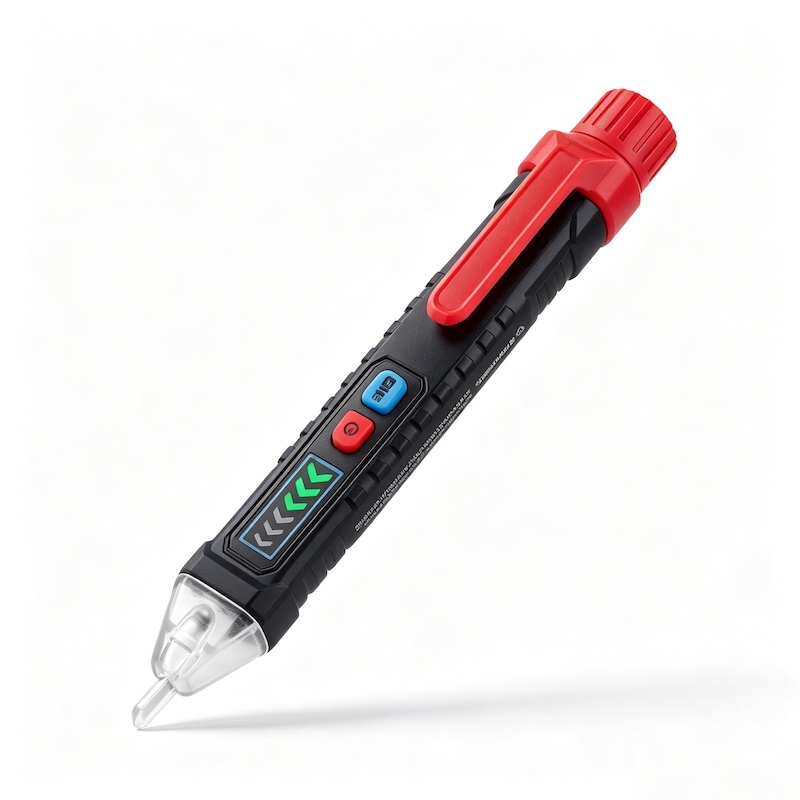
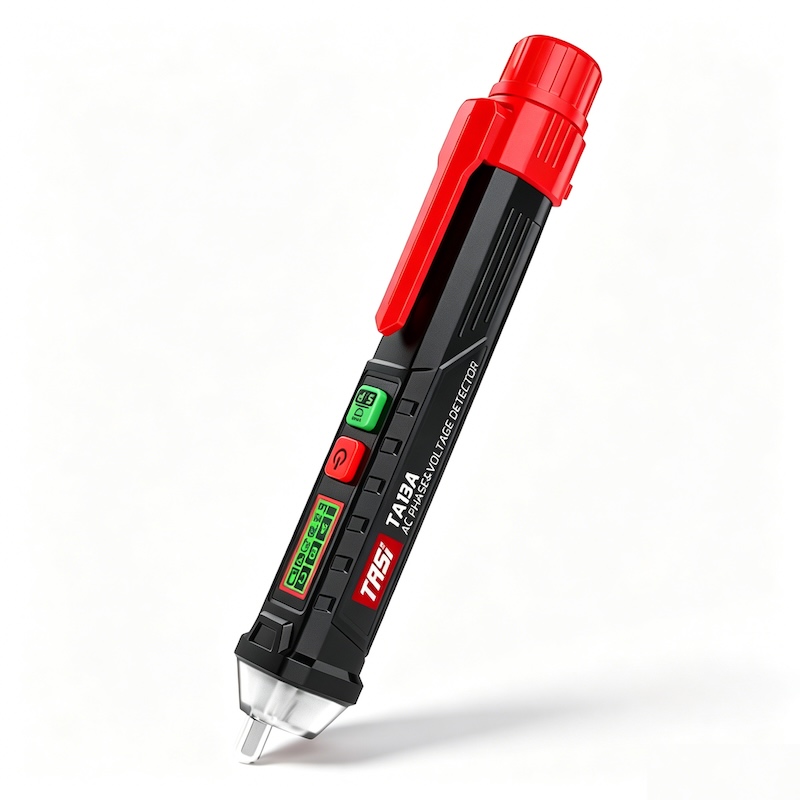
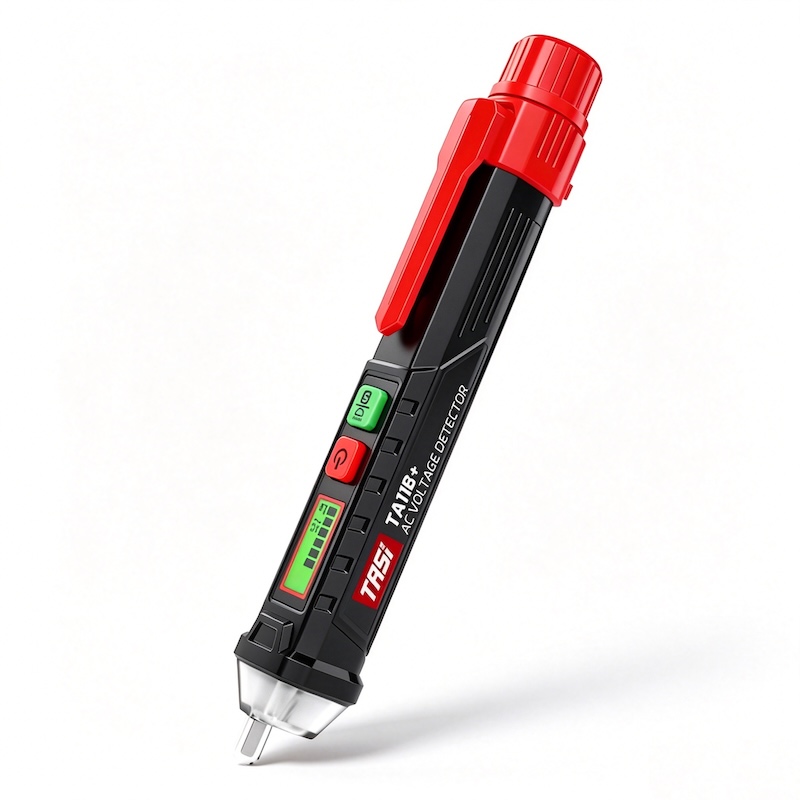
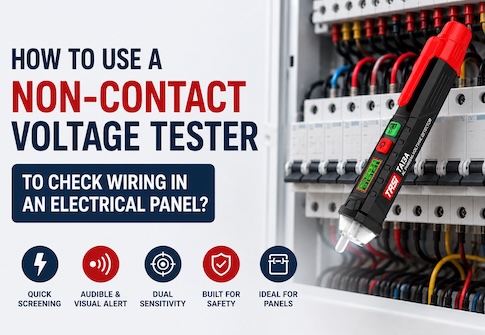
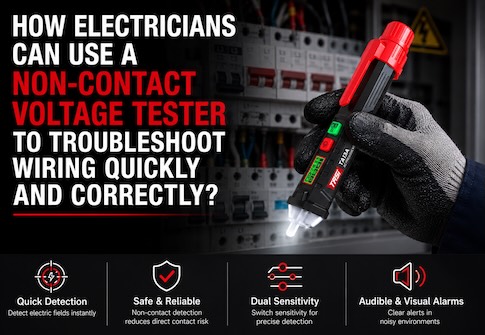
Power cords are normally covered by insulation, so it is not possible to determine visually whether the conductors inside are energized. A non-contact voltage tester (NCV tester) detects the alternating electric field surrounding an energized AC conductor, allowing a quick preliminary check without stripping insulation.
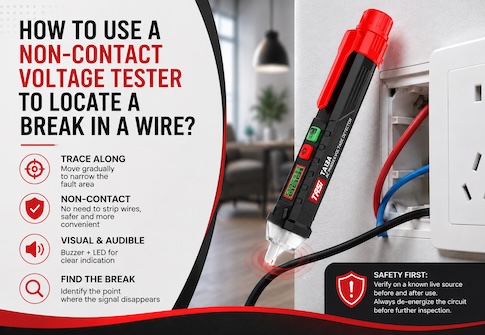
To test a cord, bring the sensing tip close to its insulated surface. If the electric field reaches the tester's detection threshold, the instrument normally responds with an LED indication, audible alarm, vibration, or a combination of these signals.
However, an NCV tester detects an electric field rather than directly measuring conductor voltage. Results can therefore be affected by voltage level, sensing distance, cable construction, insulation thickness, tester sensitivity, shielding, and nearby energized conductors. It is useful for rapid screening, but a single no-alarm result must not be treated as proof that the circuit is de-energized.
Key Points
● A non-contact voltage tester can detect the AC electric field through the insulation of many power cords.
● Before testing, verify the instrument on a known energized AC source.
● Keep the sensing tip close to the cord and scan slowly along several positions.
● Closely spaced live and neutral conductors may weaken, overlap, or alter the external electric field.
● An alarm indicates the presence of a detectable AC electric field; it does not provide an exact voltage value.
● No alarm does not, by itself, confirm that the cable is safe or de-energized.
● Before servicing equipment, disconnecting conductors, or touching exposed parts, use an appropriate contact-type test method in accordance with the applicable electrical safety procedure.
Why Can a Non-Contact Voltage Tester Detect a Power Cord?
A typical AC power cord contains a live conductor, a neutral conductor and, where applicable, a protective earth conductor. When AC voltage is present on the live conductor, it creates an alternating electric field around it.
The sensing circuit inside an NCV tester detects this field through capacitive coupling. Once the detected signal exceeds the tester's trigger threshold, the instrument activates its visual, audible or vibration alarm.
This means the insulation does not need to be punctured or removed, and the metallic conductor does not need to be touched.
The important distinction is that an NCV tester senses an electric field. It does not directly measure the potential difference between live and neutral in the way a digital multimeter or contact voltage tester does.
What Should Be Checked Before Testing?
● Inspect the tester housing and sensing tip for cracks, damage or other visible defects.
● Make sure the batteries have sufficient charge, as weak batteries may reduce sensitivity or prevent correct operation.
● Confirm that the tester's specified detection range is suitable for the expected voltage.
● If the tester provides multiple sensitivity ranges, select the appropriate setting for the application.
● Before testing the target cord, verify the tester on a known energized AC outlet or power cord.
This functional check is particularly important. A no-alarm result is only meaningful if the tester itself has first been confirmed to operate correctly.
How to Check Whether a Power Cord Is Live
● Switch on the tester. Follow the product instructions and confirm that the power-on indication, self-test or buzzer functions normally.
● Verify operation on a known live source. Bring the sensing tip close to a known energized AC outlet or cable and confirm that the tester responds.
● Move the sensing tip close to the power cord. Position the sensing end near the outer insulation. Do not pierce or remove the insulation.
● Scan slowly along the cord. Move the tester along the cable and observe whether a consistent alarm appears at different positions.
● Check different sides of the cord. In a multi-core cable, conductor position can affect field strength, so test from more than one side where practical.
● Check near the plug or connector. The plug end, strain-relief area and cable entry points can provide useful additional test locations.
● Repeat the test if necessary. If no alarm occurs, change the sensing angle, distance or sensitivity setting and test other locations along the cable.
● Verify the tester again after testing. Where practical, test the known energized source once more to confirm that the instrument remained operational throughout the procedure.
Using a known-live source before and after the target test helps reduce the risk of a false conclusion caused by battery failure, instrument malfunction or incorrect operation.
What Does an Alarm Mean?
If the tester produces a stable alarm when positioned close to the power cord, it usually indicates that an AC electric field above the tester's detection threshold is present nearby. This suggests that an energized conductor is likely to be present within the cable.
Detection generally becomes easier as the sensing tip moves closer to the energized conductor, as the voltage increases, or when a higher-sensitivity mode is selected.
However, the alarm does not indicate whether the voltage is 120 V, 230 V or another specific value. A standard NCV tester is not intended to replace a digital multimeter for quantitative voltage measurement.
Nearby energized cables, capacitively coupled voltages and high sensitivity settings can also produce an alarm. The result should therefore be interpreted in the context of the actual wiring environment.
Why Might a Live Power Cord Produce No Alarm?
● The sensing tip is too far from the live conductor. In a multi-core cable, the live conductor may be positioned on the opposite side of the cord.
● The insulation or outer sheath is thick. Additional insulation can reduce the electric field reaching the tester.
● Live and neutral are closely spaced. Their fields can partially oppose each other, reducing the external field available for detection.
● A low-sensitivity range is selected. Weak fields or lower voltages may not trigger the tester.
● Battery power is insufficient. Low battery condition can affect sensitivity and alarm performance.
● The cable is shielded. Metallic shielding can substantially reduce the external electric field.
● The actual voltage is outside the tester's specified detection range. A voltage below the instrument's threshold may not be detected.
● The tester is faulty. This is why verification on a known energized source is essential.
A no-alarm indication therefore means only that the tester did not detect an AC electric field strong enough to trigger it under the existing conditions. It does not automatically mean that the cable is de-energized.
Why Can Both Sides of a Power Cord Trigger an Alarm?
The live and neutral conductors inside a typical power cord are positioned close together, while an NCV tester responds to an electric field within a surrounding area rather than to only one conductor directly in front of the sensing tip.
With high sensitivity, a higher system voltage or a relatively small cable, the tester may detect the electric field from the live conductor from several sides of the cord.
Electric fields from nearby energized wiring can also increase the apparent detection area.
For this reason, it is not reliable to assume that one side of an intact power cord represents the live conductor and the other side represents neutral. When accurate conductor identification or voltage measurement is required, use a test method designed for that purpose.
What Safety Precautions Should Be Followed?
● Do not cut, pierce or strip the cable insulation simply to improve NCV detection.
● Do not treat a cable with damaged insulation, exposed conductors or burn marks as a normal intact power cord.
● Do not use the tester beyond its specified voltage range, measurement category or environmental limitations.
● Moisture, standing water and other unsuitable conditions can increase electrical risk; follow the instrument instructions and applicable electrical safety procedures.
● Never touch conductors or terminals solely because the NCV tester did not alarm.
● Before servicing equipment, replacing a plug, disconnecting conductors or carrying out other electrical work, verify the absence of voltage using an appropriate test method.
● Non-contact detection is useful for rapid screening, but it does not replace proper isolation and verification procedures.
Which Power Cords Are Suitable for NCV Testing?
Non-contact voltage testers are primarily intended for quick checks on common AC power wiring, including:
● Household appliance power cords.
● Extension cords and power strips.
● Office equipment power cables.
● AC lighting supply cables.
● Selected industrial equipment power cords.
● Standard AC cables between wall outlets and equipment.
Shielded cables, metallic-sheathed cables, very-low-voltage AC circuits and DC power cables should not be evaluated in the same way as ordinary AC power cords.
Most conventional NCV testers are designed primarily for alternating electric fields and are not suitable for reliably determining whether a standard DC conductor is energized.
FAQ
Can a non-contact voltage tester detect voltage through cable insulation?
Yes. This is one of its primary functions. Within its specified operating range, it can normally sense an AC electric field without contacting the metallic conductor.
If the tester alarms near a power cord, does that definitely mean the cord is energized?
It normally indicates that a detectable AC electric field is present nearby. The field may originate from the target cord or from adjacent energized wiring or capacitive coupling, so the actual installation should also be considered.
If there is no alarm, can I assume the power cord is de-energized?
No. Cable construction, shielding, sensing distance, sensitivity, battery condition and the tester's detection range can all produce a no-alarm result. Do not use a single NCV test as the sole confirmation of absence of voltage.
Why does the same cable alarm in some places but not others?
Internal conductor position, cable bending, insulation thickness, sensing distance and surrounding electric fields can all affect detection. Test from different positions and directions.
Can an NCV tester tell me the exact voltage of the power cord?
Normally no. It indicates the presence of an AC electric field rather than providing an accurate voltage value. Use an appropriate multimeter or voltage measuring instrument when a quantitative reading is required.
Can I use an NCV tester to identify which conductor inside a power cord is live?
It may provide an indication in some simple cable arrangements, but closely spaced conductors in a typical multi-core power cord can produce overlapping fields. NCV detection should therefore not be used as the sole method of conductor identification.
Can a non-contact voltage tester detect DC power cables?
Conventional NCV testers are mainly designed to sense alternating electric fields and generally cannot reliably detect steady DC voltage. Refer to the specifications of the specific instrument.
Conclusion
A non-contact voltage tester is a practical tool for quickly checking whether an AC power cord may be energized. Correct practice is to verify the tester on a known live source, scan the target cable from several positions and directions, and interpret the alarm as an indication of a nearby AC electric field.
Because the tester senses an electric field rather than directly measuring conductor voltage, cable construction, insulation, conductor spacing, sensitivity settings and nearby wiring can all influence the result.
An alarm should be treated as an important indication of possible voltage presence. A no-alarm result, however, must not be used by itself as proof that the circuit is safely de-energized. Before electrical servicing or contact with conductors, use an appropriate voltage verification procedure.