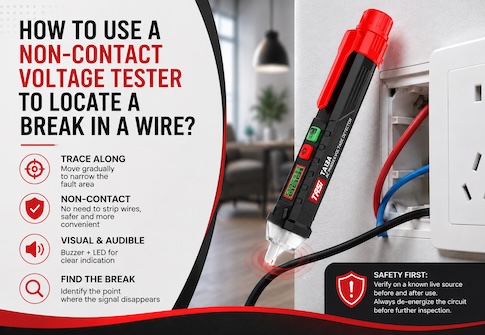
Introduction
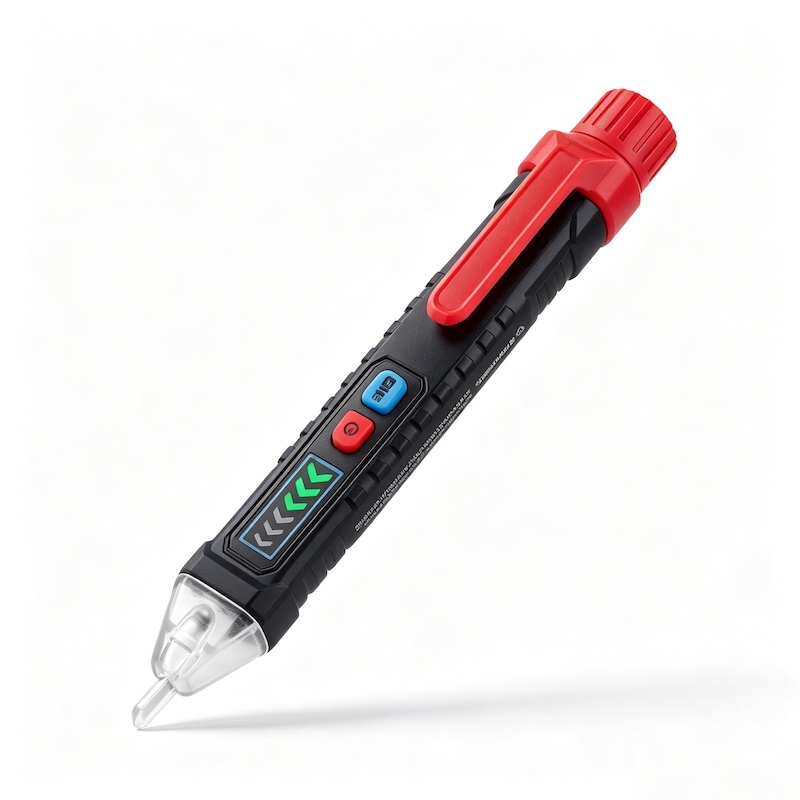
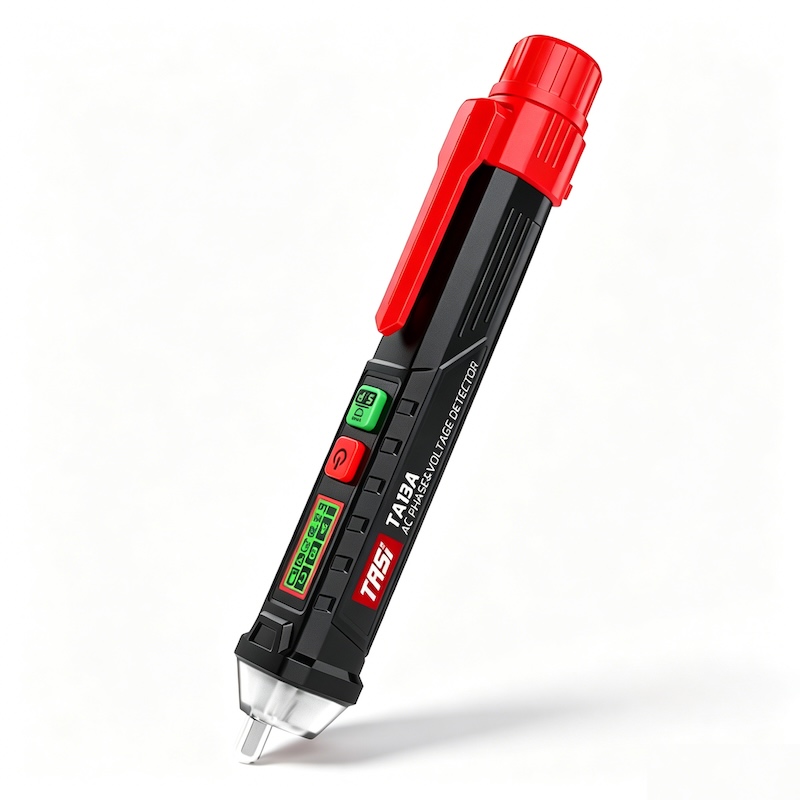
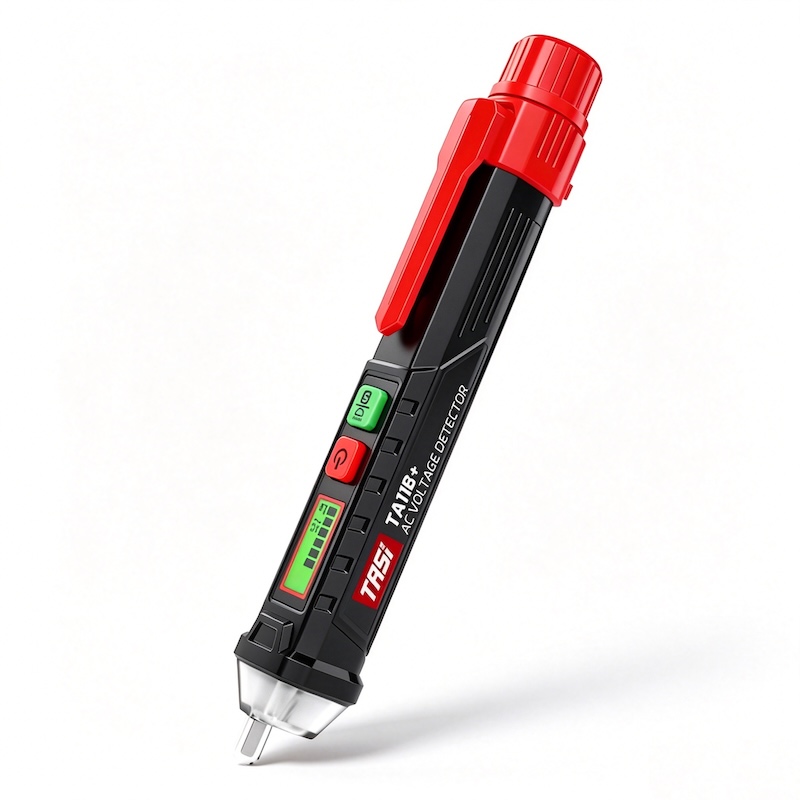
In electrical installation, maintenance, and troubleshooting, it is often necessary to determine whether a conductor is live or neutral. Traditional methods typically require a multimeter or another contact-type voltage tester. A non-contact voltage tester, by contrast, can detect the presence of an AC electric field without touching an exposed conductor.
In a typical single-phase AC circuit, the live conductor is at an AC potential relative to earth and therefore creates a relatively strong alternating electric field. The neutral conductor is normally close to earth potential, so its detectable electric field is generally much weaker.
By comparing the response of a non-contact voltage tester near each conductor, the user can therefore make a preliminary distinction between live and neutral.
However, an NCV tester detects an AC electric field; it does not directly measure the voltage between live and neutral. It can help identify the conductor that is more likely to be live, but it cannot guarantee correct conductor identification under every wiring and environmental condition.
Key Takeaways
● A non-contact voltage tester primarily identifies possible live conductors by sensing an AC electric field.
● Under normal conditions, a live conductor produces a clear alert, while a neutral conductor produces a weaker response or no response.
● Live and neutral conductors should be tested separately under similar distance and sensitivity conditions.
● High-sensitivity NCV testers can respond to capacitive coupling, nearby live conductors, or induced voltage.
● Multicore cables, shielding, moisture, conductor spacing, and wiring configuration can influence NCV results.
● Non-contact testing is suitable for rapid screening but should not be the only method used to confirm conductor identity or absence of voltage.
Why Can a Non-Contact Voltage Tester Help Identify Live and Neutral Wires?
A non-contact voltage tester contains an electric-field sensing circuit. When the sensing tip approaches an energized AC conductor, the alternating electric field around that conductor creates a very small signal through capacitive coupling.
The tester detects and amplifies this signal. Once the signal exceeds its internal threshold, the instrument indicates the presence of voltage through an LED, buzzer, display symbol, or a combination of these.
In a typical low-voltage single-phase AC system:
● The live conductor (Line / Live) normally has an AC voltage relative to earth and therefore generates a relatively strong alternating electric field.
● The neutral conductor is normally referenced close to earth potential, so the electric field detected around it is generally much weaker than around the live conductor.
This difference in electric-field strength is what allows an NCV tester to assist in distinguishing live from neutral.
What Happens When Testing a Live Wire?
When the sensing tip is brought close to an energized live conductor, the tester will usually produce a clear response, such as:
● An LED illuminating or flashing;
● An audible buzzer;
● A voltage-presence symbol on models with a display;
● A change in flash rate or buzzer frequency on testers with multiple sensitivity or signal-strength indications.
As the tip moves closer to the live conductor, the sensed electric field usually becomes stronger, so the indication may also become more pronounced.
However, the strength of the indication does not represent an exact voltage value. Most NCV testers indicate whether an AC electric field exceeds a detection threshold; they do not determine actual line voltage from the buzzer rate or LED intensity.
What Happens When Testing a Neutral Wire?
Under normal wiring conditions and in a relatively interference-free environment, bringing an NCV tester close to the neutral conductor will usually produce no alarm or a noticeably weaker response than the live conductor.
For example, when two separated conductors are tested individually:
● Conductor A produces a strong and continuous visual and audible indication.
● Conductor B produces little or no response.
In this case, conductor A is more likely to be the live conductor, while conductor B is more likely to be neutral.
However, a non-response does not automatically mean that a conductor is neutral. The conductor may also be de-energized, too far from the sensing tip, covered by thick insulation, shielded, or below the tester's sensitivity threshold.
For this reason, “alarm = live” and “no alarm = neutral” should not be treated as an absolute rule.
How to Use an NCV Tester to Distinguish Live and Neutral
A more reliable approach is to compare both conductors under the same test conditions rather than testing only one conductor.
A typical procedure is:
● Confirm that the tester is operating correctly according to the manufacturer's instructions and select an appropriate sensitivity range.
● Check the tester on a known energized source to verify that its visual and audible indications operate normally.
● Where safe and practical, separate the conductors sufficiently to reduce mutual electric-field influence.
● Bring the sensing tip close to each conductor using approximately the same position and distance.
● Compare the response from the two conductors.
● The conductor producing the stronger and more stable indication is normally more likely to be live.
● The conductor producing little or no indication is normally more likely to be neutral.
● If both conductors produce a strong indication or the results are unstable, verify the circuit using an appropriate contact-type voltage measurement method.
Comparative testing is generally more informative than identifying a conductor from a single NCV reading.
Why Do Both Live and Neutral Sometimes Trigger the Tester?
This is a common occurrence with non-contact voltage testing and does not necessarily mean that both conductors have the same voltage relative to earth.
One of the main reasons is capacitive coupling and induced voltage.
When live and neutral conductors run parallel over a significant distance, the alternating electric field from the live conductor can couple into nearby conductors. A high-sensitivity NCV tester may detect this weaker field around the neutral conductor and produce an alarm.
This is especially likely when:
● Live and neutral conductors are positioned very close together;
● Several energized conductors are grouped in the same conduit or cable trunking;
● A high-sensitivity NCV mode is selected;
● Conductors run parallel over a long distance;
● The neutral is disconnected or floating;
● Other energized wiring is located near the test point.
Therefore, if both conductors trigger an NCV tester, it should not automatically be concluded that both are live conductors.
Why Does Separating the Conductors Improve Identification?
A non-contact voltage tester senses the electric field within a certain area around its tip. It does not isolate an infinitely small point directly in front of the sensor.
If live and neutral conductors are positioned tightly together, the tester may detect the electric field from the nearby live conductor even when the sensing tip is placed close to the neutral.
Separating the conductors can:
● Make the live conductor's electric field easier to detect independently;
● Reduce the influence of the live conductor on the neutral side;
● Increase the difference between the two NCV responses.
Where it can be done safely, testing separated conductors is therefore usually more effective than moving the tester across the outside of a complete multicore cable.
Are Dual-Sensitivity NCV Testers Better for Identifying Live and Neutral?
A dual-sensitivity non-contact voltage tester normally provides a high-sensitivity mode and a lower-sensitivity mode, which can be useful when comparing adjacent conductors.
High sensitivity allows the tester to detect weaker electric fields and is useful for locating concealed wiring or performing an initial scan from a greater distance. However, it is also more susceptible to nearby energized conductors and induced electric fields.
Lower sensitivity requires a stronger signal to trigger an indication and can therefore help reduce unwanted responses caused by adjacent wiring.
If both live and neutral appear to trigger the tester in high-sensitivity mode, try:
● Moving the sensing tip closer to the individual conductor;
● Separating the conductors where safe;
● Switching to the lower-sensitivity mode;
● Comparing both conductors again under the same conditions.
If only one conductor produces a stable and clear indication in the lower-sensitivity mode, that conductor is generally more likely to be live.
Why Can an NCV Tester Detect Voltage Through Wire Insulation?
A non-contact voltage tester does not require current to flow directly from the conductor into the sensing tip, so the wire insulation normally does not need to be removed.
The alternating electric field around an AC live conductor can couple through common non-metallic insulating materials. If the resulting signal at the sensing tip is strong enough, the tester can respond.
This allows preliminary detection through materials such as:
● PVC wire insulation;
● Plastic socket or outlet covers;
● Typical non-metallic cable sheaths.
However, insulation thickness, conductor depth, shielding materials, and sensing distance all affect detection sensitivity. No indication through an insulating material does not by itself prove that voltage is absent.
What Can Cause Incorrect Live/Neutral Identification?
Non-contact voltage detection can be influenced by both the wiring arrangement and surrounding environment. Potential causes of incorrect interpretation include:
● Multicore cables: Live, neutral, and other conductors are close together, allowing their electric fields to influence the reading.
● Induced voltage: Nearby energized conductors can capacitively couple a detectable signal into another conductor.
● High-sensitivity mode: A wider detection range increases the likelihood of detecting surrounding electric fields.
● Shielding: Metal shielding, metallic conduit, or other conductive structures can reduce the external electric field.
● Different sensing distances: Comparing conductors at different distances can produce misleading differences in signal strength.
● Wiring faults: A broken neutral, incorrect connection, or other abnormal circuit condition can invalidate the normal live/neutral relationship.
● Nearby energized wiring: The tester may respond to an electric field from a conductor other than the intended test conductor.
If the result is uncertain, another appropriate voltage measurement method should be used for verification.
Can You Identify the Live Wire Through a Wall or Cable Sheath?
An NCV tester can help locate areas where an AC electric field is present behind a wall or around a cable, but accurately determining which internal core is live becomes considerably more difficult.
In a complete two-core or three-core cable, the internal conductors are positioned close together. Testing from outside the sheath usually detects the combined electric-field influence of several conductors rather than the field of one individual core.
Therefore:
● NCV detection can be used as a quick indication that a cable may be energized;
● It should not normally be used to determine exactly which core inside an intact multicore cable is live;
● If specific conductor identification is required, an appropriate verification method should be used under safe working conditions.
Can an NCV Tester Confirm That the Neutral Is Completely Safe?
No.
Under normal operating conditions, the neutral conductor is usually close to earth potential, but this does not mean it should always be considered safe to touch.
Circuit faults, an open neutral, incorrect wiring, connected loads, or other abnormal conditions can cause the neutral conductor to develop an unexpected potential.
In addition, an NCV tester has a defined detection threshold. If it does not indicate voltage, this only means that under the current test conditions it has not detected an AC electric field strong enough to trigger the tester. It does not prove that the conductor is at zero volts.
Before wiring, disassembly, or electrical maintenance, an NCV tester should therefore not be the only means used to verify that a conductor is de-energized.
What Is the Difference Between an NCV Tester and a Multimeter for Live/Neutral Identification?
A non-contact voltage tester and a multimeter operate in different ways.
An NCV tester senses an AC electric field without direct electrical contact. It is fast and convenient for locating conductors that may be energized and for preliminary live-wire identification.
A multimeter makes electrical contact through test probes and can directly measure the voltage between selected test points, providing an actual voltage value.
In simple terms:
● An NCV tester is better suited to quickly answering, “Is an AC electric field likely to be present here?”
● A suitable contact-type voltage measuring instrument is better suited to confirming the actual electrical potential between test points.
The two types of instruments serve different purposes and should not be considered direct substitutes for one another.
Important Precautions When Identifying Live and Neutral
To improve reliability when using a non-contact voltage tester:
● Verify the tester on a known energized source before use.
● Confirm the instrument's supported AC voltage range and sensitivity settings.
● Test conductors individually rather than relying only on the response from an entire cable bundle.
● Maintain approximately the same sensing distance when comparing conductors.
● If both wires trigger the tester in high-sensitivity mode, repeat the comparison using lower sensitivity where available.
● Do not estimate actual voltage from buzzer frequency or LED intensity.
● No indication must not automatically be interpreted as absence of voltage.
● If the result is uncertain, use an appropriate contact-type voltage test for confirmation.
● Follow applicable electrical safety procedures before installation, disassembly, or maintenance work.
The main advantage of NCV testing is speed and convenience. Correct use depends on understanding both what the tester detects and what its indication cannot prove.
FAQ
Q1: If an NCV tester alarms, does that always mean the wire is live?
Not necessarily. A strong and stable indication usually means a significant AC electric field is present and the conductor is more likely to be live. However, nearby energized conductors, capacitive coupling, and induced voltage can also cause an indication.
Q2: Why can the neutral wire sometimes trigger an NCV tester?
The most common reason is capacitive coupling from a nearby live conductor. High-sensitivity NCV testers are particularly likely to detect these weaker electric fields.
Q3: What should I do if both live and neutral trigger the tester?
Where safe, separate the conductors, reduce the sensitivity, and compare them again at equal distances. If the result remains unclear, use an appropriate contact-type voltage measurement method.
Q4: Is the wire that does not trigger the tester definitely neutral?
No. A conductor may fail to trigger the tester because the circuit is de-energized, the sensing distance is too large, the insulation is thick, the conductor is shielded, or the signal is below the tester's detection threshold.
Q5: Can I identify the live core through an intact multicore cable sheath?
Generally, this is not reliable. The internal conductors are close together, so the tester can respond to the combined electric fields from several cores.
Q6: Is a dual-sensitivity NCV tester better for distinguishing live and neutral?
It can be helpful. High sensitivity is useful for detecting weak fields, while lower sensitivity can reduce interference from nearby conductors and make comparative testing easier.
Q7: Can an NCV tester replace a multimeter?
No. An NCV tester is designed mainly for rapid non-contact screening, while a multimeter or other suitable contact-type instrument can measure actual voltage between test points.
Q8: Can I start electrical work if the NCV tester does not alarm?
No. Lack of an NCV indication alone does not prove that a conductor is de-energized. Appropriate safe isolation and voltage verification procedures should be followed before electrical work.
Conclusion
A non-contact voltage tester helps distinguish live and neutral conductors by detecting the difference in their AC electric-field strength relative to earth. Under normal conditions, the live conductor usually produces a clear visual or audible indication, while the neutral conductor produces a weaker response or none.
For more reliable results, conductors should be tested individually and compared under the same sensing distance and sensitivity settings. The simple rule “alarm means live, no alarm means neutral” should not be applied universally.
Because capacitive coupling, induced voltage, multicore cables, nearby wiring, and abnormal circuit conditions can all influence an NCV tester, non-contact detection is best treated as a rapid screening and preliminary identification method. Where conductor identity, actual voltage, or absence of voltage must be confirmed, an appropriate contact-type testing method should also be used.