Introduction
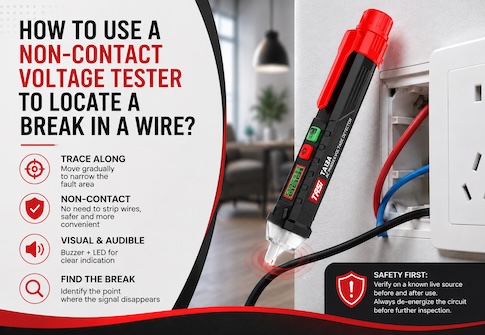
When a power cord, extension lead, lighting circuit, or equipment wire develops an internal break, the fault may be hidden beneath the insulation and difficult to identify visually. On some energized AC circuits, a non-contact voltage tester can be moved along the conductor to detect changes in the surrounding electric field and help narrow down the possible fault area.
This method is convenient because it normally does not require direct contact with exposed conductors or removal of insulation. However, an important limitation must be understood: a non-contact voltage tester detects an AC electric field; it does not directly detect a physical break in the conductor. It is therefore best used as a preliminary troubleshooting tool rather than as a substitute for a multimeter, continuity tester, or other instrument used for final verification.
Key Points
● A non-contact voltage tester can help locate a possible break in some energized AC wires, but it is not a dedicated wire-fault locator.
● The basic method is to start at a confirmed energized end and move the tester gradually along the wire.
● If the tester responds consistently before a certain point but the indication weakens or disappears beyond it, the break may be nearby.
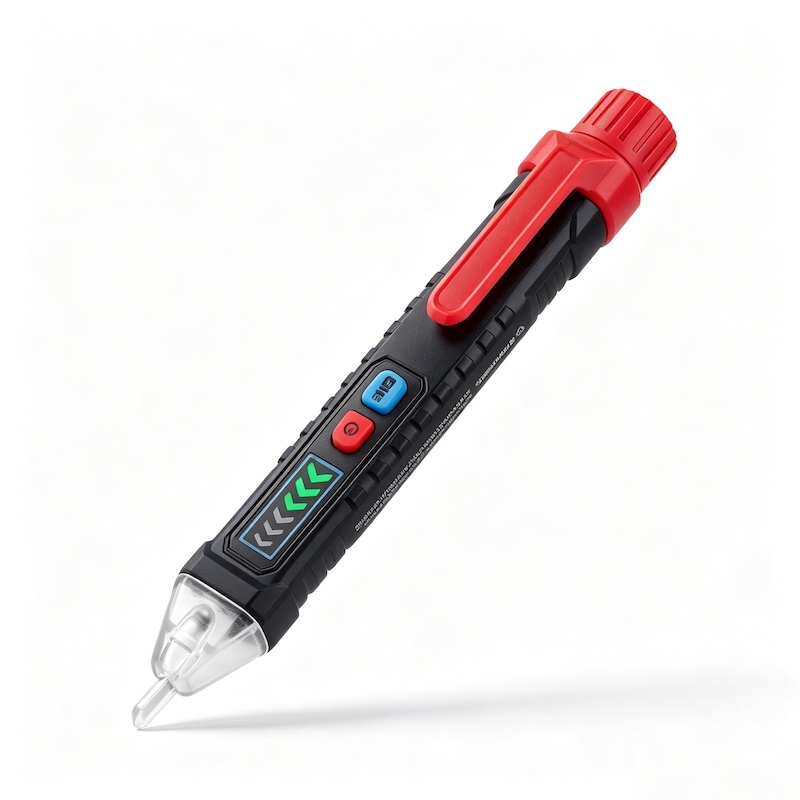
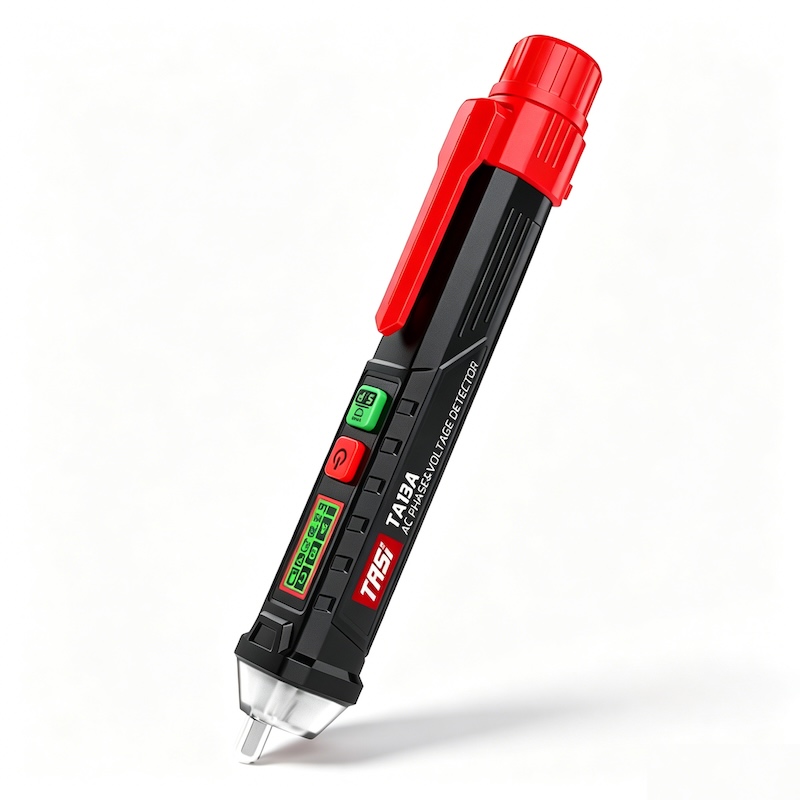
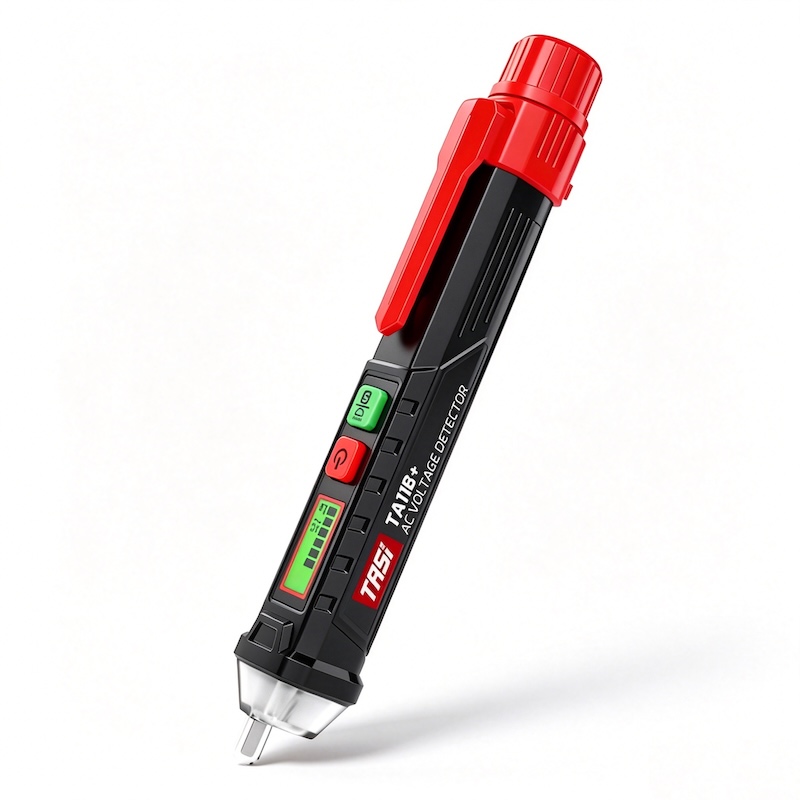
● High-sensitivity or dual-sensitivity NCV testers are generally more flexible for this type of troubleshooting.
● Adjacent live conductors, shielding, wall materials, cable construction, and probe distance can all affect the result.
● After identifying a suspected fault area, use an appropriate contact measurement method for confirmation.
Why Can a Non-Contact Voltage Tester Help Locate a Wire Break?
A non-contact voltage tester detects the alternating electric field around an energized AC conductor. When the sensing tip is brought close enough to a live wire, the internal detection circuit responds and typically activates a visual, audible, or combined alarm.
If an AC conductor is completely broken and energized from only one end, the section between the supply and the break may remain live, while the conductor beyond the break may no longer have the same electrical condition.
When the tester is moved along the wire, the following pattern may therefore be observed:
● Before the break: a stable AC field is detected and the tester responds.
● Near the break: the alarm behavior may change noticeably.
● Beyond the break: the response may weaken significantly or disappear.
By repeating the test and narrowing down the area where the signal changes, the likely fault zone can often be identified.
In practice, however, capacitive coupling, nearby energized conductors, and cable construction can influence the electric field. The point where the alarm changes should therefore not be treated as an exact physical break location.
When Is This Method Suitable?
Using an NCV tester to trace a wire break is most practical when the conductor is energized with AC and the sensing tip can be moved along the cable.
Typical applications include:
● AC power cords;
● extension leads and power strips during preliminary troubleshooting;
● lighting cables;
● AC input wiring in some appliances;
● accessible insulated conductors;
● equipment wiring that can be traced continuously.
The method becomes less reliable when the conductor is enclosed in metal conduit, covered by shielding, buried deeply inside a wall, or bundled closely with several other energized wires.
It is also generally unsuitable for locating breaks in DC wiring because most standard non-contact voltage testers are designed primarily to detect alternating electric fields.
How to Use a Non-Contact Voltage Tester to Locate a Wire Break
Before testing, understand how the circuit is supplied and confirm that the NCV tester is functioning correctly.
● Verify the tester first. Test it on a known live AC outlet or conductor and confirm that the visual and audible indications operate correctly.
● Confirm that AC voltage is present. If the circuit is not energized, an NCV tester normally cannot locate a break by detecting changes in the electric field.
● Start from the supply end. Place the sensing tip near the end of the wire closest to the power source and confirm a stable response.
● Move slowly along the wire. Keep the sensing distance and probe orientation as consistent as possible while moving toward the opposite end.
● Observe changes in the alarm. If the tester responds consistently along one section but becomes significantly weaker or stops responding at a certain point, inspect that area more closely.
● Repeat the test in both directions. Retrace the wire several times and change the direction of travel to reduce the chance of misinterpreting a temporary or environmental effect.
● Narrow down the suspected area. Around the signal transition point, move the tester in smaller increments to refine the possible fault zone.
● Confirm with another instrument. After safely de-energizing the circuit using the correct procedure, use a multimeter in continuity mode or another suitable method to verify whether the conductor is actually open.
A single change in the NCV indication should never be treated as conclusive proof of the exact break location.
Why Should Testing Start from the Supply End?
Wire-break troubleshooting depends on comparing the electric-field response at different points along the same conductor.
Starting from a confirmed energized end establishes a reliable reference. As the tester moves away from the supply, any repeatable and persistent change in the indication becomes easier to interpret.
If the energized end is unknown, or if the electrical condition at both ends is unclear, isolated NCV readings can be difficult to interpret correctly.
For this reason, confirming the supply end first and then tracing the conductor progressively is generally more reliable than checking random points along the cable.
Why Is the Alarm Transition Point Not Always the Exact Break Location?
A non-contact voltage tester does not measure voltage through direct electrical contact. It responds to the electric field around a conductor, so the result is influenced by the surrounding environment.
For example, the section beyond a physical break may still produce an NCV response if it runs closely alongside another energized conductor. Capacitive coupling can induce an electric field strong enough for a sensitive tester to detect.
Conversely, a conductor that is still live may produce a weaker response if the insulation is thick, the sensing distance increases, or a shielding structure reduces the detectable field.
For this reason, the objective is usually to identify a region where the signal changes significantly, rather than to expect the tester to identify an exact break location to the millimetre.
What Factors Can Affect Wire-Break Detection?
Several conditions can influence the result when using an NCV tester for fault tracing:
● Adjacent energized conductors: Electric fields from nearby live wires may cause the tester to continue responding beyond the actual break.
● Multi-core cables: Closely spaced line, neutral, and other conductors can influence one another.
● Metal shielding: Metal sheaths, conduit, or shielding layers can reduce the electric field available for detection.
● Insulation thickness: Thicker insulation increases the distance between the sensor and the conductor.
● Probe distance: Changes in the distance between the tester and the cable can change the response.
● Tester sensitivity: Insufficient sensitivity may cause missed detection, while excessive sensitivity may increase interference from nearby circuits.
● Circuit voltage: Lower AC voltages generally produce weaker detectable electric fields.
● User and environmental conditions: Hand position, grounding conditions, and the surrounding electrical environment may affect some NCV measurements.
For meaningful comparisons, keep the sensing distance, orientation, and testing technique as consistent as possible.
Is a Single-Sensitivity or Dual-Sensitivity Tester Better for Locating Wire Breaks?
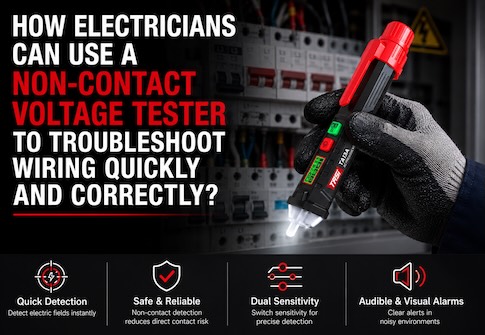
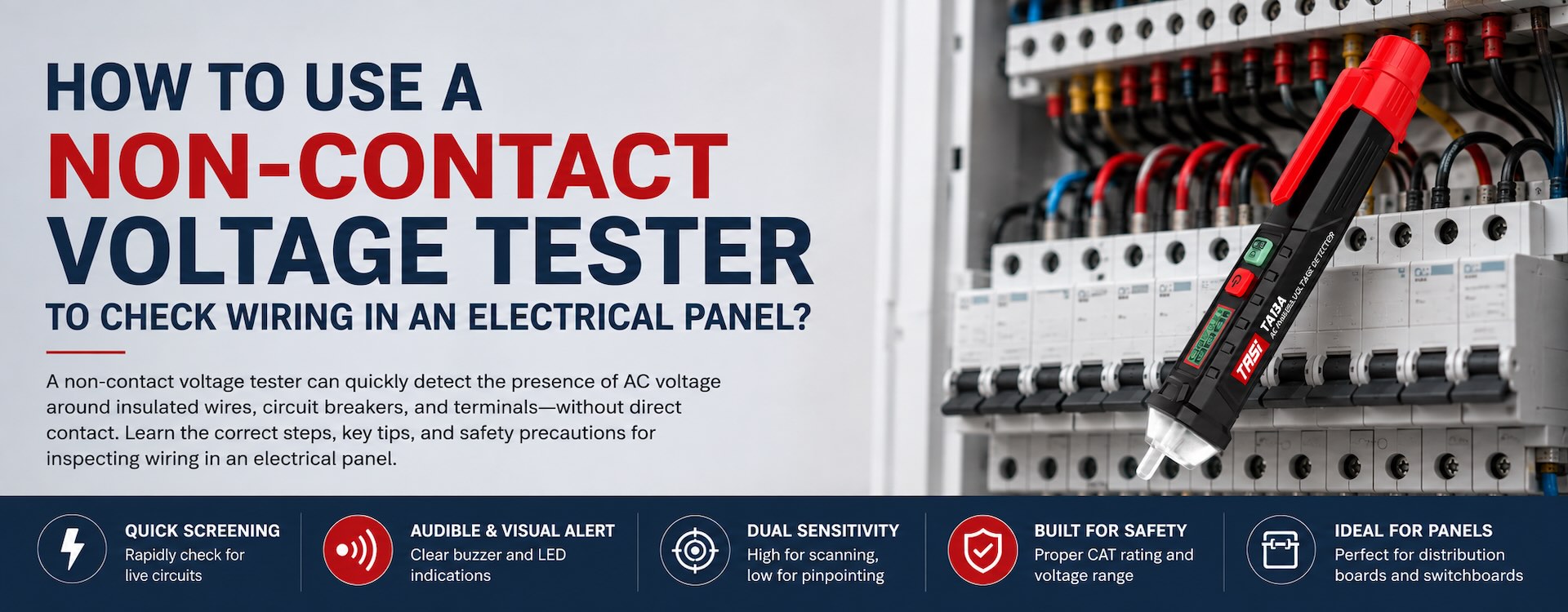
For users who regularly perform circuit troubleshooting, a dual-sensitivity non-contact voltage tester generally provides greater flexibility.
A high-sensitivity mode can help detect weaker AC electric fields during the initial search. A lower-sensitivity mode can then help reduce interference from nearby energized conductors and narrow down the suspected fault area.
For example, some testers may offer ranges such as 12–1000 V and 50–1000 V. A mode with a lower starting voltage generally provides higher sensitivity, although actual performance depends on the instrument design and the testing environment.
For basic live/dead checking, a single-sensitivity tester may be sufficient. For more demanding circuit tracing and fault isolation, dual-sensitivity operation is usually more practical.
What Should You Look for When Selecting an NCV Tester for Wire-Break Troubleshooting?
If wire tracing and fault troubleshooting are part of the intended use, consider the following specifications and features:
● Detection voltage range: A wider range provides compatibility with more common AC circuits.
● Sensitivity settings: Dual or multiple sensitivity levels make it easier to balance detection range and interference rejection.
● Audible and visual alarms: Combined LED and buzzer indications are easier to monitor in demanding working environments.
● Response speed: A prompt response helps identify signal transitions while moving along a conductor.
● Probe design: A more localized sensing area can make progressive wire tracing easier.
● Safety category: Select an appropriate CAT rating and voltage rating for the intended electrical environment.
● Self-test or low-battery indication: These features help reduce incorrect conclusions caused by a weak battery or instrument malfunction.
Higher sensitivity is not always better. In installations containing many closely spaced energized wires, excessive sensitivity can make fault localization more difficult.
Which Types of Wire Breaks May Be Difficult to Detect?
Not every open-circuit fault can be reliably identified with an NCV tester.
Examples include:
● a conductor that is only partially broken and still makes intermittent contact;
● both sides of the break being strongly influenced by nearby energized wires;
● shielded cables;
● wires installed inside metal conduit;
● multiple energized conductors bundled closely together;
● circuits that are not energized with AC;
● faults in a neutral or protective conductor while a nearby line conductor remains energized;
● deeply concealed wiring that cannot be approached closely enough by the sensing tip.
In these situations, use a multimeter, continuity tester, or dedicated cable tracer as appropriate.
Can an NCV Tester Be Used to Find a Broken Wire Inside a Wall?
It can sometimes provide preliminary clues, but the reliability is generally lower than when testing an accessible conductor directly.
Wall materials increase the distance between the sensor and the wire. Deeply buried cables, metal conduit, or other nearby energized conductors can further complicate the electric-field pattern.
A standard non-contact voltage tester is not a dedicated in-wall cable locator. A sudden change in indication on the wall surface should therefore not be treated as proof that a conductor is broken at that exact location.
For concealed wiring, use the NCV result only as an initial troubleshooting indication and confirm the fault with an appropriate diagnostic method.
What Safety Precautions Should Be Followed?
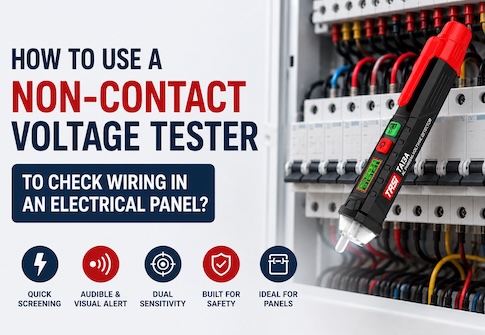
Non-contact testing reduces the need to touch exposed conductors, but it does not eliminate electrical hazards.
● Verify the tester on a known live source before and after use.
● Never touch a conductor simply because the NCV tester does not respond.
● Check the housing, sensing tip, and battery condition before use.
● Do not exceed the tester's rated voltage or CAT category.
● Before stripping, disconnecting, or performing continuity measurements, de-energize the circuit using the correct safety procedure.
● For critical electrical work, verify circuit status with an appropriate contact-type instrument.
The absence of an NCV alarm must not be used as the sole confirmation that a circuit is safely de-energized.
FAQ
Can a non-contact voltage tester really locate a broken wire?
It can help identify a suspected fault area in some energized AC circuits by detecting changes in the electric field. It does not directly detect the physical break in the conductor.
Why does the tester still respond beyond the break?
Nearby energized conductors, capacitive coupling, or a high-sensitivity setting may cause the disconnected section to produce a detectable electric field.
Is the point where the alarm stops always the break location?
No. The change in indication normally identifies a suspected area only. Further testing is required to determine the actual fault.
Should high or low sensitivity be used?
A practical approach is to begin with higher sensitivity for the initial search and then use lower sensitivity to narrow down the area. Dual-sensitivity testers are particularly useful for this purpose.
Can a non-contact voltage tester locate a break after the circuit is switched off?
Normally not by this method, because the tester depends on detecting the electric field produced by energized AC wiring. With the circuit de-energized, use an appropriate continuity test instead.
Can an NCV tester locate a break in a neutral conductor?
This is generally difficult. An NCV tester senses AC electric fields and cannot reliably identify every neutral-conductor fault. Additional measurement methods should be used.
Conclusion
A non-contact voltage tester can use changes in the electric field around an energized AC conductor to help identify possible breaks in power cords, extension leads, and some equipment wiring. In practice, start from a confirmed energized supply end, maintain a consistent sensing distance, move progressively along the conductor, and use repeatable changes in the alarm to narrow down the suspected fault area.
For frequent troubleshooting, an NCV tester with a wide detection range, dual sensitivity, clear audible and visual alarms, and an appropriate safety category is generally more versatile.
However, remember that an NCV tester detects an AC electric field, not conductor continuity. Nearby wiring, capacitive coupling, insulation thickness, and shielding can all affect the result. Once a suspected break has been identified, confirm it with an appropriate contact measurement method under safe conditions.