Introduction
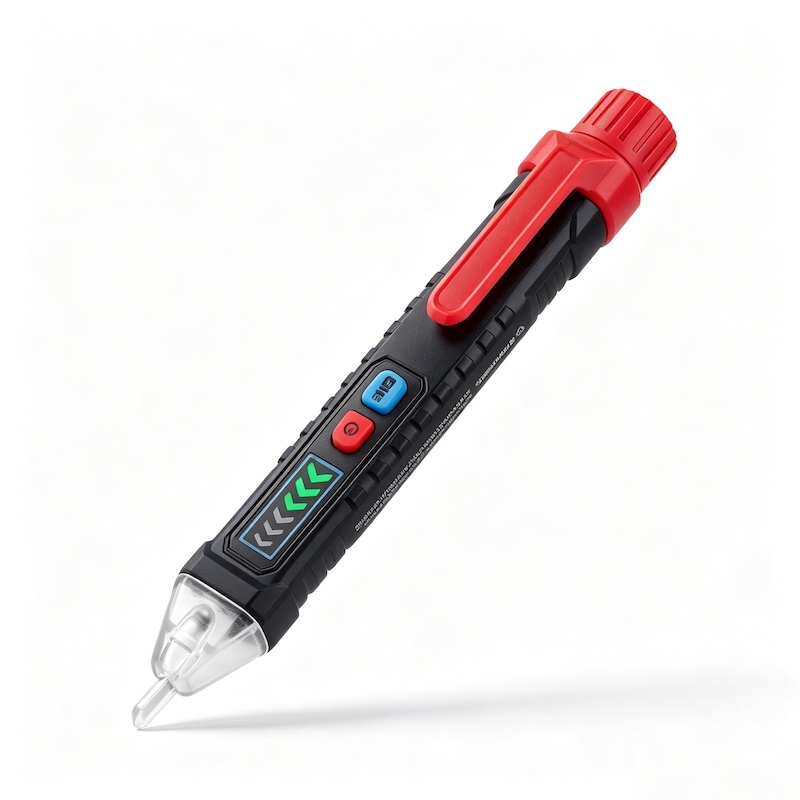
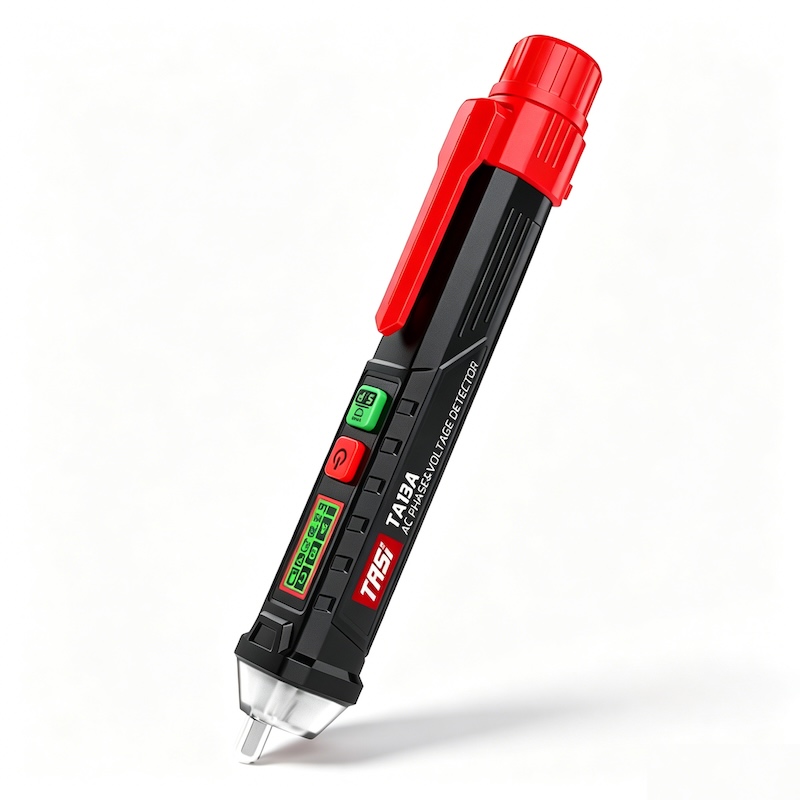
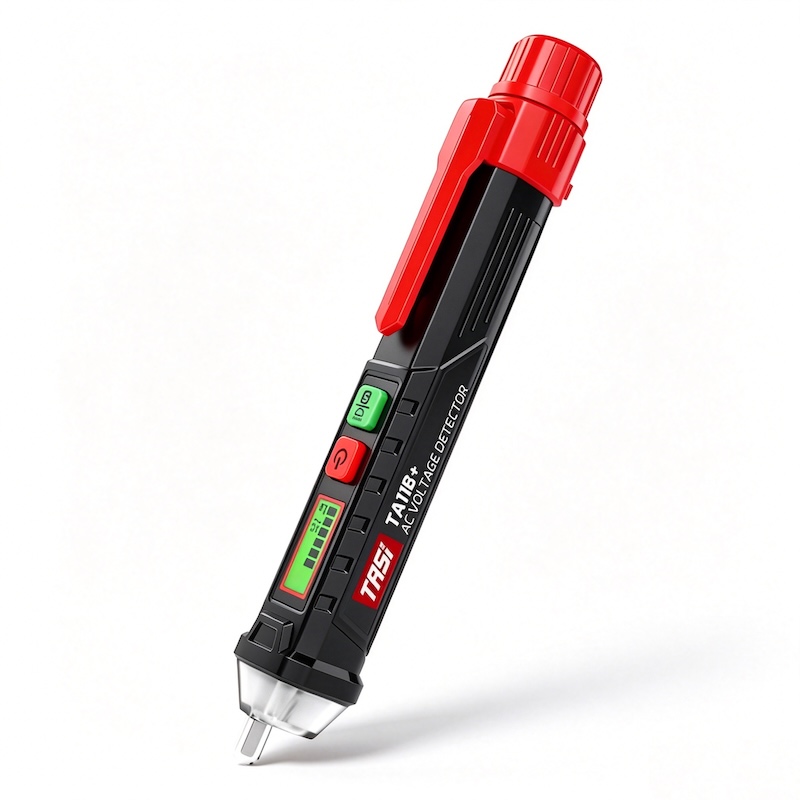
You switch off a breaker or disconnect a circuit, the equipment stops operating, yet a non-contact voltage tester still produces an audible or visual warning when brought near the wire.
This is a common situation and does not necessarily mean that the conductor is still capable of supplying normal operating power.
The main reason is that a non-contact voltage tester detects an AC electric field rather than directly measuring the voltage between conductors or the amount of current a circuit can deliver.
If a sufficiently strong alternating electric field is present—perhaps due to nearby energized conductors, capacitive coupling, or induced voltage—the tester may respond.
For this reason, a tester alarm should not automatically be interpreted as proof that the target conductor is normally energized.
However, suspected induced voltage must never be treated as proof that the circuit is safe. Before electrical work begins, the absence of hazardous voltage should be confirmed with an appropriate contact-type test instrument and an established safe-isolation procedure.
Key Takeaways
● A non-contact voltage tester primarily detects an AC electric field; it does not directly measure load current.
● A disconnected conductor running alongside energized wiring can develop induced or ghost voltage through capacitive coupling.
● Parallel wiring in conduits, cable trays, multicore cables, and distribution panels commonly produces this effect.
● High-sensitivity modes increase detection range but also make the tester more responsive to weak coupled electric fields.
● Static electricity, strong surrounding electric fields, and some electronic equipment can also cause intermittent indications.
● An NCV tester is useful for rapid screening but should not be the sole instrument used to prove that a circuit is de-energized.
Why Can a Voltage Tester Still Beep After Power Is Switched Off?
A non-contact voltage tester, often referred to as an NCV tester, typically uses an internal sensing circuit to detect the changing electric field generated by AC voltage.
When the sensing tip approaches an energized conductor, very small capacitive paths exist between the conductor, tester, user, and surrounding environment. If the detected AC signal exceeds the instrument's threshold, the tester activates its buzzer, indicator light, display, or vibration alert.
The tester therefore does not need to make metal-to-metal contact with the conductor, and substantial load current does not need to be flowing.
Consequently, even if a conductor has been disconnected from its power source, a nearby energized AC conductor can still influence it electrically and cause an NCV tester to respond.
Induced or Ghost Voltage Is One of the Most Common Causes
In practical electrical installations, multiple conductors frequently run side by side inside the same cable, conduit, trunking system, or cable tray.
If one conductor remains energized while another is disconnected, a small distributed capacitance still exists between them. The alternating electric field from the energized conductor can couple into the disconnected conductor.
This can create what is commonly known as induced voltage or ghost voltage.
Ghost voltage is generally associated with a relatively high source impedance and can usually supply only a very small current. Nevertheless, a non-contact voltage tester is intentionally designed to detect relatively weak AC electric fields, so the coupled signal may still be strong enough to trigger an indication.
This can produce an apparently contradictory situation:
● The circuit has been disconnected.
● The connected load does not operate.
● The non-contact voltage tester still beeps near the conductor.
This does not necessarily indicate a faulty tester. It may simply be detecting an electric field coupled from nearby energized wiring.
Nearby Energized Conductors Can Also Trigger the Tester Directly
In some cases, the target conductor may have little or no measurable induced voltage. The NCV tester may instead be responding directly to the electric field of another energized conductor nearby.
This is particularly common in:
● Distribution panels with densely arranged conductors.
● Conduits containing several circuits.
● Multicore cables in which only some conductors have been disconnected.
● Switch boxes or receptacles where live and switched conductors are close together.
● Cable trays containing many parallel AC circuits.
The sensing area of an NCV tester is not an infinitely precise point.
If the sensing tip enters the electric field of a nearby live conductor, the tester may alert even though the operator intended to check a different wire.
For this reason, identifying the exact energized conductor becomes more difficult in crowded panels, junction boxes, and cable bundles.
High-Sensitivity Modes Are More Likely to Detect Weak Electric Fields
Some non-contact voltage testers offer more than one sensitivity range, such as a low-voltage detection range around 12–1000 V AC and a conventional range around 48/50–1000 V AC.
A higher-sensitivity mode can detect weaker electric fields and can therefore be useful when:
● Checking lower AC voltages.
● Detecting through thicker insulation.
● Locating concealed conductors.
● Performing preliminary detection from a greater distance.
The trade-off is that a more sensitive setting is also more likely to respond to weak coupled fields.
A disconnected conductor that produces a clear alarm in high-sensitivity mode may give a much weaker response—or no response—in a lower-sensitivity mode.
This comparison can be useful during troubleshooting, but it should never be used as the final method of proving that a conductor is safe to touch.
Why Can the Tester Beep Before It Actually Touches the Wire?
The detection distance of a non-contact voltage tester is not fixed.
It can be affected by:
● AC voltage level.
● Tester sensitivity setting.
● Insulation thickness.
● Cable construction and shielding.
● Distance between the sensing tip and conductor.
● Coupling between the conductor, user, ground, and surrounding environment.
● Nearby energized wiring.
An NCV tester therefore does not always have to touch the insulation before responding.
With a strong electric field or a high-sensitivity setting, the instrument may activate while still some distance away from the conductor.
In densely wired areas, this increases the possibility of detecting the wrong conductor.
Static Electricity and Environmental Interference Can Cause Temporary Alerts
Electrical wiring is not the only possible source of an indication.
In dry conditions, the human body, clothing, plastics, and other insulating materials can accumulate static charge. Certain electronic equipment, switching power supplies, variable-frequency drives, and other strong electromagnetic environments may also affect a sensitive tester.
These situations may produce indications such as:
● Very short alarms.
● An inconsistent detection position.
● Different results when the test is repeated.
● Weaker or less stable alerts than those obtained from a known energized conductor.
Different testers use different detection circuits, filtering methods, and alarm thresholds, so alarm intensity alone should not be used to determine whether a conductor is safe.
The Condition of the Tester Should Also Be Checked
If the tester repeatedly alarms even when it is well away from wiring and electrical equipment, the tester itself should be examined.
Check whether:
● The battery is sufficiently charged.
● The battery has been installed correctly.
● The sensing tip is contaminated by moisture, oil, or conductive residue.
● The instrument has been exposed to moisture.
● The enclosure is damaged.
● The tester is operating in its highest-sensitivity mode.
● The power-on self-test operates normally.
Low battery conditions do not affect every model in the same way. Some testers simply stop operating, while others may produce abnormal indications.
Always follow the operating instructions for the specific tester.
If the instrument continues to behave abnormally under known test conditions, remove it from service and have it inspected or replaced.
How Can You Distinguish Real Energization from Induced Voltage?
Start by observing how the NCV tester responds at different positions.
Move the sensing tip gradually from the target conductor toward nearby wiring. If the indication becomes significantly stronger as the tester approaches a known live conductor, capacitive coupling or direct interference from adjacent wiring may be involved.
If the tester has multiple sensitivity settings, compare the results.
A signal that appears only in high-sensitivity mode and disappears in a less sensitive mode may indicate a relatively weak electric field.
However, these observations are only diagnostic clues.
If the actual electrical state of the conductor must be confirmed, use an appropriate contact-type voltage tester or measuring instrument to perform a direct voltage measurement in accordance with safe electrical procedures.
Before disconnecting, repairing, installing, or touching exposed conductors, never rely only on an NCV tester indication—or on an assumption that the detected voltage is merely “ghost voltage.”
Why Can a Digital Multimeter Also Show Ghost Voltage?
Induced voltage is not limited to non-contact voltage testers.
A high-input-impedance digital multimeter may also display tens of volts, or sometimes a higher voltage, when connected to a floating conductor.
Because a high-impedance meter places very little load on the circuit, it can display a small voltage produced by capacitive coupling.
When an appropriate low-impedance measurement method is used, a high-impedance ghost voltage will often collapse significantly.
However, whether a measured voltage is truly caused by capacitive coupling must be determined from the circuit configuration, the test instrument, and the actual measurement results—not from a single displayed value alone.
How Should You Troubleshoot an NCV Alarm on a Circuit That Is Supposed to Be Off?
A practical troubleshooting sequence is:
● First verify that the NCV tester responds correctly on a known energized source.
● Confirm that the correct circuit has actually been isolated and that only a load switch or a different branch circuit has not been switched off by mistake.
● Check whether other energized conductors are located close to the target wire.
● If the tester supports sensitivity adjustment, compare the result in high- and low-sensitivity modes.
● Change the position and distance of the sensing tip and observe whether the response follows a nearby live conductor.
● Where further confirmation is required, use an appropriate contact-type voltage test instrument.
● Before electrical work begins, follow the applicable safe-isolation procedure and verify the absence of voltage.
These checks can often help distinguish normal energization from weak coupled signals or interference from adjacent wiring.
What Is a Non-Contact Voltage Tester Best Used For?
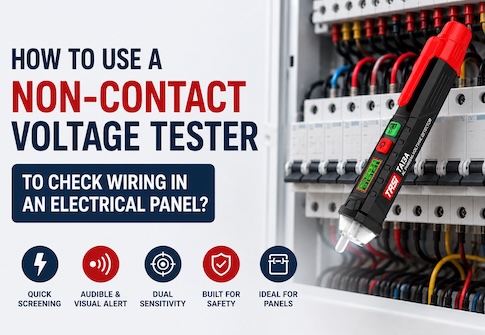
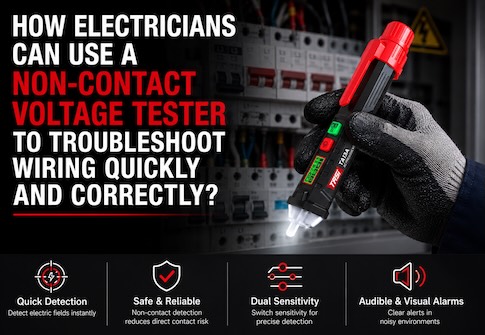
The main advantage of a non-contact voltage tester is fast, convenient detection without direct contact with a bare conductor.
It is particularly useful for:
● Rapid screening for the presence of an AC electric field.
● Preliminary identification of a live conductor.
● Checking outlets, wires, and cables for possible AC voltage.
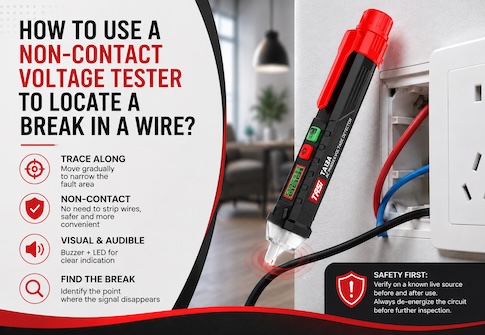
● Assisting in locating interruptions or open circuits.
● Performing an initial check before working near electrical wiring.
An NCV tester should therefore be viewed primarily as a rapid preliminary screening tool.
It is not intended to provide an exact voltage value, nor should it be used alone to prove that a circuit is completely de-energized.
Important Safety Considerations
● Before use, verify the tester on a known energized source.
● After testing, where practical, verify the tester again on a known energized source.
● Never assume a conductor is safe simply because the NCV tester does not alarm.
● Never touch a conductor simply because an alarm is suspected to be caused by induced voltage.
● In densely wired locations, consider the influence of nearby energized conductors.
● Select a tester with an appropriate voltage detection range, sensitivity, and CAT safety rating for the application.
● Before working on exposed conductors, use an appropriate contact-type test method and approved safe-isolation procedure to confirm the absence of hazardous voltage.
FAQ
Does an NCV alarm always mean that hazardous voltage is present?
No. An NCV tester detects an AC electric field, so induced voltage or a nearby energized conductor can also trigger an alarm. Until further testing confirms the condition, however, the conductor should be treated as potentially energized.
Why does the tester still beep after I switch off the breaker?
A nearby energized conductor may capacitively couple voltage into the disconnected wire. It is also possible that the wrong circuit has been isolated, so the actual wiring arrangement should be verified.
Can ghost voltage operate electrical equipment?
A high-impedance ghost voltage caused by capacitive coupling normally provides very little current and is generally unable to power a normal load. The fact that a load does not operate, however, is not proof that hazardous voltage is absent.
Why does high-sensitivity mode trigger more frequently?
Because high-sensitivity mode detects weaker AC electric fields. It is therefore more likely to detect low-level coupled signals in addition to normally energized conductors.
Does an alarm after power is switched off mean the tester is faulty?
Not necessarily. Induced voltage, adjacent energized wiring, static charge, and environmental electric fields can all cause an indication. If the tester continues to alarm well away from electrical sources, then its battery, sensing tip, moisture exposure, and general condition should be checked.
Can a non-contact voltage tester confirm that a circuit is completely de-energized?
It should not be used as the sole means of confirmation. NCV testers are designed for rapid screening. Before electrical work or contact with conductors, use an appropriate contact-type test method and follow the required safe-isolation procedure.
Summary
If a non-contact voltage tester continues to beep after a circuit has been switched off, the most common causes are induced or ghost voltage, electric fields from nearby energized conductors, and high sensitivity settings.
This behavior is a natural consequence of the way non-contact voltage detection works.
An NCV alarm means that the tester has detected a sufficiently strong AC electric field near its sensing tip. It does not by itself prove that the target conductor can supply normal operating power.
Likewise, the absence of an NCV alarm is not sufficient proof that a conductor is completely de-energized.
The correct approach is to use the non-contact voltage tester as a rapid preliminary screening tool and, before installation, maintenance, or direct contact with conductors, confirm the circuit condition using appropriate contact-type test equipment and safe electrical procedures.