Introduction
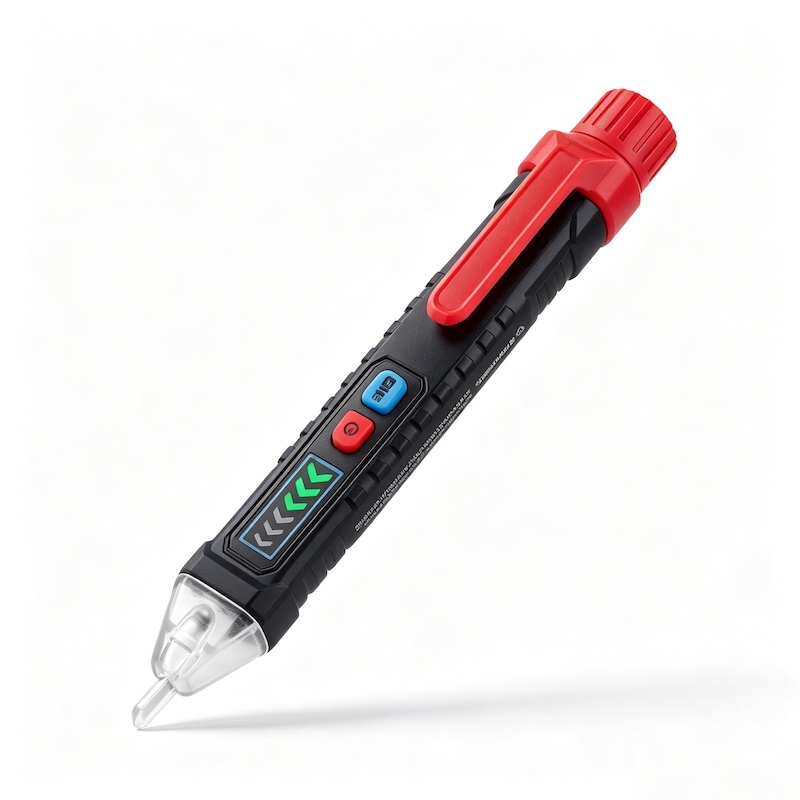
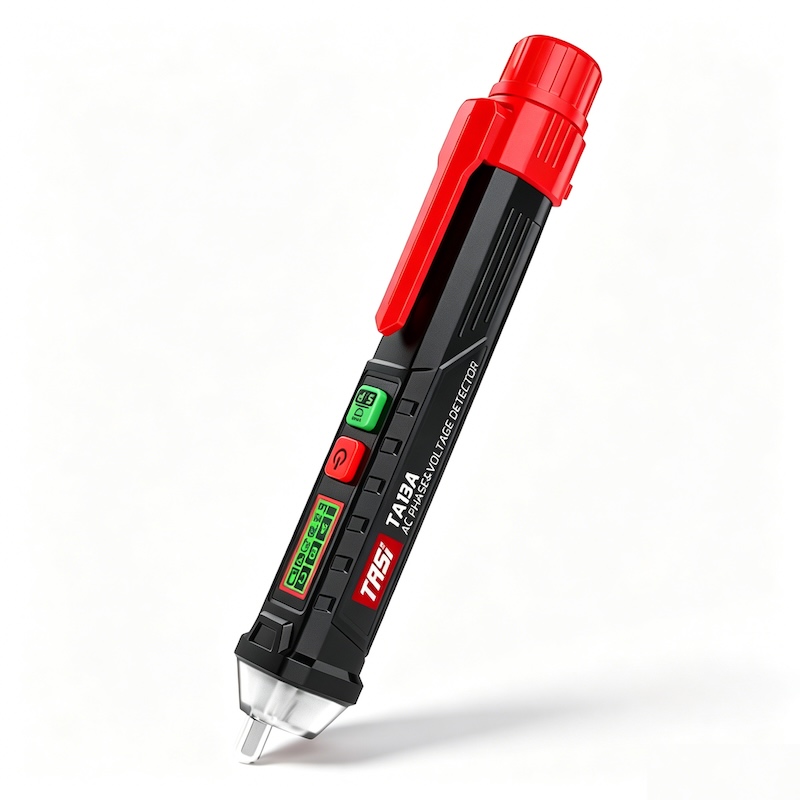
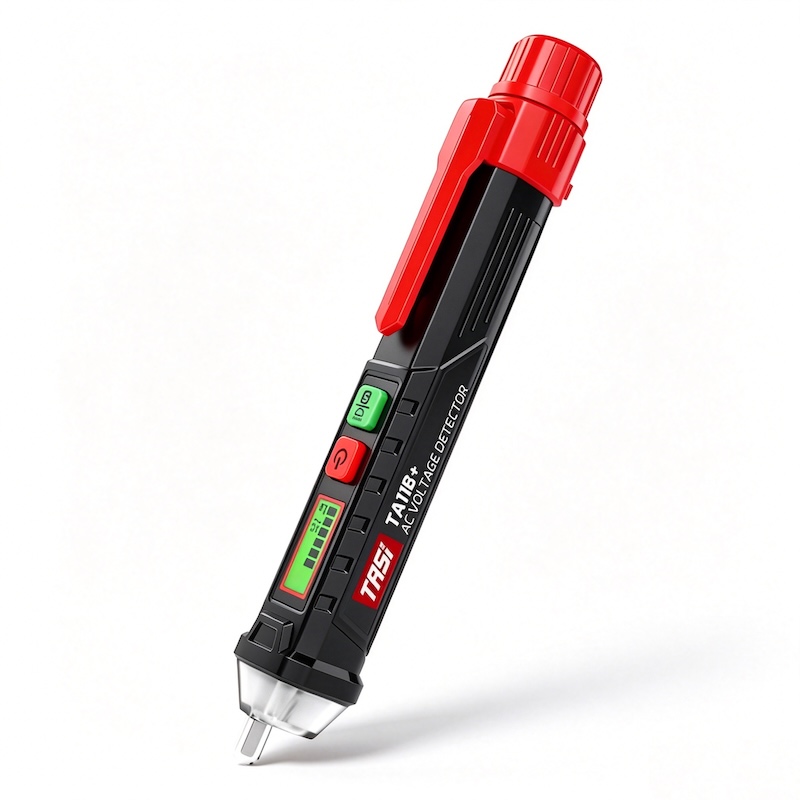
A non-contact voltage tester can detect the electric field produced by AC voltage without requiring direct contact with an exposed conductor. This makes it a convenient tool for preliminary checks of wall outlets, troubleshooting power problems, and performing basic electrical inspections before maintenance.
However, an NCV tester detects the presence of an AC electric field rather than measuring the actual voltage between outlet contacts. Outlet construction, sensing distance, tester sensitivity, voltage level, and nearby wiring can all affect the indication. For this reason, a single “no alert” result should never be treated as definitive proof that an outlet is safely de-energized.
Key Points
● A non-contact voltage tester can provide a quick preliminary indication of whether an AC-energized conductor is present near a wall outlet.
● Before testing, verify the tester on a known live source.
● Check each outlet slot and, where appropriate, the area around the outlet faceplate rather than testing only one location.
● An alert indicates that an AC electric field has been detected, but it does not provide an exact voltage value.
● No alert does not necessarily mean that the outlet is de-energized.
● When confirming a safe de-energized condition is required, use an appropriate contact-type voltage tester or measuring instrument.
How to Check a Wall Outlet with a Non-Contact Voltage Tester
For reliable results, first confirm that the voltage tester is operating correctly and then inspect the outlet using a consistent procedure.
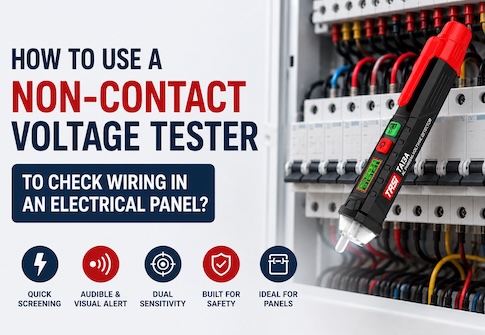
● Check the tester condition: Make sure the batteries are sufficiently charged, switch on the tester, and select the appropriate sensitivity or voltage-detection range if the model provides these settings.
● Test a known live source first: Bring the sensing tip close to an outlet or conductor that is known to be energized and confirm that the audible and visual indicators operate normally.
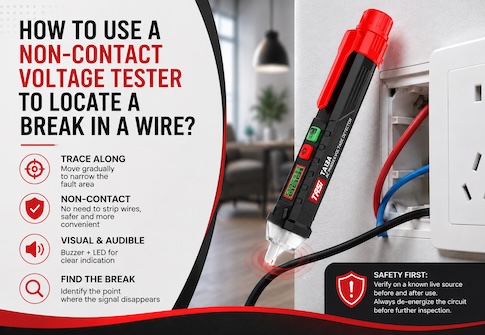
● Approach the outlet slots: Hold the tester only by its designated insulated grip area and slowly bring the sensing tip close to the outlet slot. There is generally no need to insert the tester into the slot.
● Check the slots individually: Test each relevant slot separately and compare the audible or visual indications.
● Check around the outlet: Moving the tester slowly around the edge of the outlet faceplate may help identify electric fields from energized wiring behind the wall.
● Verify the tester again afterward: For important de-energization checks, test the NCV tester again on a known live source after completing the inspection to confirm that it remained operational throughout the procedure.
Move the tester slowly toward the target area. Excessive distance, rapid movement, or testing only one location briefly can reduce detection reliability.
How Should the Test Results Be Interpreted?
If the tester produces a consistent audible or visual alert near a particular area of the outlet, it generally means that an AC electric field strong enough to trigger the tester is present nearby. In a normally wired AC outlet, the strongest indication will often be associated with the live conductor.
However, an NCV result should not be interpreted simply as “alert means normal” and “no alert means no voltage.”
● Strong, consistent alert: An AC electric field has been detected, but the tester does not indicate the exact voltage or confirm that the outlet is wired correctly.
● Only one slot gives a strong alert: Under normal wiring conditions, this may correspond to the live conductor, although outlet design, wiring layout, and the surrounding electric field can affect the result.
● Both slots trigger an alert: This may result from capacitive coupling, closely spaced conductors, high tester sensitivity, or an abnormal wiring condition. Additional testing may be required.
● No alert at all: The outlet may be de-energized, but the result can also be caused by insufficient tester sensitivity, excessive sensing distance, weak batteries, low voltage, or outlet construction that reduces the detectable electric field.
A non-contact voltage tester is therefore best used as a preliminary screening tool rather than as the sole method for confirming the electrical condition of an outlet.
Why Might the Tester Not Alert Even When the Outlet Is Energized?
An energized wall outlet can sometimes produce little or no response from a non-contact voltage tester.
● The energized parts may be recessed too deeply inside the outlet for the electric field to be detected effectively.
● Safety shutters or thick insulating components may reduce the field strength outside the outlet.
● The actual voltage may be below the tester's specified detection range.
● The tester may be operating in a lower-sensitivity mode.
● The batteries may be weak, or the tester may not be functioning correctly.
● The sensing tip may be moved too quickly across the target area.
● The user's body position, grounding conditions, and surrounding environment may affect capacitive coupling and detection sensitivity.
If the tester does not alert but the next step involves removing the outlet, servicing wiring, or contacting conductors, do not rely on the NCV result alone.
Why Might the Tester Still Alert After the Outlet Has Been Switched Off?
A non-contact voltage tester may continue to indicate voltage even after power to the outlet has been disconnected.
When de-energized wiring runs close and parallel to energized wiring, capacitive coupling can create an induced electric field. A high-sensitivity NCV tester may detect this field and generate an alert even though the conductor is not carrying normal operating voltage.
The tester may also respond to other energized wiring located behind the same wall or close to the outlet.
If the indication does not match the expected circuit condition, use an appropriate contact-type test method to verify the actual electrical state rather than relying only on the strength of the NCV alert.
Safety Precautions When Testing Wall Outlets
● Inspect the tester housing, sensing tip, and battery condition before use. Do not use a damaged tester.
● Do not force a standard non-contact voltage tester into an outlet slot simply to increase sensitivity.
● Hold the tester only within the manufacturer's designated safe gripping area.
● Avoid routine testing where hands are wet, the outlet is exposed to water, or there are signs of an electrical leakage hazard.
● Never rely on a single NCV reading as proof that a circuit is safe to touch.
● If the outlet shows burning, discoloration, unusual odor, looseness, or abnormal heating, stop using it and arrange further inspection.
● Before removing an outlet or contacting internal wiring, disconnect the appropriate power source and verify the de-energized condition using a suitable voltage-testing method.
A non-contact voltage tester is useful for rapid screening, but it is not a replacement for every type of electrical safety test.
FAQ
Can a non-contact voltage tester tell whether a wall outlet has power?
It can provide a quick preliminary indication of whether an AC-energized conductor is present nearby, but it should not be the only method used to confirm outlet voltage or a safe de-energized condition.
Do I need to insert the tester into the outlet slot?
Generally, no. A non-contact voltage tester is designed to detect an electric field by proximity. Always use the tester according to the manufacturer's operating instructions.
Why does the tester alert at both outlet slots?
Possible causes include capacitive coupling between conductors, nearby energized wiring, field spreading, high tester sensitivity, or an abnormal wiring condition. Further testing may be required.
Does no alert mean the outlet is definitely de-energized?
No. Sensing distance, outlet construction, voltage level, tester sensitivity, battery condition, and other factors can all affect the result.
Can an NCV tester tell whether the outlet is 110 V, 120 V, or 230 V?
A conventional non-contact voltage tester cannot accurately measure a specific voltage value. Use an appropriate voltage-measuring instrument when an actual voltage reading is required.
Should I still test the outlet after turning off a wall switch?
Yes. Circuit configurations and switch wiring can vary. Before servicing or removing an outlet, isolate the relevant power supply and verify the electrical condition independently.
Conclusion
The correct way to check a wall outlet with a non-contact voltage tester is to first verify the tester on a known live source, then move the sensing tip near the individual outlet slots and surrounding area while monitoring the audible and visual indicators.
This method is fast, convenient, and does not require direct contact with exposed conductors, making it useful for preliminary checks and troubleshooting. However, an NCV tester does not measure exact voltage, and a lack of indication does not prove that a circuit is safe or fully de-energized.
Before removing an outlet, servicing wiring, or contacting conductors, disconnect the relevant power source and confirm the de-energized condition with an appropriate contact-type voltage testing instrument.