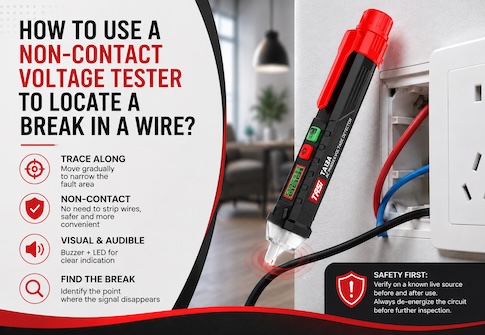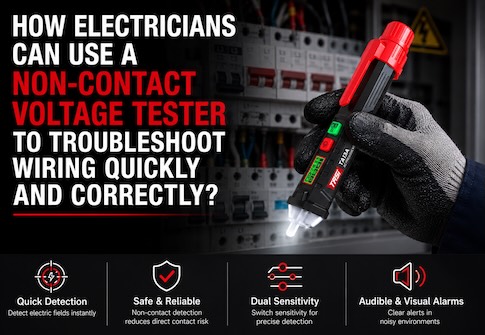
Introduction
Yes. A non-contact voltage tester can be used to quickly check whether an AC electric field is present near the live contact of an outlet, helping determine whether the outlet is likely energized.
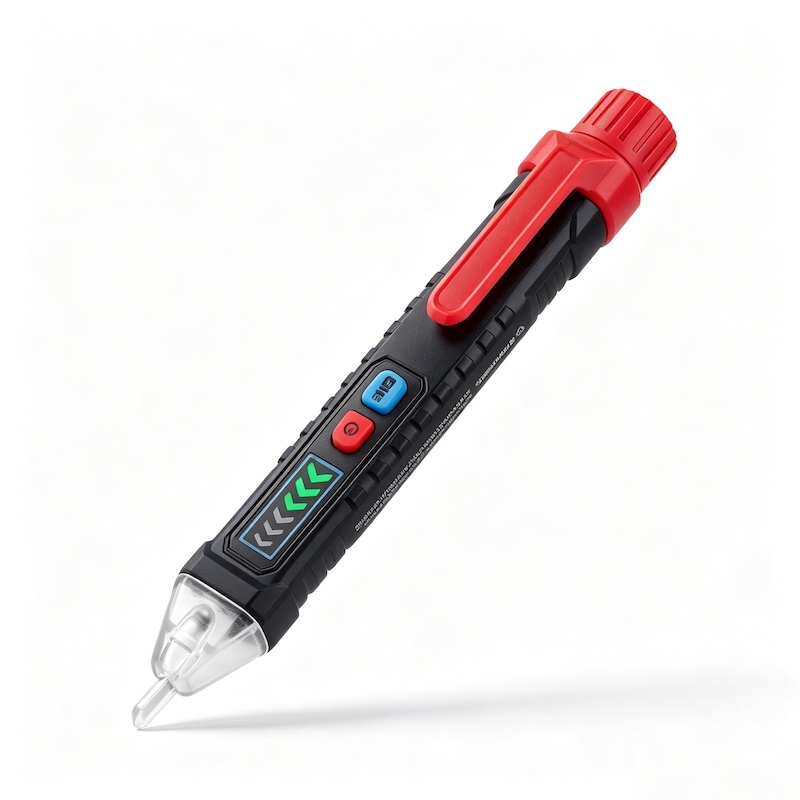
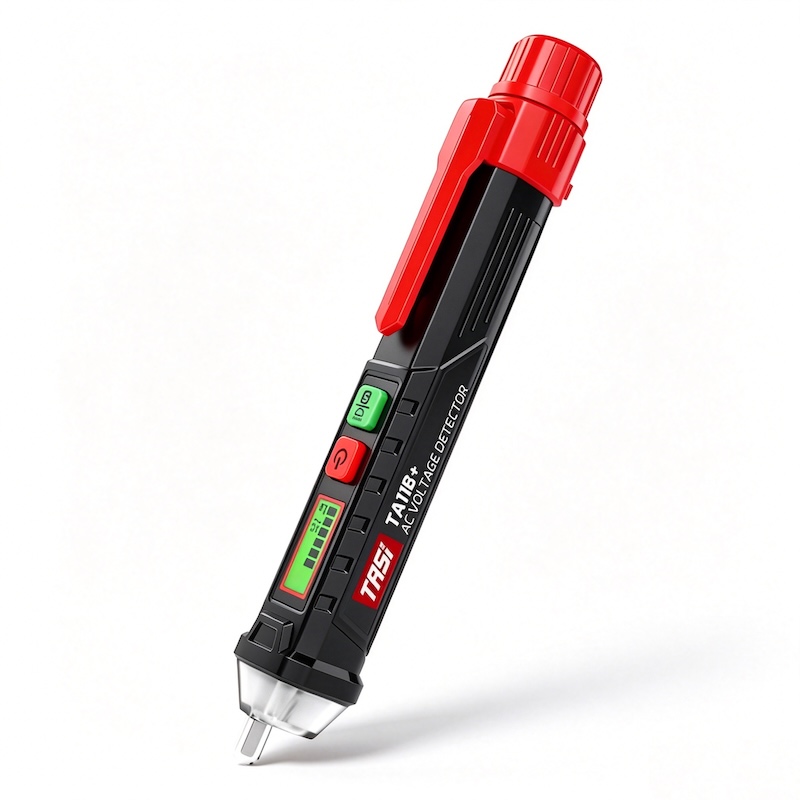
In most cases, the tester does not need to touch an internal metal contact. Simply bringing the sensing tip close to the outlet opening may be sufficient. If the detected AC electric field exceeds the tester's threshold, it will usually provide an audible, visual, or combined alarm.
However, a non-contact voltage tester detects an AC electric field rather than directly measuring voltage between two outlet terminals. It is therefore best used as a preliminary screening tool and should not be relied upon to confirm that an outlet is correctly wired or electrically sound.
Key Points
● A non-contact voltage tester can quickly check for the presence of an AC voltage field around an outlet.
● Under normal conditions, the tester will usually respond near the live contact, while the signal near neutral is normally weaker or absent.
● An alarm indicates that an AC electric field has been detected; it does not confirm that the outlet voltage or wiring is correct.
● No alarm does not always prove that the outlet is completely de-energized.
● To verify live, neutral, protective earth, and actual voltage, use an appropriate contact voltage tester or digital multimeter.
Why Can a Non-Contact Voltage Tester Detect an Energized Outlet?
Most non-contact voltage testers use NCV (Non-Contact Voltage) technology.
When the live conductor in an AC outlet is energized, it produces a changing electric field. Even though the conductor is inside the outlet, the tester's sensing tip may detect this field through capacitive coupling when brought sufficiently close to the outlet opening.
Once the detected signal exceeds the tester's internal threshold, an audible or visual warning is triggered.
In other words, the tester is determining:
whether a sufficiently strong AC electric field is present near the outlet.
It is not directly measuring the voltage between live and neutral.
How to Check an Outlet with a Non-Contact Voltage Tester
Before testing an outlet, first verify that the voltage tester is operating correctly.
● Switch on the tester and select an appropriate sensitivity range if the model provides adjustable sensitivity.
● Test the instrument on a known energized AC source to confirm that its audible and visual alarms work correctly.
● Hold the tester only by the designated grip area and do not touch internal outlet contacts.
● Bring the sensing tip close to each outlet opening in turn.
● Move the tip slowly and observe any change in audible, visual, or signal-strength indication.
● After testing, verify the tester again on a known live source to confirm continued correct operation.
On a normally wired AC outlet, a clear indication is usually obtained near the live contact.
Outlet designs and live-contact positions vary between countries and regions. The live conductor should therefore not be identified solely by assuming that it is always on a particular side of the outlet.
Does an Alarm Mean the Outlet Is Definitely Working Correctly?
No.
An alarm only confirms that an AC electric field has been detected near the sensing point. It does not prove that the complete outlet circuit is functioning correctly.
For example, the tester may still respond when:
● The live conductor is energized but the neutral is open.
● The outlet is incorrectly wired.
● Electric fields from nearby energized conductors couple into the tested area.
● An isolated conductor carries induced or phantom voltage.
● A high-sensitivity setting detects a weak surrounding electric field.
Therefore, an alarm near the live contact does not confirm correct neutral continuity, grounding, or load-carrying capability.
Does No Alarm Mean the Outlet Is Definitely De-Energized?
Not necessarily.
Non-contact detection can be influenced by several factors, including:
● The tester's specified voltage detection range.
● The selected sensitivity level.
● Distance between the sensing tip and energized conductor.
● Position and construction of the internal outlet contacts.
● Thickness and material of the outlet faceplate.
● Shielding around the conductor.
● Capacitive coupling between the user, tester, and ground.
● Battery condition and tester operating status.
For example, if the live conductor is positioned deep inside the outlet, the faceplate is relatively thick, or a low-sensitivity mode is selected, the tester may not provide a stable indication even when voltage is present.
Before touching conductors or carrying out electrical work, do not assume that a circuit is safe simply because one non-contact test produces no alarm.
Why Can Both Outlet Openings Trigger the Tester?
This does not necessarily mean that both conductors are live.
When live and neutral conductors are positioned close together inside an outlet, the electric field from the live conductor can couple capacitively into nearby conductors.
A highly sensitive tester may therefore respond near both outlet openings.
Other possible causes include:
● High sensitivity extending the detection area.
● Closely spaced internal wiring.
● A disconnected neutral developing a floating potential.
● Nearby energized wiring.
● Capacitive coupling or induced voltage within an outlet or extension lead.
If this occurs, reducing the sensitivity and comparing indications closer to each contact may help. If the result remains uncertain, use an appropriate contact-type test instrument.
Can a Non-Contact Voltage Tester Identify Live and Neutral?
It can often provide a preliminary indication.
In a normally wired AC outlet:
● The live conductor usually produces a stronger electric field and is more likely to trigger the tester.
● Neutral is normally close to earth potential and usually produces a weaker signal or no indication.
Comparing the response at both outlet openings can therefore help identify the likely live conductor.
However, this method is not definitive.
Induced voltage, an open neutral, parallel wiring, unusual outlet construction, or excessive tester sensitivity can cause indications at both contacts.
A non-contact voltage tester is therefore suitable for rapid identification and preliminary screening, but not as a substitute for proper wiring verification.
What Outlet Conditions Can a Non-Contact Voltage Tester Help Check?
A non-contact voltage tester is useful for quickly checking:
● Whether an AC electric field is present near the live side of an outlet.
● Whether an outlet is likely to have been de-energized.
● Which outlets in an area appear to have power available.
● Whether the electric field disappears after a circuit breaker is switched off.
● Whether voltage may still be present before initial maintenance work.
It should not be used alone to determine:
● The actual outlet voltage.
● Whether the neutral conductor is correctly connected.
● Whether protective earth is present and effective.
● Whether live and neutral have been reversed.
● Whether the outlet can safely supply a load.
● Whether insulation resistance is acceptable.
These checks require appropriate contact-type electrical test instruments.
What Should You Consider When Testing an Outlet?
Because outlet testing is directly related to electrical safety, non-contact test results should never be interpreted as absolute proof of circuit condition.
● Verify the tester on a known energized source before each use.
● Use an instrument with a voltage range and measurement category appropriate for the application.
● Do not force the sensing tip into the outlet.
● Never touch a conductor solely because the tester did not alarm.
● Before electrical maintenance, isolate the supply and verify the absence of voltage using an appropriate procedure.
● If the result is uncertain, confirm it with a suitable contact-type test instrument.
For professional electrical work, a non-contact voltage tester is best regarded as a fast screening tool rather than the sole means of proving electrical safety.
FAQ
Is it normal for a non-contact voltage tester to alarm when it is brought close to an outlet?
Yes. If the sensing tip enters the electric field produced by an energized live conductor, the tester may alarm without touching any metal contact.
Why do some outlets require the tester to be very close before it responds?
This can be caused by outlet construction, conductor depth, faceplate thickness, voltage level, and tester sensitivity.
If both outlet openings trigger the tester, does that mean the outlet is wired incorrectly?
Not necessarily. High sensitivity, capacitive coupling, or induced voltage can cause indications near both contacts. Use a contact-type test method if wiring must be confirmed.
Why can the tester still alarm after the circuit breaker has been switched off?
Nearby energized conductors may produce induced electric fields, particularly when the tester is set to high sensitivity. Additional verification may be required.
Can I remove the outlet once the non-contact tester no longer alarms?
A single non-contact reading should not be used as the sole basis for declaring a circuit safe. Isolate the power supply and verify the absence of voltage using an appropriate electrical safety procedure.
Can a non-contact voltage tester tell whether an outlet is 120 V or 230 V?
A conventional non-contact voltage tester normally cannot measure an exact voltage value. Use a digital multimeter or another suitable voltage-measuring instrument when actual voltage is required.
Conclusion
A non-contact voltage tester can quickly detect an AC electric field near the live contact of an outlet, making it useful for preliminary checks of whether an outlet is likely energized.
Under normal conditions, bringing the sensing tip near the live side of an energized outlet will usually trigger an audible or visual warning. However, an alarm only confirms the presence of an AC electric field; it does not prove that live, neutral, protective earth, and actual outlet voltage are all correct. Likewise, no alarm does not always guarantee that the circuit is de-energized.
For routine screening, a non-contact voltage tester is highly convenient. For fault diagnosis, wiring verification, or electrical maintenance, use it together with a digital multimeter, contact voltage tester, or other suitable electrical test equipment.