Introduction
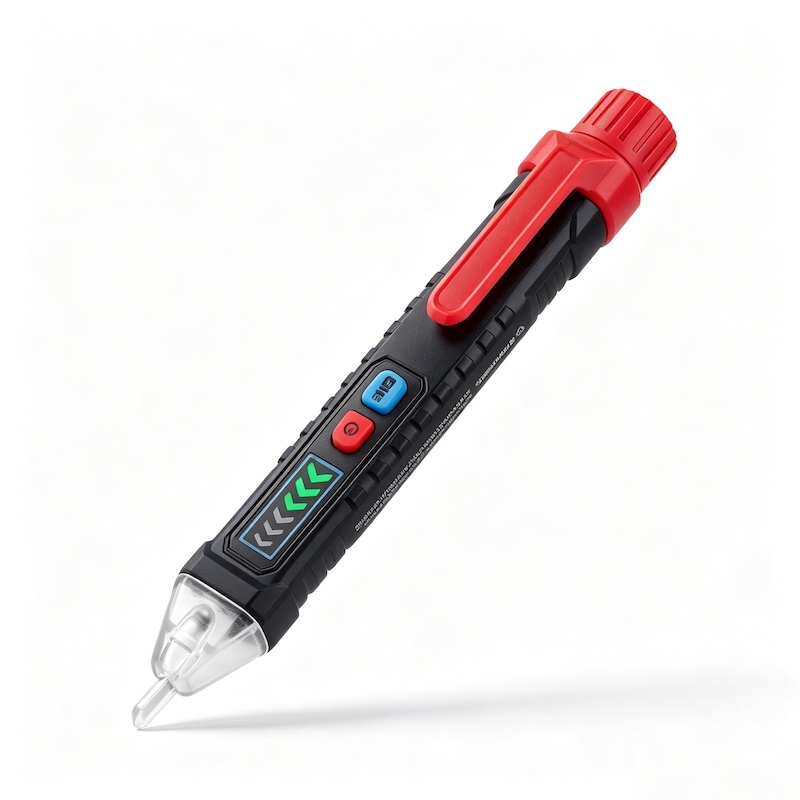
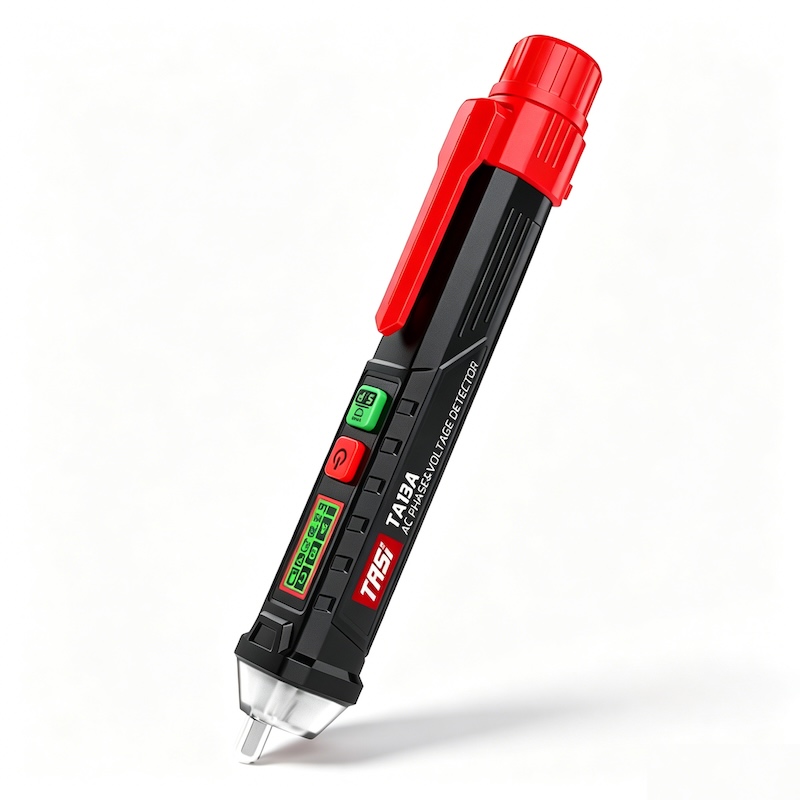
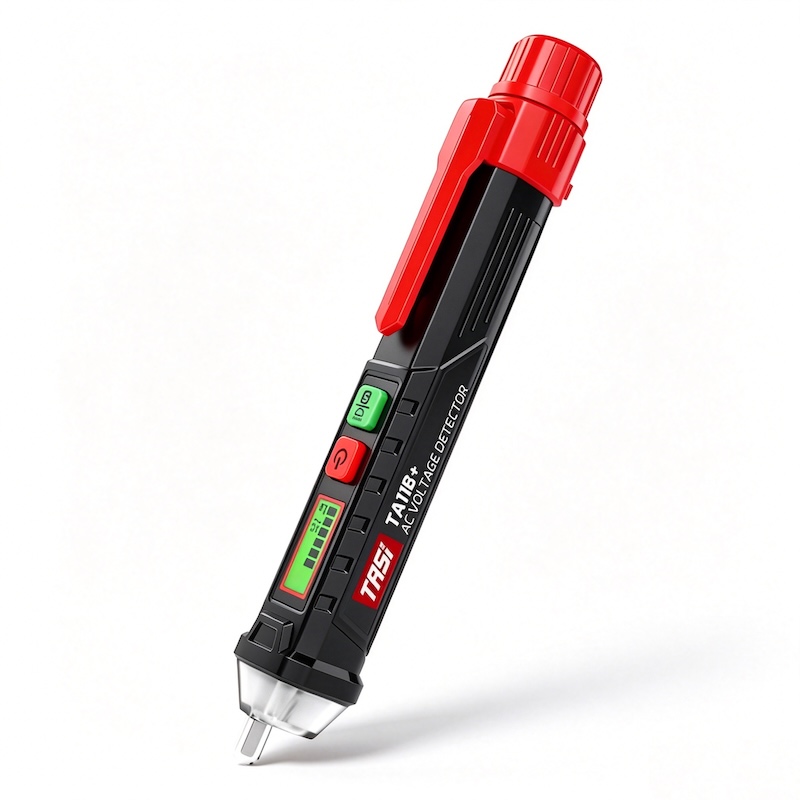
Markings such as “CAT II 600 V,” “CAT III 1000 V,” or “CAT IV 600 V” are commonly found on voltage testers, digital multimeters, clamp meters, test leads, and other electrical test equipment.
CAT does not indicate measurement accuracy, nor does it simply represent the maximum voltage an instrument can measure. CAT stands for Measurement Category and defines the type of electrical environment in which a measuring instrument is designed to be used, including its ability to withstand transient overvoltages that may occur in that environment.
In general, moving from CAT II to CAT III and then CAT IV means working progressively closer to the source of a low-voltage electrical installation, where available fault energy and transient overvoltage risks are typically higher.
Understanding these categories is therefore essential when selecting voltage testers, multimeters, clamp meters, and related electrical test instruments.
Key Takeaways
● CAT stands for Measurement Category and identifies the electrical environment and transient overvoltage conditions for which a test instrument is designed.
● CAT II typically applies to plug-connected appliances and other loads supplied from socket outlets.
● CAT III generally covers fixed building installations, including distribution boards, circuit breakers, fixed wiring, and permanently installed equipment.
● CAT IV applies to the origin of a low-voltage installation, such as electricity meters, service entrance conductors, and main overcurrent protection devices.
● A higher CAT category does not mean higher measurement accuracy. It indicates suitability for a different and generally more demanding electrical environment.
● CAT category and rated voltage must always be considered together, for example CAT III 1000 V or CAT IV 600 V.
● For contact measurements, the safety rating of the complete measuring system is limited by its lowest-rated component, including the instrument, leads, probes, and accessories.
What Is a CAT Measurement Category?
Measurement categories classify the different low-voltage electrical environments in which electrical test equipment may be used.
Even when a circuit operates normally at 230 V, 400 V, or another common low-voltage level, short-duration transient overvoltages may occur because of lightning effects, load switching, motor starting or stopping, switching operations, or other events within the electrical distribution system.
The same nominal voltage does not necessarily mean the same level of electrical risk.
For example, a 230 V measurement inside a plug-connected household appliance and a measurement near the incoming supply of a 230 V or 400 V distribution system may involve similar operating voltages, but the available fault current, transient energy, and electrical environment can be very different.
CAT classification therefore considers more than voltage alone. It also reflects where the measurement point is located within the low-voltage installation and the transient energy that may be present.
A simple way to remember the categories is:
● CAT II: socket-outlet loads and plug-connected equipment.
● CAT III: fixed building distribution systems.
● CAT IV: the origin or service entrance of a low-voltage installation.
As the measurement point moves closer to the source of the low-voltage supply, the potential transient energy and fault risk generally increase.
What Is CAT II?
CAT II primarily applies to equipment and loads connected directly to socket outlets in a low-voltage installation.
Typical applications include:
● Household appliances;
● Portable power tools;
● Plug-connected equipment;
● Certain office appliances;
● Similar equipment supplied through a plug and socket outlet.
For example, measuring voltage on a household appliance connected to a wall outlet is a typical CAT II application.
CAT II should not be interpreted as meaning “low voltage.” It describes the location and electrical environment of the measurement.
A CAT II instrument with a relatively high voltage rating should not automatically be considered suitable for measurements inside distribution boards or at service entrance points simply because its maximum voltage appears sufficient.
What Is CAT III?
CAT III is mainly associated with fixed installations and distribution systems within buildings.
Typical applications include:
● Distribution boards;
● Circuit breakers;
● Fixed wiring;
● Busbars and feeders;
● Junction boxes;
● Permanently installed switches and wiring systems;
● Permanently connected industrial equipment;
● Fixed motors;
● Commercial building lighting distribution systems.
Compared with CAT II, CAT III measurement points are generally closer to the building distribution system and may therefore be exposed to higher available fault energy and more severe transient overvoltages.
For example, measuring voltage at a standard socket outlet and measuring directly at circuit breaker terminals inside a distribution board may involve similar nominal voltages, but they are not equivalent measurement environments.
The distribution board measurement would typically require a CAT III-rated instrument appropriate for the voltage involved.
What Is CAT IV?
CAT IV applies primarily to the origin of a low-voltage installation, where the building electrical system connects to the incoming electrical supply.
Typical applications include:
● Electricity meters and associated wiring;
● Service entrance conductors;
● Low-voltage supply entrances;
● Main overcurrent protection devices;
● Conductors between the electricity meter and main distribution equipment;
● Overhead or underground conductors associated with the low-voltage service entrance.
These locations are closer to the supply source and generally have higher available fault energy. CAT IV therefore represents a more demanding low-voltage measurement environment than CAT III.
CAT IV does not mean that an instrument is suitable for every high-voltage power system.
It still must be used only within the CAT category, rated voltage, and other operating conditions specified by the manufacturer.
Key Differences Between CAT II, CAT III, and CAT IV
The three measurement categories can be compared as follows:
| Comparison | CAT II | CAT III | CAT IV |
|---|---|---|---|
| Typical location | Socket-outlet load side | Fixed building installation | Origin of low-voltage installation |
| Typical equipment | Appliances, portable tools | Distribution boards, circuit breakers, fixed wiring, motors | Electricity meters, service entrance conductors, main protection devices |
| Relative distance from supply source | Farther | Closer | Closest |
| Potential transient exposure | Relatively lower | Higher | Highest of the three |
| Typical use | Plug-connected equipment | Fixed distribution systems | Low-voltage service entrance |
At the same rated voltage, the general relationship can be expressed as:
CAT IV > CAT III > CAT II
Here, “>” means that the category is intended for a more demanding electrical environment with potentially greater transient energy.
It does not mean that CAT IV instruments are more accurate, nor does it mean that every CAT IV instrument has a higher maximum measurement voltage than every CAT III instrument.
Why Maximum Measurement Voltage Is Not Enough
This is one of the most important points when interpreting CAT ratings.
Suppose two instruments can both measure up to 600 V AC. That does not mean they are suitable for exactly the same electrical environment.
One may be marked:
CAT II 600 V
while another is marked:
CAT IV 600 V
Both display a 600 V rating, but they are designed for different measurement environments.
The CAT IV 600 V instrument is designed to withstand the more severe transient conditions associated with measurements near the origin of a low-voltage installation, while CAT II 600 V is intended for socket-outlet load-side environments.
Nominal operating voltage is therefore only one part of electrical safety evaluation. The measurement category is equally important.
Why CAT Category and Rated Voltage Must Be Read Together
A complete safety marking normally does not simply state “CAT III” or “CAT IV.”
Typical markings include:
● CAT II 1000 V
● CAT III 600 V
● CAT III 1000 V
● CAT IV 600 V
The CAT category and voltage value describe two related but different conditions.
The CAT category defines the type of electrical environment, while the voltage value defines the rated voltage applicable within that category.
For this reason, it is not correct to say that “CAT IV is always higher than CAT III 1000 V” without considering the full rating.
For example:
CAT III 1000 V / CAT IV 600 V
means that the same instrument may be rated for use up to 1000 V in a CAT III environment and up to 600 V in a CAT IV environment.
This type of dual rating is common on professional electrical test instruments.
Does a Higher CAT Rating Mean Better Measurement Accuracy?
No.
CAT rating is a safety-related parameter and is independent of measurement accuracy.
A CAT IV instrument is not necessarily more accurate than a CAT III instrument.
Measurement accuracy depends on specifications such as:
● Basic accuracy;
● Display counts or digits;
● Resolution;
● Measurement circuit design;
● Calibration condition;
● Temperature and environmental conditions.
The CAT rating answers a different question:
Is this instrument designed for the electrical environment in which the measurement will be performed?
Measurement performance and electrical safety should therefore be evaluated separately.
Can a CAT IV Instrument Be Used in CAT III or CAT II Environments?
Provided that the rated voltage and all manufacturer-specified operating conditions are satisfied, an instrument rated for a higher measurement category can generally be used in lower-category environments.
For example, a CAT IV 600 V instrument may normally be used in appropriate CAT III or CAT II environments as long as the applicable voltage and other limitations are not exceeded.
The reverse is not true.
For example:
● A CAT II instrument should not be used inside a CAT III distribution environment simply because the measured voltage is within its range.
● A CAT III instrument should not be used at a CAT IV service entrance when the required category or rated voltage exceeds its specification.
The basic selection rule is:
The CAT category and rated voltage of the instrument must meet or exceed the requirements of the actual measurement location.
The CAT Rating of Test Leads and Accessories Also Matters
Electrical measurement safety does not depend only on the main instrument.
A contact measurement system may include:
● Digital multimeter;
● Clamp meter;
● Test leads;
● Test probes;
● Adapters;
● Alligator clips;
● Other measurement accessories.
The complete system should normally be considered according to the component with the lowest applicable rating.
For example, if a multimeter is rated CAT IV 600 V but the test leads are rated only CAT III 600 V, the complete measurement setup should not automatically be treated as CAT IV 600 V.
When working in higher-energy electrical environments, always verify the CAT rating and rated voltage of the test leads, probes, and accessories as well as the main instrument.
How to Select the Correct CAT Rating
Start by identifying the actual location in the electrical installation where measurements will be performed.
● For household appliances, plug-connected equipment, and portable tools, select a CAT II instrument with an appropriate voltage rating.
● For distribution boards, circuit breakers, fixed wiring, industrial distribution equipment, or permanently installed motors, CAT III is generally appropriate.
● For electricity meters, service entrance conductors, main overcurrent protection, and locations near the origin of a low-voltage installation, CAT IV should be considered.
● If one instrument must cover several environments, select it according to the most demanding measurement location.
● In addition to CAT rating, check rated voltage, maximum input limits, fuse protection, protective design, and applicable safety standards.
Professional electrical technicians should not select test equipment only according to whether they normally measure 230 V, 400 V, or another voltage.
The position of the measurement point within the electrical distribution system is equally important.
What Else Should Be Considered When Using CAT-Rated Instruments?
Even when an instrument has an appropriate CAT rating, standard electrical safety practices remain essential.
● Inspect the instrument, test leads, and probes for damage before use.
● Confirm that both the CAT category and rated voltage are suitable for the measurement location.
● Never exceed the specified maximum input voltage or current.
● Select the correct measurement function and range before testing.
● Do not touch exposed conductive parts of probes during contact measurements.
● When using a multimeter, verify that the test leads are connected to the correct input terminals.
● Treat unknown circuits conservatively until their electrical conditions are understood.
● Do not rely solely on a CAT marking without considering whether the product is genuinely designed and verified for the stated safety rating.
A CAT rating contributes to safety in the intended electrical environment, but it does not replace correct operating procedures and electrical safety practices.
FAQ
Q1: What does CAT mean in CAT II, CAT III, and CAT IV?
CAT stands for Measurement Category. It identifies the type of electrical environment in which a test instrument is intended to operate and the transient overvoltage conditions it is designed to withstand.
Q2: Is CAT IV always safer than CAT III?
At the same rated voltage, CAT IV is intended for a more demanding electrical environment than CAT III. However, the complete CAT category and voltage rating must always be considered together.
Q3: Which is higher: CAT III 1000 V or CAT IV 600 V?
They cannot be reduced to a single “higher” or “lower” comparison. CAT III 1000 V specifies the instrument rating for a CAT III environment, while CAT IV 600 V specifies its rating for a CAT IV environment. Many professional instruments carry both ratings.
Q4: Is the CAT rating the same as the maximum measurement voltage?
No. CAT identifies the measurement environment, while the voltage following the CAT marking is the rated voltage for that category. The instrument’s maximum input specifications must also be checked separately.
Q5: Is a household wall outlet CAT II or CAT III?
Plug-connected appliances and similar loads supplied from wall outlets are typical CAT II applications. Fixed wiring, distribution boards, and circuit breakers in the building installation are typically CAT III environments.
Q6: What CAT rating should be used for a distribution board?
Distribution boards, circuit breakers, and fixed building wiring are generally CAT III applications. The instrument must also have a rated voltage suitable for the actual system voltage.
Q7: Why are electricity meters typically associated with CAT IV?
Electricity meters and service entrance conductors are located close to the origin of the low-voltage supply, where available fault energy and transient exposure are generally greater.
Q8: If my multimeter is CAT IV but the test leads are only CAT III, can I use the setup as CAT IV?
No. The complete measurement system is generally limited by its lowest-rated component. Test leads, probes, adapters, and accessories must also have suitable CAT and voltage ratings.
Conclusion
CAT II, CAT III, and CAT IV are not simply voltage classes. They are safety classifications that describe the electrical environments for which test equipment is designed.
A useful summary is:
● CAT II — socket outlets and plug-connected loads;
● CAT III — fixed building distribution systems;
● CAT IV — the origin of a low-voltage installation.
From CAT II to CAT IV, the measurement point generally moves closer to the supply source, where transient overvoltage and available fault energy can be higher.
When selecting voltage testers, digital multimeters, clamp meters, or other electrical test equipment, do not consider only maximum measurement voltage or the CAT number alone.
Always evaluate the measurement category, rated voltage, and actual measurement location together.
For contact measurements, test leads, probes, and accessories must also carry ratings suitable for the intended environment. Only when the complete measurement system matches the electrical application can its CAT safety rating provide the intended protection.