Introduction
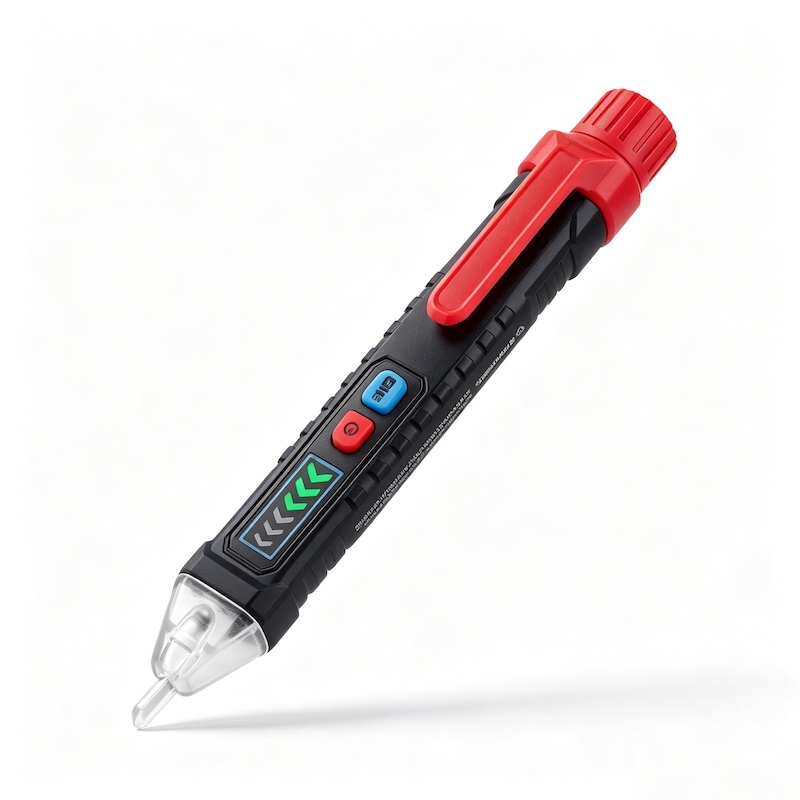
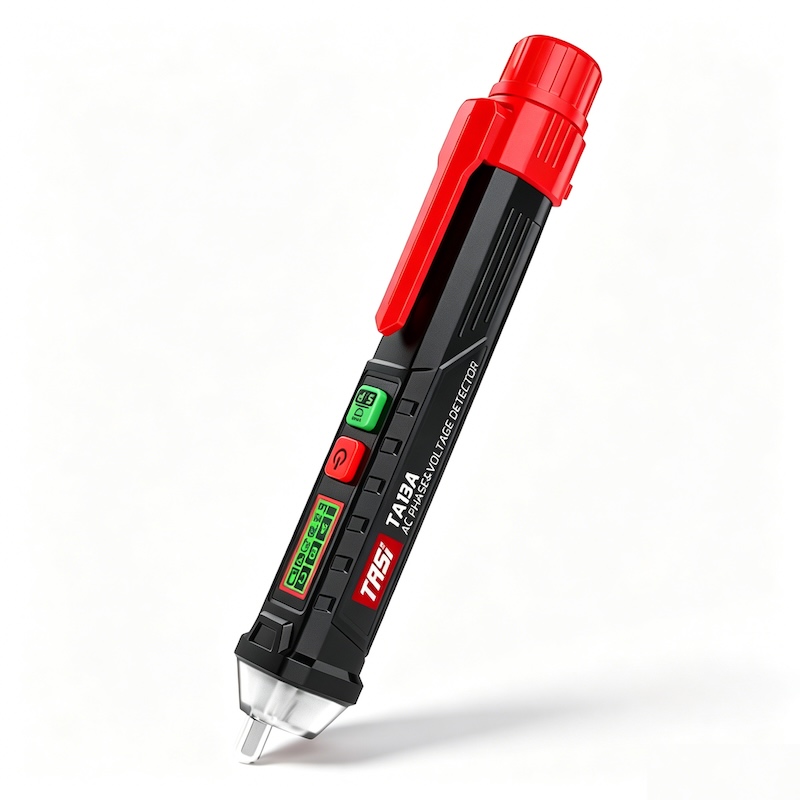
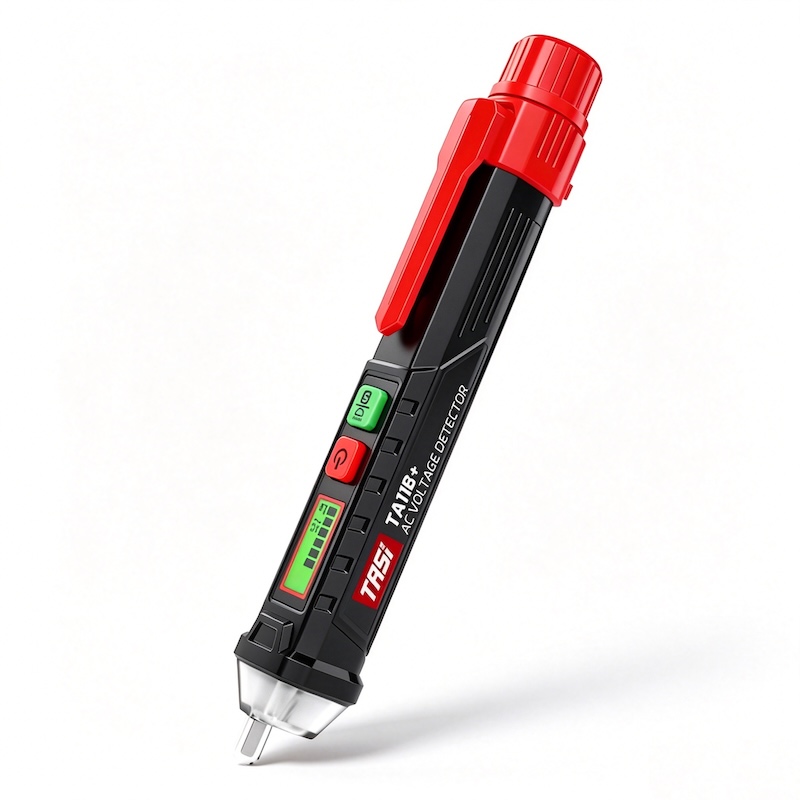
When checking a wire, outlet, or electrical device with a non-contact voltage tester, you may occasionally encounter a confusing situation: a multimeter or another measuring instrument confirms that voltage is present, yet the non-contact voltage tester produces no audible, visual, or vibration alert.
This does not necessarily mean that the tester is defective.
A non-contact voltage tester, commonly referred to as an NCV tester, primarily detects the changing electric field around an energized AC conductor. It does not directly measure conductor voltage. Whether it produces an alert therefore depends not only on whether voltage is present, but also on voltage level, frequency, test distance, cable construction, shielding, instrument sensitivity, and the surrounding environment.
Most importantly, no alert from an NCV tester must not be treated as proof that a circuit is de-energized. Before touching conductors or carrying out electrical work, verify the absence of hazardous voltage using an appropriate contact-type test instrument and applicable safe-work procedures.
Key Takeaways
● A non-contact voltage tester detects an AC electric field rather than directly measuring conductor voltage.
● An energized conductor may not trigger an alert if the external electric field is too weak or shielded.
● Excessive test distance, incorrect probe positioning, or a low-sensitivity setting can cause missed detection.
● Closely spaced line and neutral conductors can partially cancel their external electric fields.
● The tester's voltage range, frequency range, battery condition, and operating status all affect detection performance.
● Never use the absence of an NCV alert as the sole confirmation that a circuit is safe to touch.
Why Can an Energized Circuit Go Undetected?
The main reason is that a non-contact voltage tester operates differently from a multimeter.
When measuring voltage with a multimeter, the test leads make electrical contact with two points in the circuit and measure the potential difference between them.
A non-contact voltage tester, by contrast, normally requires no direct metal contact. Its sensor detects the alternating electric field around an energized AC conductor. Only when the detected signal exceeds the instrument's internal threshold does it activate an audible, visual, or vibration alert.
As a result, the following situation is possible:
● AC voltage is actually present on the conductor.
● The electric field reaching the NCV sensor is weak.
● The signal remains below the tester's detection threshold.
● The tester therefore produces no alert.
In other words, an NCV tester answers the question, "Is there a sufficiently strong detectable AC electric field here?" It does not directly determine whether a conductor definitely has voltage on it.
The Tester Is Too Far from the Conductor
Detection capability depends strongly on the distance between the sensing tip and the energized conductor.
In general, the closer the sensor is to the conductor, the stronger the detected electric field. As distance increases, field strength decreases.
If the energized conductor is behind thick insulation, cable sheathing, a wall, or an equipment enclosure, the field reaching the tester may be too weak to trigger an alert.
For example:
● A single insulated conductor may be detected easily.
● A heavily sheathed cable may require a much shorter detection distance.
● Wiring buried deep inside a wall may not be detected at all.
A tester's stated voltage range therefore does not mean that it can detect energized conductors at any distance or through any material.
Metal Shielding Is Blocking the Electric Field
Metal structures can significantly alter or shield the electric field surrounding an energized conductor.
If the conductor is located inside metal conduit, a metal enclosure, shielded cable, or another conductive structure, very little external electric field may reach the NCV tester.
Common examples include:
● Wiring inside metal conduit.
● Cables with metallic shielding.
● Conductors inside grounded metal enclosures.
● Energized parts behind metal panels or conductive structures.
In these situations, the conductor may be fully energized while an NCV tester used outside the metal structure produces no alert.
This is a limitation of the non-contact detection principle and must not be interpreted as evidence that the internal conductor is de-energized.
Line and Neutral Conductors Are Too Close Together
In an AC circuit, line and neutral conductors are often routed together inside the same cable.
Because the electric fields around the two conductors differ in polarity and distribution, closely spaced line and neutral conductors can partially cancel each other's external fields. This can reduce the field strength detectable outside the cable.
This effect is especially relevant with:
● Multi-core cables.
● Sheathed cables with closely spaced line and neutral conductors.
● Twisted conductor arrangements.
● Compact power cords.
As a result, a tester may readily detect an isolated line conductor but have a much shorter detection distance when used on the outer jacket of a complete multi-core cable.
Incorrect Test Position
The sensing area of an NCV tester is generally concentrated around the probe tip or a designated sensor section. The entire body of the tester does not necessarily have the same sensitivity.
Detection may be unreliable if:
● The middle of the tester body is placed near the wire instead of the sensing tip.
● The sensor is angled away from the energized conductor.
● The tester is positioned near the neutral side of an outlet rather than the line side.
● There is too much distance between the probe and the conductor.
This is particularly important when checking outlets. Depending on the socket design and local wiring arrangement, testing only one position may not bring the sensor close enough to the line conductor.
Always use the sensing area specified by the manufacturer and reposition the probe where appropriate.
The Sensitivity Setting Is Too Low
Some non-contact voltage testers provide high- and low-sensitivity modes or different voltage detection ranges.
One mode may be intended for normal mains-voltage testing, while a higher-sensitivity mode can detect weaker electric fields.
If a low-sensitivity mode is selected, missed detection is more likely when testing:
● Lower AC voltages.
● Conductors with thick insulation.
● Conductors at greater distance.
● Weak external electric fields.
For testers with selectable sensitivity, choose the appropriate mode according to the product instructions. Higher sensitivity, however, should not be used as a substitute for proper test technique or safe electrical procedures.
The Actual Voltage Is Below the Tester's Detection Range
Different NCV testers have different minimum detection voltages.
Some models may be designed to detect approximately 50 V AC and above, while more sensitive models may begin detecting at much lower voltage levels.
If the circuit voltage is below the tester's specified detection range, a multimeter may display a valid voltage while the NCV tester remains inactive.
For example:
● NCV detection range: 50–1000 V AC.
● Actual circuit voltage: 24 V AC.
In this case, voltage is present, but it is below the specified NCV detection range, so the lack of an alert can be normal.
Always check the tester's specified AC voltage and frequency ranges before use.
The Signal Is Not the Type of AC Voltage the Tester Is Designed to Detect
Most standard non-contact voltage testers are designed primarily for AC electric-field detection within a specified frequency range. They are not suitable for every type of electrical signal.
Signals that may not be reliably detected include:
● DC voltage.
● AC signals below the specified frequency range.
● Certain high-frequency or unusual waveforms.
If a multimeter indicates voltage, it is therefore important to determine whether the measured signal is AC or DC.
For example, a conductor carrying 48 V DC can produce a valid multimeter reading, but a conventional AC NCV tester will generally not be expected to detect it reliably.
Walls, Insulation, or Enclosures Are Reducing the Field
NCV testers are sometimes used to look for wiring behind walls, but they are not dedicated in-wall wire locators.
Detection depends on wall material, conductor depth, cable construction, and nearby conductive materials.
Potential limitations include:
● Deeply buried conductors.
● Thick walls.
● Wiring routed through metal conduit.
● Metal framing or other conductive materials within the wall.
These factors can weaken, redirect, or shield the electric field before it reaches the sensor.
Therefore, the ability to detect voltage "through a wall" should never be interpreted as guaranteed detection of all concealed wiring. A dedicated cable or wall scanner is more suitable for locating hidden electrical circuits.
The User and Surrounding Environment Can Affect Sensitivity
The detection circuit in many NCV testers is influenced by capacitive coupling between the instrument, the user, and the surrounding environment.
Detection performance can therefore vary depending on:
● The user's coupling to ground.
● Insulating footwear or gloves.
● Test posture.
● Nearby metal structures.
● The physical position and arrangement of the conductor.
The degree of influence varies by tester design.
Do not deliberately touch grounded objects, exposed metal, or bypass protective equipment in an attempt to make the tester more sensitive. Always use the instrument according to the manufacturer's instructions.
Low Battery Condition
Non-contact voltage testers typically rely on internal batteries to power the sensing circuit, buzzer, indicator LEDs, and other functions.
A weak battery can cause:
● Reduced detection sensitivity.
● Normal power-up indication but poor voltage detection.
● Weak audible alerts.
● Shorter detection distance.
● Unstable operation.
Before assuming that the circuit is responsible for an unexpected result, confirm that the tester itself is operating correctly.
Replace the batteries promptly when a low-battery indication appears.
The Tester May Be Faulty
If the same tester fails to respond at several known energized AC sources, the instrument itself may have a problem.
Possible causes include:
● Incorrectly installed batteries.
● Poor battery contact.
● Exhausted batteries.
● Damage to the sensing tip.
● Internal electronic failure.
● Damage caused by dropping, moisture, or water ingress.
Before performing an important test, verify the NCV tester on a known energized AC source.
Where the test result affects subsequent electrical work, it is good practice to verify the tester again after completing the check.
How to Troubleshoot When Voltage Is Present but the Tester Does Not Alert
If another suitable measuring method confirms that AC voltage is present but the NCV tester does not respond, check the following:
● Make sure the tester is powered on and the batteries are in good condition.
● Verify the tester on a known energized AC source.
● Confirm that the circuit voltage is within the tester's specified detection range.
● Confirm that the signal is AC and compatible with the tester's operating frequency range.
● Move the designated sensing area gradually closer to the conductor.
● If sensitivity is selectable, use the appropriate mode according to the product instructions.
● Check for metal shielding, conduit, thick insulation, or other barriers.
● When testing multi-core cables, consider partial field cancellation between line and neutral conductors.
● If any uncertainty remains, use an appropriate contact-type voltage tester for verification.
The purpose of troubleshooting is not to force the NCV tester to produce an alert, but to understand why the electric field at the test point is insufficient for reliable detection.
Why You Must Not Use "No Alert" as Proof of a De-Energized Circuit
This is one of the most important safety considerations when using a non-contact voltage tester.
NCV testers are highly useful for quick preliminary checks, including:
● Identifying the possible presence of AC voltage.
● Performing an initial line-conductor check.
● Quickly checking outlets and power cords.
● Assisting in fault or break-point investigation.
● Preliminary screening before electrical maintenance.
However, because NCV detection is affected by distance, shielding, voltage range, sensitivity, and environmental conditions, the absence of an alert cannot prove that a conductor is free from hazardous voltage.
Before disconnecting wires, removing components, or touching exposed conductors, isolate the electrical supply in accordance with applicable safety procedures and verify the absence of hazardous voltage using an appropriate contact-type test instrument suitable for the installation and measurement category.
In simple terms:
An alert generally indicates that AC voltage may be present nearby; no alert does not prove that voltage is absent.
FAQ
Q: My multimeter reads 230 V. Why doesn't the non-contact voltage tester alert?
The cause may be shielding, cable construction, test distance, probe position, sensitivity setting, or the tester's operating condition. A multimeter directly measures potential difference, whereas an NCV tester detects the surrounding AC electric field.
Q: If the tester does not detect voltage, does that mean it is faulty?
Not necessarily. First verify it on a known energized AC source. If it also fails to detect other known live circuits, inspect the batteries and tester for faults.
Q: Why can the tester detect a single line conductor but not a complete multi-core cable?
Closely spaced line and neutral conductors can partially cancel the external electric field, and the outer cable sheath also increases the distance between the sensor and conductors.
Q: Can an NCV tester detect an energized wire inside metal conduit?
Not reliably. Metal conduit can significantly shield and redistribute the electric field from the internal conductor.
Q: Is a 12–1000 V tester always more sensitive than a 50–1000 V tester?
It generally has a lower specified starting voltage, but actual sensitivity also depends on detector design, operating mode, distance, cable construction, and environment. The minimum voltage rating alone does not determine detection performance in every situation.
Q: Can a non-contact voltage tester detect DC voltage?
Most standard NCV testers are designed for AC electric-field detection and generally cannot reliably detect steady DC voltage. Refer to the specific product specifications for supported functions.
Q: If there is no NCV alert, can I safely start disconnecting wires?
No. The absence of an NCV alert must not be used as the sole indication that a circuit is de-energized. Isolate the supply and verify the absence of hazardous voltage with an appropriate contact-type test instrument before working on conductors.
Conclusion
An energized circuit and a non-responsive NCV tester are not necessarily contradictory. A non-contact voltage tester does not directly measure conductor voltage; it detects the alternating electric field surrounding an energized AC conductor.
Excessive test distance, metal shielding, thick insulation, partial field cancellation between line and neutral, voltage below the specified detection range, an unsuitable sensitivity mode, weak batteries, or tester malfunction can all prevent an energized conductor from triggering an alert.
In practice, an NCV tester is best used as a quick screening tool for the possible presence of AC voltage. A "no alert" result must never be interpreted as absolute proof that a conductor is de-energized. For electrical maintenance or any task involving contact with conductors, verify the condition using an appropriate contact-type voltage test method.