Introduction
During electrical installation, equipment maintenance, and troubleshooting, technicians frequently need to determine quickly whether a wire, outlet, switch, or electrical component may be energized. Conventional contact measurements require test probes to make electrical contact with a conductor, while a non-contact voltage tester (NCV tester) can provide an initial indication of AC voltage without touching exposed conductive parts.
In use, the sensing tip is simply brought close to insulated wiring, an outlet, a switch plate, or another test point. If the instrument detects an alternating electric field that meets its response threshold, it typically alerts the user through LEDs, an audible signal, vibration, or a display.
Non-contact voltage testers are fast and convenient, but they are fundamentally voltage-presence detection tools. They do not replace a digital multimeter, two-pole voltage tester, or other suitable contact measurement instrument. Understanding their operating principle, capabilities, and limitations is essential for correct and safe use.
Key Takeaways
● A non-contact voltage tester, commonly referred to as an NCV tester, is used for quickly checking whether a detectable AC electric field is present nearby.
● It does not require direct electrical contact with an exposed conductor and primarily detects the alternating electric field around energized AC conductors.
● Typical components include a sensing tip, signal-detection circuitry, control electronics, alarm indicators, a power source, and an insulated housing.
● Common applications include preliminary live-wire checks, outlet testing, switch and wiring inspection, fault-location assistance, and electrical maintenance.
● Results can be affected by voltage level, distance, cable construction, shielding, surrounding electric fields, body coupling, and tester sensitivity.
● A lack of indication does not by itself prove that a circuit is de-energized.
What Is a Non-Contact Voltage Tester?
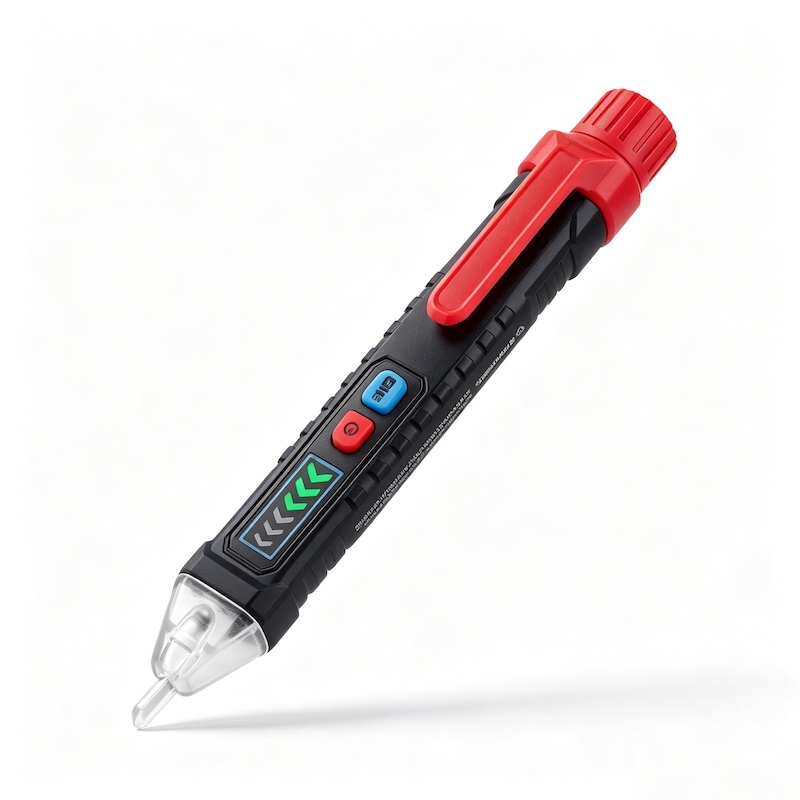
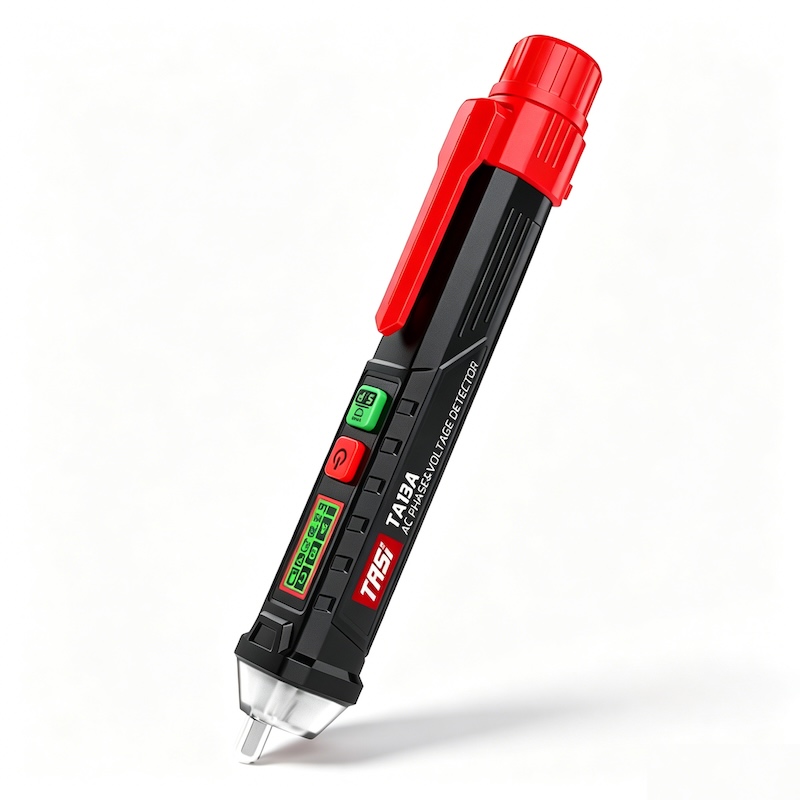
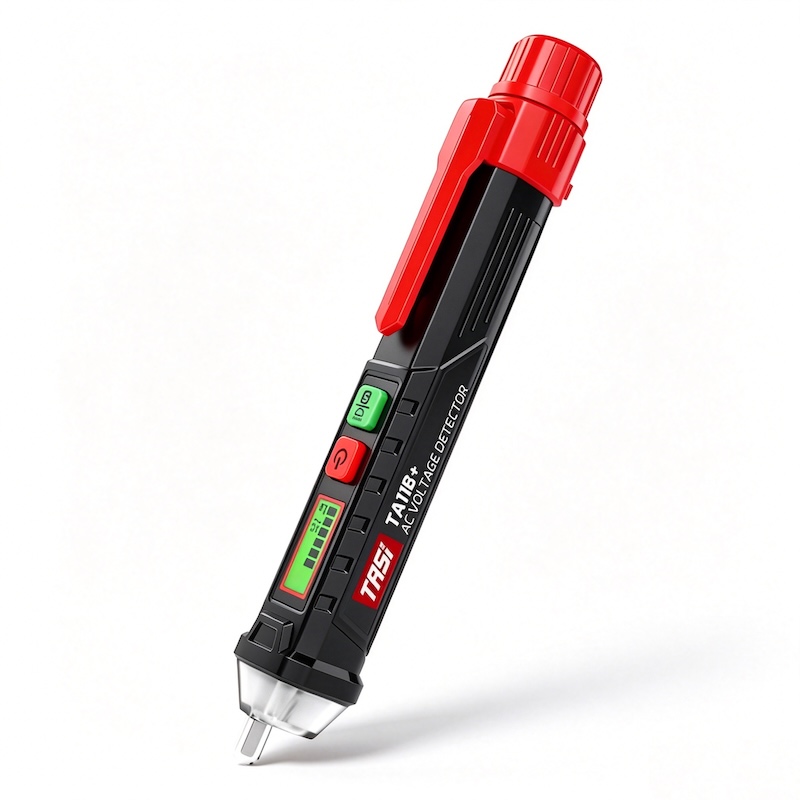
A non-contact voltage tester is a portable electrical testing instrument that detects the presence of AC voltage by sensing an electric field. It is commonly referred to as a Non-Contact Voltage Tester or NCV Tester.
Unlike contact voltage testers, which require their probes to touch conductive points, an NCV tester generally only needs to be brought close to the circuit. When the electric field around an energized AC conductor produces a signal strong enough to meet the tester's detection criteria, the internal electronics process the signal and provide an audible, visual, vibration, or display indication.
For example, when checking an insulated AC wire, the user usually does not need to strip the insulation. Bringing the sensing tip close to the conductor can provide a quick preliminary indication of whether the wire may be energized.
For this reason, NCV testers are highly useful for inspection and preliminary troubleshooting. However, they primarily answer the question, “Is a detectable AC voltage field present here?” rather than “What is the exact voltage?”
How Does a Non-Contact Voltage Tester Work?
The operating principle of an NCV tester is based on the changing electric field surrounding an energized AC conductor.
Because AC voltage changes magnitude and polarity periodically, the electric field around the conductor also changes over time. When the sensing tip of an NCV tester is brought near the energized conductor, very weak capacitive coupling occurs between the conductor, the tester's sensing electrode, the user's body, and the surrounding environment.
This coupling creates a very small induced signal. A high-input-impedance detection circuit inside the tester receives the signal and processes it through amplification, filtering, comparison, and control logic to determine whether it exceeds the preset detection threshold.
When the required threshold is reached, the instrument activates one or more indications, such as:
● An LED illuminates or flashes;
● A buzzer generates an audible warning;
● The beep rate or flash frequency increases as the detected signal becomes stronger;
● Some models provide vibration feedback;
● Display-equipped models may show a voltage range, sensitivity status, or other detection information.
It is important to understand that an NCV tester does not normally measure the exact line voltage “through” the insulation. Instead, it detects an induced signal caused by the alternating electric field and evaluates that signal according to its internal design.
Why Can It Detect Voltage Without Touching the Conductor?
An energized conductor is not completely electrically isolated from surrounding objects. Even when air and cable insulation provide high electrical resistance, small capacitances still exist between conductors and nearby objects.
From a detection perspective, the energized conductor, the sensing electrode, the user's body, and the surrounding environment can form a weak capacitive coupling path. Because AC voltage continually changes, this coupling allows a very small alternating signal to be induced at the sensing electrode.
Modern electronic detection circuits can amplify and evaluate these extremely weak signals. As a result, the tester can often recognize the electric field around an AC conductor without directly touching the copper wire or another exposed conductive part.
This is why many NCV testers can operate through wire insulation, at the surface of an outlet, or near a switch plate.
What Are the Main Components of a Non-Contact Voltage Tester?
The design varies by model, but a typical NCV tester generally includes the following parts:
● Sensing tip: Located at the front of the tester and used to detect the alternating electric field around the test area;
● Input and signal-detection circuit: Receives and processes the weak induced signal;
● Filtering and amplification circuit: Helps reduce certain interference and increases the usable signal level;
● Comparator or control circuit: Determines whether the detected signal meets the preset response criteria;
● Indicator system: Provides LED, audible, vibration, or display feedback;
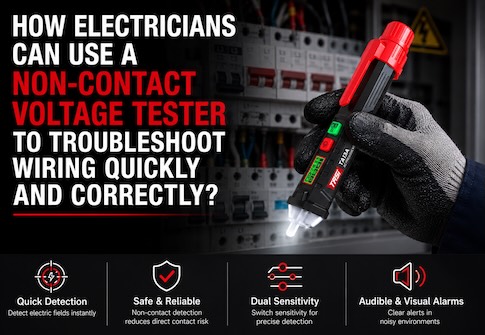
● Sensitivity control: Some testers offer high/low sensitivity or multiple voltage-detection ranges;
● Power supply: Usually batteries that power the internal electronics;
● Insulated housing: Protects the internal circuitry and helps reduce the risk of accidental contact with energized parts during normal use.
Some products may also include a flashlight, automatic power-off, low-battery indication, self-test functions, or multiple sensitivity ranges.
What Can a Non-Contact Voltage Tester Detect?
NCV testers are primarily designed to detect AC voltage signals within the voltage and frequency ranges specified by the manufacturer. Typical applications include quick checks around:
● AC power cables;
● Wall outlets;
● Power switches;
● Junction boxes;
● Distribution wiring;
● Extension cords;
● Lighting circuits;
● Appliance power cords;
● Wiring around electrical equipment.
The minimum and maximum detectable voltage, supported frequency range, and sensitivity vary by model. Always refer to the specifications and operating instructions for the specific instrument.
What Can a Non-Contact Voltage Tester Not Tell You Directly?
Although NCV testers are convenient, they are not complete electrical measurement instruments.
A typical NCV function generally cannot accurately provide:
● The exact AC voltage value;
● DC voltage;
● Current;
● Resistance;
● Continuity;
● Frequency or other electrical parameters;
● Confirmation that a circuit meets the requirements for safe de-energized work.
If an exact voltage value is required, a digital multimeter or another suitable voltage measurement instrument should be used.
In particular, before maintenance, wiring, or contact with conductors, an absence of NCV indication should not be treated as sufficient proof that the circuit is de-energized. Appropriate electrical safety procedures and suitable verification instruments should be used.
Common Applications of Non-Contact Voltage Testers
The main advantage of an NCV tester is speed, making it particularly useful for initial inspection and troubleshooting.
Checking whether a wire may be live
Bringing the sensing tip close to an insulated AC conductor can provide a rapid preliminary indication of a nearby alternating electric field.
Checking electrical outlets
The tester can be brought near different areas of a receptacle to help determine whether an AC voltage field is present. Results can vary with outlet construction, wiring arrangement, and sensing position.
Checking wall switches
During lighting or wiring maintenance, the tester can be used around switches, wires, or terminal areas for preliminary voltage-presence screening.
Assisting with locating a broken conductor
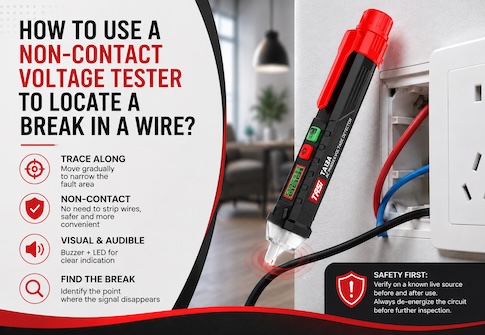
On some energized AC circuits, moving the tester along a cable may help identify a region where a previously consistent signal disappears. This can provide a clue to a possible break. However, adjacent energized conductors, capacitive coupling, and wiring layout can affect the result, so this method should be considered an aid rather than definitive fault location.
Electrical equipment maintenance
Technicians can use an NCV tester to screen power cords, terminal areas, and accessible wiring around equipment before carrying out further measurements.
How to Use a Non-Contact Voltage Tester Correctly
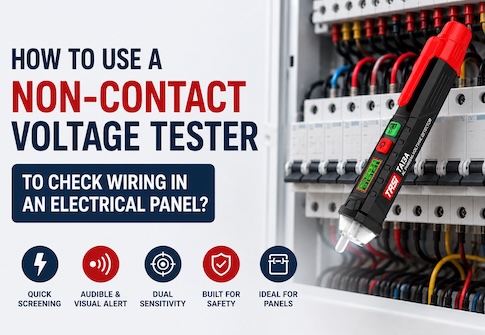
Always read the instructions for the specific model before use. A typical procedure includes:
● Inspect the tester housing, sensing tip, and battery condition for damage or abnormalities;
● Switch on the tester and select the appropriate mode or sensitivity range if available;
● Verify correct operation on a known energized AC source before testing;
● Bring the sensing tip gradually toward the wire, outlet, or other test point;
● Observe the LED, audible, vibration, or display indication;
● If necessary, test from different directions or distances to reduce the risk of position-related misinterpretation;
● If work will involve contact with conductors, use an appropriate method to verify the circuit condition before proceeding;
● Switch the tester off after use and store it according to the manufacturer's instructions.
Verifying the instrument on a known live source before testing is particularly important because it helps identify problems such as depleted batteries or instrument malfunction.
What Factors Affect NCV Detection Results?
Because NCV testing depends on very weak electric-field signals, several factors can influence the result.
Voltage level
Under otherwise similar conditions, higher AC voltage generally produces an electric field that is easier to detect. Actual response still depends on the tester design and sensitivity.
Detection distance
The farther the sensing tip is from the energized conductor, the weaker the detected signal will generally be.
Wire insulation
Insulation material, thickness, and cable construction can influence the strength of the signal reaching the tester.
Metal shielding
If energized wiring is enclosed in metallic conduit, a metal cabinet, shielded cable, or another structure that significantly attenuates the electric field, an external NCV tester may not detect the internal voltage reliably.
Adjacent conductors
When multiple wires are routed close together, electric-field coupling from a nearby energized conductor may cause a detectable signal near another conductor.
Body and environmental coupling
The way the tester is held, the user's coupling to ground, ambient conditions, and surrounding conductive objects can change the sensing conditions.
Tester sensitivity
High-sensitivity settings can detect weaker electric fields but are also more susceptible to nearby wiring and environmental electric fields. Lower sensitivity can help narrow the detection area but may reduce response to weak signals.
What Is the Difference Between High and Low Sensitivity?
Some NCV testers provide two or more sensitivity levels.
High-sensitivity mode responds more readily to weak electric fields. It can be useful for locating concealed wiring, performing preliminary checks from a greater distance, or detecting lower-voltage AC fields within the instrument's specified range. However, in areas with closely grouped conductors, high sensitivity may broaden the response area and make it more difficult to identify the exact source.
Low-sensitivity mode usually requires the sensing tip to be closer to an energized conductor before a clear indication is produced. This can help narrow the test area when multiple conductors are located close together.
In practice, high sensitivity can first be used to locate an energized area, followed by lower sensitivity and a shorter test distance to refine the assessment.
Non-Contact vs. Contact Voltage Testing
The main difference between the two methods is whether direct electrical contact with the conductor is required.
An NCV tester senses an AC electric field and provides a rapid indication that voltage may be present. It is convenient for screening and preliminary troubleshooting.
A contact voltage tester requires its test leads or probes to touch the relevant electrical points. Depending on the instrument type, it can determine an actual potential difference. Digital multimeters and similar instruments can also provide numerical voltage readings and additional electrical measurements.
The two approaches therefore serve different purposes rather than being direct substitutes. NCV testing is suited to rapid screening and preliminary identification, while contact measurement is better suited to verification and quantitative measurement.
Advantages of Non-Contact Voltage Testers
● In many applications, wire insulation does not need to be removed;
● Fast and convenient for routine inspection;
● Reduces the need to make direct contact with exposed conductors during preliminary checks;
● Usually compact and easy to carry;
● Useful for checking outlets, switches, wiring, and equipment power circuits;
● Audible and visual alarms help identify areas that may be energized quickly;
● Some models include multiple sensitivity levels, a flashlight, and automatic power-off.
These characteristics make NCV testers common auxiliary tools for electricians, electrical maintenance technicians, HVAC technicians, and equipment service personnel.
Limitations of Non-Contact Voltage Testers
Every test instrument has an intended application range, and NCV testers are no exception.
● Most are designed primarily for AC electric fields and may not detect DC voltage;
● They do not replace accurate voltage measurement instruments;
● Metal shielding can prevent reliable detection of energized wiring;
● Low voltage, excessive distance, or a weak electric field may result in no indication;
● Nearby energized wiring can create induced or coupled signals;
● Cable arrangement and environmental conditions may affect results;
● Instrument malfunction, low batteries, or incorrect use can lead to misinterpretation.
An NCV tester should therefore be regarded as a tool for improving inspection efficiency, not as a universal stand-alone method for electrical safety verification.
Safety Considerations When Using an NCV Tester
Electrical testing involves a potential shock hazard, so the instrument should always be used according to its instructions and applicable electrical safety procedures.
● Do not use a tester with a damaged housing or sensing tip;
● Do not exceed the instrument's specified voltage rating or operating conditions;
● Verify the tester on a known energized source before use;
● Where appropriate, recheck it on a known energized source after testing to confirm continued operation;
● Never assume that a circuit is safe to touch simply because the NCV tester does not indicate voltage;
● Do not use an NCV result as the sole means of proving absence of voltage for work on electrical conductors;
● Use other suitable test methods when working with shielded cables, metallic conduit, or complex wiring;
● High-voltage and specialized electrical environments require appropriately rated instruments and suitable safety procedures.
Knowing when an NCV tester is appropriate—and when it should not be relied upon alone—is an essential part of using it correctly.
How to Choose a Non-Contact Voltage Tester
When selecting an NCV tester, consider the following specifications and functions:
● Voltage detection range: It should cover the AC voltages commonly encountered in the intended application;
● Frequency range: Confirm compatibility with the target electrical system;
● Sensitivity settings: Multiple sensitivity levels can help accommodate different distances and environments;
● Alarm methods: Audible, visual, vibration, or combined indications can be selected according to the working environment;
● Self-test function: Helps verify basic tester status before use;
● Automatic power-off: Helps conserve battery life;
● Flashlight: Useful inside panels, equipment, and poorly illuminated areas;
● Safety rating and specifications: Select an instrument appropriate for the electrical environment in which it will be used;
● Mechanical design: Sensing-tip size, grip comfort, and portability can influence day-to-day usability.
For professional electrical work, selection should not be based solely on whether the instrument provides an alarm. Detection range, stability, working environment, and safety ratings should all be considered.
FAQ
Q1: Is a non-contact voltage tester the same as NCV?
Generally, yes. NCV stands for Non-Contact Voltage and commonly refers to the non-contact voltage detection function used in handheld electrical test instruments.
Q2: Does an NCV tester need to touch the copper conductor?
Normally, no. It detects the electric field around an energized AC conductor and can therefore often operate through wire insulation.
Q3: Why does the tester alarm before it touches the wire?
Because it detects an electric field rather than requiring direct electrical contact. In high-sensitivity mode, it may respond while still some distance from an energized conductor.
Q4: Why can an energized wire sometimes produce no indication?
Possible reasons include low voltage, excessive distance, metal shielding, cable construction, sensing position, tester sensitivity, battery condition, or environmental factors. No indication should therefore not be interpreted as absolute proof that no voltage is present.
Q5: Can an NCV tester show the exact voltage?
A standard NCV function is primarily intended to detect the presence of AC voltage and normally does not provide an accurate voltage value. Use a suitable voltage measurement instrument when a numerical reading is required.
Q6: Can an NCV tester detect DC voltage?
Most conventional NCV testers are based on detection of an alternating electric field and are therefore mainly intended for AC voltage. Any additional capabilities depend on the specific model.
Q7: Why do several wires seem to trigger the tester at the same time?
Electric-field coupling from adjacent energized wires can produce detectable signals, particularly in high-sensitivity mode. Lowering the sensitivity, reducing the test distance, and checking each conductor individually may help.
Q8: If the tester does not alarm, is the circuit definitely de-energized?
No. Detection can be affected by shielding, distance, voltage level, cable construction, and instrument condition. A single no-alarm result is not sufficient to prove absence of voltage.
Conclusion
A non-contact voltage tester is a portable electrical testing tool that detects the alternating electric field around energized AC conductors to provide a quick indication of voltage presence. Because it does not normally require direct contact with exposed conductors, it is highly useful for checking wires, outlets, switches, electrical equipment, and for preliminary troubleshooting.
Its primary strengths are speed, convenience, and non-contact operation. However, detection results can be influenced by voltage level, distance, shielding, cable arrangement, environmental coupling, and instrument sensitivity.
An NCV tester is therefore best used for rapid screening and preliminary assessment. When accurate voltage measurement or confirmation of a de-energized condition is required, a suitable digital multimeter, contact voltage tester, or other appropriate instrument and electrical safety procedure should also be used.
Understanding both the operating principle and the limitations of NCV technology allows the tester to be used efficiently while reducing the risk of incorrect interpretation.