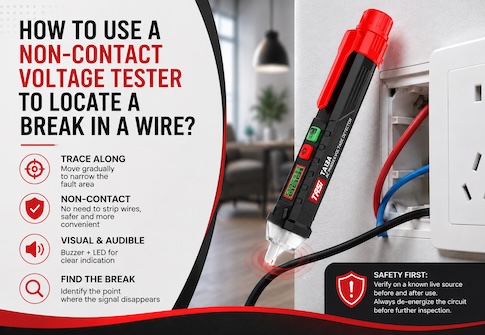
Introduction
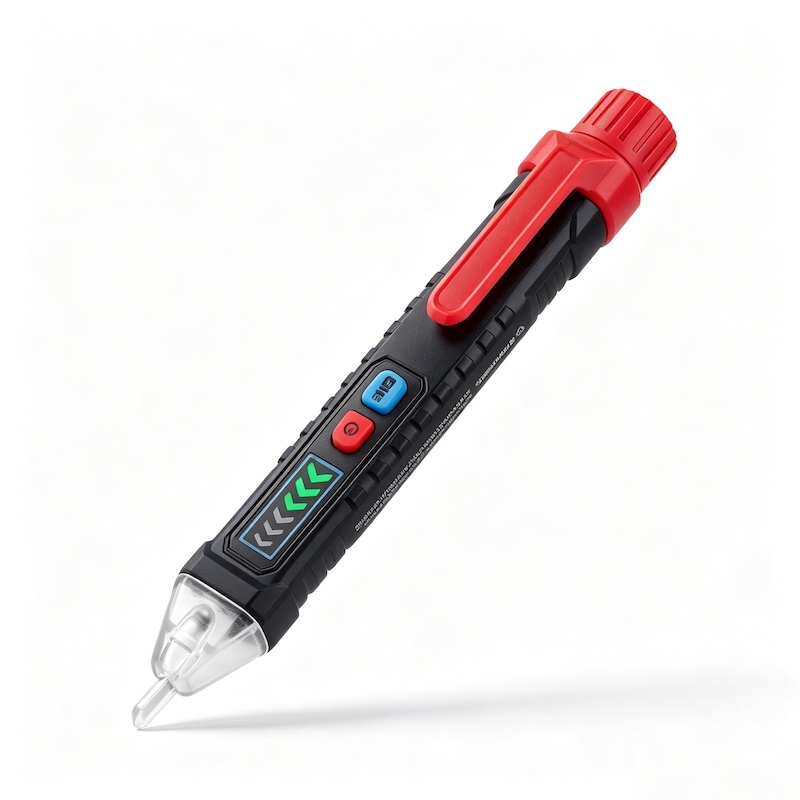
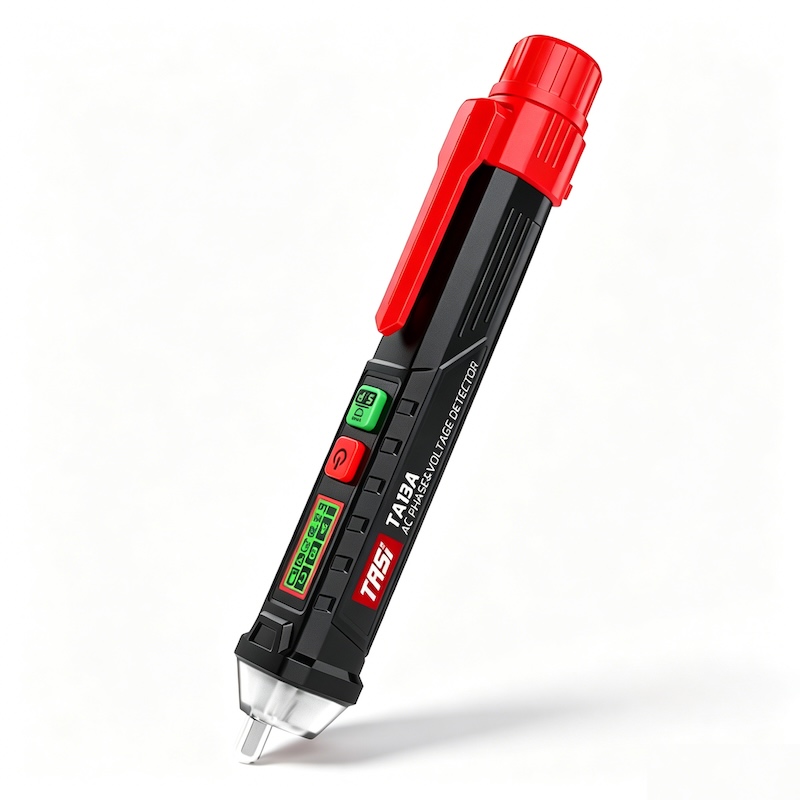
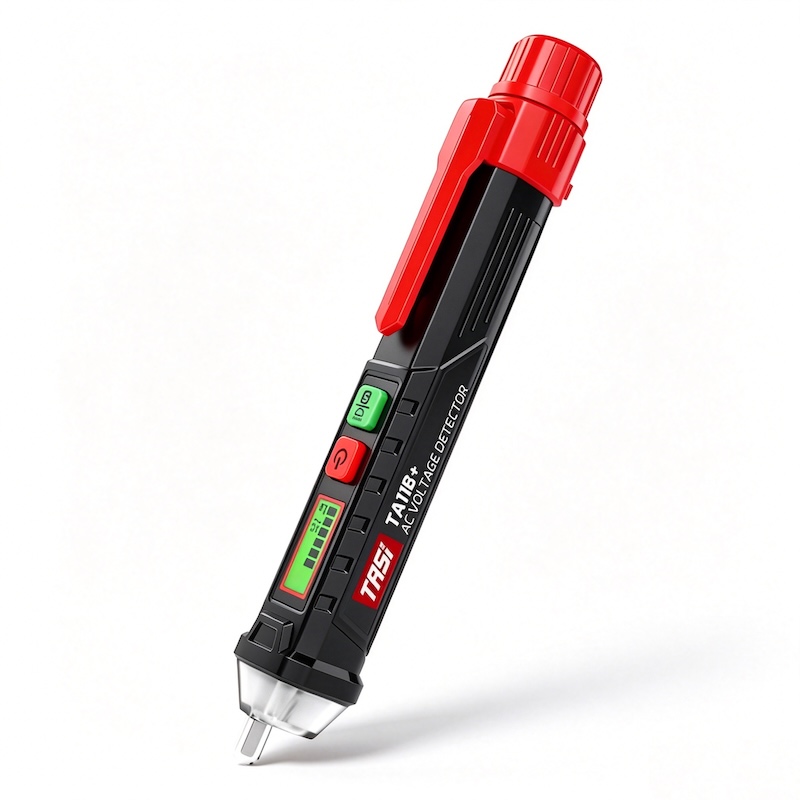
When a conductor breaks inside its insulation, a conduit, a wall, or electrical equipment, the fault is often impossible to identify by visual inspection alone. On AC circuits, a non-contact voltage tester can detect the alternating electric field around an energized conductor. This makes it possible, under suitable conditions, to trace the cable and identify the area where the voltage indication changes.
However, a non-contact voltage tester should be regarded as a tool for narrowing down the suspected fault area, not as an instrument that can precisely locate every wire break. Test results can be affected by conductor depth, insulation material, adjacent wiring, shielding, and tester sensitivity.
Key Points
● A non-contact voltage tester detects the electric field surrounding an energized AC conductor.
● To trace a possible break, begin at a point known to be energized and move progressively along the wire.
● If the tester gives a stable indication at one point and the indication then becomes significantly weaker or disappears, the break may be located between those positions.
● High-sensitivity or dual-sensitivity NCV testers can be useful for insulated or concealed wiring, but higher sensitivity also increases the likelihood of detecting interference from nearby energized conductors.
● NCV testing should be used for preliminary fault location. Before repair work, isolate the circuit and confirm its condition using an appropriate contact measurement method.
Why Can a Non-Contact Voltage Tester Help Locate a Wire Break?
When AC voltage is present, an alternating electric field forms around the energized conductor. The sensing circuit inside a non-contact voltage tester detects this field and provides an audible, visual, or display indication when the signal exceeds its detection threshold.
If a conductor is completely broken, the section between the power source and the break may remain energized. The section beyond the break, if fully disconnected from the source, will normally produce a much weaker electric field.
The transition from detectable voltage to significantly reduced or absent indication can therefore help narrow down the possible location of the break.
This is not an absolute rule. A disconnected section of wire can still pick up a voltage through capacitive coupling with nearby energized conductors. A sensitive NCV tester may therefore continue to indicate voltage beyond the actual break.
How to Locate a Broken Wire with a Non-Contact Voltage Tester
● Verify the tester first. Test the NCV tester on a known energized AC outlet, conductor, or source to confirm that its audible and visual indications are operating correctly.
● Identify the cable route. Determine the starting point, end point, and approximate path of the conductor. For concealed wiring, use wiring plans, junction locations, or other suitable locating methods where available.
● Start from the energized end. Place the sensing tip close to the insulation or cable surface at a point where a stable voltage indication is confirmed.
● Move gradually along the conductor. Keep the sensing distance and orientation as consistent as possible while tracing the cable. Observe any significant change in the indication.
● Identify the transition area. If the tester gives a stable indication and then suddenly becomes much weaker or stops indicating, repeatedly check the area before and after that point.
● Reduce the test interval. Once the suspected area has been identified, test at progressively shorter intervals to narrow down the possible break location.
● Confirm with another test method. After preliminary location, isolate the power and use a multimeter continuity test, resistance measurement, or another appropriate method to confirm the actual break.
This method is generally easier on an accessible single insulated conductor. Results are less reliable when several conductors run together, when wiring is concealed in walls, or when shielding is present.
How Can You Identify the Most Likely Break Location?
Assume the wire is checked progressively from the supply side:
● Point A: stable indication;
● Point B: stable indication;
● Point C: indication becomes weak or disappears;
● Point D: no clear indication.
If other test conditions remain approximately the same, the break may be located between Points B and C.
Do not immediately open or repair the cable. Continue testing between B and C at shorter intervals until the transition area becomes more consistent.
If the indicated transition point changes significantly between repeated tests, or if the tester continues to alarm even when moved away from the target conductor, nearby electric fields may be affecting the measurement. In such conditions, NCV testing alone is not sufficiently reliable for precise fault location.
Why Can the Tester Still Indicate Voltage Beyond the Break?
This is one of the most common causes of misinterpretation when tracing broken conductors.
Although the wire beyond the break may no longer be directly connected to the supply, it can run alongside energized wiring. Capacitive coupling between the conductors may create an induced or ghost voltage that is detectable by a sensitive NCV tester.
Common causes include:
● The disconnected conductor runs parallel to a live conductor;
● Several conductors are grouped inside the same conduit or cable trunking;
● High-sensitivity mode detects a weak induced electric field;
● Other energized wiring is located behind the same wall;
● The fault is a high-resistance or intermittent connection rather than a complete open circuit.
For this reason, evaluate the overall change in signal strength rather than relying solely on a simple “alarm” or “no alarm” result.
When Is This Method Most Suitable?
Using an NCV tester for broken-wire tracing is most useful in situations such as:
● Preliminary troubleshooting of conventional low-voltage AC wiring;
● Single insulated conductors or wiring with sufficient separation from adjacent circuits;
● Extension cords, supply cables, and other wiring that can be traced continuously;
● Applications where the energized end is known and the objective is to narrow down the fault area;
● Situations where opening the insulation for repeated contact measurements is impractical.
The main advantage is the ability to perform a rapid preliminary check without directly contacting an exposed conductor.
When Should You Not Rely on an NCV Tester Alone?
NCV results may be unreliable under the following conditions:
● Multiple live, neutral, or other conductors are installed closely together;
● Wiring is deeply embedded behind thick wall materials;
● Metal conduit, metallic shielding, or shielded cable is used;
● Strong electromagnetic interference is present;
● Precise fault location is required;
● The fault is intermittent or caused by a poor connection rather than a complete break;
● The objective is to verify that the circuit is completely de-energized.
Metallic shielding in particular can significantly reduce the external electric field and make the conductor difficult or impossible to detect with an NCV tester.
Does Higher Sensitivity Make It Easier to Find a Break?
Not necessarily.
Higher sensitivity can improve detection through thicker insulation, at greater sensing distances, or through some wall materials. However, it also increases sensitivity to induced voltage and electric fields from nearby conductors.
With a dual-sensitivity or multi-level NCV tester, it is generally useful to begin with the lower sensitivity setting. If the signal is too weak, switch to the higher sensitivity range.
For meaningful comparison, keep the sensing distance, tester orientation, and sensitivity setting as consistent as possible while tracing the wire.
What Should You Consider When Tracing a Broken Wire Inside a Wall?
A wall increases the distance between the sensing tip and the conductor, while multiple cables may be routed within the same area. This makes concealed wiring substantially more difficult to trace.
● Determine the most likely cable route before testing;
● Trace continuously along the same route rather than testing isolated points;
● Maintain a consistent distance between the tester and wall surface;
● Pay particular attention to switches, sockets, junction boxes, and terminal locations, where connection failures are more likely to occur;
● Consider possible interference from other energized conductors;
● If no clear and repeatable transition can be identified, use a dedicated cable tracer or fault-location instrument.
An NCV tester can help identify a general area, but it should not be expected to provide centimetre-level accuracy on deeply concealed or complex wiring.
Safety Precautions
Because voltage tracing may require part of the circuit to remain energized, electrical safety is essential.
● Do not remove insulation and touch conductors to obtain a stronger indication;
● Never touch exposed energized parts;
● Ensure the tester's voltage range and CAT rating are suitable for the electrical environment;
● Verify the tester on a known live source before and after testing;
● No NCV indication does not, by itself, prove that a circuit is de-energized;
● Before opening, disconnecting, or repairing wiring, isolate the circuit and verify the absence of hazardous voltage using an appropriate test method.
NCV testing is suitable for rapid screening and preliminary fault location, but it should not be the sole method used to verify a safe de-energized condition.
FAQ
Can a non-contact voltage tester really locate a broken wire?
It can help narrow down the location. On energized AC wiring, the transition from a detectable electric field to a significantly weaker or absent signal may indicate the area of a break. It does not normally provide the same precision as a dedicated wire-fault locator.
Why is voltage still detected after the break?
The disconnected section can pick up induced voltage through capacitive coupling with nearby energized conductors. A sensitive NCV tester may still respond to this electric field.
Can I repair the wire immediately after locating the suspected break with an NCV tester?
No. NCV testing should only be used for preliminary location. Isolate the circuit first, then confirm the fault with a multimeter, contact voltage tester, or another suitable instrument before repair.
Why does the tester indicate voltage along the entire cable?
The section beyond the break may be carrying induced voltage, or the tester may be detecting nearby energized wiring. This is particularly common when multiple conductors share the same conduit or trunking.
Why is there no indication anywhere along the wire?
The circuit may not be energized, the break may be before the starting point, the conductor may be shielded, the sensing distance may be too great, or the tester's voltage range or sensitivity may not be suitable. Verify the tester on a known live source first.
Can the same method be used to locate a broken neutral conductor?
It is generally less reliable. NCV testers respond to alternating electric fields, and the live conductor normally has a stronger potential relative to earth. Neutral-conductor faults are usually better diagnosed using a multimeter or another appropriate contact measurement method.
Conclusion
A non-contact voltage tester can be a useful tool for preliminary location of a broken AC conductor. Starting from a known energized point and tracing the wire while observing changes in the NCV indication can help narrow down the suspected fault area.
However, capacitive coupling, induced voltage, adjacent energized conductors, wall attenuation, and shielding can all affect the result. The point where the NCV indication disappears is therefore not necessarily the exact location of the physical break.
For electrical troubleshooting, locating a fault and proving a circuit is de-energized are two different tasks. An NCV tester can improve troubleshooting efficiency, but the circuit should always be isolated and verified with an appropriate measurement method before wiring is opened or repaired.