Introduction
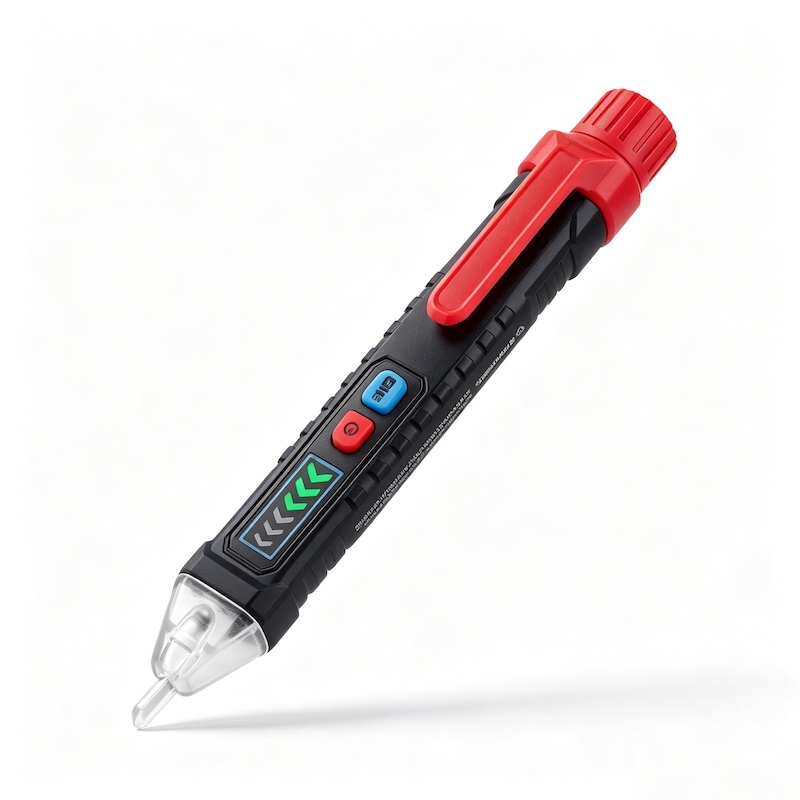
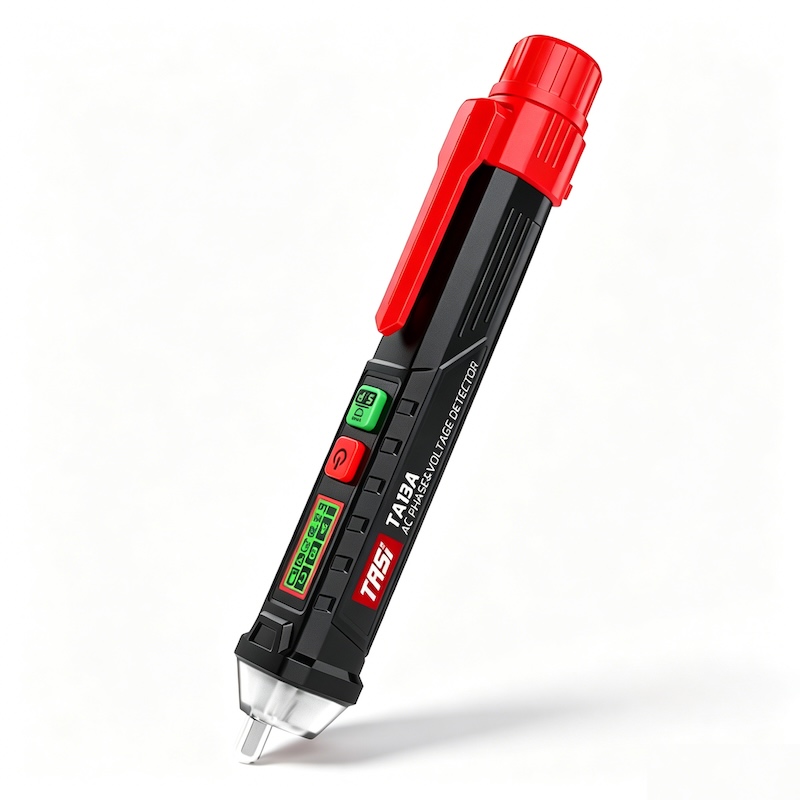
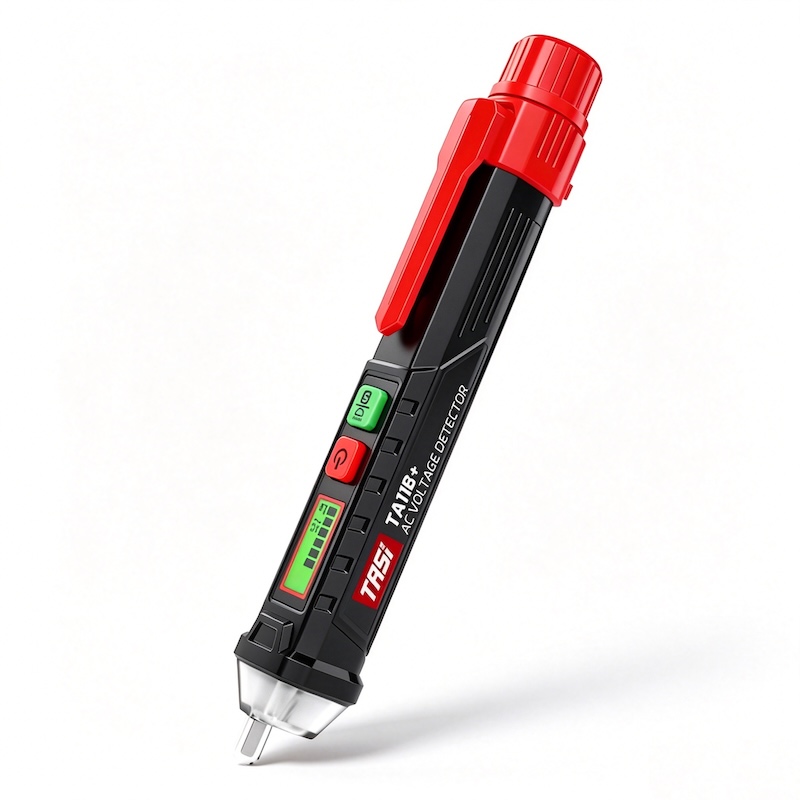
NCV is a common function found on digital multimeters, clamp meters, and non-contact voltage testers. For electrical installation, maintenance, and troubleshooting work, it provides a convenient way to perform an initial check for the possible presence of AC voltage without directly touching an exposed conductor.
However, NCV is not the same as conventional voltage measurement. It normally indicates whether an AC electric field has been detected within the instrument's sensitivity range. It does not provide an accurate voltage value and should not be used as the sole method for confirming that a circuit is completely de-energized.
Understanding what NCV does, how it works, and where its limitations lie is essential for using non-contact voltage detection correctly.
Key Takeaways
● NCV stands for Non-Contact Voltage.
● NCV mainly detects the electric field around an energized AC conductor.
● The sensing tip normally does not need to contact an exposed metal conductor.
● NCV is useful for quickly checking wires, outlets, switches, distribution equipment, and other electrical installations for the possible presence of voltage.
● NCV generally provides a presence/absence indication rather than an accurate voltage reading.
● Detection results can be affected by distance, insulation, shielding, grounding conditions, environmental interference, and instrument sensitivity.
● NCV alone should not be relied upon to confirm that a circuit is completely de-energized before electrical work.
What Does NCV Mean?
NCV stands for Non-Contact Voltage. The term NCVT, meaning Non-Contact Voltage Tester, is also commonly used for dedicated non-contact voltage detectors.
The key feature of NCV is that the user does not normally need to place a test probe directly onto an exposed energized conductor.
When the sensing end of an NCV tester is brought near an energized AC conductor, the instrument senses the surrounding electric field. If the detected signal exceeds the instrument's threshold, the tester may provide an audible alarm, illuminate an LED, display an indication, or vibrate.
In simple terms, the main purpose of NCV is:
To quickly identify locations where an energized AC conductor may be present.
Typical targets include electrical wiring, power cords, outlets, switches, circuit breakers, and lighting circuits.
How Does Non-Contact Voltage Detection Work?
An energized AC conductor produces a changing electric field around it. An NCV detector contains sensing circuitry designed to respond to this field.
As the sensing tip approaches the energized conductor, the electric field couples a very small signal into the tester, commonly through capacitive coupling. The instrument detects and processes this signal. When the signal reaches the programmed detection threshold, the tester activates an audible, visual, or other warning.
Because the sensing tip does not normally have to touch the internal metal conductor, the process is described as non-contact voltage detection.
NCV is therefore fundamentally different from a digital multimeter measuring voltage between two test points. An NCV tester senses an electric field rather than directly measuring the electrical potential difference between two conductors.
For this reason, NCV is primarily a rapid screening function rather than a precision voltage measurement method.
What Can NCV Detect?
NCV is mainly intended to identify AC electric fields associated with energized conductors.
Common applications include:
● Checking whether an AC power cable may be energized;
● Checking wall outlets for the possible presence of AC voltage;
● Identifying energized wiring near switches or circuit breakers;
● Assisting with live conductor identification;
● Checking extension cords, power cables, and lighting circuits;
● Performing an initial voltage-presence check before equipment maintenance;
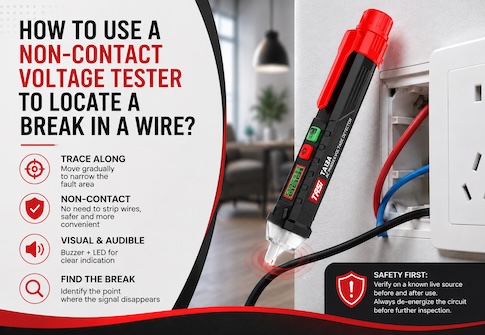
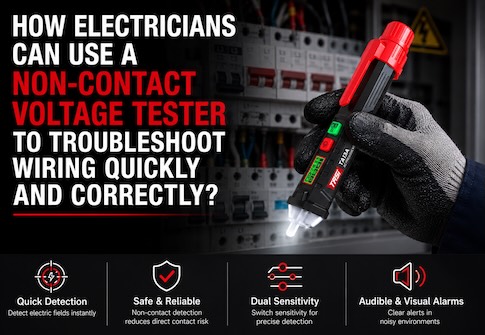
● Assisting with preliminary troubleshooting of wiring faults or loss of supply.
The voltage detection range varies by instrument. Some models are intended primarily for conventional mains-voltage applications, while higher-sensitivity or dual-range models may detect lower AC voltages.
For example, one tester may begin detecting at approximately 12 V AC, while another may be specified from approximately 90 V AC. Always refer to the specifications of the individual instrument.
What Can NCV Not Do?
NCV is convenient, but it does not replace every type of electrical test instrument.
It cannot accurately measure voltage
NCV normally indicates whether a detectable AC electric field is present. It does not determine whether the actual circuit voltage is 110 V, 230 V, or another specific value. A digital multimeter, voltmeter, or suitable contact voltage tester should be used when an actual voltage reading is required.
No alarm does not automatically mean no voltage
A conductor may be difficult to detect because of low voltage, excessive distance, metal shielding, thick insulation, installation configuration, limited instrument sensitivity, or incorrect test technique.
It should not be the sole means of proving a circuit is de-energized
For electrical work involving conductor access, disconnection, or maintenance, appropriate safety procedures and suitable contact-type test equipment should be used to verify circuit condition.
Most NCV functions are primarily intended for AC
Typical NCV testers and NCV functions built into multimeters or clamp meters are designed to detect changing AC electric fields. They should not automatically be assumed to detect DC voltage.
What Is the Difference Between NCV and Contact Voltage Measurement?
The main difference is the measurement method and the purpose of the test.
● NCV detection: The sensing tip is brought near the conductor, and the instrument detects the surrounding AC electric field to indicate whether voltage may be present.
● Contact voltage measurement: Test probes are connected directly to two measurement points, allowing the instrument to measure the electrical potential difference and display a voltage value.
NCV is especially useful for fast screening. For example, it can help identify which cable, outlet, or section of a distribution system may be energized.
A digital multimeter or two-pole voltage tester is more appropriate when the actual voltage must be measured or when the electrical condition of a circuit must be confirmed more reliably.
The two methods therefore serve different purposes rather than directly replacing one another.
How to Use an NCV Function Correctly
Always follow the instructions supplied with the specific instrument. A typical operating procedure includes:
● Inspect the tester, housing, and sensing tip for visible damage;
● Check that the battery is in good condition and activate the NCV function;
● Verify operation on a known energized source before testing;
● Bring the sensing end gradually toward the wire, outlet, or electrical equipment being checked;
● Move the detector slowly and observe any audible, LED, display, or vibration indication;
● If the instrument alarms, an AC electric field meeting its detection threshold has been sensed;
● If the work involves opening wiring, servicing equipment, or touching conductors, perform the required additional verification using suitable contact test equipment.
Checking the tester on a known live source before use is an important step because it confirms that the instrument and its indication system are functioning.
Some professional testers also provide self-test functions, battery status indication, or continuous operational indicators.
Why Does NCV Sometimes Alarm and Sometimes Not?
NCV does not simply measure whether voltage “exists.” It responds to the AC electric field that reaches its sensor. Several factors can therefore influence the result.
Voltage level
Higher voltage generally produces an electric field that is easier for the detector to sense, although the actual triggering point depends on the instrument design.
Detection distance
As the sensing tip moves farther away from the energized conductor, the electric field at the sensor usually becomes weaker.
Insulation and conductor construction
Standard wire insulation does not necessarily prevent NCV operation, but insulation thickness, cable construction, and surrounding materials can affect sensitivity.
Metal shielding
Conductors located inside metallic conduit, metal enclosures, shielded cables, or similar structures may be difficult or impossible to detect because the electric field is shielded.
Adjacent energized conductors
When several conductors are positioned close together, electric fields from neighboring live wires may interfere with attempts to identify individual conductors.
Instrument sensitivity
Detection thresholds vary between models. Some testers provide selectable high- and low-sensitivity modes or dual voltage ranges.
Environmental interference
Nearby electrical equipment, electromagnetic fields, installation configuration, and the way the tester is held or positioned can also affect detection.
Why Is NCV Mainly Used for AC Voltage?
Most NCV detectors operate by sensing a changing electric field around an energized conductor.
Because AC voltage continuously changes with time, it produces a varying electric field that can be detected by the sensing circuitry.
This is why NCV functions on common voltage testers, multimeters, and clamp meters are generally intended for non-contact AC voltage detection.
DC voltage does not produce the same continuously alternating electric field under steady-state conditions. Therefore, a conventional AC NCV function should not be assumed to detect batteries, DC power supplies, or other DC circuits.
Always check the instrument specification to determine what types of voltage it supports.
What Types of NCV Alerts Are Common?
Different instruments use different indication methods.
Common examples include:
● LED illumination or flashing;
● Audible buzzer;
● Increasing beep frequency as the detected field becomes stronger;
● Multi-segment LED indicators;
● NCV symbols or status information on an LCD;
● Signal-strength bars;
● Vibration alerts;
● Combined audible, visual, and vibration indication.
Some instruments vary the beep rate or LED indication according to detected signal strength, which can help locate an energized conductor.
However, signal strength should not normally be interpreted as an accurate voltage value because it is also influenced by distance, conductor configuration, and surrounding conditions.
Which Instruments Include NCV?
NCV may be provided as a dedicated function or integrated into other electrical test instruments.
Common examples include:
● Non-contact voltage testers: Compact instruments designed primarily for NCV checks;
● Digital multimeters: Some models combine standard voltage, current, resistance, and other measurements with an NCV function;
● Clamp meters: Many clamp meters include NCV for quick preliminary checks during electrical maintenance;
● Multifunction electrical testers: Some combine NCV, contact voltage measurement, continuity testing, and other electrical functions.
When “NCV” appears on an electrical test instrument, it generally indicates that the device includes some form of non-contact AC voltage detection.
How to Choose a Tester with NCV
The presence of an NCV function alone should not be the only selection criterion.
Detection voltage range
Confirm that the specified AC detection range is suitable for the intended application.
Sensitivity or detection modes
For applications involving different voltage levels or closely spaced wiring, selectable sensitivity or dual-range detection may be useful.
Indication method
Audible and visual indication suits most applications. In noisy environments, strong LED indications or vibration can provide additional convenience.
Safety rating
Select an instrument with an appropriate measurement category, rated voltage, and relevant safety compliance for the intended electrical environment. The fact that NCV is non-contact does not eliminate the need for proper electrical safety ratings.
Self-test features
Battery checks, startup self-tests, and operating-status indicators can help confirm that the tester is functioning before use.
Additional measurement requirements
For simple voltage-presence screening, a dedicated NCV tester may be sufficient. If voltage, current, resistance, and other electrical parameters also need to be measured, an NCV-equipped digital multimeter or clamp meter may be more practical.
Where Is NCV Commonly Used?
NCV is particularly useful where AC wiring needs to be checked quickly.
Typical applications include:
● Residential and commercial electrical inspection;
● Electrical installation and wiring work;
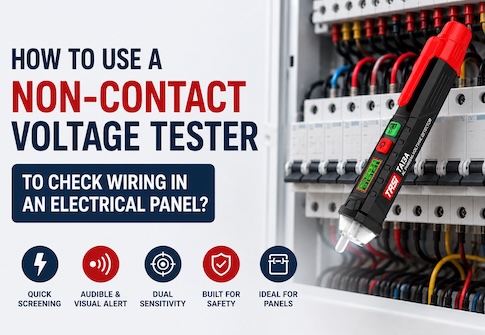
● Preliminary inspection of distribution panels and control cabinets;
● Industrial equipment maintenance;
● HVAC electrical troubleshooting;
● Outlet, switch, and lighting circuit inspection;
● Power cord and extension cord checking;
● Preliminary live-voltage screening before servicing equipment.
Its main advantage is speed and the ability to perform many initial checks without exposing or directly touching the conductor.
For precise measurement, detailed troubleshooting, or verification of electrical isolation, suitable contact-type test equipment should still be used.
FAQ
What does NCV stand for?
NCV stands for Non-Contact Voltage. It detects an AC electric field around an energized conductor to indicate that AC voltage may be present nearby.
Can NCV measure the exact voltage?
Normally, no. NCV is primarily a voltage-presence detection function. Use a digital multimeter, voltmeter, or suitable voltage tester when an accurate voltage value is required.
Can NCV detect voltage through wire insulation?
In suitable conditions, yes. Detecting an AC electric field through normal wire insulation is one of the primary purposes of non-contact voltage detection.
If the NCV tester does not alarm, is the circuit definitely de-energized?
No. Shielding, conductor position, voltage level, sensitivity, distance, and environmental conditions can all influence detection. NCV should not be the sole method used to verify a de-energized circuit.
Can NCV detect DC voltage?
Most conventional NCV functions are designed primarily for AC voltage. DC detection capability should only be assumed if it is specifically stated in the product specification.
Are NCV and a voltage tester the same thing?
Not exactly. NCV is a detection method or function. A non-contact voltage tester is a device designed primarily around that function, while multimeters and clamp meters may also include NCV.
Can NCV identify a live conductor?
It can assist in identifying energized conductors under suitable conditions. Closely spaced wiring, shielding, and interference may reduce the reliability of conductor identification.
Do I still need a multimeter after checking with NCV?
If only a quick screening check is required, NCV can be sufficient for that purpose. If actual voltage must be measured, or if wiring will be accessed or serviced, appropriate contact test equipment should be used for further verification.
Conclusion
NCV, or Non-Contact Voltage, is a detection method that senses the AC electric field around an energized conductor.
Its main advantage is the ability to quickly check wires, outlets, switches, circuit breakers, and electrical equipment without normally contacting an exposed live conductor. As a result, NCV is widely used in dedicated voltage testers, digital multimeters, clamp meters, and other electrical test instruments.
However, NCV is fundamentally a preliminary detection and screening function. It does not provide an accurate voltage value, and the absence of an alarm does not under all conditions prove that a circuit is completely de-energized.
The correct approach is to use NCV as a rapid method for locating potentially energized conductors and to use appropriate contact-type instruments whenever accurate voltage measurement or reliable verification of circuit condition is required.