Introduction
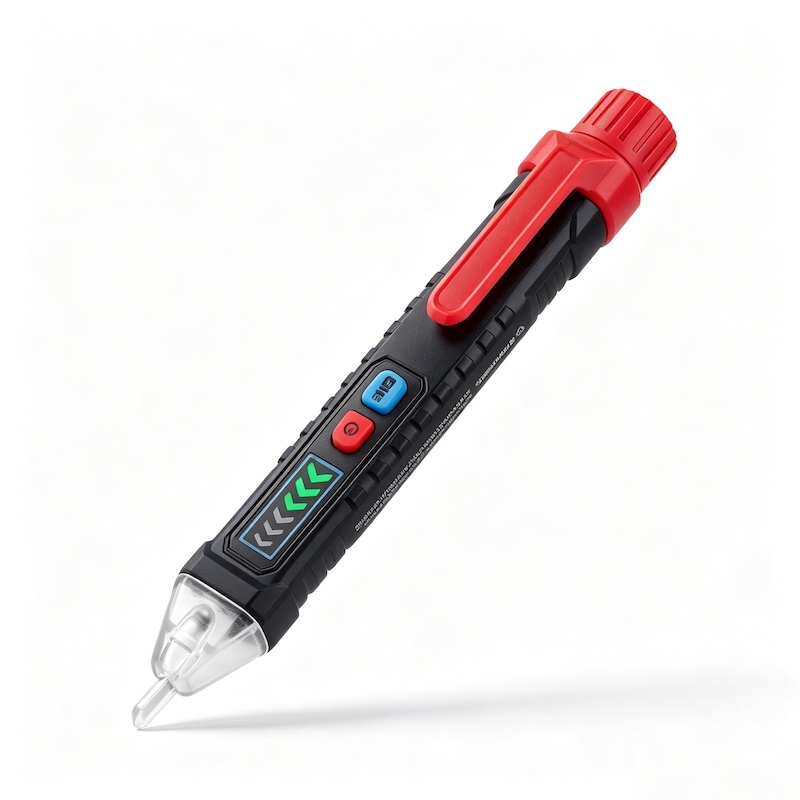
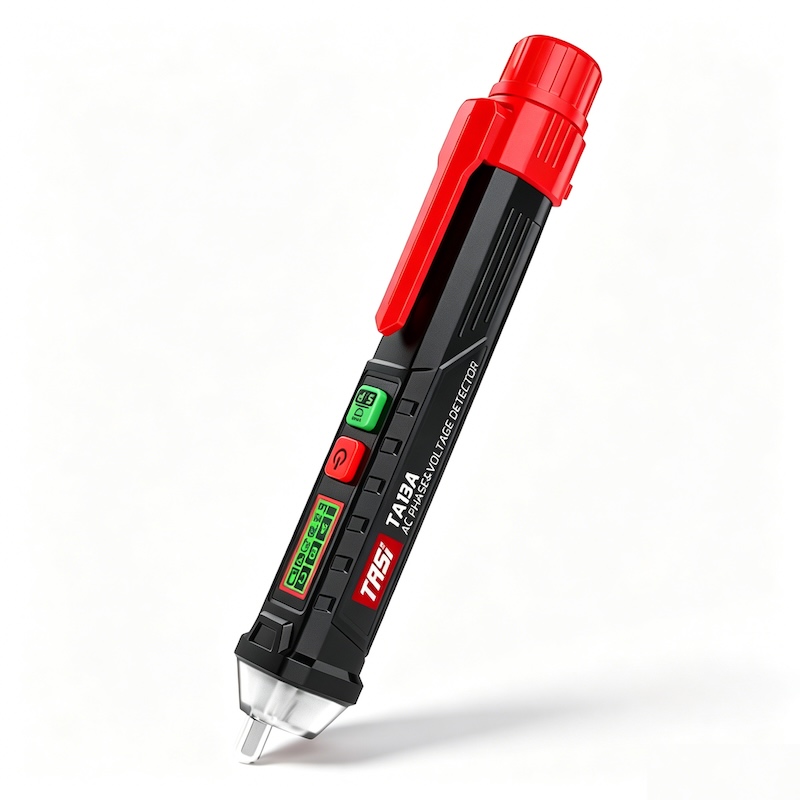
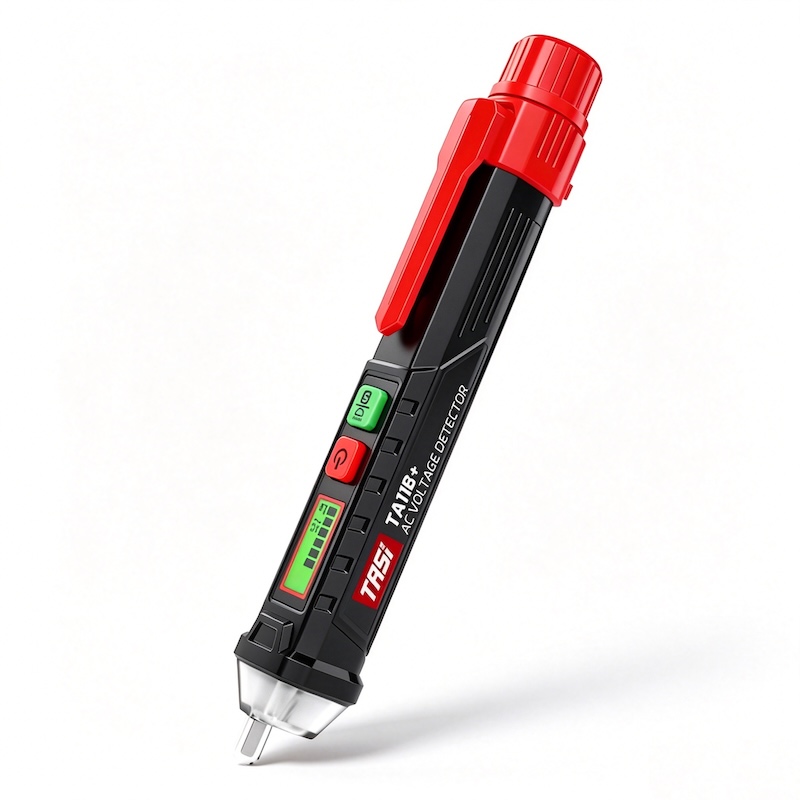
When selecting or using a non-contact voltage tester (NCV), specifications such as 12–1000 V AC, 24–1000 V AC, or 90–1000 V AC are commonly listed as the detection range.
But what exactly do these values mean? Does a tester always detect voltage whenever the conductor voltage falls within the specified range? And does the detection range indicate how far the tester can be held from a wire?
In most cases, the detection range of an NCV tester primarily refers to the AC voltage range within which the instrument is designed to detect an alternating electric field.
Because NCV operation depends on capacitive sensing of an AC electric field, actual performance is also influenced by conductor construction, insulation thickness, distance, shielding, body coupling, and surrounding electrical conditions.
Understanding this parameter correctly is therefore important for both instrument selection and safe use.
Key Takeaways
● The detection range of a non-contact voltage tester generally refers to its AC voltage detection range.
● A specification such as 90–1000 V AC describes the voltage range the tester is designed to detect; it does not mean a sensing distance of 90–1000 mm.
● Voltage detection range and sensing distance are different parameters.
● Higher AC voltage generally produces a stronger electric field that is easier for an NCV tester to detect.
● Insulation, shielding, conductor location, grounding conditions, body coupling, and surrounding electric fields can affect detection performance.
● An NCV tester is suitable for quickly identifying the possible presence of AC voltage, but a single negative NCV indication should not be used as the sole confirmation that a circuit is de-energized.
What Is the Detection Range of a Non-Contact Voltage Tester?
For a typical non-contact voltage tester, the detection range generally refers to the AC voltage range over which the instrument is designed to sense the electric field around an energized conductor.
For example:
AC Voltage Detection Range: 90–1000 V AC
This means the tester is designed to detect electric fields associated with AC voltages of approximately 90 V to 1000 V under specified test conditions.
If another tester is rated:
12–1000 V AC
it has a lower specified starting detection voltage and is designed to respond to lower-voltage AC electric fields.
Terminology such as “Detection Range,” “NCV Range,” and “Voltage Detection Range” may be defined slightly differently by different manufacturers. The product specification and operating instructions should therefore always be consulted.
Why Is the Detection Range Expressed in V AC?
A non-contact voltage tester does not measure voltage in the same way as a digital multimeter connected directly to a circuit.
Instead, a sensor near the tip of the tester detects the changing electric field around an energized AC conductor. When the sensed signal exceeds the instrument's internal threshold, the tester provides an indication through LEDs, a buzzer, a display, vibration, or a combination of these.
Typical specifications include:
● 12–1000 V AC;
● 24–1000 V AC;
● 50–1000 V AC;
● 90–1000 V AC.
The “V AC” rating refers to alternating voltage associated with the detectable electric field. It does not mean the tester is directly measuring and displaying the actual voltage value.
A conventional NCV tester is primarily intended for presence-of-voltage detection, not precision voltage measurement.
What Is the Difference Between Detection Range and Measurement Range?
The detection range of an NCV tester should not be confused with the voltage measurement range of a digital multimeter.
A multimeter connected directly to a circuit may display a numerical value such as 230.1 V AC.
A standard NCV tester, by contrast, generally determines whether the surrounding AC electric field exceeds its detection threshold and may indicate this through:
● LEDs;
● Audible alarms;
● Different LED colors;
● Different beep frequencies;
● Signal-strength indicators.
Therefore, a tester rated for 12–1000 V AC does not necessarily measure the precise voltage anywhere within that range.
Detection indicates whether voltage may be present, while measurement provides a numerical value with a specified accuracy.
Is the Detection Range the Same as the Sensing Distance?
No.
This is one of the most important distinctions when interpreting NCV specifications.
For example:
90–1000 V AC
refers to an AC voltage detection range. It does not mean the tester can detect voltage from a distance of 90 mm, 100 mm, or 1000 mm.
The actual sensing distance depends on many factors and cannot generally be represented by one fixed value applicable to every conductor and environment.
In some conditions, the tester may respond several millimeters away from an insulated wire. In other situations, it may need to be placed much closer before the electric field is strong enough to trigger an indication.
Why Does the Sensing Distance Change?
An NCV tester responds to an AC electric field, and the field strength reaching its sensor varies with operating conditions.
Voltage Level
Under otherwise similar conditions, higher AC voltage usually produces a stronger detectable electric field and may allow the tester to respond from a greater distance.
Wire Insulation
The insulation material, thickness, and cable construction can affect the electric field reaching the NCV sensor. Two cables operating at the same voltage may therefore produce different detection results.
Conductor Position
A wire located behind a wall, inside trunking, deep within a distribution enclosure, or behind other materials may produce a weaker or altered field at the tester.
Metal Shielding
Metal conduit, metal enclosures, shielded cables, and similar structures can reduce or block the electric field and may prevent reliable NCV detection.
Body and Environmental Coupling
Many NCV testers rely partly on capacitive coupling involving the tester, operator, and surrounding environment. Grip, footwear, floor conditions, and nearby objects can therefore influence sensitivity.
For this reason, NCV sensing distance is inherently dependent on the application.
What Does the Lower Detection Limit Mean?
If a tester is specified as:
90–1000 V AC
the 90 V value can be regarded as the nominal lower limit of its detection range under the manufacturer's specified conditions.
If the range is:
12–1000 V AC
the tester is designed to respond to lower-level AC electric fields.
However, the lower limit should not be interpreted as an absolute switching threshold.
A 90 V rating does not mean:
● 89 V can never be detected;
● 90 V will always be detected under every condition.
The NCV circuit responds to the electric field actually reaching the sensor, and this may vary significantly with cable construction, distance, shielding, and the surrounding environment.
What Does the Upper Detection Limit Mean?
The upper limit indicates the highest nominal AC voltage for which the NCV function is designed within the manufacturer's specified operating conditions.
For example:
12–1000 V AC
indicates an NCV detection range extending up to 1000 V AC.
Non-contact operation does not eliminate electrical hazards. In higher-voltage environments, users should also verify:
● The rated NCV detection range;
● The instrument's safety rating;
● Measurement category, where applicable;
● Rated working voltage;
● Manufacturer-specified operating conditions;
● Applicable electrical safety procedures.
The instrument must not be used beyond its specified ratings.
What Is Dual-Range or Dual-Sensitivity NCV Detection?
Some NCV testers provide two or more detection sensitivity levels, such as:
● High-sensitivity mode;
● Low-sensitivity mode.
Other products describe these modes using separate lower- and higher-voltage detection ranges.
High sensitivity allows the tester to respond to weaker electric fields. It may be useful for locating conductors, detecting lower-voltage AC signals, or performing more sensitive preliminary checks.
However, greater sensitivity also increases the possibility of detecting electric fields from nearby energized conductors.
Low sensitivity requires a stronger electric field to trigger the tester and can help reduce interference from adjacent live wiring.
Therefore, a wider detection range or higher sensitivity is not automatically better for every application. The appropriate setting depends on the test environment.
Why Can Multiple Nearby Wires Cause Misidentification?
In distribution panels, outlets, cable bundles, and trunking systems, conductors are often installed close together.
The electric field from one energized conductor may extend toward adjacent wires. A highly sensitive NCV tester can therefore respond even when its tip is positioned near another conductor.
NCV testers are highly useful for:
● Quickly identifying potentially energized wiring;
● Checking for possible AC voltage near an outlet;
● Performing preliminary checks on cables;
● Assisting with live-conductor identification.
However, when the electrical state of a specific conductor must be confirmed, an appropriate contact-type voltage test method should also be used.
What Factors Affect the Detection Range?
Actual NCV performance can be influenced by:
● AC voltage level;
● Supply frequency;
● Distance between the conductor and sensor;
● Insulation material and thickness;
● Cable construction and conductor arrangement;
● Metal shielding;
● Metal conduit or enclosures;
● Nearby energized conductors;
● How the user holds the tester;
● Capacitive coupling between the operator and ground;
● Electromagnetic interference;
● Battery condition;
● Tester sensitivity and detection algorithm.
For this reason, a nominal voltage range alone cannot fully predict performance in every installation.
Does No NCV Indication Mean the Circuit Is Definitely De-Energized?
No.
A lack of indication may mean that AC voltage is absent, but it can also result from:
● Voltage below the tester's effective detection conditions;
● Excessive distance from the conductor;
● Metal shielding;
● Cable insulation or construction reducing the field;
● Low battery condition;
● Instrument malfunction;
● Operating technique or environmental conditions;
● A signal type that the NCV function is not designed to detect.
A negative NCV indication should therefore not always be interpreted as proof that a conductor is de-energized.
Before electrical maintenance, disconnection, or contact with exposed conductors, appropriate procedures and suitable test equipment should be used to verify the absence of voltage.
How Should the Detection Range Be Used When Selecting an NCV Tester?
Start by considering the voltage systems in which the tester will normally be used.
For building wiring, outlets, distribution circuits, and common AC power systems, select an instrument whose detection range covers the intended system voltage.
If lower AC voltages need to be detected, pay particular attention to the lower detection limit and whether the tester provides a high-sensitivity mode.
Other useful selection criteria include:
● Multiple sensitivity levels;
● Clear audible and visual indications;
● Vibration alert, where required;
● Built-in flashlight;
● Auto power-off;
● Low-battery indication;
● Appropriate safety rating;
● Suitability for the intended operating environment and voltage system.
Detection range is only one part of NCV performance and should not be considered in isolation.
What Should You Consider When Using an NCV Tester?
To reduce the risk of incorrect interpretation:
● Verify the tester on a known live source before use;
● Move the sensing tip gradually toward the test point rather than relying on a single quick scan;
● Be aware that nearby live conductors can cause interference;
● Do not treat one negative indication as absolute proof of absence of voltage;
● Before electrical work, use an appropriate method to verify the de-energized state;
● Never exceed the manufacturer's specified voltage range or safety rating;
● Stop using the instrument if its enclosure, tip, or insulation is damaged.
Checking the tester on a known energized source before use is particularly important because it confirms that the instrument, battery, and indication system are functioning.
FAQ
Q1: What does 12–1000 V mean on a non-contact voltage tester?
It means the NCV function is designed to detect AC electric fields associated with approximately 12 V to 1000 V AC under specified conditions. It does not mean the tester can precisely measure voltage throughout that range.
Q2: What is the difference between a 90–1000 V and a 12–1000 V NCV tester?
One important difference is the specified lower detection limit. A 12–1000 V tester is generally designed to detect weaker electric fields associated with lower AC voltages, although actual performance still depends on the instrument and test conditions.
Q3: Is detection range the same as sensing distance?
No. Detection range generally refers to the AC voltage range. Sensing distance is the physical distance at which the electric field becomes strong enough to trigger the tester.
Q4: Can an NCV tester detect wiring through a wall?
It may respond to wiring behind some wall materials under certain conditions, but depth, wall material, voltage, shielding, and surrounding wiring all affect the result. An NCV tester should not be considered a complete substitute for a dedicated in-wall wire locator.
Q5: Why does the sensing distance differ between two 230 V wires?
Differences in insulation, cable construction, conductor position, nearby metal, body coupling, and adjacent wiring can all affect the electric field reaching the tester.
Q6: Is a wider detection range always better?
Not necessarily. A lower detection threshold or higher sensitivity can detect weaker fields but may also increase sensitivity to nearby wiring and environmental electric fields.
Q7: If the NCV tester does not beep, is the circuit definitely dead?
No. Shielding, low voltage, excessive distance, poor battery condition, or other factors may prevent detection. Appropriate verification methods should be used before electrical work.
Q8: Can a non-contact voltage tester detect DC voltage?
Most conventional NCV testers are designed primarily to sense changing electric fields produced by AC voltage. Support for other voltage types depends on the specific instrument.
Conclusion
The “detection range” of a non-contact voltage tester generally refers to its AC voltage detection range, such as 12–1000 V AC or 90–1000 V AC. It is not a fixed sensing distance and does not mean that the tester measures exact voltage values like a digital multimeter.
Because NCV detection depends on sensing an AC electric field, actual performance is affected by voltage level, distance, insulation, cable construction, metal shielding, body coupling, and surrounding electrical conditions.
Understanding the difference between voltage detection range, sensing distance, and measurement range helps prevent incorrect interpretation of NCV specifications.
A non-contact voltage tester is highly useful for fast preliminary voltage checks, but appropriate verification methods should always be used before electrical work where confirmation of a de-energized condition is required.