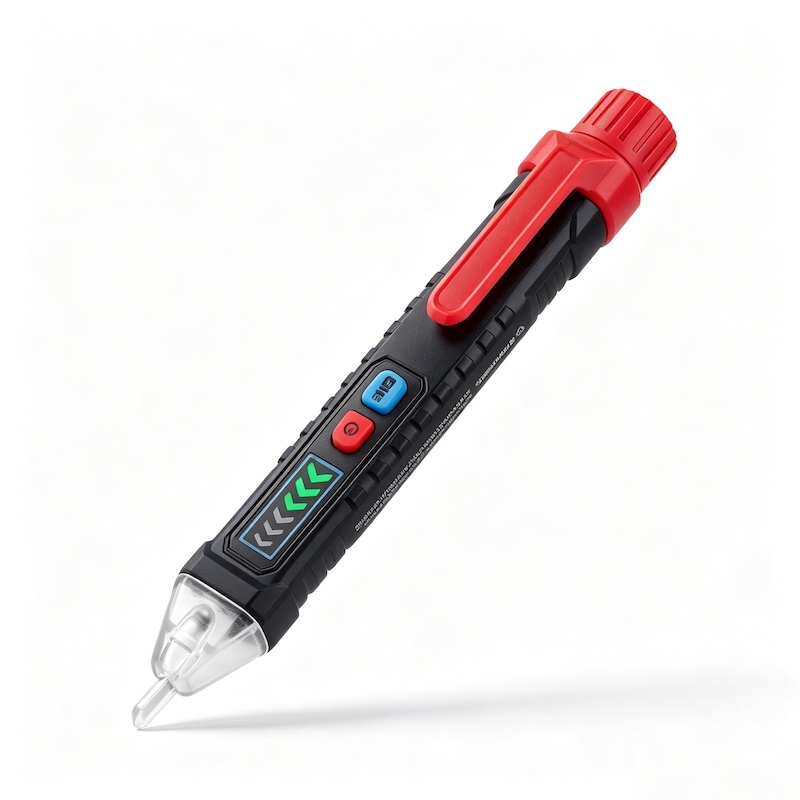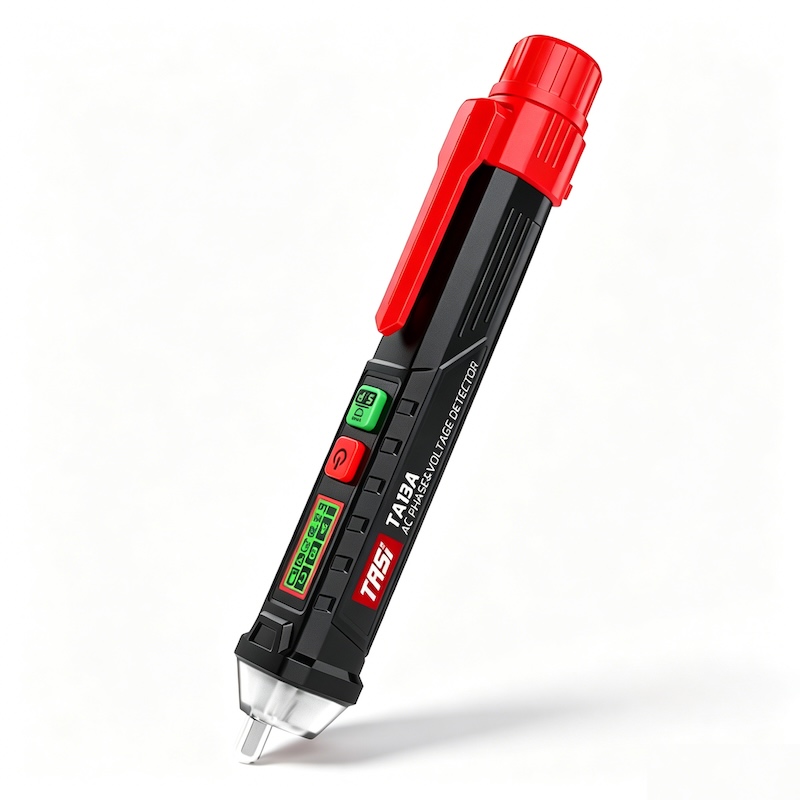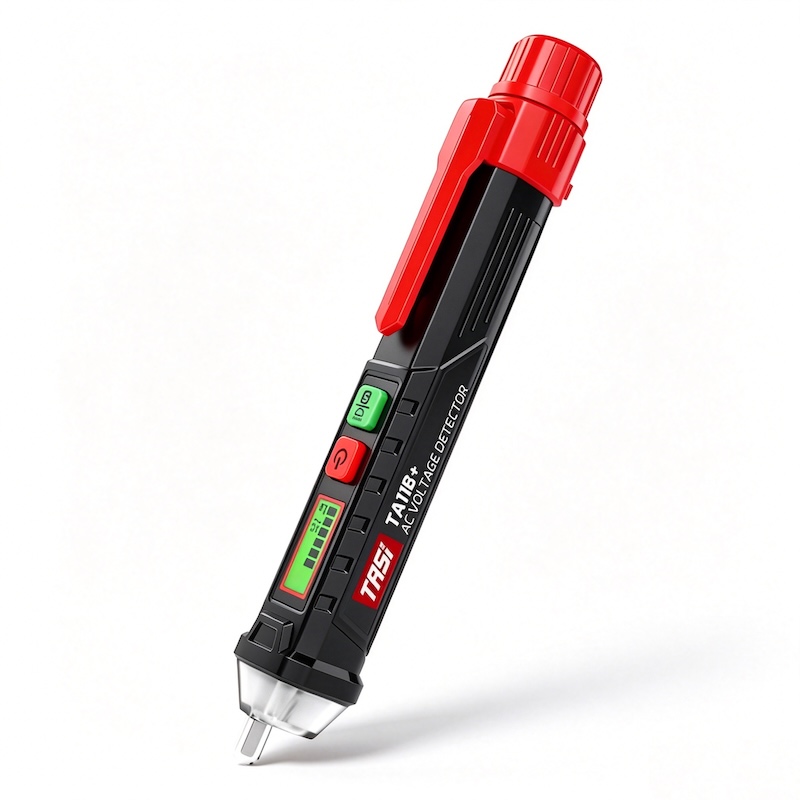
Introduction
Yes. Most non-contact voltage testers can detect the alternating electric field around an energized conductor through common plastic, PVC, or rubber insulation. This is one of the main advantages of non-contact voltage detection.
An NCV tester does not determine voltage by making an electrical connection with the conductor. Instead, it senses the alternating electric field produced around an energized AC conductor. Therefore, the probe can often detect voltage when positioned close to the outer insulation of a wire without exposing the metal conductor.
However, the ability to detect voltage through insulation does not mean detection will be reliable under every condition. Insulation thickness, voltage level, cable construction, shielding, probe distance, and tester sensitivity can all influence the result.
Key Points
● Non-contact voltage testers can usually detect AC voltage through common plastic or rubber wire insulation.
● An NCV tester senses an alternating electric field rather than directly measuring the voltage inside the conductor.
● Single insulated conductors are generally easier to detect than multicore, shielded, or armoured cables.
● Thicker insulation, greater distance, or lower voltage can reduce detection sensitivity.
● No alarm from an NCV tester must not be treated as conclusive proof that a circuit is de-energized.
● Before electrical work or contact with conductors, the absence of voltage should be confirmed using an appropriate contact-type test instrument and the applicable safe working procedure.
Why Can a Non-Contact Voltage Tester Detect Through Insulation?
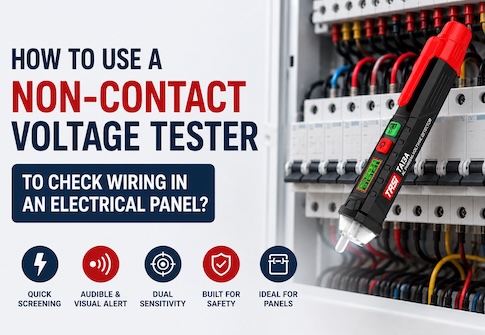
A non-contact voltage tester works by sensing the alternating electric field around an AC conductor.
When AC voltage is present on a conductor, an alternating electric field exists around it. Common insulation materials such as PVC and rubber electrically isolate the conductor, but they do not necessarily prevent the external electric field from being detected.
When the sensing tip of the tester is brought close to the wire, its internal sensing circuit responds to the electric field. If the detected signal exceeds the instrument's threshold, the tester normally provides a visual indication, an audible alarm, or both.
This means that NCV testing normally does not require:
● Removing the wire insulation;
● Touching the copper conductor;
● Completing a measurement circuit in the same way as a conventional multimeter.
This makes non-contact voltage testers useful for quick preliminary checks on cables, outlets, switches, and electrical equipment.
Which Types of Insulation Can Usually Be Tested Through?
For common electrical insulation materials, detection is normally possible if the insulation thickness and cable construction are suitable.
Typical examples include:
● PVC-insulated wires;
● Rubber-insulated wires;
● Common plastic-jacketed power cords;
● Appliance power cables;
● Some insulated low-voltage control conductors.
It is important to understand that the tester is not physically “penetrating” the insulation. Instead, it is sensing the electric field that remains detectable outside the insulation.
A more accurate description is therefore: common insulation materials may allow the external AC electric field to remain detectable by a non-contact voltage tester.
Does Thicker Insulation Reduce Detection Performance?
Yes.
The actual distance between the sensing probe and the energized conductor is an important factor in non-contact detection. As insulation becomes thicker, the effective distance from the probe to the conductor increases and the detected electric field usually becomes weaker.
Under the same voltage conditions:
● A normal single-core insulated wire is generally easier to detect;
● A power cable with a thick outer jacket may require the probe to be positioned closer to the cable surface;
● Cables with multiple insulation layers may produce a weaker detectable signal;
● At greater distances, a low-sensitivity mode may not trigger.
If the tester provides high- and low-sensitivity modes, the appropriate mode should be selected according to the voltage range and test environment.
Why Can an Energized Insulated Wire Sometimes Produce No Alarm?
A non-contact voltage tester may occasionally fail to indicate even when voltage is present. Common reasons include:
● Thick insulation or cable jacket. The sensing probe may be too far from the energized conductor.
● Voltage below the tester's detection range. Different models have different minimum detection thresholds.
● Excessive probe distance. NCV detection normally requires the sensing tip to be positioned close to the test point.
● Shielded cable construction. Metallic shielding can significantly reduce the external electric field.
● Metal conduit or enclosure. Conductive barriers may reduce or block the field available to the tester.
● Multiple conductors within one cable. The arrangement of live, neutral, and other conductors can alter the external field distribution.
● Sensitivity set too low. Dual- or multi-sensitivity testers may require a higher-sensitivity mode.
● Low battery or instrument malfunction. Tester operation should always be verified before use.
For these reasons, the absence of an NCV indication must not automatically be interpreted as proof that the circuit is de-energized.
Can Voltage Be Detected Through the Jacket of a Shielded Cable?
Not reliably in every case.
Plastic and rubber insulation perform a different function from metallic shielding. Metal braid, foil shielding, armour, or conductive conduit can substantially reduce the electric field outside the cable.
Detection may therefore be significantly less reliable with:
● Cables with metallic shielding;
● Armoured cables;
● Conductors installed inside metal conduit;
● Wiring enclosed within grounded metal housings.
It should not be assumed that an NCV tester will always detect voltage simply because its probe is placed against the outer jacket of a cable.
Can a Non-Contact Voltage Tester Detect Wiring Through a Wall?
Some high-sensitivity NCV testers may respond to energized wiring behind a wall under certain conditions, but this is generally less reliable than testing directly against an insulated conductor.
Wall material, wire depth, conductor orientation, metal framing, nearby energized circuits, and tester sensitivity can all affect the indication.
A general-purpose NCV tester should therefore be considered an instrument for detecting the possible presence of an AC electric field near the probe, rather than a dedicated in-wall wiring locator.
Where accurate cable location is required, a purpose-designed wire or circuit tracing instrument should be used.
How Should Voltage Be Checked Through Insulation?
To improve detection reliability:
● Inspect the tester and check the battery condition before use.
● Verify operation on a known energized source before testing the target circuit.
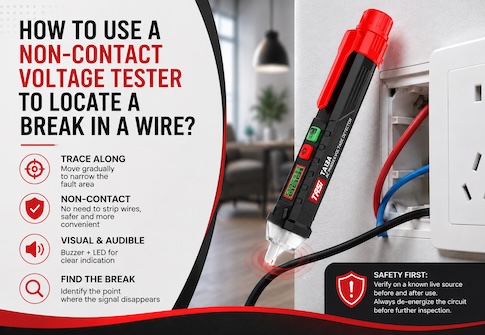
● Move the sensing tip gradually toward the insulated conductor rather than making a rapid pass from a distance.
● Test at several points along the conductor and observe whether the indication remains consistent.
● Select the appropriate sensitivity mode if the tester provides multiple detection ranges.
● After testing, verify the tester again on a known energized source.
This before-test, test, and after-test verification approach helps reduce the risk of misinterpretation caused by battery failure or tester malfunction.
Does an Alarm Through Insulation Mean the Wire Is Definitely Live?
Not necessarily.
An alarm means the tester has detected an AC electric field above its response threshold near the sensing tip. It does not necessarily prove that the specific conductor being tested is the live conductor.
Where several wires run close together, electric-field coupling from a live conductor may cause an indication near a neutral conductor, floating conductor, or even part of a disconnected cable.
NCV testers are therefore best suited to rapid preliminary detection. Accurate identification of live and neutral conductors, or confirmation of circuit condition, may require additional testing methods.
Does No Alarm Mean the Conductor Inside the Insulation Is Definitely De-Energized?
No.
This is an important safety limitation of non-contact voltage testing.
No indication may mean that the conductor is de-energized, but it may also result from:
● Voltage below the detection range;
● Thick insulation;
● Excessive probe distance;
● Metallic shielding;
● An unsuitable test location;
● Insufficient tester sensitivity;
● Low battery condition;
● Instrument malfunction.
Before stripping, terminating, repairing, or touching conductors, the absence of voltage should not be established solely from a negative NCV indication.
What Is a Non-Contact Voltage Tester Best Used For?
The main advantages of an NCV tester are speed, convenience, and the ability to perform preliminary checks without touching exposed conductors.
Typical applications include:
● Checking whether an AC electric field is present around a power cord;
● Preliminary checking of electrical outlets;
● Checking for voltage near the supply side of a switch;
● Inspecting appliance power leads;
● Assisting with preliminary AC wiring fault diagnosis;
● Performing an initial energized-circuit check before maintenance.
However, an NCV tester is primarily a presence-detection and preliminary troubleshooting tool. It does not replace a multimeter, two-pole voltage tester, or other appropriate instrument where an actual voltage value or reliable verification of absence of voltage is required.
FAQ
Does the insulation need to be removed before using a non-contact voltage tester?
Normally, no. For common insulated AC conductors, the sensing probe can usually be placed close to the outer insulation.
Can an NCV tester detect voltage through PVC insulation?
Usually, yes. PVC is a common electrical insulation material and generally does not completely prevent detection of the external AC electric field. Performance still depends on insulation thickness, voltage level, probe distance, and tester sensitivity.
Can voltage be detected through rubber insulation?
In many cases, yes. However, thick rubber insulation increases the distance between the sensing tip and the conductor and may reduce sensitivity.
Why can an energized cable sometimes produce no NCV indication?
Possible causes include a thick cable jacket, low voltage, excessive sensing distance, metallic shielding, or a detection range that is unsuitable for the application.
Can an NCV tester detect voltage through a metal enclosure?
Generally not reliably. Metal housings and shields can alter or attenuate the electric field, so this method should not be relied upon to determine whether internal wiring is energized.
Can an NCV tester tell me the exact voltage?
No. Standard NCV testers primarily indicate the presence of an AC electric field. Even models with high/low voltage indication do not normally provide an accurate voltage measurement.
If there is no alarm through the insulation, is the wire safe to touch?
No. A negative NCV indication alone is not sufficient to confirm electrical safety. Appropriate verification of absence of voltage is required before electrical work begins.
Conclusion
A non-contact voltage tester can usually detect AC voltage through common PVC, plastic, or rubber insulation because it responds to the alternating electric field surrounding an energized conductor rather than requiring direct electrical contact.
Detection performance, however, depends on insulation thickness, sensing distance, voltage level, cable construction, metallic shielding, and tester sensitivity. Standard insulated wires are generally easier to detect, while shielded, armoured, or heavily jacketed cables may significantly reduce detection reliability.
NCV testers are therefore highly useful for rapid preliminary voltage checks, but a lack of indication must never be treated as definitive proof that a circuit is de-energized. Appropriate test equipment should be used to verify the absence of voltage before electrical work or direct conductor contact.