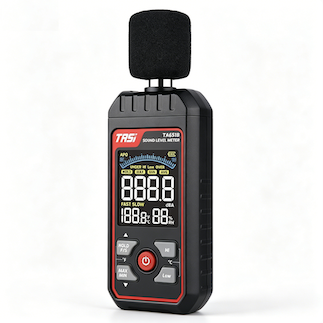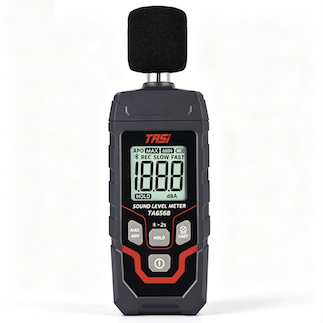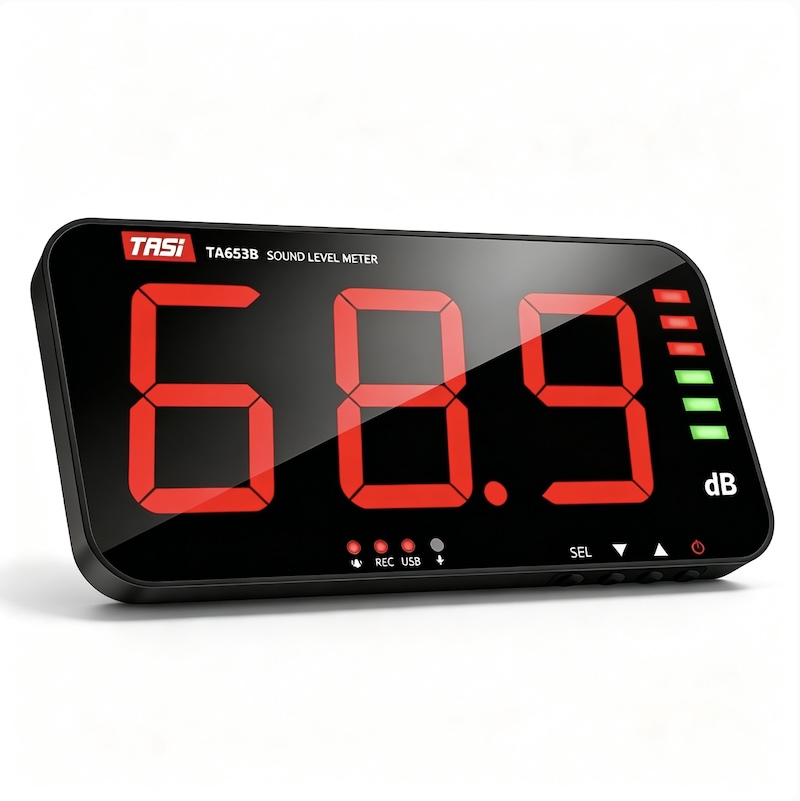
Introduction
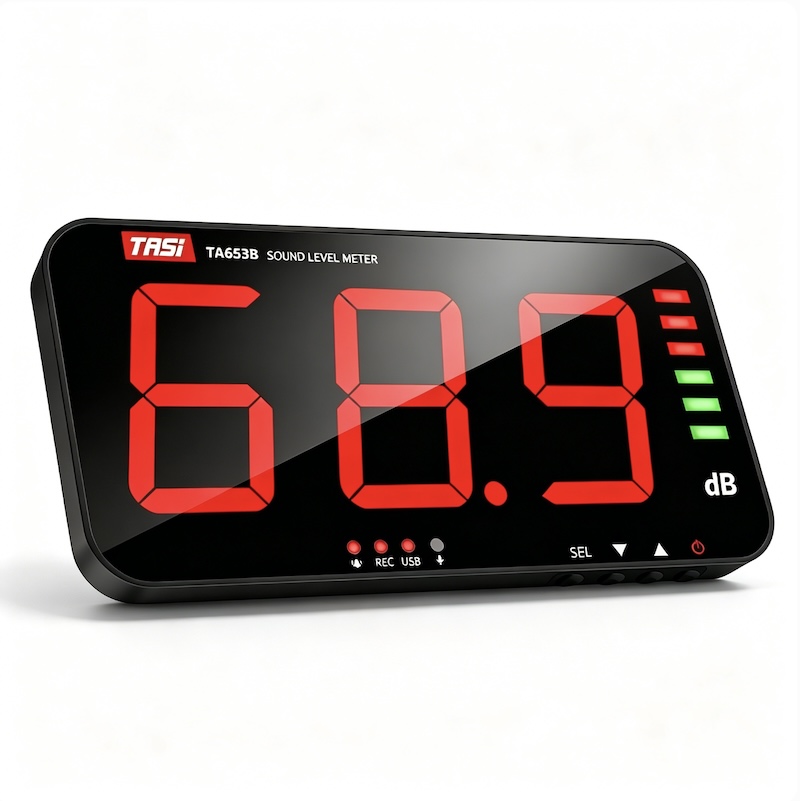
Indoor noise measurement may be required in homes, offices, classrooms, meeting rooms, laboratories, commercial buildings, and many other environments. A sound level meter provides a direct method of measuring sound pressure level, but simply switching on the instrument and recording one instantaneous reading may not produce a representative result.
Indoor sound fields are affected by reflections from walls, floors, and ceilings, as well as by occupant activity, HVAC systems, door and window conditions, and measurement position. To obtain meaningful and repeatable results, measurement conditions should therefore be kept as consistent as possible, and the correct frequency weighting, time response, and microphone position should be selected.
This article explains the basic procedure for measuring indoor noise with a sound level meter and the main factors that should be controlled during measurement.
Key Points
● Indoor noise is generally measured as sound pressure level using a sound level meter, with measurement settings selected according to the purpose of the assessment.
● A-weighting (dBA) is commonly used for general environmental noise assessment because it approximates the frequency sensitivity of human hearing.
● The microphone should not normally be positioned too close to walls, windows, furniture, or other reflective surfaces unless required by a specific test method.
● Doors, windows, HVAC equipment, and occupant activity should be kept in a defined and consistent condition.
● For fluctuating noise, one instantaneous reading is not sufficient; the sound level should be observed over an appropriate period.
● Measurements used for regulatory compliance, occupational noise assessment, building acoustics, or formal testing should follow the relevant standard or prescribed measurement procedure.
Basic Principles of Indoor Noise Measurement
A sound level meter uses a microphone to detect variations in air pressure caused by sound and converts them into a sound pressure level, normally expressed in decibels (dB).
For indoor environmental measurements, readings are commonly expressed in dBA. The “A” indicates A-frequency weighting, which adjusts the measurement according to the frequency-dependent sensitivity of human hearing. It is therefore widely used for environmental noise, workplace noise, and general indoor noise assessment.
Typical indoor sound sources may include:
● HVAC and ventilation systems;
● Computers, printers, and other office equipment;
● Conversations and occupant activity;
● Traffic noise entering from outdoors;
● Elevators, pumps, fans, and building services equipment;
● Sound transmitted from adjacent rooms or floors.
A sound level meter measures the sound pressure level at the exact position of its microphone. For this reason, readings may vary significantly between different locations within the same room.
What Should Be Prepared Before Measuring Indoor Noise?
Before starting, first define the purpose of the measurement. The appropriate microphone position, measurement duration, and data interpretation method may differ depending on the objective.
For example, evaluating the general acoustic environment of an office requires measurements at representative occupied locations. Investigating noise from an air-conditioning unit may require measurements with the equipment operating and switched off. If the purpose is to assess outdoor traffic noise entering a room, the condition of the doors and windows must also be clearly defined.
Before measurement, it is advisable to:
● Check that the sound level meter has sufficient battery power;
● Inspect the microphone and windscreen where applicable;
● Select an appropriate measurement range;
● Check the instrument with an acoustic calibrator before measurement when required;
● Record the room use, door and window status, and major noise sources;
● Define the measurement positions and measurement period.
Where measurements will be repeated for comparison, the instrument settings and environmental conditions should be reproduced as closely as possible.
How Should the Sound Level Meter Be Set?
For general indoor environmental noise surveys, A-weighting is commonly selected.
The time response should be chosen according to how the sound changes over time. Common settings include FAST and SLOW.
FAST responds quickly to changes in sound level and is useful for observing rapidly varying noise.
SLOW provides a more stable display and is useful for relatively steady or slowly changing background noise.
For example, SLOW may be suitable for observing steady HVAC, fan, or background noise, while FAST may be more useful for events such as door closures, impacts, or other rapidly changing sounds.
Some digital sound level meters also provide MAX Hold, maximum/minimum recording, or data logging functions. These can be selected according to the measurement objective.
How to Select the Indoor Measurement Position
Measurement position is one of the most important factors affecting indoor noise readings.
For general indoor surveys, the microphone should be placed at a representative location and should normally be kept away from walls, glazing, desktops, large cabinets, and other nearby reflective surfaces.
Sound reflects from walls, ceilings, floors, and furniture. Reflected sound can combine with direct sound and alter the sound pressure level at particular locations.
In practice:
● Do not place the microphone directly next to a wall or window unless the test method requires it;
● Do not place the meter directly on vibrating machinery or surfaces;
● Keep the operator at a reasonable distance from the microphone to reduce reflections from the body;
● When assessing noise experienced by occupants, position the microphone close to the typical ear height of the relevant occupied location;
● In large rooms, take measurements at several representative positions.
For formal building acoustics, environmental noise, or standardized testing, microphone position and distances from reflecting surfaces should follow the applicable test procedure rather than being determined solely by experience.
How to Measure Indoor Noise Correctly
Once the instrument settings and measurement positions have been established, the measurement can begin.
A consistent procedure is recommended:
● Switch on the sound level meter and confirm that it is operating correctly;
● Select A-weighting and FAST or SLOW response as appropriate;
● Position the microphone at the predetermined location;
● Keep the instrument stable and avoid unnecessary movement during measurement;
● Allow the reading to settle and observe how the sound level changes;
● Do not record only one incidental instantaneous value;
● Record stable levels, maximum values, minimum values, or time-varying data as required;
● Use the same instrument settings when measuring multiple positions;
● Record the environmental conditions after completing the measurement.
If the noise varies continuously because of occupants, traffic, or intermittent machinery, measurements lasting only a few seconds are unlikely to represent the overall acoustic environment. A longer observation period should be used.
Why Should Indoor Noise Be Measured More Than Once?
Indoor noise is rarely completely constant.
For example, an office may have relatively low background noise when nobody is speaking, but the sound level may increase considerably when a printer operates, an HVAC compressor starts, or conversations begin.
To understand the actual noise conditions in a space, measurements should therefore be made at different times or under different operating conditions.
Useful measurements may include:
● Background noise with the room unoccupied;
● Noise during normal occupancy;
● Noise with major equipment operating;
● Noise with major equipment switched off;
● Noise at different positions within the room.
Comparing these measurements can help identify the dominant noise sources.
How to Measure Noise from HVAC, Fans, and Other Indoor Equipment
When investigating whether a particular item of equipment is a significant noise source, comparative measurements can be useful.
First measure the sound pressure level with the equipment operating normally. Where practical, switch the equipment off and repeat the measurement at the same position using the same instrument settings.
For example:
● Air conditioner operating: record the sound level;
● Air conditioner switched off: record the background sound level;
● Compare the two measurement conditions.
Decibels are logarithmic values, so two sound levels cannot be treated like ordinary linear numbers.
Where the independent sound level of a particular source must be determined accurately, an appropriate background-noise correction method should be applied rather than simply subtracting the background dB value from the operating dB value.
Should Doors and Windows Be Open or Closed During Measurement?
This depends on the purpose of the measurement.
If the objective is to assess indoor noise under normal operating conditions, doors and windows should be in the positions normally used in that space. If windows are normally closed, they should generally remain closed during the measurement.
If the objective is to investigate how outdoor traffic noise enters the room, measurements may be carried out under both conditions:
● Doors and windows closed;
● Doors and windows open;
● Comparison of the two results.
The important point is not that doors and windows must always be closed, but that the test condition must be clearly defined and recorded.
Measurements taken with closed windows should not be directly compared with measurements taken later with windows open without considering the change in test conditions.
What Commonly Causes Errors in Indoor Noise Measurement?
Many factors can influence indoor noise readings.
Measurement too close to a wall
Reflections from nearby surfaces can alter the measured sound pressure level and make the result less representative.
Unstable handheld measurement
Moving the meter continuously or positioning fingers or the operator’s body too close to the microphone can influence the reading.
Measurement period too short
For fluctuating noise, observing the meter for only a few seconds may capture an unusually high or low instantaneous level.
Incorrect measurement range
When using a manually ranged sound level meter, the actual sound level should remain within the instrument’s valid measurement range.
Background noise ignored
When measuring a particular machine, sound from HVAC systems, traffic, occupants, and other equipment may also reach the microphone.
Inconsistent environmental conditions
Changes in doors, windows, equipment operation, number of occupants, or measurement position can all change the result.
How Should Indoor Noise Measurement Results Be Recorded?
Recording only a value such as “55 dB” is usually insufficient if the data will later be compared or reviewed.
It is advisable to record:
● Measurement date and time;
● Room or measurement area;
● Measurement position;
● Sound level meter model;
● Frequency weighting, such as A-weighting;
● Time response, such as FAST or SLOW;
● Door and window status;
● Operating status of HVAC, fans, or other equipment;
● Measurement duration;
● Main measurement results;
● Any unusual sounds occurring during the measurement.
This information makes it easier to reproduce the original test conditions and determine whether a later change in noise level is genuine.
Can a Smartphone Noise App Be Used Indoors?
Smartphone noise apps can provide a useful indication of general noise trends, but they should not automatically be treated as equivalent to a professional sound level meter.
Microphones, audio-processing circuitry, and software algorithms vary between smartphone models. Phone microphones are primarily designed for communication and recording rather than calibrated acoustic measurement, and may not provide the frequency response or accuracy required for professional noise assessment.
Therefore:
● A smartphone app may be useful for a general indication of whether a room is relatively quiet or noisy;
● It may help identify obvious changes under similar conditions;
● A calibrated sound level meter should be used when reliable quantitative data are required;
● Regulatory, occupational safety, building acceptance, and professional acoustic assessments should use equipment appropriate to the applicable requirements.
When Is Professional Noise Testing Required?
A general-purpose sound level meter is suitable for many routine inspections, maintenance checks, and preliminary environmental surveys, but not every noise problem can be evaluated adequately using a simple handheld measurement.
More formal measurement methods are commonly required for:
● Building sound insulation assessment;
● Occupational noise exposure assessment;
● Environmental noise compliance testing;
● HVAC acoustic acceptance testing;
● Residential noise disputes;
● Product noise testing;
● Projects requiring an official test report.
Such work may require specified microphone positions, measurement durations, background-noise correction, frequency analysis, equivalent continuous sound level measurements, and Class 1 or Class 2 sound level meters. The appropriate procedure should be determined by the applicable standard and the objective of the test.
FAQ
What unit is normally used for indoor noise?
General indoor environmental noise is commonly expressed in dBA, meaning an A-weighted sound pressure level. The appropriate acoustic parameter ultimately depends on the measurement objective.
Should FAST or SLOW be used for indoor noise measurement?
FAST is suitable for observing rapidly changing sounds, while SLOW provides a more stable indication for relatively steady noise. The correct setting depends on the characteristics of the sound and the purpose of the measurement.
Should a sound level meter be placed on a desk?
It should generally not be placed directly on a vibrating machine or surface. The microphone should also be kept away from nearby large reflective surfaces where practical. A tripod can be used when a fixed measurement position is required.
Is it better to measure as close to the noise source as possible?
No. The correct distance depends on the measurement objective. If the purpose is to assess the noise experienced by occupants, measurements should be taken at representative occupied positions. Equipment noise testing may require defined measurement distances specified by the relevant procedure.
Why do different locations in the same room give different dB readings?
Indoor sound fields contain direct sound, reflected sound, and contributions from multiple sources. Their interaction varies with position, so different sound pressure levels within the same room are normal.
Is one measurement position enough for a room?
One representative position may be adequate for a basic check. For larger rooms, complex sound fields, or assessments intended to represent the entire space, measurements at several representative positions are recommended.
Conclusion
Correct indoor noise measurement involves more than placing a sound level meter in a room and reading a decibel value. Measurement position, A-weighting, FAST/SLOW response, door and window conditions, equipment operating status, measurement duration, and sound reflections can all influence the result.
For routine measurements in homes, offices, classrooms, and commercial spaces, use a sound level meter at representative positions, take more than one measurement where necessary, and keep test conditions as consistent as possible. Recording the time, position, instrument settings, and environmental conditions also improves the comparability of the data.
Where measurements are intended for regulatory compliance, occupational safety, building acoustics, or formal certification, the applicable requirements for instrument class, measurement position, duration, and data processing should be followed.