Introduction
We are surrounded by sound every day—from conversation and music to road traffic, machinery, and construction activities. From an acoustical perspective, all of these are forms of sound. Under certain conditions, however, some sounds are classified as noise.
Therefore, noise is not a fundamentally different physical phenomenon from sound. It is sound that is considered unwanted, disturbing, or inappropriate in a particular environment, time, or application.
Understanding the relationship between sound and noise is fundamental to environmental noise monitoring, occupational noise assessment, machinery noise testing, and the correct use of sound level meters.
Key Takeaways
● Sound is a mechanical wave produced by vibration and transmitted through media such as air, liquids, or solids.
● From a physical perspective, noise is still sound.
● Sound is generally regarded as noise when it is unwanted, disturbing, or potentially harmful.
● Whether a sound should be treated as noise cannot be determined by decibel level alone; frequency, duration, timing, and environment also matter.
● Noise perception has a subjective element, but acoustic quantities such as sound pressure level can be measured objectively with a sound level meter.
● In occupational safety, environmental monitoring, and industrial testing, noise should be assessed using appropriate measurement methods and evaluation parameters.
What Is Sound?
Sound is generally produced by vibrating objects. When machinery, loudspeakers, vocal cords, or other objects vibrate, they create pressure variations in the surrounding medium. These variations propagate as sound waves.
When sound waves reach the human ear and fall within a detectable frequency and sound pressure range, they may produce the sensation of hearing.
From a physical standpoint, sound can therefore be described as a mechanical wave that travels through a medium.
Common parameters used to describe sound include:
● Sound pressure: The instantaneous pressure variation caused by a sound wave and one of the fundamental quantities in acoustic measurement.
● Sound pressure level: Usually expressed in decibels (dB), representing the logarithmic ratio of sound pressure to a reference pressure.
● Frequency: Expressed in hertz (Hz), and closely related to perceived pitch.
● Duration: The length of time for which a sound is present.
● Temporal characteristics: Sound may be steady, fluctuating, intermittent, periodic, or impulsive.
Knowing only the decibel level of a sound is therefore not always sufficient to describe its acoustic characteristics completely.
What Is Noise?
Noise is generally defined as unwanted, disturbing, or undesirable sound, particularly when it interferes with normal activities.
For example, music in a concert hall may be intentionally enjoyed, while the same music transmitted through a wall into a bedroom late at night may be considered noise.
The same principle applies in industrial environments. Sound generated by operating machinery may be a normal part of production, but if workers are exposed to high noise levels for extended periods, the sound may need to be measured, assessed, and controlled.
This means that the concept of noise includes both the physical properties of sound and the circumstances in which it occurs.
What Is the Difference Between Noise and Sound?
From an acoustical perspective, sound and noise do not have a completely separate physical boundary. Both consist of sound waves and can be described and measured using the same acoustic quantities.
The principal difference is whether the sound is appropriate for the environment and whether it causes disturbance or adverse effects.
| Comparison | Sound | Noise |
|---|---|---|
| Physical nature | Sound waves generated by vibration | Physically still a form of sound |
| Perception | May be wanted, neutral, or pleasant | Usually unwanted or disturbing |
| Sound level | May be low or high | May also be low or high |
| Evaluation | Mainly describes the sound itself | Also considers environment, timing, purpose, and impact |
| Measurable | Yes | Yes |
| Typical applications | Acoustics, audio, speech, music | Environmental monitoring, occupational noise, machinery testing |
Therefore, a loud sound should not automatically be classified as noise.
Whether a sound becomes noise depends on the actual application and surrounding conditions.
Is Noise Always Loud?
No.
Sound level is an important factor in noise assessment, but it is not the only factor. Some sounds with moderate sound levels can still be highly disturbing if they are repetitive, tonal, persistent, or occur in a quiet environment.
Examples include:
● A continuous low-frequency hum from equipment in a quiet room.
● Repetitive dripping or mechanical vibration at night.
● Continuous fan noise in an office.
● Compressors or pumps that repeatedly start and stop.
Conversely, some short-duration high-level sounds may be expected and necessary in certain industrial operations.
Noise should therefore be considered in terms of sound level, frequency characteristics, duration, repetition, and background environment.
Why Can the Same Sound Be Noise to One Person but Not Another?
Noise perception is partly subjective.
People differ in hearing sensitivity, attention, expectations, activities, and environmental conditions. As a result, the same sound may be interpreted differently by different listeners.
Factors affecting subjective perception include:
● Whether the listener wants or expects the sound.
● Whether it occurs during the day or at night.
● Whether the environment is a factory, office, residence, school, or other location.
● Whether the sound interferes with communication, concentration, sleep, or other activities.
● Whether it is continuous or repeatedly occurring.
● Whether it contains prominent low-frequency, high-frequency, or tonal components.
For example, machinery noise may be an expected part of a factory environment but could become a significant environmental noise source if transmitted into nearby residential areas.
Subjective response is therefore important, but professional noise assessment cannot rely solely on human perception.
Why Does Noise Need to Be Measured with an Instrument?
Human hearing can roughly distinguish whether a sound is louder or quieter, but it cannot accurately determine sound pressure level or consistently compare different sound environments over time.
In addition, human hearing is not equally sensitive to all frequencies, and an individual's perception can vary depending on environmental and physiological factors.
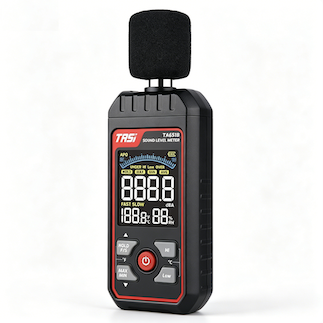
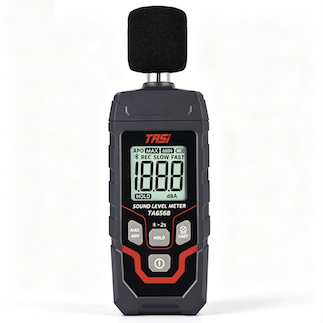
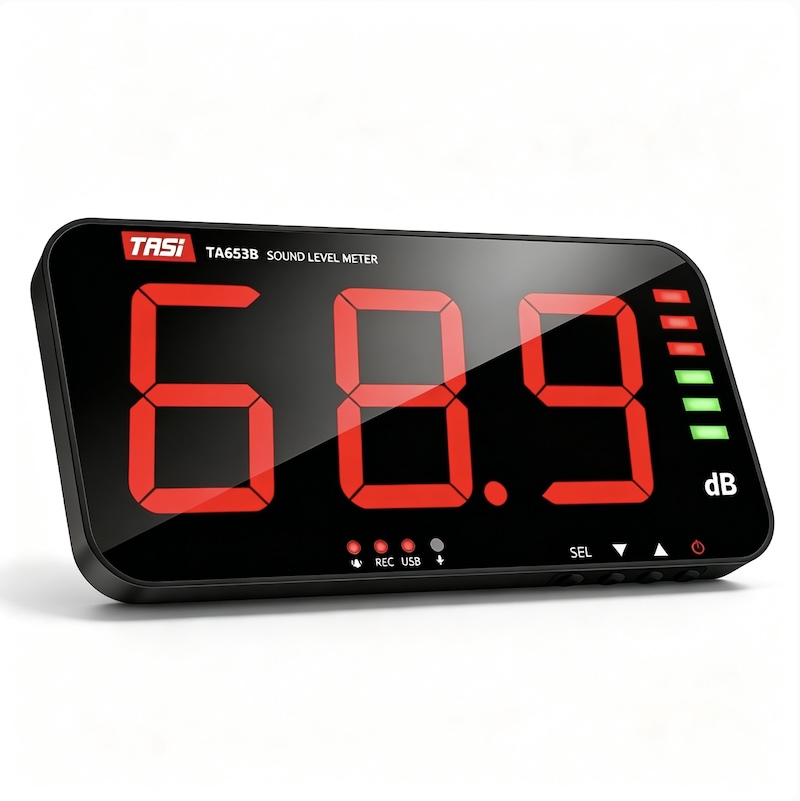
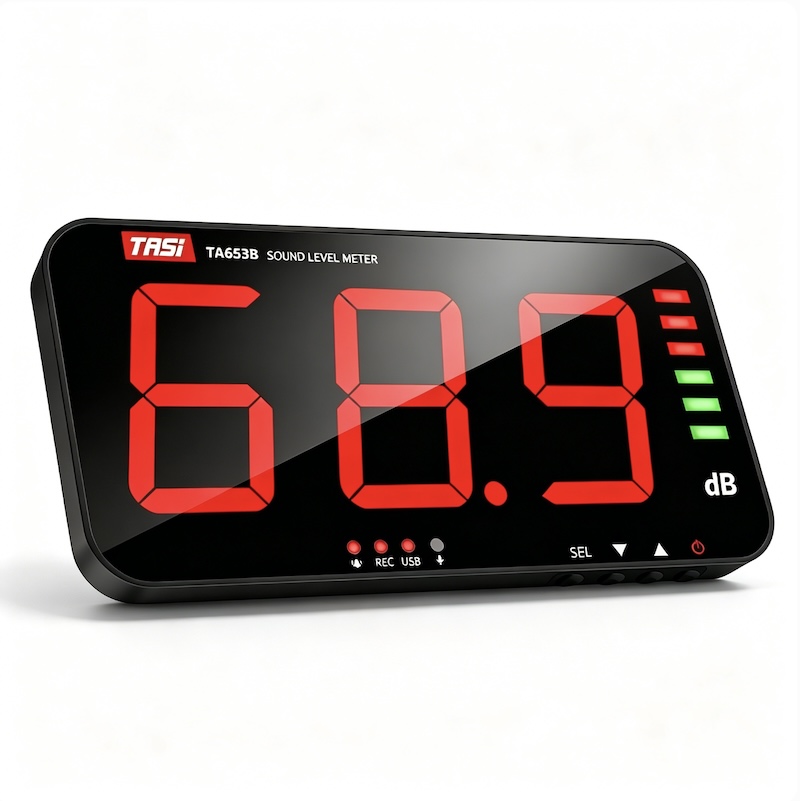
For objective assessment, a sound level meter is therefore commonly used.
Typical measurement parameters include:
● dB: Decibel, the commonly used unit for expressing sound level.
● dB(A): A-weighted sound level, widely used for environmental and occupational noise assessment.
● dB(C): C-weighted sound level, often useful for high-level sounds, low-frequency components, or certain peak-related measurements.
● Leq: Equivalent continuous sound level, representing the constant sound level containing the same acoustic energy as the varying sound over a defined measurement period.
● Lmax: Maximum sound level recorded during the measurement period.
● Lmin: Minimum sound level recorded during the measurement period.
Different measurement applications require different parameters. A single instantaneous decibel reading is therefore not always sufficient to characterize the overall noise environment.
Why Is A-Weighting Commonly Used for Noise Measurement?
Human hearing has different sensitivities at different frequencies. The ear is generally more sensitive to certain mid-frequency sounds and less sensitive to very low or very high frequencies.
To make measured values better reflect human auditory response, sound level meters commonly provide frequency-weighting networks.
A-weighting is one of the most widely used frequency weightings for environmental noise, workplace noise, and general-purpose noise measurements. Results are commonly expressed as dB(A).
However, A-weighting is not appropriate for every acoustic analysis. C-weighting or more advanced frequency analysis may be required for low-frequency sound, high-level sound, or other specific acoustic characteristics.
What Factors Determine Whether a Sound Requires Noise Assessment?
Several factors should be considered when deciding whether a sound requires further noise evaluation.
● Sound level: Higher levels generally warrant greater attention.
● Duration: Long-term exposure differs significantly from short-duration exposure.
● Frequency characteristics: Low-frequency, high-frequency, or prominent tonal sound may have different perceptual and propagation characteristics.
● Time of occurrence: The same sound may have a different impact during the day and at night.
● Type of environment: Factories, homes, offices, schools, and public areas have different acoustic requirements.
● Exposure pattern: Long-term occupational exposure differs from occasional exposure near a noise source.
● Variation over time: Steady, intermittent, fluctuating, and impulsive noise may require different assessment approaches.
Professional noise assessment therefore normally involves more than recording a single number. Measurement conditions, duration, and intended application should all be considered.
Where Is Noise Measurement Commonly Used?
Noise measurement is widely used in industrial, occupational, environmental, and building-acoustics applications.
Typical examples include:
● Machinery noise testing in factories and workshops.
● Occupational noise exposure assessment.
● Noise inspection of motors, fans, compressors, pumps, and other equipment.
● Construction-site noise monitoring.
● Road traffic and community noise monitoring.
● Sound-level surveys in offices, schools, and other indoor environments.
● Product noise comparison and quality inspection.
● HVAC system noise measurement.
Because measurement objectives differ between applications, measurement position, duration, frequency weighting, time weighting, and instrument performance requirements may also vary.
FAQ
Above what decibel level does sound become noise?
There is no universal decibel threshold that separates sound from noise in every situation. Noise assessment normally considers sound level together with duration, environment, time of occurrence, and the applicable evaluation requirements.
Are sound and noise two different types of sound waves?
No. Physically, both are sound waves. The term noise is generally used when a sound is unwanted, disturbing, or potentially harmful.
Is louder sound always more harmful?
Sound level is an important factor, but the effect of noise also depends on exposure duration, frequency characteristics, and exposure pattern. Occupational noise assessment, for example, commonly considers both sound level and exposure time.
Can a smartphone replace a professional sound level meter?
Smartphone applications can be useful for approximate observations, but microphone performance, calibration, measurement range, and consistency generally cannot match a dedicated sound level meter. Professional measurements should use appropriate acoustic measurement instruments.
Does a sound level meter measure sound or noise?
A sound level meter measures sound pressure and processes it to obtain sound-level values. Whether the measured sound is classified as noise depends on the measurement purpose and application environment.
Can low-level sound in a quiet environment still be considered noise?
Yes. A sound that is persistent, repetitive, or disruptive to sleep, work, or other activities may be considered noise even when its sound level is not particularly high.
Conclusion
Sound is a mechanical wave generated by vibration and transmitted through a medium, while noise is fundamentally still sound. The key distinction is not a fixed decibel threshold, but whether the sound is appropriate for the environment and whether it interferes with work, rest, communication, or other activities.
Noise should therefore not be evaluated solely on the basis of how loud it appears. Sound pressure level, frequency, duration, timing, and environmental context should also be considered.
Human perception can indicate whether a sound is disturbing, but professional applications such as environmental noise monitoring, occupational noise assessment, and machinery testing require objective measurements using sound level meters and appropriate measurement procedures.