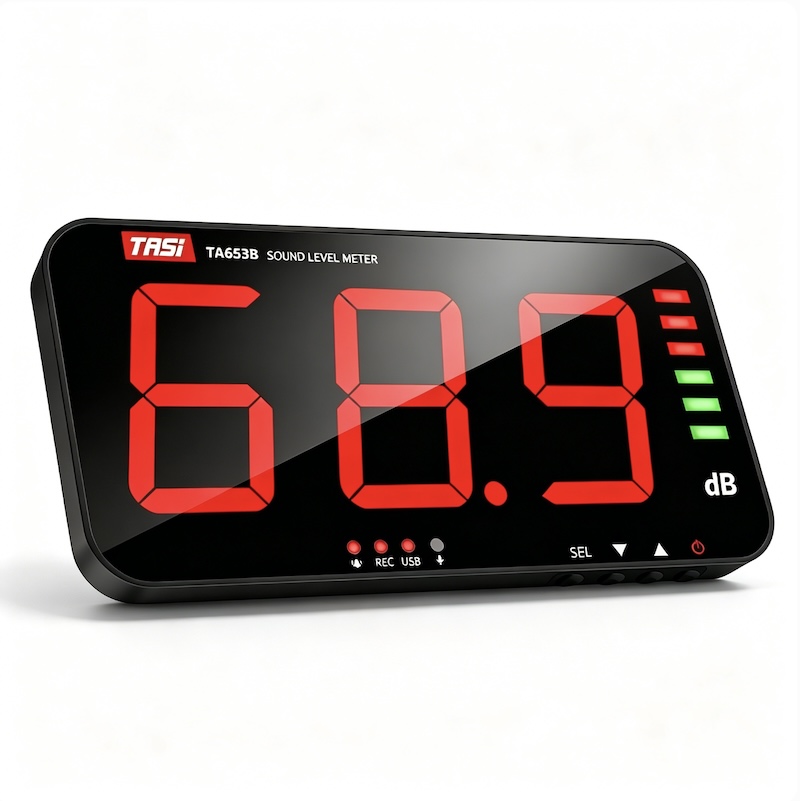
Introduction
We encounter sound constantly in everyday life, from speech and music to machinery, road traffic, fans, and air-conditioning systems. From a physical perspective, however, sound is more than an auditory sensation. It is a mechanical wave generated by vibration and transmitted through a medium.
Sound production requires a vibrating source, while sound propagation requires a medium such as air, liquid, or solid. When these vibrations are transferred through the medium and eventually reach the human ear or an acoustic measuring instrument, the sound can be heard or measured.
Understanding how sound is generated and transmitted is essential for understanding sound pressure, sound pressure level, frequency, decibels, and noise measurement.
Key Takeaways
● Sound is generally produced by mechanical vibration.
● Sound is a mechanical wave and requires a medium to propagate.
● In air, sound mainly propagates as a longitudinal pressure wave.
● Sound can travel through gases, liquids, and solids, but not through a vacuum.
● Frequency is closely related to pitch, while vibration amplitude and sound pressure are related to sound level.
● The speed of sound depends mainly on the propagation medium and its physical state.
● A sound level meter detects variations in air pressure caused by sound and converts them into electrical signals for processing and measurement.
What Is Sound?
From a physical perspective, sound is a mechanical wave produced by vibration and transmitted through an elastic medium.
For example, when a loudspeaker diaphragm moves back and forth, it pushes and pulls the surrounding air molecules. This creates alternating regions of compression and rarefaction, which propagate outward as sound waves.
When these sound waves reach the human ear, the changing air pressure causes the eardrum to vibrate. The auditory system then converts and processes these vibrations into nerve signals, creating the perception of sound.
The basic process can therefore be summarized as:
Vibrating sound source → disturbance propagating through a medium → receiver detects or perceives the sound
The receiver may be the human ear, a microphone, a sound level meter, or another acoustic measurement instrument.
How Is Sound Produced?
The fundamental requirement for sound generation is vibration.
When an object vibrates mechanically at a given frequency, it causes nearby particles in the surrounding medium to move. Examples include:
● The vocal cords vibrate when a person speaks.
● A loudspeaker diaphragm moves back and forth during operation.
● Motors can produce vibration through rotors, bearings, shafts, or housings.
● A metal plate vibrates after being struck.
● A guitar string vibrates after being plucked.
Vibration alone does not necessarily mean that sound will be heard at a distance. The vibration must interact with a surrounding medium such as air, water, or a solid structure so that the mechanical energy can propagate.
For example, when a loudspeaker diaphragm moves forward, it compresses the air in front of it. When it moves backward, the local air pressure decreases. Continuous oscillation creates a sequence of pressure fluctuations that form a sound wave.
How Does Sound Travel?
Sound propagation does not mean that air molecules physically travel all the way from the source to the listener. Instead, vibration and energy are transferred progressively through the medium.
In air, particles close to the source begin to oscillate around their equilibrium positions. Their motion affects neighboring particles, causing pressure disturbances to move progressively farther away from the source.
The particles themselves generally move only over very small distances, while the sound wave propagates through the medium.
The process can be summarized as follows:
● The sound source causes nearby particles to vibrate.
● These particles transfer the disturbance to adjacent particles.
● Pressure variations and acoustic energy propagate outward.
● The sound wave eventually reaches the ear or a microphone and is detected.
This explains how sound can travel over a considerable distance without the air itself moving from the source directly to the listener.
Why Is Sound in Air a Longitudinal Wave?
When sound travels through air, the air particles primarily vibrate in a direction parallel to the direction of wave propagation. For this reason, airborne sound is generally classified as a longitudinal wave.
When a sound source moves forward, it compresses the nearby air, creating a region of increased pressure. When it moves backward, it creates a region of lower pressure.
These alternating compression and rarefaction regions propagate through the air and form the sound wave.
Sound propagation therefore involves continuously varying air pressure.
This small variation in pressure is an important acoustic quantity known as sound pressure.
Microphones and sound level meters measure sound by detecting these pressure variations.
Why Does Sound Need a Medium to Travel?
Because sound is a mechanical wave, its propagation depends on interactions between particles in a medium.
Common sound propagation media include:
● Gases: Air is the most common medium for everyday sound transmission.
● Liquids: Sound can propagate through water and other liquids.
● Solids: Metals, concrete, wood, and building structures can transmit mechanical vibration and sound.
Different media have different densities, elastic properties, and internal structures. As a result, sound speed, attenuation, and transmission characteristics vary from one medium to another.
Wave propagation in solids can be more complex than in air. Depending on the material and structure, solids may support longitudinal, transverse, and other forms of mechanical vibration.
Can Sound Travel Through a Vacuum?
No.
A vacuum does not contain enough particles to transmit mechanical vibration, so ordinary sound waves cannot propagate through it.
This is fundamentally different from light. Light is an electromagnetic wave and does not require a material medium, whereas sound is a mechanical wave and depends on interactions within matter.
Therefore, even if an object vibrates in a complete vacuum, the vibration cannot be transmitted as airborne sound unless it is coupled through another medium, such as a solid structure.
What Media Can Transmit Sound?
Sound can propagate through gases, liquids, and solids, although its transmission characteristics vary significantly between them.
Air is the most common medium for human hearing and environmental noise measurement. Machinery noise, road traffic noise, and office noise, for example, generally travel through air before reaching the listener or measurement microphone.
Liquids can also transmit sound effectively. Underwater sonar systems, for example, use sound propagation in water for detection and ranging.
Solids can transmit vibration efficiently as well. Mechanical vibration from equipment can travel through machine bases, pipes, walls, floors, and building structures before producing sound elsewhere. This type of transmission is often associated with structure-borne sound.
For practical noise analysis, it may therefore be necessary to consider both airborne sound and vibration transmitted through structures.
What Determines the Pitch of a Sound?
Pitch is mainly related to frequency.
Frequency describes the number of periodic cycles per second and is measured in hertz (Hz).
For example:
● 100 Hz represents approximately 100 cycles per second.
● 1,000 Hz represents approximately 1,000 cycles per second.
● 10,000 Hz represents approximately 10,000 cycles per second.
In general, lower frequencies are perceived as lower-pitched sounds, while higher frequencies are perceived as higher-pitched sounds.
Human hearing is commonly considered to cover approximately 20 Hz to 20 kHz, although the actual hearing range varies with age, individual differences, and hearing condition.
Sound below the typical human hearing range is generally referred to as infrasound, while sound above it is referred to as ultrasound.
What Determines How Loud a Sound Is?
The perceived and measured strength of a sound depends on several factors, including vibration amplitude, propagation distance, acoustic conditions, and the sound pressure at the receiving position.
A stronger vibration will generally create larger pressure variations in the surrounding medium and therefore higher sound pressure.
However, sound level cannot be determined from source vibration amplitude alone. Other important factors include:
● Distance from the sound source;
● Reflections from walls and floors;
● Obstructions and barriers;
● Sound-absorbing materials;
● Atmospheric absorption;
● Interaction between multiple sound sources;
● Measurement position and direction.
For this reason, the same sound source may produce significantly different measured levels at different locations.
In practical acoustics, sound pressure level (SPL) is commonly used to describe the sound level at a particular position and is expressed in decibels (dB).
What Is Sound Wavelength?
Wavelength is an important parameter describing the spatial characteristics of a sound wave and is usually represented by λ.
The relationship between frequency, wavelength, and propagation speed is:
Speed of sound = Frequency × Wavelength
or:
c = f × λ
where:
● c is the speed of sound;
● f is the frequency;
● λ is the wavelength.
In the same medium under similar conditions, a higher frequency corresponds to a shorter wavelength, while a lower frequency corresponds to a longer wavelength.
Wavelength influences how sound behaves around barriers and surfaces, including diffraction, reflection, and spatial distribution. It is therefore important in environmental noise control, building acoustics, and machinery noise analysis.
How Fast Does Sound Travel?
The speed of sound is not the same in every environment. It depends on the propagation medium and its physical condition.
In air at typical room temperature, the speed of sound is approximately 343 m/s, although it changes with temperature and other atmospheric conditions.
In general, the speed of sound in air increases as temperature rises.
Sound typically travels faster in water and many solid materials than in air, although the exact speed depends on density, elasticity, and other material properties.
For precision acoustic analysis, the speed of sound should therefore not be treated as a universal constant.
Why Does Sound Become Weaker as It Travels?
Sound generally decreases in level as it travels away from its source. This reduction can be described as sound attenuation.
Several mechanisms contribute to attenuation.
● Sound energy spreads over a progressively larger area.
● The atmosphere absorbs part of the acoustic energy.
● Walls, machinery, furniture, and other objects absorb, reflect, or scatter sound.
● Different frequencies attenuate at different rates.
● Ground surfaces, buildings, and environmental conditions can alter the propagation path.
As a result, sound pressure level generally decreases with increasing distance from the source. However, the exact reduction does not always follow a simple fixed rule.
In indoor spaces, factories, and other complex environments, reflected sound can significantly affect the resulting acoustic field.
What Happens When Sound Encounters an Object?
When a sound wave encounters a wall, machine, floor, or other object, several phenomena may occur.
● Reflection: Part of the sound is reflected from the surface.
● Absorption: Part of the acoustic energy is absorbed by the material.
● Transmission: Part of the sound passes through the material.
● Diffraction: Sound bends around edges and obstacles.
● Scattering: Irregular surfaces can redirect sound in multiple directions.
The acoustic behavior of materials also varies with frequency.
For example, porous materials are often effective at absorbing mid- and high-frequency sound, while low-frequency noise can be more difficult to control using simple absorptive treatment.
These mechanisms form an important foundation for building acoustics and industrial noise control.
What Happens Between the Sound Source and the Human Ear?
A complete sound transmission process can be divided into several stages.
● The sound source vibrates: A motor, loudspeaker, vocal cord, or mechanical component produces vibration.
● The vibration acts on a medium: The source moves nearby air or other medium particles.
● A sound wave is formed: Pressure fluctuations or mechanical disturbances develop in the medium.
● The sound wave propagates: Acoustic energy is transferred through the medium.
● The wave reaches the ear: Pressure variations cause the eardrum to vibrate.
● The auditory system processes the signal: The brain interprets characteristics such as loudness, pitch, and timbre.
Acoustic measurement instruments operate on a similar principle, except that a microphone is used in place of the human ear.
What Is the Difference Between Sound and Noise?
From a physical perspective, sound and noise are not fundamentally different phenomena. Both consist of acoustic waves.
“Sound” is generally a neutral term, while “noise” is more often used when a sound is unwanted, disruptive, or potentially harmful.
For example, the sound produced by operating machinery is still a sound wave physically. In a workplace, however, if the level is sufficiently high or the exposure lasts long enough, it may be regarded as occupational noise.
Noise assessment may therefore consider:
● Sound pressure level;
● Frequency characteristics;
● Duration;
● Time variation;
● Exposure time;
● Measurement environment.
For this reason, professional noise evaluation should not rely solely on subjective hearing. Appropriate acoustic measurement instruments are used to quantify the sound.
How Does a Sound Level Meter Measure Sound?
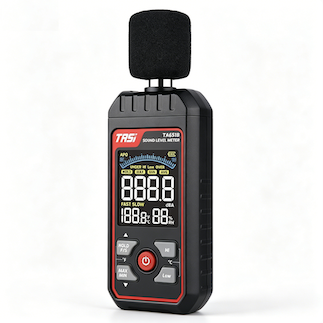
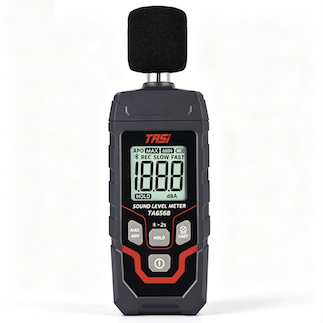
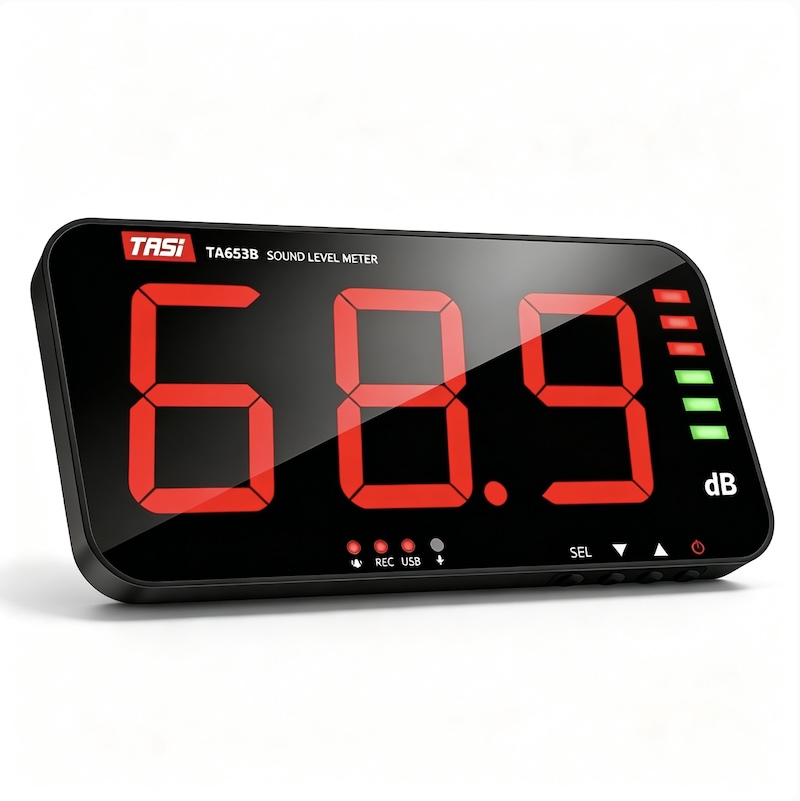
A sound level meter detects changes in air pressure caused by sound and converts them into measurable electrical signals.
A typical signal chain is:
Sound → Microphone → Electrical signal → Signal processing → Sound level calculation → Display
The microphone is the primary acoustic input component. When a sound wave reaches the microphone, pressure fluctuations act on its sensing element and generate a corresponding electrical signal.
The instrument then performs signal amplification, frequency weighting, time weighting, and digital processing before displaying results in units such as dB.
Understanding sound generation, propagation, and sound pressure is therefore fundamental to understanding how sound level meters operate.
FAQ
Is sound always produced by vibration?
In classical acoustics, sound originates from mechanical vibration or disturbance. When this disturbance acts on a surrounding medium and creates propagating pressure or mechanical fluctuations, a sound wave is formed.
Why can ordinary sound not be heard in space?
Space is close to a vacuum and therefore lacks sufficient particles to transmit mechanical vibration. Ordinary sound cannot propagate through it in the same way as through air.
Can sound travel through water?
Yes. Water can transmit mechanical pressure variations, allowing sound waves to propagate through it.
Can sound travel through walls?
Yes. A wall can vibrate when exposed to sound or mechanical vibration and transfer that vibration to the other side, where it can generate airborne sound again.
Does a higher frequency always mean a louder sound?
No. Frequency is mainly related to pitch, while sound level is related to sound pressure and other acoustic factors.
Does the sound level always decrease as distance increases?
It generally decreases with distance, but reflections, absorption, barriers, source directivity, and multiple sound sources can significantly affect the measured level.
Does a sound level meter directly measure decibels?
More precisely, the microphone first detects sound-induced pressure variations. The instrument then processes the signal and calculates acoustic quantities such as sound pressure level, which are displayed in decibels.
Conclusion
Sound is a mechanical wave generated by vibration or another mechanical disturbance and transmitted through a medium such as air, liquid, or solid. In air, vibration creates alternating pressure changes that propagate outward and carry acoustic energy.
Important sound parameters include frequency, wavelength, sound pressure, and propagation speed. Frequency is closely related to pitch, while sound pressure is fundamental to sound measurement.
Because sound requires a medium, it cannot propagate through a vacuum. During propagation, sound is also affected by distance, absorption, reflection, diffraction, obstacles, and the properties of the surrounding environment.
For noise measurement, these principles are essential. A sound level meter uses a microphone to detect variations in air pressure and converts them into electrical signals that can be processed and expressed as measurable sound level data.