Introduction
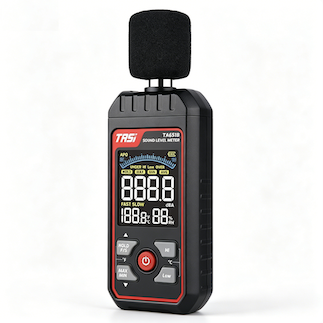
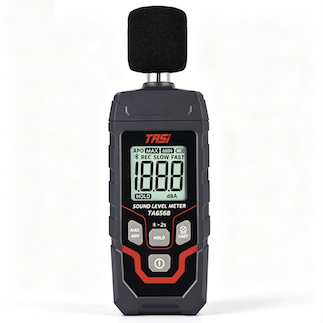
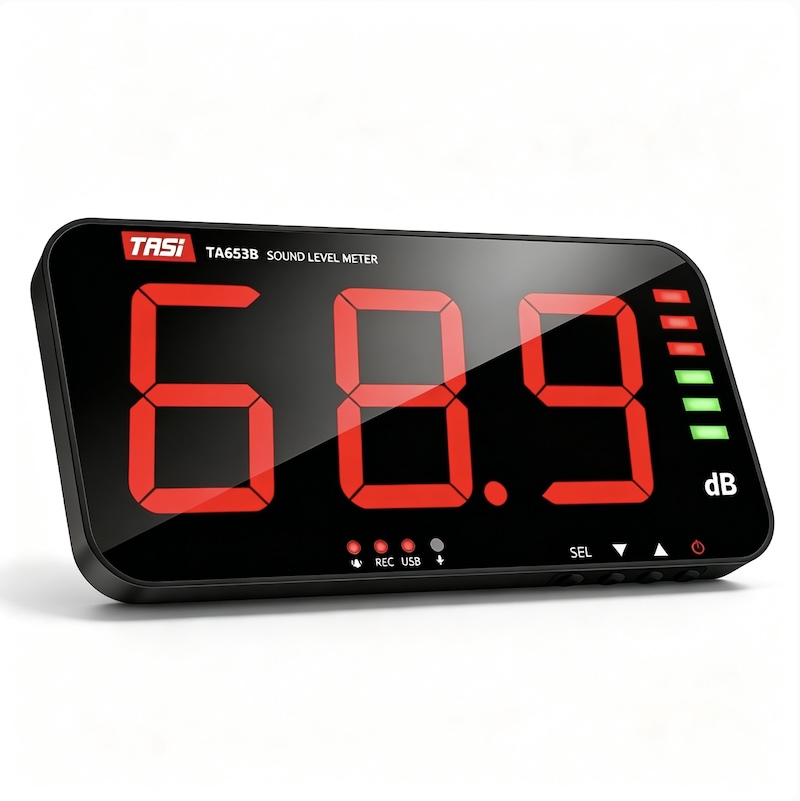
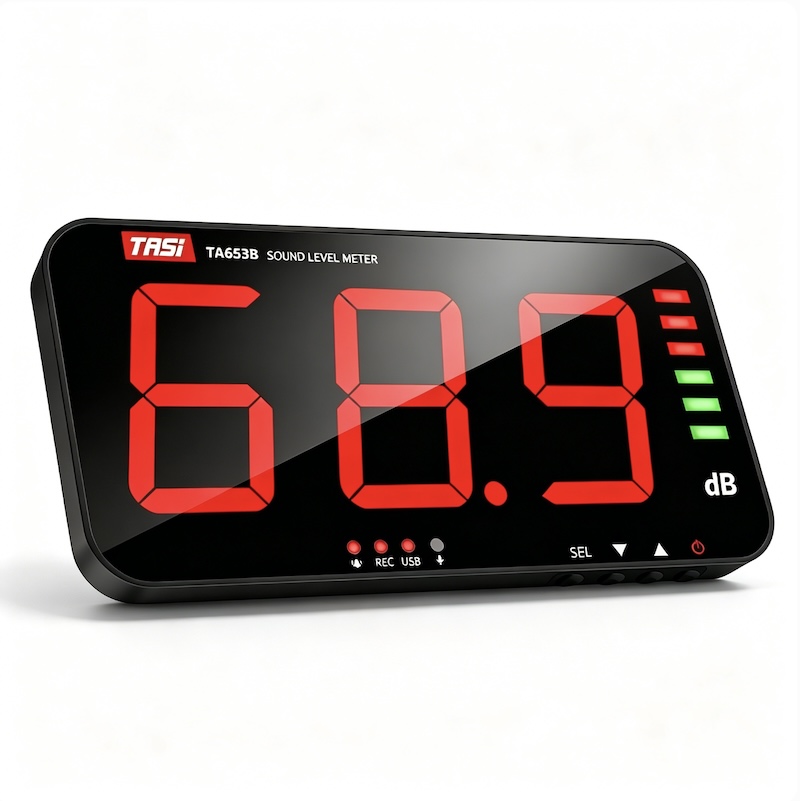
A sound level meter is an important instrument for measuring environmental, occupational, and equipment noise levels. Whether it is used for industrial noise surveys, workplace noise assessment, environmental monitoring, or machinery maintenance, the reliability of the measurement depends heavily on the condition of the instrument.
Over time, microphone sensitivity, electronic components, environmental exposure, transportation, and mechanical shock may cause changes in measurement response. For professional noise measurements, confirming that the instrument powers on and displays a value is therefore not sufficient. Its response should also be checked against a known acoustic reference.
In metrological terms, calibration establishes the relationship between the indication of an instrument and a known reference quantity. Calibration should not simply be understood as “adjusting the meter until the reading looks correct.”
Key Takeaways
● Sound level meter calibration verifies the relationship between the instrument indication and a known reference sound pressure level.
● Field calibration checks are normally performed using an acoustic calibrator that generates a stable reference sound pressure level.
● A field calibration check and periodic laboratory calibration serve different purposes and are not interchangeable.
● For professional measurements, checking the sound level meter before and after the measurement is recommended.
● Calibration and adjustment are different procedures. Whether an instrument should be adjusted depends on its design and the manufacturer’s instructions.
● Sound level meters used for important or traceable measurements should also undergo periodic laboratory calibration or testing when required.
● The acoustic calibrator itself must also maintain valid metrological performance.
What Is Sound Level Meter Calibration?
Sound level meter calibration can be understood as comparing the response of the instrument with a known and traceable acoustic reference.
For field use, this is normally carried out with an acoustic calibrator. The calibrator is fitted over the microphone and produces a sound signal with a specified frequency and sound pressure level under defined conditions. The sound level meter measures this signal, allowing its indication to be compared with the reference value.
Many acoustic calibrators operate at approximately 1 kHz and provide commonly used levels such as 94 dB, although other output levels are also available. The correct frequency, level, correction factors, and operating procedure should always be determined from the specifications of the sound level meter and calibrator.
IEC 60942 specifies performance requirements for sound calibrators and includes laboratory standard, Class 1, and Class 2 categories.
Why Does a Sound Level Meter Need Calibration?
A sound level meter is a precision acoustic measuring instrument. Its final reading depends on the microphone, preamplifier, frequency-weighting network, signal-processing electronics, and other components. A change in any of these parts can affect the result.
To confirm that measurement data are reliable
If a meter has developed a measurement error without the operator knowing it, all subsequent noise measurements may contain a systematic deviation.
A calibration check before measurement helps verify that the instrument responds correctly to a known acoustic reference and reduces the risk of collecting data with an abnormal instrument.
To identify measurement drift
Microphone sensitivity and electronic response can change gradually over time. Such changes may be too small to notice during routine measurements.
Regular comparison with a reliable acoustic reference helps identify whether the measurement system has experienced significant drift.
To verify instrument stability before and after measurement
A pre-measurement check confirms the initial condition of the instrument, while a post-measurement check helps determine whether its response remained stable during the measurement period.
NIOSH guidance for occupational noise measurements recommends checking sound level meters before and after measurements.
To improve measurement traceability
For occupational noise surveys, environmental measurements, laboratory testing, machinery noise verification, and other applications requiring traceable records, storing the measured sound level alone may not be sufficient.
Recording the instrument model, serial number, calibrator information, pre- and post-measurement calibration readings, and measurement time provides a more complete measurement record.
What Is the Difference Between Field Calibration and Periodic Laboratory Calibration?
Field calibration checks and laboratory calibration are often described using the same word, but their purpose and scope are different.
Field calibration or calibration check
A field calibration check is normally performed at the measurement location using an acoustic calibrator fitted directly to the sound level meter microphone.
Its main purposes are to:
● Confirm that the sound level meter and microphone respond correctly.
● Check whether microphone sensitivity has changed significantly.
● Detect problems involving the microphone, connection, battery, or instrument condition.
● Create a calibration record for the measurement session.
A field check normally verifies the instrument at one particular reference frequency and sound pressure level. It does not fully assess performance across the entire frequency range, dynamic range, or all environmental conditions.
Periodic laboratory calibration
Periodic calibration is performed under controlled conditions using traceable reference equipment and a broader set of tests.
IEC 61672-3 specifies periodic testing procedures for Class 1 and Class 2 sound level meters designed to comply with the IEC 61672 series.
A successful field calibration check therefore does not replace periodic laboratory calibration.
Are Calibration and Adjustment the Same Thing?
No.
This distinction is important when working with sound level meters.
Calibration determines the relationship between the instrument indication and a known reference. Adjustment, by contrast, means changing the instrument so that its indication or response is brought closer to a specified value.
For example, when an acoustic calibrator generates a known reference level:
● If the meter displays the expected value, the response at that calibration point is satisfactory.
● If a small deviation is observed, the applicable measurement procedure and instrument design determine whether correction or adjustment is appropriate.
● If the deviation is excessive, the microphone, calibrator, instrument settings, environmental conditions, and instrument condition should be investigated rather than simply forcing the displayed value to match the reference.
Some digital sound level meters provide a CAL function that allows microphone sensitivity to be adjusted when connected to an acoustic calibrator. Such adjustment should only be performed in accordance with the manufacturer’s instructions.
How Does an Acoustic Calibrator Work?
An acoustic calibrator is a reference sound source designed to produce a known sound pressure level under specified coupling conditions.
During use, the calibrator is fitted tightly over the sound level meter microphone, usually with the appropriate adaptor. Once activated, it creates a stable acoustic pressure inside the coupling cavity.
The sound level meter receives this signal through its microphone and displays the measured value, which can then be compared with the specified reference level.
The measurement chain can be described as:
Known acoustic calibrator → reference sound pressure → microphone → sound level meter indication → comparison with reference
The accuracy of the acoustic calibrator is therefore critical. If the reference source has itself drifted, adjusting a sound level meter to that incorrect reference cannot ensure accurate measurements.
How to Perform a Field Calibration Check
Exact procedures vary by instrument and manufacturer. The operating manuals of both the sound level meter and acoustic calibrator should always take priority.
A typical procedure is:
● Check the battery status of the sound level meter and calibrator.
● Inspect the microphone for contamination, moisture, or mechanical damage.
● Select the correct adaptor for the microphone diameter.
● Fit the acoustic calibrator securely over the microphone.
● Switch on the sound level meter and select the required measurement settings.
● Activate the acoustic calibrator at the specified reference level.
● Allow the reading to stabilise.
● Record the indicated value.
● Compare the indication with the expected reference value.
● If the meter provides an approved user calibration function, perform the adjustment according to the manufacturer’s instructions.
● After completing the noise measurement, repeat the calibration check and record the result.
The calibrator should not be fitted loosely or at an incorrect depth because coupling conditions, sealing, adaptor selection, and environmental conditions can affect the result.
Why Check Calibration Both Before and After Measurement?
A calibration check performed only before a measurement cannot confirm that the instrument remained stable throughout the complete measurement period.
During a long industrial noise survey, for example, the following may occur:
● The microphone may be bumped.
● The instrument may be dropped.
● Battery condition may change significantly.
● A microphone or connection may become unstable.
● Temperature or humidity may change substantially.
● The instrument may experience measurement drift.
Repeating the calibration check at the end of the measurement allows the pre- and post-measurement results to be compared.
If the readings remain within the applicable acceptance criteria, confidence in the measurement data is increased. If a significant change is observed, the operator should investigate what happened during the measurement and determine whether the collected data remain valid.
When Should a Sound Level Meter Be Checked or Recalibrated?
Calibration status deserves particular attention in the following situations:
● The meter has been stored for a long period and is being returned to service.
● The instrument has been dropped, struck, or subjected to significant mechanical shock.
● The microphone has been replaced.
● The instrument has been repaired or important components have been replaced.
● Measurement results differ unexpectedly from historical data.
● A field calibration check produces an abnormal result.
● The meter has been used extensively in high-temperature, high-humidity, dusty, or otherwise demanding environments.
● The instrument is used for occupational, environmental, product, or other critical measurements.
● A customer, laboratory quality system, measurement procedure, or regulatory requirement calls for valid calibration documentation.
Whether full laboratory recalibration is required should be determined from the manufacturer’s recommendations, operating environment, measurement importance, instrument history, and relevant quality requirements.
How Often Should a Sound Level Meter Be Calibrated?
There is no single calibration interval that is appropriate for every sound level meter and every application.
The appropriate interval depends on factors such as:
● Frequency of use.
● Importance of the measurement.
● Severity of the operating environment.
● Historical stability of the instrument.
● Repairs, impacts, or component replacement.
● Manufacturer recommendations.
● Quality-management requirements.
● Applicable project, regulatory, or test requirements.
Professional users commonly combine routine field calibration checks with a planned periodic laboratory calibration programme and retain calibration certificates and historical records.
IEC 61672-3 defines periodic test procedures for sound level meters, but the actual calibration interval should still be determined according to the application and quality system.
Do Both Class 1 and Class 2 Sound Level Meters Need Calibration?
Yes.
Class 1 and Class 2 describe different performance requirements and permissible tolerances. The classification does not mean that a Class 1 meter does not require calibration or that a Class 2 meter can be used without calibration checks.
In practice, the greater the accuracy and traceability requirements of the measurement, the more important instrument condition and calibration control become.
IEC 60942 also defines different performance classes for acoustic calibrators. In general, Class 1 calibrators are intended for use with Class 1 sound level meters, while Class 2 calibrators are typically associated with Class 2 instruments.
Compatibility between the calibrator, microphone, and sound level meter should always be verified rather than relying only on physical connector size.
What Can Affect Calibration Results?
Incorrect operating conditions can produce misleading results even when an acoustic calibrator is used.
Common factors include:
● Poor coupling between calibrator and microphone: Leakage can affect the actual sound pressure in the calibration cavity.
● Incorrect adaptor: Different microphone diameters may require different adaptors.
● Contaminated or damp microphone: Moisture or contamination may alter acoustic response.
● Low battery: The operating condition of the meter or calibrator may be affected.
● Unusual environmental conditions: Temperature, humidity, and atmospheric pressure may influence certain calibrators.
● Incorrect output level: Multi-level calibrators must be set to the intended reference level.
● Incorrect meter settings: Some instruments require a specific calibration mode.
● An out-of-calibration acoustic calibrator: An unreliable reference source cannot provide a reliable calibration result.
Calibration is therefore more than simply placing a calibrator over the microphone and checking the displayed number.
What Happens If a Sound Level Meter Is Not Calibrated for a Long Time?
The main risk is that measurement drift may remain undetected.
This can lead to:
● Poor comparability between measurements taken at different times.
● Incorrect conclusions about machinery noise condition.
● Errors in occupational noise exposure assessments.
● Reduced confidence in environmental noise data.
● Insufficient traceability in product noise testing.
● Difficulty determining whether an abnormal reading comes from the actual noise source or the measuring instrument.
For general trend observation, a small error may initially go unnoticed. For compliance testing, performance verification, or long-term comparison, calibration management becomes much more important.
FAQ
Does a sound level meter need to be calibrated before every use?
For professional measurements, a field calibration check before and after important measurements is recommended. For general reference measurements, the appropriate procedure should be determined from the instrument instructions and intended application.
Must sound level meter calibration always be performed at 94 dB?
No. 94 dB is a very common reference level, but acoustic calibrators may provide other output levels. Always follow the specifications of the instrument and calibrator.
Is 1 kHz always used for sound level meter calibration?
1 kHz is widely used for field acoustic calibration, but complete laboratory testing covers additional frequencies and performance characteristics.
Does a successful field calibration check prove that the entire sound level meter is within specification?
No. A field check normally confirms response at a particular frequency and level. It does not replace complete testing of frequency response, linearity, dynamic range, and other characteristics.
Does a new sound level meter still need calibration?
A new instrument is normally tested during manufacture, but whether an additional field check or laboratory calibration is required depends on the application, quality system, and manufacturer documentation.
If the calibration reading is incorrect, can I simply adjust the meter?
Not automatically. First check the calibrator, adaptor, microphone, batteries, instrument settings, and environmental conditions. If the deviation remains excessive, professional inspection, repair, or calibration may be required.
Does the acoustic calibrator itself need calibration?
Yes. The calibrator is itself a reference instrument, and its output level and frequency may change over time. It should therefore be included in the calibration and traceability system.
Summary
Sound level meter calibration is not simply a process of forcing the display to a predetermined number. Its purpose is to compare the instrument response with a known acoustic reference and confirm that the measurement system remains reliable.
Field calibration checks and periodic laboratory calibration perform different functions. Pre- and post-measurement checks help confirm stability during a measurement session, while periodic laboratory calibration provides a more comprehensive assessment of instrument performance.
For industrial noise surveys, occupational noise assessments, environmental noise monitoring, equipment maintenance, and laboratory testing, a structured calibration programme covering the sound level meter, acoustic calibrator, calibration records, and instrument condition is an important foundation for accurate, stable, and traceable noise measurements.