Introduction
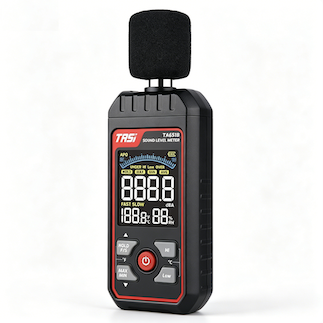
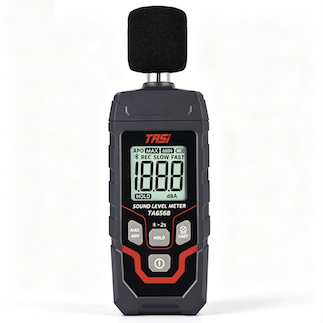
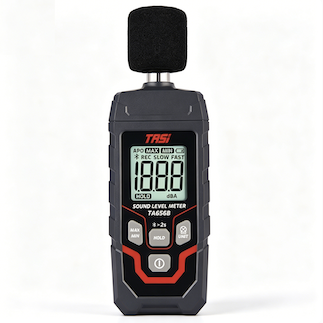
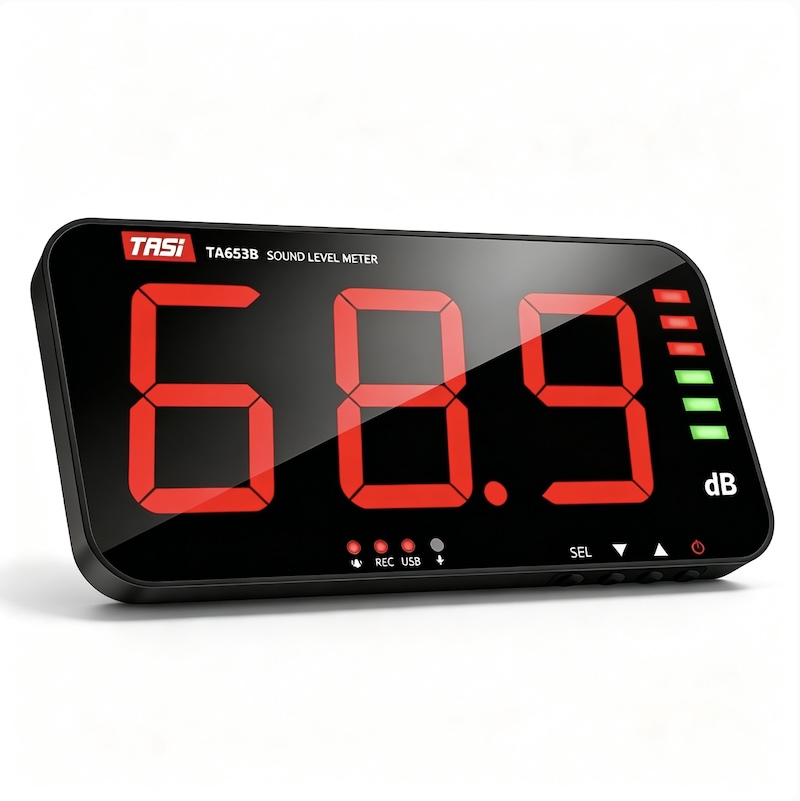
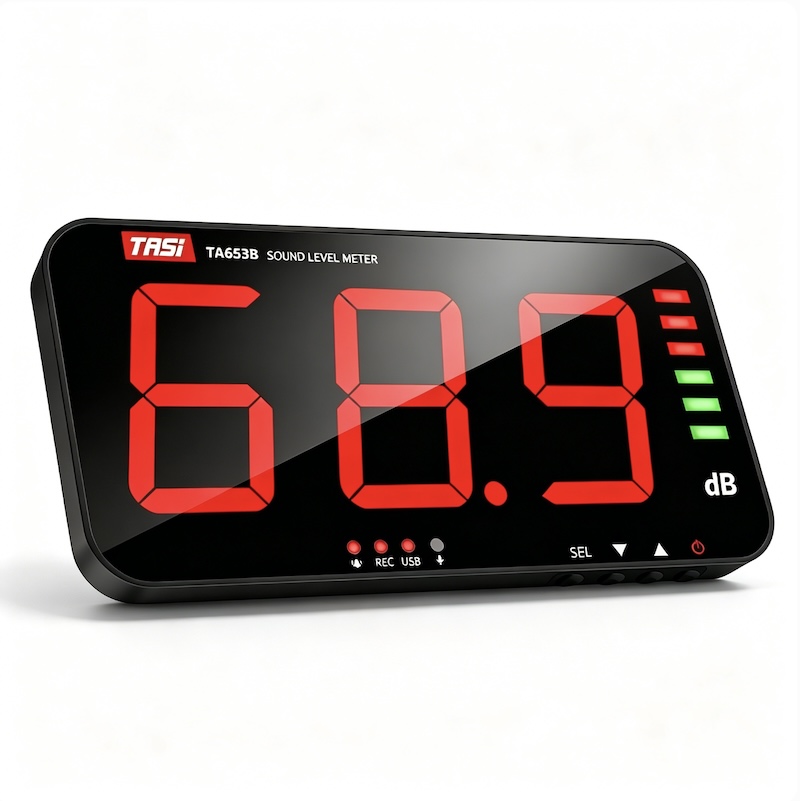
A sound level meter, sometimes referred to as a noise meter or decibel meter, is an instrument used to measure sound pressure level. Although most instruments display results in dB or dBA, their measurement accuracy, range, frequency weighting, time weighting, data logging capability and environmental performance can differ considerably.
Residential noise checks, industrial equipment inspections, occupational noise assessments and professional acoustic measurements do not require exactly the same instrument configuration. Selecting a sound level meter should therefore not be based simply on the widest measurement range or the longest feature list. The first step is to define the measurement task and then determine which specifications are actually important.
This guide explains how to select a suitable sound level meter based on application, accuracy class, measurement range, frequency weighting, time weighting, data functions and calibration requirements.
Key Takeaways
● Define the measurement purpose before comparing price or the number of functions.
● Class 2 sound level meters are generally suitable for routine environmental measurements, equipment maintenance and general noise surveys, while Class 1 instruments may be required for professional acoustics and regulatory measurements.
● A typical measurement range of approximately 30–130 dB covers many everyday and industrial noise applications.
● A-weighting is widely used for environmental and occupational noise measurements, while C-weighting can be useful when stronger low-frequency components or high sound pressure levels need to be assessed.
● FAST and SLOW time weightings provide different response characteristics and should be selected according to how quickly the sound level changes.
● For long-term monitoring or subsequent analysis, consider models with data logging, maximum/minimum values and data transfer functions.
● Where measurement confidence is important, the instrument should support convenient field calibration with an acoustic calibrator.
Start by Defining Why You Need to Measure Noise
Different applications place different demands on a sound level meter. Before selecting an instrument, determine where and why it will be used.
● Residential and general environmental noise: For homes, offices, residential areas or general surroundings, advanced functions are usually unnecessary. Ease of use, a clear display and appropriate basic accuracy are more important.
● Industrial equipment noise checks: For motors, fans, compressors, pumps and production machinery, pay attention to measurement range, FAST/SLOW time weighting and functions such as MAX hold.
● Workplace noise measurements: A-weighting is generally important when assessing noise levels in employee work areas. Formal occupational noise exposure assessments may require specialised instruments selected according to applicable regulations and measurement procedures.
● Environmental noise monitoring: For boundary noise, construction noise, traffic noise or community noise, accuracy class, long-term stability, data logging and compliance with the relevant measurement procedure become more important.
● Acoustic engineering and professional testing: Building acoustics, product acoustic testing, laboratory research and regulatory measurements may require higher-accuracy instruments with more advanced functions.
Two sound level meters both specified as “30–130 dB” are therefore not necessarily suitable for the same measurement tasks.
Choosing Between Class 1 and Class 2
Accuracy class is one of the most important specifications when selecting a professional sound level meter. Under commonly used sound level meter standards, instruments are generally classified as Class 1 or Class 2.
● Class 1: Tighter tolerance limits and more demanding frequency-response requirements make Class 1 instruments suitable for laboratory work, professional acoustic analysis, regulatory measurements and applications requiring lower measurement uncertainty.
● Class 2: Wider tolerances are permitted, but Class 2 instruments are suitable for a broad range of industrial, commercial, maintenance, general environmental and field survey applications.
A higher class is not automatically the better choice for every user. Class 1 instruments normally cost more and may involve more demanding calibration and measurement procedures.
For routine noise checks, industrial inspections and equipment comparisons, Class 2 is often sufficient. If the results will be used for regulatory compliance, professional reports, research or third-party testing, determine whether Class 1 is required by the applicable measurement method.
A display resolution of 0.1 dB does not mean that an instrument provides Class 1 accuracy. Display resolution and overall measurement accuracy are different specifications.
Selecting the Appropriate Measurement Range
Every sound level meter specifies an effective sound level range, for example 30–130 dB. The expected sound levels must fall within this range.
Noise levels encountered in practice can vary from relatively quiet indoor environments to industrial machinery and high-noise workplaces. For many general applications, a range of approximately 30–130 dB provides useful coverage.
Two factors deserve particular attention.
● If very quiet environments are the main application, check the instrument's lower measurement limit and inherent noise performance.
● If machinery, construction equipment or other high-level noise sources will be measured, make sure the upper limit is sufficiently high.
A wider numerical range does not necessarily mean a better instrument. What matters is whether the useful range covers the intended application while maintaining reliable performance within that range.
Understanding A and C Frequency Weighting
Human hearing does not respond equally to all frequencies, so sound level measurements often use frequency weighting.
A-weighting (dBA) is one of the most widely used weightings. Its response is designed to approximate human hearing sensitivity under many common conditions, making it widely used for environmental, industrial and occupational noise measurements.
If the main applications include residential noise, office noise, machinery checks and general environmental monitoring, A-weighting is normally a basic requirement.
Some sound level meters also provide C-weighting (dBC). C-weighting applies less attenuation to low-frequency sound and can be useful for higher sound pressure levels, strong low-frequency noise or applications requiring additional information about the characteristics of the sound source.
For routine noise measurements, A-weighting is often sufficient. For broader industrial or professional acoustic applications, an instrument supporting both A and C weighting provides greater flexibility.
Choosing FAST or SLOW Time Weighting
Noise levels are rarely constant. Machine start-up, impacts, passing vehicles and human activity can all cause sound pressure levels to change over time.
Sound level meters therefore commonly provide FAST and SLOW time weightings.
● FAST: Responds more rapidly to changes and makes short-term fluctuations easier to observe.
● SLOW: Provides a smoother response, reducing rapid display fluctuations and making relatively stable sound levels easier to read.
For general environmental and industrial measurements, an instrument supporting both FAST and SLOW provides useful flexibility.
FAST and SLOW do not represent different accuracy classes. They describe the time response used to process variations in sound pressure level.
Do You Need MAX, MIN and Data Hold?
If you only need to view the current sound level, a basic sound level meter may be sufficient. For maintenance and field inspection, however, several additional functions can improve usability.
● MAX: Records the highest sound level measured during the observation period and is useful for equipment start-up, impacts and short-duration noise peaks.
● MIN: Records the lowest sound level during the measurement period.
● Data Hold: Freezes the current reading on the display for convenient recording.
● Backlight: Useful inside machinery, plant rooms and other poorly illuminated areas.
These functions do not fundamentally change the acoustic measurement principle, but they can significantly improve efficiency during field measurements.
Do You Need Data Logging and Data Transfer?
For occasional spot measurements, reading the real-time sound level from the display may be sufficient. Long-term monitoring, equipment comparison and trend analysis benefit from data logging.
A data-logging sound level meter can store measurements at defined intervals for later review and analysis. Some models also support USB, Bluetooth or dedicated software for transferring measurements to a computer or mobile device.
Data logging is particularly useful when:
● Noise needs to be observed continuously over a period of time;
● Noise levels before and after equipment maintenance must be compared;
● Field measurement records need to be retained;
● Trend graphs or further data analysis are required;
● Many measurement points must be documented efficiently.
If large volumes of data will not be used, there is little benefit in selecting an unnecessarily complex instrument.
Do You Need Leq and Other Advanced Parameters?
Basic sound level meters generally focus on real-time sound pressure level. More advanced noise assessments may also require parameters such as equivalent continuous sound level, Leq.
Leq represents a time-varying noise exposure as a constant sound level containing the same total acoustic energy over the measurement period. It is therefore important in environmental noise, occupational noise and long-term noise assessment.
For equipment inspections, residential checks or basic noise comparisons, real-time SPL and MAX values may be sufficient.
For formal environmental assessment, occupational noise analysis or professional acoustic projects, first identify the parameters required by the measurement procedure and then select an instrument supporting Leq, statistical analysis or other necessary functions.
Accuracy and Resolution Are Not the Same
Many users notice a specification such as “0.1 dB resolution” first, but this does not directly indicate actual measurement accuracy.
Resolution describes the smallest change shown on the display, while accuracy describes how close the measured result is expected to be to the actual value.
An instrument may display 65.1 dB, for example, without having an actual measurement uncertainty of only ±0.1 dB.
When comparing sound level meters, give priority to:
● Stated measurement accuracy;
● Compliance with applicable sound level meter standards;
● Accuracy class;
● Frequency response range;
● Performance under the specified operating conditions.
For traceable measurements or formal documentation, these specifications are generally more important than the number of display digits.
Calibration Capability Is an Important Selection Factor
Microphone characteristics, electronic components and environmental conditions can affect the measurement system over time. Calibration is therefore important in professional noise measurement.
Professional sound level meters can generally be checked or calibrated using an acoustic calibrator. Before or after a measurement, the calibrator is fitted over the microphone and produces a specified sound pressure level to verify instrument performance.
For simple comparative measurements, calibration requirements may be less demanding. For reports, quality control or compliance assessment, select an instrument with a clearly defined and convenient calibration procedure.
Periodic calibration or metrological verification should also be arranged according to instrument usage, the organisation's quality system and applicable measurement requirements.
Consider the Microphone and Windscreen
The microphone is the primary sensing element of a sound level meter and directly affects measurement performance.
During use, microphone orientation, distance from the source and reflections from nearby surfaces should be considered. Outdoors, near air outlets, fans or other areas with significant airflow, wind acting directly on the microphone can produce additional low-frequency disturbance and unstable or artificially high readings.
For regular outdoor or industrial measurements, choose an instrument that can be used with a suitable windscreen.
A windscreen helps reduce airflow effects and offers some physical protection for the microphone, but it cannot eliminate all wind-induced noise and does not replace correct microphone positioning and measurement technique.
Match the Instrument to the Operating Environment
Acoustic specifications are not the only consideration. The physical working environment also affects instrument selection.
● General indoor use: Prioritise portability, simple operation and display readability.
● Industrial sites: Consider housing design, button operation, resistance to interference and portability.
● Outdoor measurements: Consider temperature, humidity, wind and overall environmental suitability.
● Long-term monitoring: Consider battery life, storage capacity and data transfer options.
● Frequent professional use: Prioritise stability, convenient calibration and long-term reliability.
For unusually hot, humid, dusty or otherwise demanding environments, always check the manufacturer's specified operating conditions.
Recommendations by Application
If you are still unsure which type of sound level meter you need, start with the primary application.
● Home, office and general environmental checks: A basic digital sound level meter with A-weighting, FAST/SLOW, MAX and a suitable general-purpose range is normally sufficient.
● Industrial equipment maintenance: Consider approximately 30–130 dB range, A-weighting, FAST/SLOW, MAX/MIN and Data Hold.
● Initial occupational noise surveys: Select an instrument meeting the required accuracy level and supporting A-weighting and the necessary time parameters. Formal occupational exposure assessment should follow the applicable regulations and measurement methodology.
● Environmental noise monitoring: Give greater attention to accuracy class, calibration, Leq, data logging and long-term stability.
● Professional acoustic testing: Class 1 instruments are commonly required, together with frequency analysis, statistical functions or other specialised capabilities where the project requires them.
The best sound level meter is therefore not the one with the most features, but the one whose performance matches the measurement task, accuracy requirements and data needs.
Common Mistakes When Selecting a Sound Level Meter
● Looking only at measurement range: A 30–130 dB specification is only one parameter and does not describe overall measurement performance.
● Assuming 0.1 dB display resolution means high accuracy: Resolution is not the same as measurement accuracy or instrument class.
● Assuming more functions are always better: Advanced functions offer little value if the application only requires quick field checks.
● Ignoring frequency weighting: Different weightings produce different measurement responses and should be selected according to the application.
● Ignoring calibration: Even a high-quality instrument can produce questionable results if calibration procedures are not properly followed.
● Assuming a smartphone app can fully replace a professional meter: Smartphones may be useful for basic reference and trend checks, but microphone performance, calibration status and device-to-device variation generally prevent them from being equivalent to a dedicated sound level meter.
FAQ
Is a wider measurement range always better?
No. The range only needs to cover the intended application. Approximately 30–130 dB is sufficient for many general environmental and industrial applications. Accuracy, class, frequency weighting and stability are usually more important.
Do I need a Class 1 sound level meter for home use?
Usually not. For homes, offices and general noise checks, the main objective is normally to understand approximate sound levels and changes. A suitable Class 2 instrument is generally sufficient.
What sound level meter is suitable for industrial equipment testing?
Choose an instrument whose range covers the expected machinery noise and that supports A-weighting, FAST/SLOW time weighting, MAX and preferably Data Hold. Data logging is useful if long-term trend analysis is required.
Is A-weighting alone sufficient?
For most environmental, machinery and general workplace measurements, A-weighting is the most widely used option. If stronger low-frequency noise or more advanced acoustic analysis needs to be assessed, an instrument supporting both A and C weighting may be preferable.
Which is more accurate, FAST or SLOW?
Neither is inherently more accurate. They use different time-response characteristics. FAST follows rapid changes more closely, while SLOW produces a steadier display. The appropriate setting depends on the measurement method.
Is data logging essential?
No. It is unnecessary for simple real-time spot measurements. It becomes useful when measurements must be stored, monitored over time or analysed for trends.
Does a sound level meter need calibration?
Calibration is important whenever measurements need to be reliable, comparable or formally documented. Professional users normally arrange periodic calibration and may also perform field checks with an acoustic calibrator.
Are a sound level meter, noise meter and decibel meter the same thing?
In everyday usage, these terms are often used interchangeably for instruments that measure sound pressure level. In professional applications, “sound level meter” normally refers more specifically to an instrument with defined acoustic performance and standardised specifications. Product performance should therefore not be judged by the name alone.
Conclusion
Choosing the right sound level meter is not about buying the highest specification available. The instrument should match the actual measurement task.
For residential, office, general environmental and industrial equipment checks, key considerations include measurement range, A-weighting, FAST/SLOW time weighting, MAX functions and appropriate basic accuracy. Long-term monitoring may require data logging and transfer functions, while occupational, environmental and professional acoustic measurements may also require Class 1 or Class 2 performance, Leq, calibration capability and compliance with the relevant measurement methodology.
Before purchasing, answer three questions: What sound will be measured? What will the measurement results be used for? Do the results need to be stored or analysed? Once these requirements are clear, comparing measurement range, accuracy class and functions becomes much more straightforward.