Introduction
For professional electricians, a non-contact voltage tester is more than a simple tool for checking whether voltage may be present. Residential wiring, distribution panels, industrial equipment, fault finding, and electrical installation work all involve different voltage levels, interference conditions, and safety risks.
Choosing a professional-grade NCV tester therefore requires more than comparing its voltage detection range. Sensitivity, measurement category, alert method, interference resistance, mechanical durability, and suitability for the working environment can all affect real-world performance.
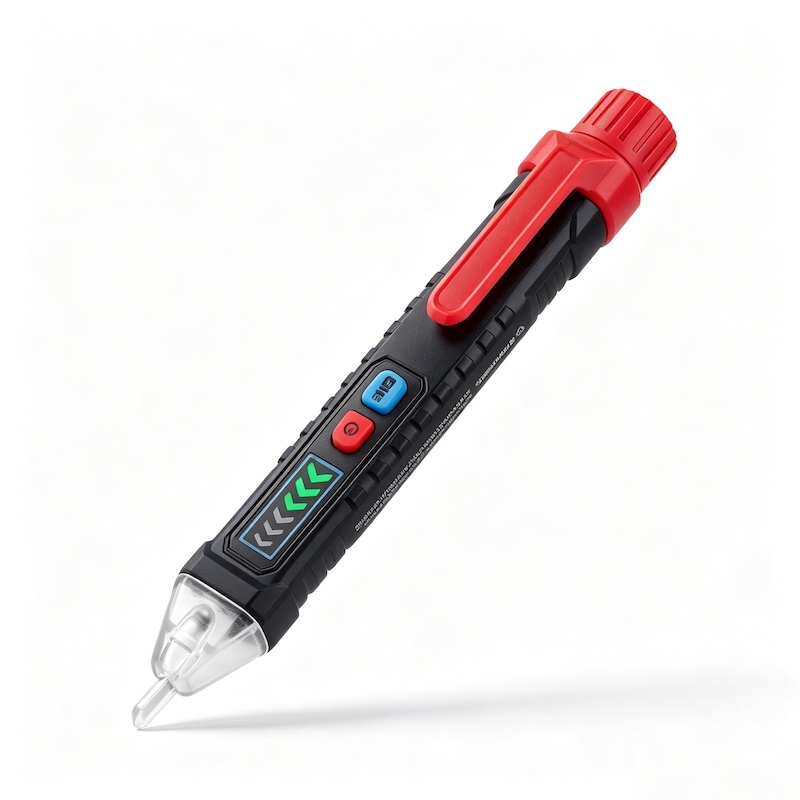
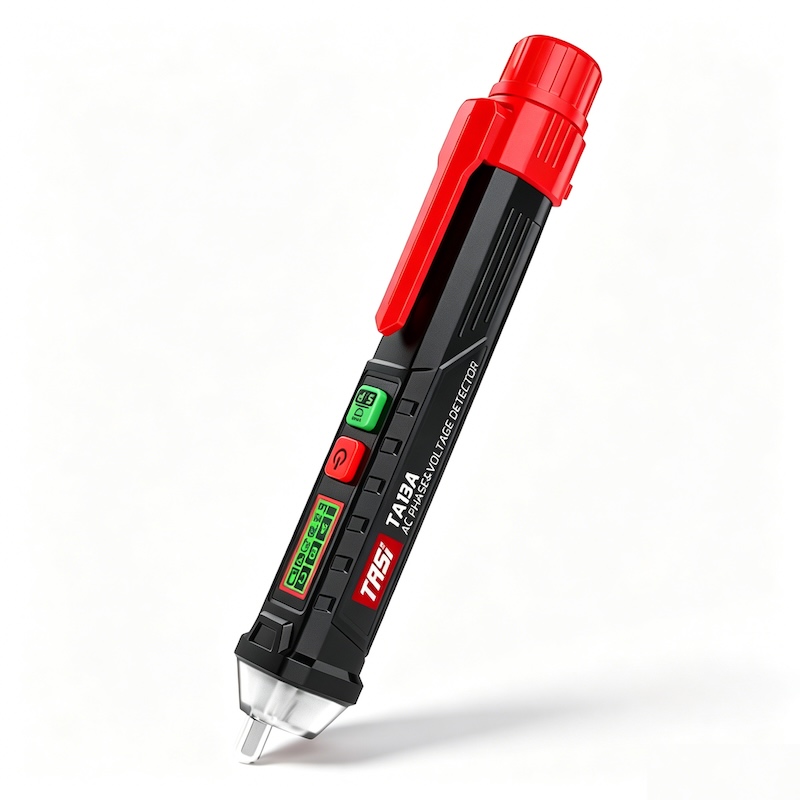
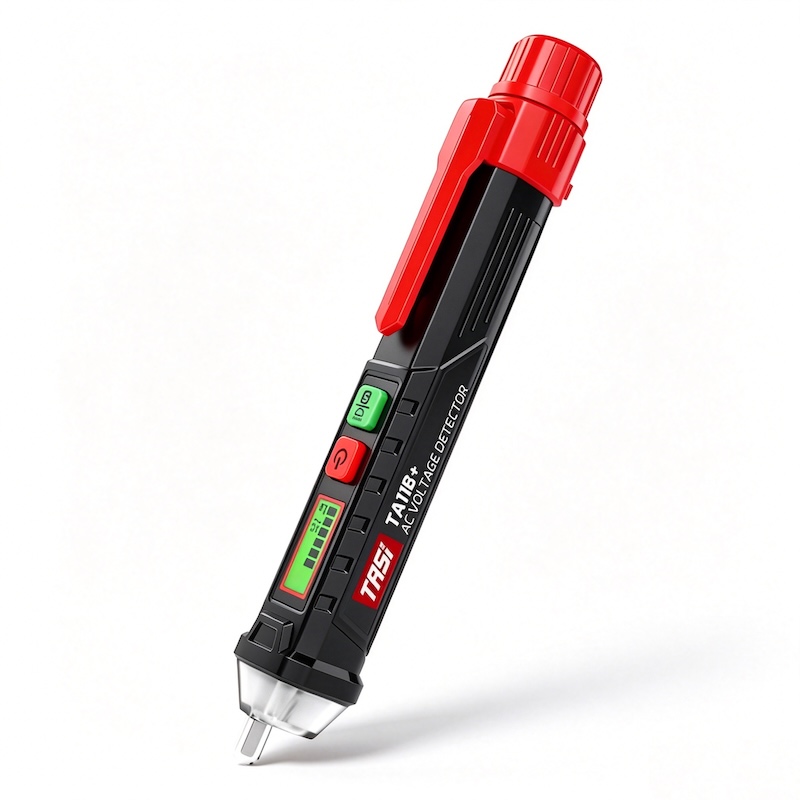
It is also important to understand that an NCV tester is primarily intended for rapid detection of the electric field associated with AC voltage. It does not measure an exact voltage value and should not be used as the sole means of proving that a circuit is de-energized.
Key Takeaways
● Professional electricians should choose the detection range according to the actual circuits they work on rather than simply selecting the widest available range.
● Dual-sensitivity or switchable-sensitivity models are generally more versatile for circuit tracing and work in complex distribution environments.
● The CAT measurement category should match the location within the electrical installation, particularly when working on distribution systems or near the service entrance.
● Audible and visual alerts are basic requirements, but their visibility and audibility in noisy or bright environments also matter.
● For professional use, mechanical durability, enclosure protection, reliable controls, and low-battery indication deserve particular attention.
● An NCV tester is suitable for rapid screening, but absence-of-voltage verification should be performed with appropriate test equipment and according to applicable electrical safety procedures.
Start With the Required Voltage Detection Range
Non-contact voltage testers are normally specified with an AC detection range, such as 50–1000 V AC. Some models extend the lower detection threshold to approximately 12 V AC.
For professional electricians, the appropriate range depends on the type of work being performed.
● Residential and commercial maintenance: Standard AC ranges are generally suitable for checking mains wiring, power cords, outlets, and distribution circuits.
● Control circuits and lower-voltage AC systems: A tester with a lower detection threshold may be useful when weaker electric fields must be identified.
● Industrial maintenance: In addition to nominal voltage, the working environment may include closely packed cables, variable-frequency drives, motors, and control cabinets that can affect NCV detection.
A lower detection threshold generally allows the tester to respond to weaker AC electric fields, but it can also make the instrument more sensitive to adjacent energized conductors, induced voltage, and capacitive coupling.
For this reason, a lower minimum detection voltage is not automatically better in every application. The correct range is the one that matches the electrician's typical working conditions.
Single Sensitivity or Dual Sensitivity?
For occasional checks of wall outlets and ordinary power cables, a single-sensitivity NCV tester may be sufficient. Professional electricians, however, often work in much more complex wiring environments, where switchable sensitivity can provide greater flexibility.
A high-sensitivity mode can be useful for:
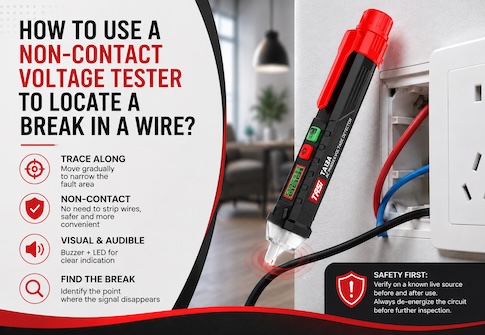
● Locating the approximate path of concealed wiring;
● Checking for AC electric fields around insulated conductors;
● Initial screening of lower-voltage AC circuits;
● Tracing continuous cable runs.
A lower-sensitivity mode can be more useful for:
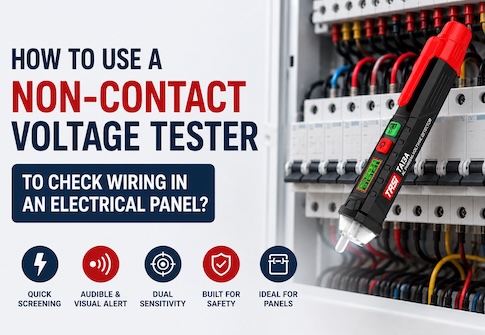
● Distribution panels with many closely spaced conductors;
● Bundled or parallel cable runs;
● Areas with significant influence from adjacent energized wiring;
● Narrowing down which conductor is actually producing the strongest field.
In a crowded distribution panel, for example, a very sensitive tester may respond around several adjacent conductors because of their electric fields. Switching to a lower sensitivity can help reduce unwanted responses and improve localization.
For electricians who regularly perform different types of electrical work, dual-sensitivity or multi-level sensitivity is generally more versatile than a fixed single-sensitivity design.
Why CAT Rating Matters for Professional Electricians
The CAT measurement category indicates the types of electrical installation environments for which test equipment is designed with respect to transient overvoltages.
For professional electricians who regularly work on distribution systems, this is an important selection criterion.
In general:
● CAT II: Typically associated with equipment connected to the low-voltage installation, including many plug-connected loads and appliances.
● CAT III: Typically associated with fixed installations within a building, such as distribution boards, fixed wiring, and related distribution equipment.
● CAT IV: Typically associated with the origin of the low-voltage installation, service entrances, and locations closer to the utility supply.
For routine residential work involving outlets, lighting circuits, and internal wiring, an appropriately rated CAT III tester may be suitable for many tasks.
If work frequently involves:
● Distribution boards and electrical panels;
● Fixed building wiring;
● Industrial distribution equipment;
● Low-voltage building distribution systems;
then a tester with an appropriate CAT III rating should receive particular attention.
If work also involves:
● Building service entrances;
● Wiring near utility meters;
● Outdoor distribution circuits;
● Locations closer to the supply origin;
then equipment suitable for the relevant CAT IV environment may be required.
The CAT designation should never be considered on its own. The associated rated voltage is equally important. A product may, for example, carry ratings such as CAT III 1000 V and CAT IV 600 V. The complete category-and-voltage combination should be matched to the intended working environment.
How Should You Choose the Alert System?
Professional electrical work is not always performed in quiet, well-lit conditions. The clarity of the alarm system can therefore have a direct impact on usability.
Common NCV testers use:
● LED visual indication;
● Audible buzzer alerts;
● Combined audible and visual indication.
Some instruments also vary LED color, flash rate, or buzzer frequency according to the strength of the detected electric field.
In an industrial workshop, plant room, or near operating machinery, background noise may make an audible alarm difficult to hear. In bright outdoor conditions, a weak indicator light may be difficult to see.
Professional users should therefore favor a tester with clear, easily distinguishable audible and visual indications. If the alert rate changes with the detected field strength, this can also help when tracing conductors or locating the approximate energized area.
Consider Interference Resistance in Complex Electrical Environments
An NCV tester detects an AC electric field rather than directly contacting the conductor to measure voltage. Its response can therefore be influenced by the surrounding environment.
Common influencing factors include:
● Closely spaced energized conductors;
● Bundled or parallel cables;
● Electromagnetic interference from variable-frequency drives, motors, and other electrical equipment;
● Induced voltages or capacitively coupled electric fields;
● Insulation thickness;
● Metallic shielding;
● Distance between the tester and the conductor.
These effects may be relatively minor in a simple residential environment but can become much more noticeable inside distribution boards, industrial control panels, and machinery.
For professional work, a well-designed sensitivity system, switchable sensitivity, and a clear alert response are generally more useful than simply choosing the most sensitive tester available.
Which Additional Functions Are Useful for Professional Work?
Beyond voltage range and CAT rating, several practical features can improve day-to-day usability.
● Self-check function: Helps confirm that the indicators, buzzer, or basic operating status are functioning before use.
● Low-battery indication: Low battery condition can affect instrument operation, so a clear warning is important for professional use.
● Automatic power-off: Helps reduce unnecessary battery consumption when the tester is left switched on.
● Built-in LED flashlight: Useful inside electrical panels, behind equipment, or in other poorly illuminated areas.
● Clear sensitivity-mode indication: Particularly important on dual-sensitivity models to reduce the risk of using the wrong setting.
● Pocket clip: Allows convenient attachment to workwear or a tool pouch.
These features do not change the fundamental principle of non-contact voltage detection, but they can significantly improve convenience and reliability during frequent field use.
Why Durability Matters
Professional tools are usually used far more frequently than household tools. A voltage tester may spend every day in a tool bag and may be exposed to impact, dust, moisture, and changing temperatures.
When comparing models, consider:
● Mechanical strength of the housing;
● Protection of the sensing tip;
● Ease of operation while wearing work gloves;
● Security of the battery compartment;
● Clearly specified IP protection rating where required;
● Specified operating and storage temperature ranges.
For electricians working regularly on construction sites, industrial equipment, or outdoor installations, impact resistance, dust protection, and moisture resistance may be more valuable than additional functions that are rarely used.
Which NCV Tester Suits Different Professional Applications?
For residential and commercial electrical maintenance, consider a tester with a suitable mains-voltage detection range, clear audible and visual alarms, an appropriate CAT III rating, and good portability.
For distribution-panel and industrial equipment maintenance, dual sensitivity, good behavior in electrically noisy environments, an appropriate measurement category, and a robust housing become more important.
For control circuits and lower-voltage AC systems, a lower detection threshold and high-sensitivity mode may be useful, although users must remain aware of induced fields and false indications.
For work involving service entrances, outdoor distribution, or locations close to the supply origin, select test equipment with a CAT IV rating and rated voltage appropriate to the installation, and follow the applicable electrical safety procedures.
For electricians using an NCV tester throughout the working day, simple operation, clear alerts, obvious mode indication, reliable low-battery warnings, and durable construction are often more important than the sheer number of functions.
Do Not Use an NCV Tester as the Sole Means of Proving a Circuit Is De-Energized
This is one of the most important limitations professional users need to understand.
An NCV tester is very useful for:
● Rapid screening for the presence of an AC electric field;
● Initial identification of energized conductors;
● Checking outlets and power cords;
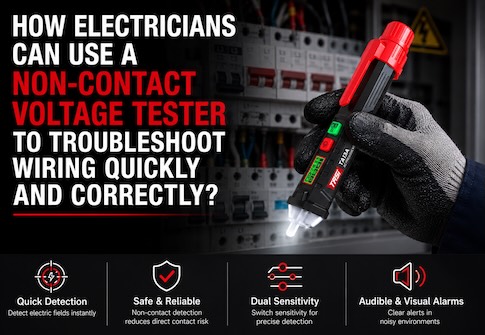
● Quick troubleshooting;
● Assisting with live-conductor identification;
● Preliminary checks before electrical maintenance.
However, its result can be affected by shielding, distance, weak electric fields, instrument condition, and unusual wiring arrangements.
Therefore, no NCV alarm must not automatically be interpreted as confirmed absence of voltage.
Before maintenance, disconnection, or any work requiring a safe de-energized state, use suitable voltage-testing equipment according to the applicable electrical safety procedure, and verify that the tester itself is functioning correctly before and after the test where required.
What Should Professional Electricians Check Before Buying?
When comparing several NCV testers, the following sequence is useful:
● Does the AC detection range cover the circuits normally encountered?
● Is low-voltage AC detection required?
● Is dual or multi-level sensitivity needed?
● Are the CAT rating and rated voltage appropriate for the intended installation environment?
● Are the audible and visual alarms easy to recognize at the worksite?
● Does the tester provide a self-check or operating-status confirmation?
● Is there a clear low-battery warning?
● Can the tester be operated comfortably while wearing gloves?
● Is a built-in flashlight required?
● Is the enclosure sufficiently durable and protected for the working environment?
● Does the manufacturer clearly specify voltage range, measurement category, and operating conditions?
The objective is not to choose the tester with the highest specifications, but to select one that matches the actual electrical environment, safety requirements, and working practices.
FAQ
Do professional electricians always need a CAT IV NCV tester?
No. The measurement category should correspond to the location in the electrical installation. CAT III equipment may be appropriate for many fixed-installation applications within buildings, while work near service entrances or the origin of the installation may require suitable CAT IV equipment.
Is a 12–1000 V tester better than a 50–1000 V model for professional use?
Not necessarily. A 12–1000 V tester offers a lower AC detection threshold and may be useful for weaker electric fields or lower-voltage AC circuits. A 50–1000 V model can cover many standard mains-voltage applications. The correct choice depends on the circuits normally tested.
Is dual sensitivity necessary for professional electricians?
It can be highly useful when working in distribution panels, tracing wiring, checking lower-voltage AC circuits, or working around densely routed cables. For straightforward mains checks, a single-sensitivity tester may still be adequate.
Is higher sensitivity always better?
No. Excessive sensitivity can cause responses from nearby energized conductors in crowded wiring environments. Stable and controllable sensitivity is generally more valuable than maximum sensitivity alone.
Can an NCV tester display the actual voltage value?
No. A standard NCV tester detects the presence of an AC electric field. It is not a digital multimeter or contact voltage tester and does not provide an accurate voltage measurement.
Can maintenance begin immediately if the tester does not alarm?
No. Absence of an NCV indication alone does not prove that a circuit is de-energized. Where absence of voltage must be confirmed, appropriate voltage-testing equipment and the applicable safety procedure should be used.
Conclusion
For professional electricians, a suitable non-contact voltage tester should balance detection capability, measurement category, sensitivity, alert clarity, and durability.
Residential and commercial maintenance may place greater emphasis on standard AC detection ranges and appropriate CAT III capability. More complex distribution and industrial work often benefits from switchable sensitivity, stable behavior in interference-prone environments, and robust construction. Work near service entrances or the supply origin may require equipment suitable for the relevant CAT IV environment and rated voltage.
Most importantly, the strength of an NCV tester lies in fast and convenient AC voltage screening. It should complement, rather than replace, appropriate contact voltage-testing methods and established electrical safety procedures.