Introduction
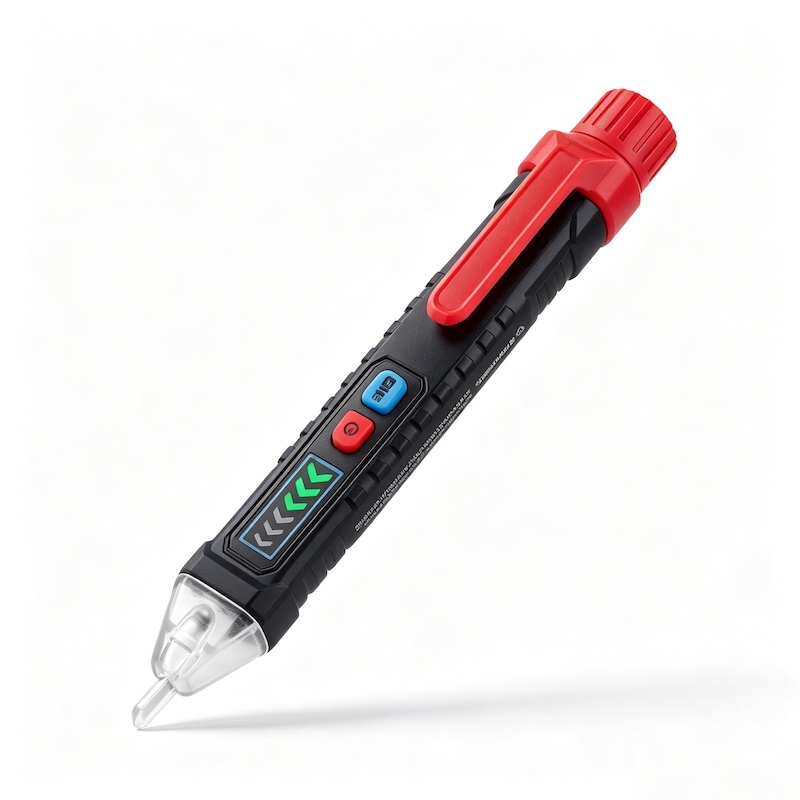
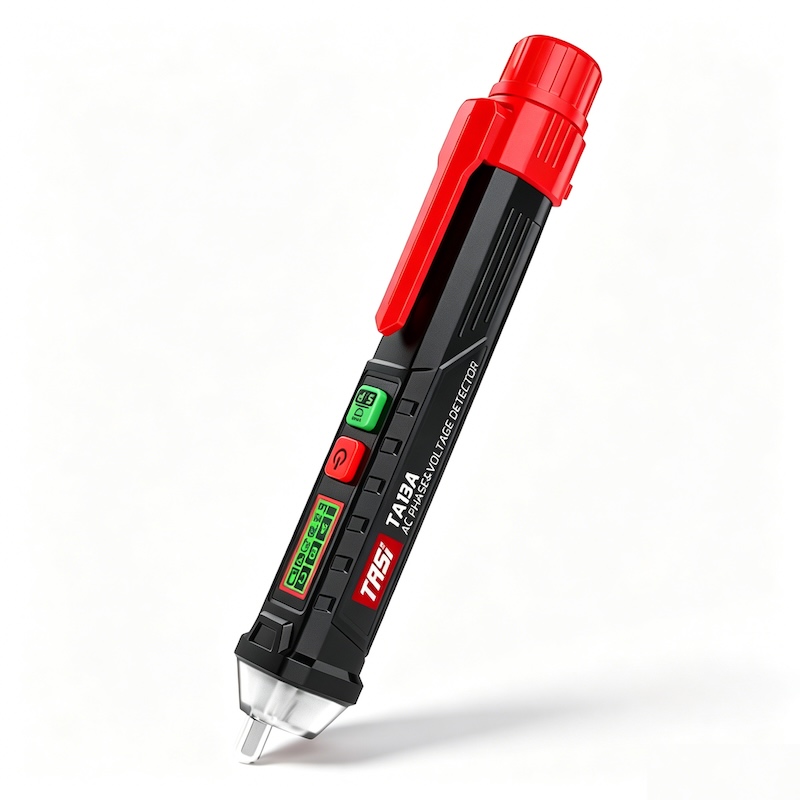
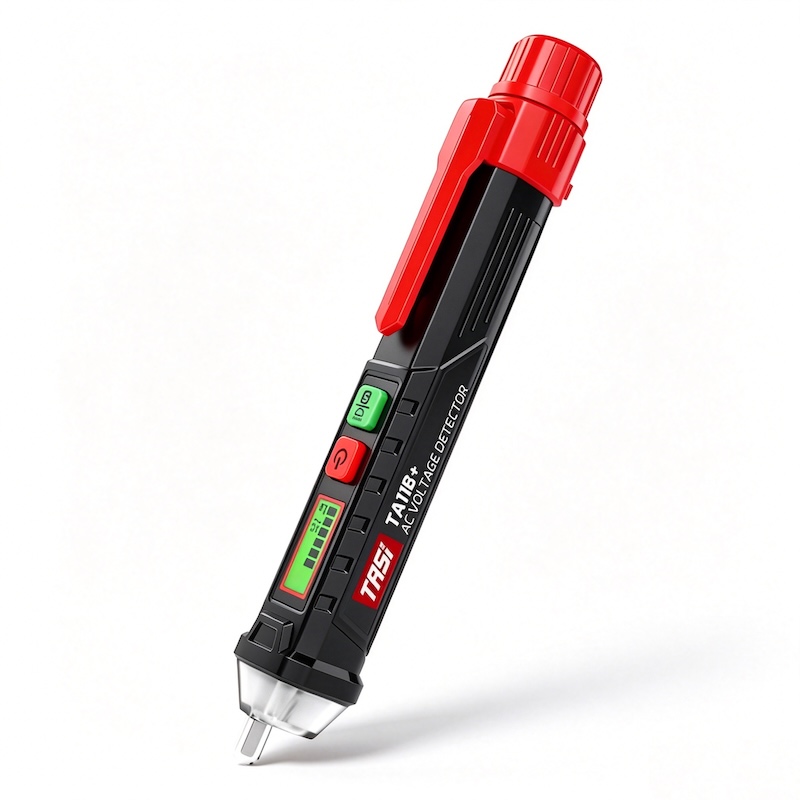
When a non-contact voltage tester is brought near an outlet, cable, or electrical device, it may respond with an audible alarm, LED indication, or changing alarm frequency. This can lead to a common question: if the tester can detect voltage, can it also tell whether the circuit is at 120 V, 230 V, 400 V, or another specific voltage?
In most cases, no.
A non-contact voltage tester is primarily designed to detect whether a sufficiently strong AC electric field is present. It does not directly measure the potential difference between two electrical points. Therefore, even models with multiple sensitivity levels, different LED colors, or variable alarm frequencies should not normally be used to determine an exact voltage value.
Key Points
● A non-contact voltage tester is primarily used to determine whether AC voltage may be present nearby; it normally cannot display an exact voltage value.
● It senses the alternating electric field surrounding an energized conductor instead of measuring the potential difference between two test points.
● A faster buzzer, different LED color, or stronger alarm does not reliably indicate a specific voltage such as 120 V, 230 V, or 400 V.
● Detection distance, insulation, body coupling, grounding conditions, adjacent conductors, and electromagnetic interference can all affect the indication.
● For an actual voltage reading, use a suitable digital multimeter, contact voltage tester, or other instrument designed for voltage measurement.
Why Can’t a Non-Contact Voltage Tester Measure an Exact Voltage?
A non-contact voltage tester typically uses NCV, or Non-Contact Voltage, sensing technology. When its sensing tip approaches an energized AC conductor, the tester detects the alternating electric field around that conductor.
The internal circuitry amplifies, filters, and evaluates this weak signal. Once the signal exceeds a predefined threshold, the tester activates an LED, buzzer, vibration alert, or a combination of these indicators.
Unlike a digital multimeter, the tester does not connect two probes across two electrical points. It therefore does not directly measure the potential difference between those points.
In practical terms:
● A digital multimeter measures the actual voltage between two test points.
● A non-contact voltage tester detects whether an AC electric field is sufficiently strong near its sensor.
These are two fundamentally different measurement principles. NCV testers are therefore best suited to rapid screening rather than quantitative voltage measurement.
Does a Stronger Alarm Mean a Higher Voltage?
Not necessarily.
Under tightly controlled conditions, a higher AC voltage may produce a stronger electric field and therefore a stronger response from the tester. In real installations, however, many other factors influence the detected signal.
These include:
● Distance between the sensing tip and the conductor;
● Type and thickness of conductor insulation;
● Presence of cable shielding;
● Single-core versus multi-core cable construction;
● Relative position of line and neutral conductors;
● How the tester is held;
● Capacitive coupling between the user and ground;
● Nearby energized conductors;
● Interference from motors, variable-frequency drives, power supplies, and other electrical equipment;
● The tester’s own sensitivity and detection threshold.
For example, the same energized 230 V conductor may produce a rapid alarm when the sensing tip is touching the insulation but a much weaker response when the tester is moved several centimetres away. The actual circuit voltage has not changed; only the electric field detected by the tester has changed.
For this reason, alarm frequency or LED intensity should not be converted into a voltage value.
Can a Dual-Sensitivity Tester Indicate High and Low Voltage?
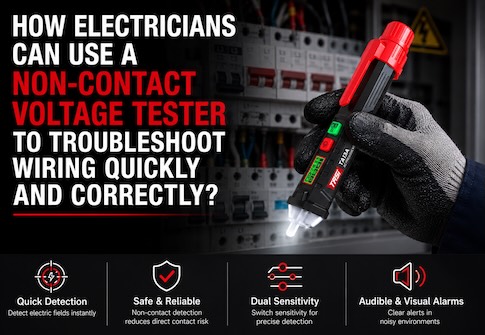
Some NCV testers provide high- and low-sensitivity modes. A high-sensitivity mode may be useful for lower-voltage AC circuits or weaker electric fields, while a lower-sensitivity mode can help reduce unwanted triggering when locating conventional mains conductors.
These modes improve detection performance in different applications, but they do not turn the tester into a voltage-measuring instrument.
For example, if an NCV tester is specified with detection ranges such as 12–1000 V and 50–1000 V, those ranges normally describe the AC voltage conditions under which the instrument is designed to detect an electric field. They do not mean the tester can determine whether the actual voltage is 24 V, 120 V, 230 V, or 400 V.
Detection range and measurement range are not the same thing.
Can Multi-Level Audible and Visual Alarms Show Voltage Levels?
Some non-contact voltage testers change their indication according to detected signal strength. For example:
● A weak signal may produce a slow audible alarm;
● A stronger signal may increase the buzzer frequency;
● Different LED colors may be used;
● Some models may provide several signal-strength levels.
These features can help locate areas with stronger electric fields, identify the likely live conductor, or trace an energized cable.
However, they normally indicate relative signal strength or detection level, not a calibrated voltage value.
Unless the product specification explicitly states that the instrument includes a separate voltage-measurement function, multi-level alarms should not be interpreted as exact voltage levels.
What Is a Non-Contact Voltage Tester Best Used For?
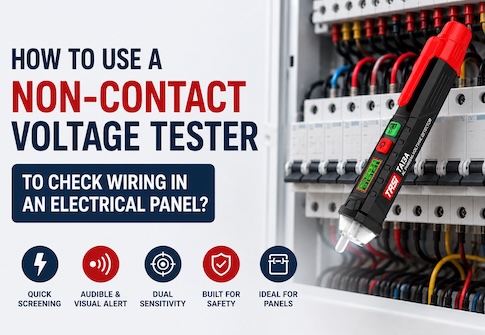
Although it cannot normally measure exact voltage, an NCV tester is very useful for rapid electrical checks because it can detect an AC electric field without exposing or contacting a bare conductor.
Typical applications include:
● Quickly checking whether AC voltage may be present near an outlet;
● Performing an initial check on whether a wire may be energized;
● Assisting with identification of line and neutral conductors;
● Checking switches, junction boxes, and electrical equipment for nearby energized wiring;
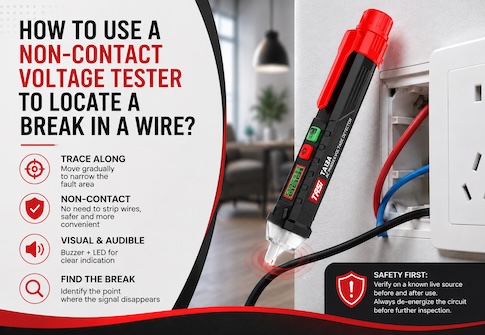
● Assisting with preliminary broken-wire location;
● Checking power cords, extension leads, and selected electrical equipment;
● Performing a preliminary screening before contact measurement.
A non-contact voltage tester should therefore be regarded primarily as a voltage-presence detection tool.
What Should Be Used to Measure an Exact Voltage?
If you need to know whether a circuit is at 12 V, 24 V, 120 V, 230 V, 400 V, or another specific value, use an instrument designed for direct voltage measurement.
Common options include:
● Digital multimeter: Measures AC and DC voltage and, depending on the model, may also measure current, resistance, frequency, and other electrical parameters.
● Contact voltage tester: Uses test probes in direct contact with electrical points. Its exact measurement and indication capabilities depend on the product design.
● Dedicated voltage-measurement instruments: Used for specialized industrial, electrical, laboratory, or electronic testing applications.
For contact measurements, always verify that the instrument’s voltage rating, measurement category, and test accessories are appropriate for the electrical environment.
Can an NCV Tester Be Used Before a Multimeter?
Yes. The two instruments serve different purposes and can complement each other.
An NCV tester is useful for a quick preliminary check around outlets, distribution equipment, wiring, or electrical devices. If an exact voltage value is then required, a suitable contact instrument can be used for measurement.
However, no alarm from an NCV tester should not automatically be interpreted as proof that a conductor is completely de-energized.
A lack of indication can result from excessive distance, shielding, unsuitable voltage type, circuit construction, tester sensitivity, low batteries, or instrument malfunction.
For safety-related work, do not rely solely on one non-contact test result. Where appropriate, verify the tester on a known live source before and after testing to confirm basic operation.
FAQ
Can a non-contact voltage tester display 230 V?
Normally no. A standard NCV tester indicates the presence of an AC electric field rather than directly displaying a value such as 230 V. If a product has a numerical display, check its technical specification to confirm whether it includes a genuine voltage-measurement function.
Does a faster alarm mean the voltage is higher?
Not necessarily. Alarm frequency usually reflects detected electric-field strength, which can also be affected by distance, insulation, wiring arrangement, surrounding equipment, and environmental conditions.
Can a 12–1000 V NCV tester tell me the actual voltage?
No. The 12–1000 V specification normally describes the detection range, not the tester’s ability to provide a precise voltage reading.
Can an NCV tester distinguish between 120 V and 230 V?
A standard NCV tester generally cannot do so reliably. Differences in alarm response should not be treated as an accurate method of identifying the circuit voltage.
Are dual-sensitivity modes the same as two voltage ranges?
Not in the same sense as a digital multimeter. They normally represent different detection sensitivities or trigger thresholds rather than calibrated voltage-measurement ranges.
Why does the same voltage sometimes produce a strong alarm and sometimes a weak one?
Because the detected signal depends on sensing distance, cable construction, insulation, grounding, body coupling, and the surrounding electromagnetic environment.
If the NCV tester does not alarm, is the circuit definitely de-energized?
No. Low battery condition, excessive sensing distance, shielding, circuit configuration, unsuitable voltage conditions, or instrument malfunction can prevent detection. Appropriate electrical safety procedures should always be followed.
Conclusion
The primary function of a non-contact voltage tester is to detect the possible presence of AC voltage, not to measure an exact voltage value.
Because it responds to the alternating electric field around an energized conductor, buzzer frequency, LED color, alarm intensity, and sensitivity mode mainly represent detection conditions or relative signal strength. They should not be converted directly into specific voltage values.
Use an NCV tester for rapid screening, preliminary live-conductor identification, and basic troubleshooting. When an accurate voltage value is required, use a digital multimeter, contact voltage tester, or another instrument specifically designed for direct voltage measurement.
Understanding the difference between detecting voltage and measuring voltage helps ensure the correct instrument is selected for the task and prevents misinterpretation of NCV indications.
任务 2|Deutsche Version
Artikeltitel: Kann ein berührungsloser Spannungsprüfer einen genauen Spannungswert messen?
Meta Description: Kann ein berührungsloser Spannungsprüfer die genaue Spannung messen? Erfahren Sie, warum NCV-Prüfer elektrische Wechselfelder erkennen, aber normalerweise keinen exakten Spannungswert anzeigen, und welches Messgerät für präzise Spannungsmessungen geeignet ist.
Artikelübersicht: Ein berührungsloser Spannungsprüfer kann schnell anzeigen, ob sich an einer Leitung, Steckdose oder einem elektrischen Gerät ein elektrisches Wechselfeld befindet. Einen exakten Spannungswert misst er jedoch in der Regel nicht. Dieser Artikel erläutert den Unterschied zwischen Spannungserkennung und Spannungsmessung sowie die Bedeutung von Alarmstärke, Empfindlichkeitsstufen und Messbereichen.