Introduction
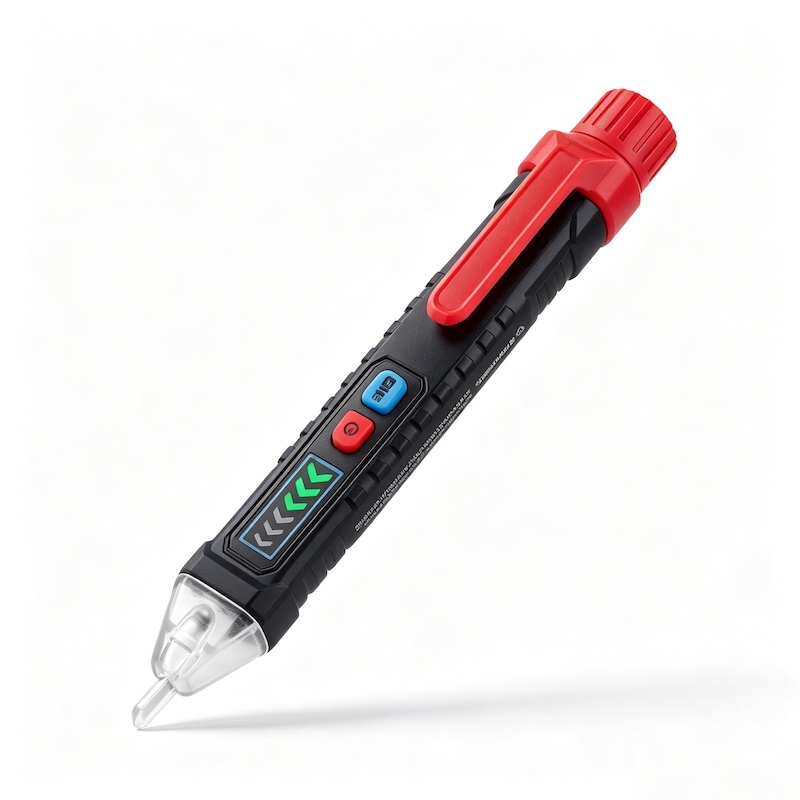
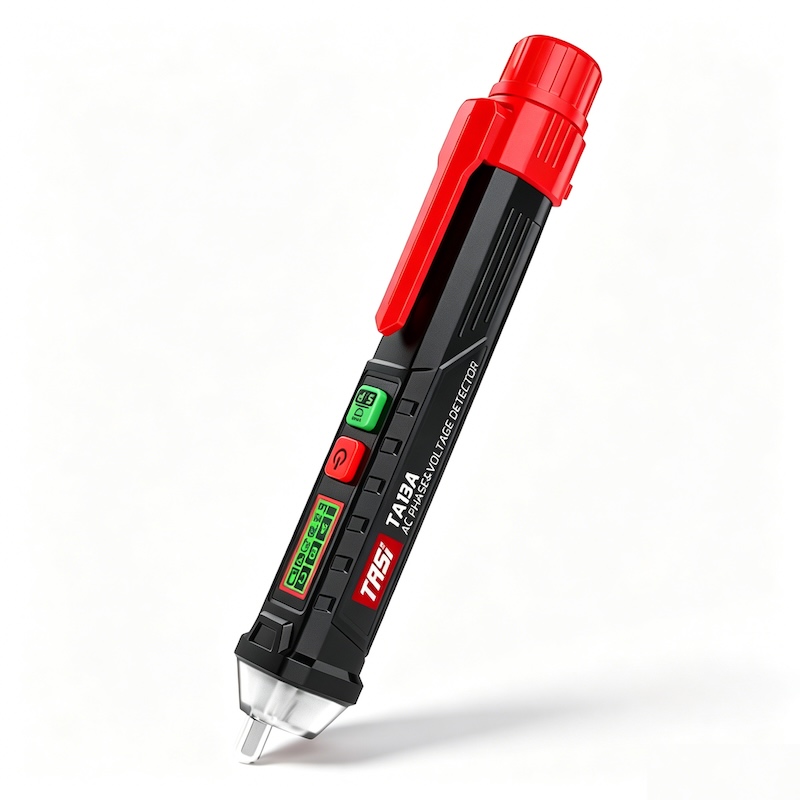
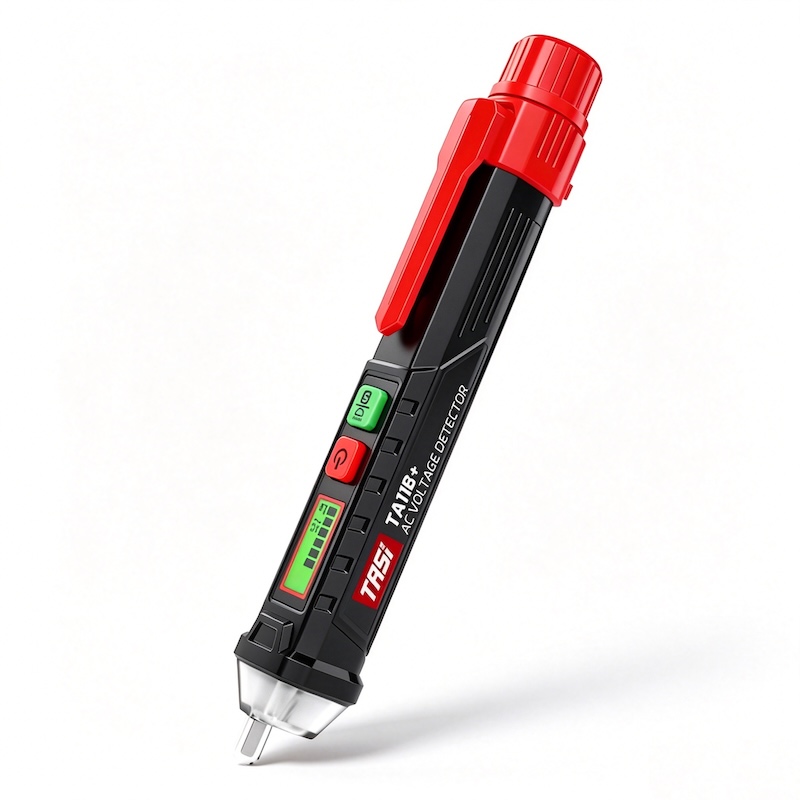
When selecting a non-contact voltage tester, specifications such as “12–1000 V AC,” “48–1000 V AC,” and “50–1000 V AC” are common. Some models also provide two sensitivity levels or dual detection ranges. It can be tempting to assume that a wider range is always better, or that a lower starting voltage automatically means greater accuracy.
In practice, the appropriate detection range should be selected according to the intended application. A lower starting voltage generally means greater sensitivity to weak AC electric fields, but it can also increase susceptibility to nearby energized conductors, induced voltages, and electromagnetic interference. A higher starting threshold may provide more straightforward and stable indications when working with conventional mains circuits.
Detection range should therefore be considered together with the voltage system, wiring arrangement, sensitivity requirements, CAT rating, and operating environment.
Key Takeaways
● Non-contact voltage testers are primarily designed to detect the presence of an AC electric field and normally do not measure an exact voltage value.
● Common ranges include 12–1000 V AC, 48–1000 V AC, and 50–1000 V AC.
● A range such as 12–1000 V generally provides higher sensitivity and is useful for weaker electric fields or lower-voltage AC circuits.
● A 48/50–1000 V range is well suited to routine mains-voltage testing in residential, commercial, and industrial environments.
● Dual-range or dual-sensitivity testers provide greater flexibility by balancing sensitive detection with reduced interference.
● Detection range alone does not determine electrical safety; the CAT rating, rated voltage, and manufacturer’s instructions must also be considered.
What Does the Detection Range of a Non-Contact Voltage Tester Mean?
A non-contact voltage tester detects the electric field surrounding an energized AC conductor. Its specified detection range therefore generally indicates the AC voltage range within which the instrument is designed to respond under defined operating conditions.
Typical examples include:
● 12–1000 V AC
● 24–1000 V AC
● 48–1000 V AC
● 50–1000 V AC
● 90–1000 V AC
The lower value, such as 12 V or 50 V, indicates the nominal lower detection threshold, while 1000 V represents the upper limit of the specified detection range.
Non-contact detection should not be confused with direct voltage measurement using a digital multimeter. A tester marked 12–1000 V does not determine whether a conductor is carrying 12 V, 230 V, or 400 V. Its primary purpose is to indicate the presence of a detectable AC electric field.
Is a Wider Detection Range Always Better?
Not necessarily.
A 12–1000 V specification covers a wider nominal range than 50–1000 V, but for an NCV tester, a lower starting voltage normally corresponds to greater electric-field sensitivity.
Higher sensitivity has both benefits and limitations.
● Advantage: the tester may respond more readily to weaker AC electric fields, thicker insulation, lower AC voltages, or an energized conductor at a slightly greater distance.
● Limitation: in densely wired areas or strong electromagnetic environments, it may also respond more readily to fields from adjacent energized conductors or induced voltages.
If the tester is mainly used on wall outlets, power cords, distribution panels, and other conventional mains circuits, operating permanently at the lowest detection threshold is not always necessary.
When Is a 12–1000 V Detection Range Suitable?
A 12–1000 V range normally represents a relatively high-sensitivity mode.
It can be useful for:
● Detecting relatively weak AC electric fields;
● Checking power cables with thicker insulation;
● Testing certain lower-voltage AC circuits;
● Preliminary tracing of wiring or fault locations;
● Situations where the energized conductor is slightly farther from the sensing tip.
However, greater sensitivity also increases the possibility of detecting electric fields from nearby conductors. In a cable bundle, for example, a conductor that is not itself normally energized may still produce an indication because of capacitive coupling from an adjacent live conductor.
A low starting-voltage range should therefore be viewed as a way to increase sensitivity, rather than as an inherently more accurate detection mode.
When Is a 48/50–1000 V Detection Range Suitable?
A 48–1000 V or 50–1000 V range is common on non-contact voltage testers and is particularly suitable for routine mains-voltage checks.
Typical applications include:
● Checking whether a wall outlet may be energized;
● Checking power cords for the presence of AC voltage;
● Detecting energized conductors near switches and terminals;
● Preliminary checks before servicing distribution panels or electrical equipment;
● Troubleshooting common AC circuits in residential, commercial, and general industrial environments.
Because the lower threshold is higher, these ranges are generally less responsive to very weak induced electric fields. In conventional mains installations, this can make it easier to identify the area associated with an actually energized conductor.
For users primarily working with standard AC mains circuits, a range around 50–1000 V will normally cover most basic detection requirements.
Why Is a Dual-Range Voltage Tester More Versatile?
Some non-contact voltage testers provide two operating modes, for example:
● High sensitivity: 12–1000 V AC
● Lower sensitivity: 48/50–1000 V AC
This allows the user to adapt the tester to different environments.
For routine outlet or distribution-circuit checks, the lower-sensitivity mode can be used first. If the electric field is weak or the indication is uncertain, the tester can then be switched to the higher-sensitivity mode.
In a distribution panel with many conductors, a high-sensitivity setting may cause indications over a relatively broad area. Switching to the lower-sensitivity range can help reduce the influence of adjacent energized conductors.
For home maintenance, electrical servicing, and equipment troubleshooting across varied applications, a dual-range or dual-sensitivity NCV tester generally offers greater flexibility than a fixed-range model.
What Other Specifications Should Be Considered?
Detection range is only one part of selecting a non-contact voltage tester.
● CAT rating: For use on distribution systems, electrical equipment, or industrial installations, verify that the CAT category and rated voltage are appropriate for the intended environment.
● Sensitivity design: Two testers with the same nominal range may have different sensing distances and response characteristics.
● Audible and visual indication: Clear buzzer and LED indications help the user identify voltage presence in different working conditions.
● Self-test functions: Power-on checks and low-battery indications help confirm that the tester is operating correctly.
● Operating environment: Cable density, insulation thickness, electromagnetic interference, and capacitive coupling between the user, tester, and ground can all influence NCV detection.
It is particularly important to distinguish between detection range and safety rating. A tester marked for detection up to 1000 V is not automatically suitable for every 1000 V electrical environment. Suitability must also be assessed from its CAT rating, rated voltage, and manufacturer instructions.
Which Range Should You Choose for Different Applications?
For routine household checks such as wall outlets, power cords, and switches, a range around 48/50–1000 V is generally sufficient.
For electrical maintenance involving different voltage levels, insulation thicknesses, and wiring configurations, a dual-range tester with selectable sensitivity is often the more practical choice.
If the application requires detection of relatively weak AC electric fields, a lower starting range such as 12–1000 V can be useful, provided that the user takes possible interference from adjacent energized conductors into account.
A simple selection guide is:
● Routine mains-voltage checks: consider 48/50–1000 V.
● Higher sensitivity required: consider a lower starting range such as 12–1000 V.
● Complex wiring environments: consider a dual-range or selectable-sensitivity tester.
● Professional electrical servicing: evaluate the CAT rating and rated voltage in addition to detection range.
What Should Be Considered When Testing Lower-Voltage Circuits?
NCV detection depends on more than the nominal circuit voltage. Electric-field strength, conductor position, insulation material, probe distance, and the surrounding environment can all affect the result.
Therefore, even if a tester is specified down to 12 V AC, this does not mean that every 12 V AC conductor will reliably trigger an indication under all conditions.
Similarly, conventional NCV testers are generally not appropriate for determining whether a DC circuit is energized because their operating principle is primarily based on detecting alternating electric fields.
When the actual voltage of a low-voltage circuit must be confirmed, an appropriate digital multimeter or other contact-type measuring instrument should be used.
Do Not Treat the Detection Range as an Absolute Proof of De-Energization
A non-contact voltage tester is highly useful as a rapid screening tool, but its response depends on operating conditions.
For electrical servicing, the absence of an NCV indication should not by itself be taken as proof that a circuit is completely de-energized.
A sound checking procedure includes:
● Verify the tester on a known energized source before use;
● Test the target circuit;
● Use an appropriate contact-type tester where confirmation is required;
● Recheck the NCV tester on a known energized source after the test.
This before-and-after verification helps reduce the risk of incorrect conclusions caused by a depleted battery, instrument malfunction, or unsuitable detection conditions.
FAQ
Is 12–1000 V better than 50–1000 V for an NCV tester?
Neither is universally better. A 12–1000 V range generally provides higher sensitivity, while 50–1000 V is well suited to routine mains-voltage detection and may reduce some responses caused by weak induced fields. A dual-range model is useful when applications vary.
Does a lower starting voltage mean higher accuracy?
No. It generally means greater sensitivity to weaker electric fields, not higher measurement accuracy.
Can a 50–1000 V tester detect voltage at a standard wall outlet?
Normally, yes. Standard mains outlets generally fall within this range, although the indication can still depend on outlet construction, probe position, and tester sensitivity.
Can a 12–1000 V NCV tester detect 12 V DC?
Not simply because “12–1000 V” is printed on the tester. This specification normally refers to AC detection. Conventional NCV testers are mainly designed to detect alternating electric fields and are not a reliable method for detecting ordinary DC circuits.
Is a dual-range voltage tester worthwhile?
Yes, particularly when working with different wiring systems or complex electrical environments. The high-sensitivity mode helps detect weaker fields, while the lower-sensitivity mode can help reduce unwanted responses from nearby energized conductors.
Does no alarm mean the circuit is definitely de-energized?
No. Insulation thickness, sensing distance, probe position, battery condition, circuit voltage, and other factors can affect detection. Use an appropriate verification method when confirming a de-energized condition.
Conclusion
The best NCV detection range is not necessarily the widest one. It should match the intended application.
For routine outlet, power-cord, and mains-voltage checks, a 48/50–1000 V range will usually meet most requirements. For weaker AC electric fields, a lower starting range such as 12–1000 V may be more suitable. Where operating conditions vary, a dual-range or selectable-sensitivity tester provides greater flexibility.
Detection range should also be considered together with the CAT rating, rated voltage, sensitivity, indication method, and manufacturer’s operating instructions. A non-contact voltage tester is an effective tool for rapidly detecting the presence of an AC electric field, but it should not replace an appropriate contact-type voltage tester when positive verification of circuit status is required.