Introduction
In equipment maintenance, electrical inspection, HVAC servicing, and production monitoring, users often need more than an exact temperature reading. They also need to determine quickly whether a measured temperature is outside an acceptable range.
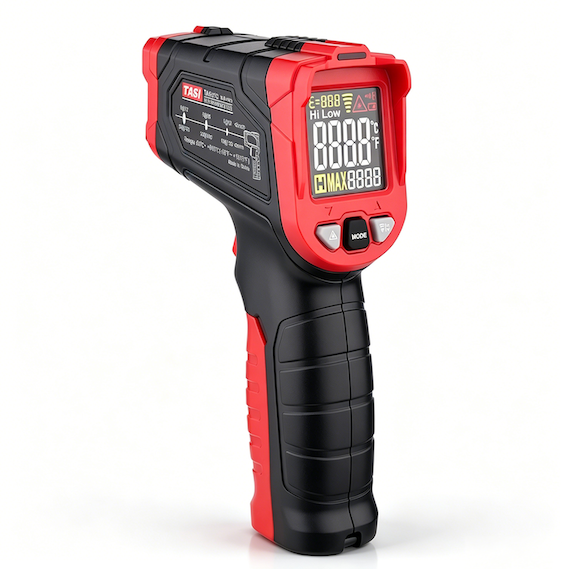
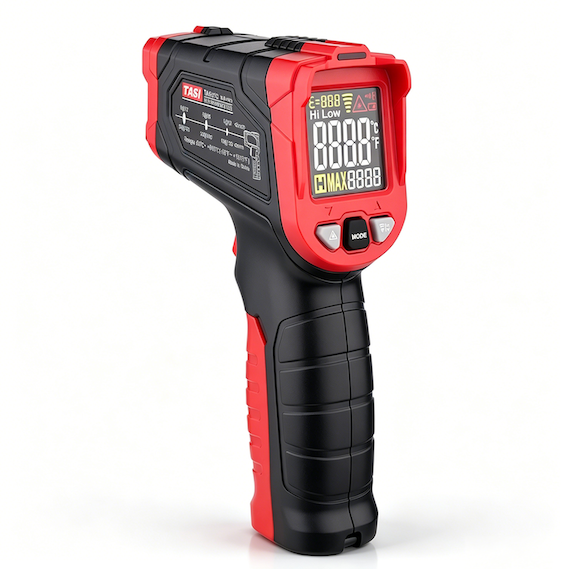
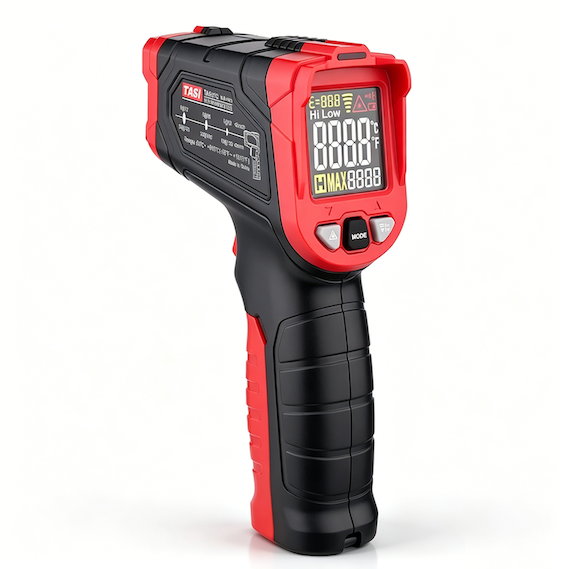
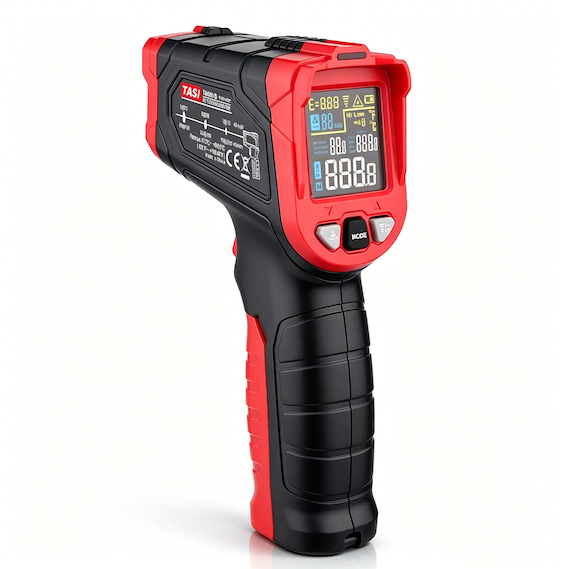
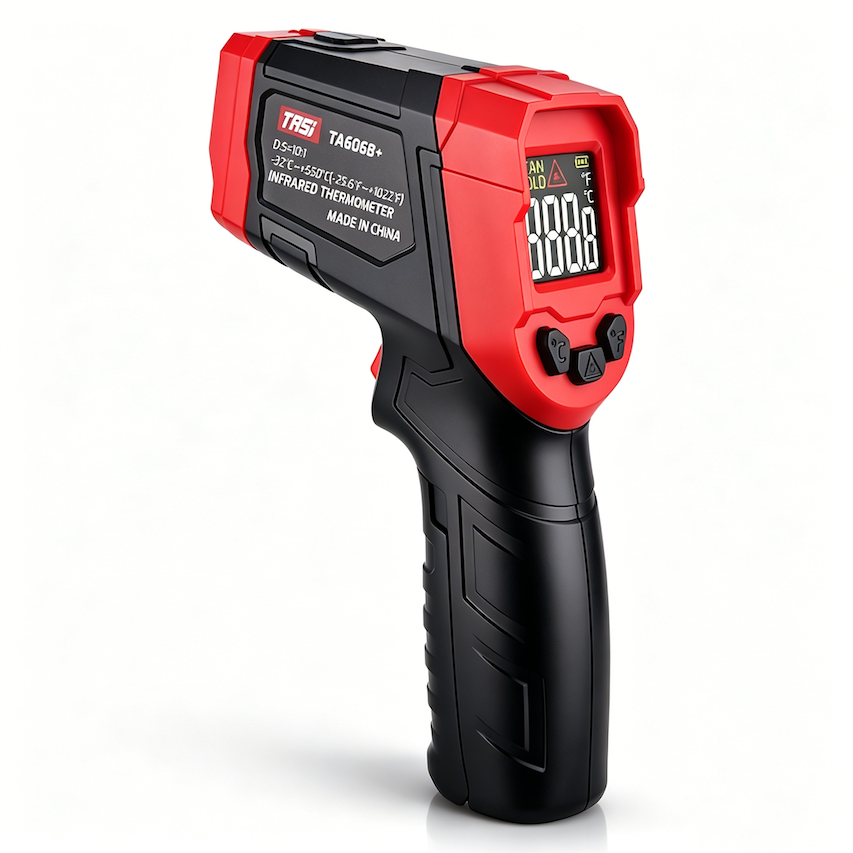
For this reason, some infrared thermometers include high- and low-temperature alarm functions. Users can preset temperature thresholds, and when the measured value meets the alarm condition, the instrument provides an audible, visual, or display-based warning.
The alarm function does not improve measurement accuracy. Its purpose is to reduce the need to manually compare every reading with a specified limit and to make abnormal-temperature screening more efficient.
Key Points
● The alarm function indicates whether a measured temperature is outside preset limits.
● Common functions include high-temperature alarms, low-temperature alarms, and dual high/low alarms.
● Alerts may be provided by a buzzer, indicator light, colored backlight, or display symbol.
● Alarm thresholds are not the same as the instrument's measurement range or the safe operating temperature of the target.
● Reliable alarm results still depend on correct emissivity settings, measuring distance, target size, and environmental conditions.
What Is the Alarm Function on an Infrared Thermometer?
The alarm function is an auxiliary feature that compares the measured temperature with a user-defined threshold.
For example, if the high-temperature alarm is set to 80°C, the instrument can trigger an alert when the measured surface temperature reaches or exceeds 80°C. Similarly, a low-temperature alarm can be activated when the temperature falls below a specified value.
Alarm logic, adjustable ranges, and alert methods vary between models. The product manual should therefore be consulted for the exact settings and operating behavior.
What Is a High-Temperature Alarm Used For?
A high-temperature alarm is mainly used to identify targets that may be overheating.
● Electrical inspections: Helps identify abnormal heating at terminals, switches, busbars, and other electrical components.
● Mechanical equipment inspection: Supports rapid screening of bearings, motor housings, and other mechanical components for excessive temperature rise.
● HVAC inspection: Helps determine whether ducts, outlets, pipes, or equipment surfaces exceed predefined temperature limits.
● Production process inspection: Provides quick checking of surfaces subject to process temperature requirements.
● Routine maintenance: Reduces the need to read and manually compare every value when inspecting large numbers of measurement points.
For example, if a particular component is normally required to remain below 70°C, the high alarm can be set according to the applicable operating limit. When the temperature exceeds the threshold, the instrument can immediately prompt the operator to investigate further.
What Is a Low-Temperature Alarm Used For?
A low-temperature alarm is primarily used to identify temperatures below an expected range.
● Checking whether refrigeration system surfaces reach the required temperature;
● Identifying abnormal conditions in cold rooms, refrigerated equipment, or low-temperature areas;
● Checking whether heating equipment has failed to reach its expected operating temperature;
● Screening applications that require a defined minimum process temperature.
For example, if the surface of a heating system is expected to remain above 60°C during normal operation, a low-temperature alarm can help identify insufficient heating or abnormal operation when the measured value falls below the threshold.
What Is the Purpose of a Dual High/Low Alarm?
Some infrared thermometers allow users to set both a high limit and a low limit, creating an acceptable temperature window.
For example:
● Low alarm: 20°C;
● High alarm: 80°C;
● 20°C to 80°C: acceptable range;
● Below 20°C: low-temperature alarm;
● Above 80°C: high-temperature alarm.
This is useful when the objective is to determine whether a temperature remains within a specified range. Compared with a single threshold, a dual alarm can make pass/fail screening more intuitive.
How Does an Infrared Thermometer Indicate an Alarm?
Alarm indications vary by model. Common methods include:
● Audible alarm: A buzzer sounds when the alarm condition is reached.
● Indicator light: An LED indicates the current temperature status.
● Backlight color change: The display changes color according to normal, high, or low temperature status.
● Display indication: Symbols such as HI, LOW, or dedicated alarm icons appear on the screen.
In noisy industrial environments, visual alerts can be easier to identify, while audible alarms can be useful when the operator needs to keep attention on the measurement target rather than continuously watching the display.
Does the Alarm Function Improve Measurement Accuracy?
No.
The alarm function only compares the current measurement result with the preset threshold. It does not improve the intrinsic accuracy of the infrared thermometer.
If measurement conditions are incorrect—for example, if the emissivity setting is unsuitable, the distance is too great, the target is too small, or the surface is highly reflective—the measured value may already contain significant error. In this situation, the alarm decision may also be misleading.
The alarm function should therefore be considered a rapid evaluation tool based on the measured value, not a method for correcting measurement error.
How Should Alarm Temperatures Be Set?
Alarm thresholds should be based on the normal temperature range of the actual application, equipment requirements, or process specifications rather than on a universal fixed value.
Factors to consider include:
● Normal operating temperature range;
● Permitted maximum or minimum temperature;
● Temperature limits specified by the equipment manufacturer;
● Process control requirements;
● Historical baseline measurements;
● Measurement uncertainty and an appropriate safety margin.
If the threshold is set too close to the normal operating temperature, nuisance alarms may occur frequently. If it is set too far outside the expected range, abnormal conditions may not be identified early enough.
Is the Alarm Temperature the Same as the Measurement Range?
No.
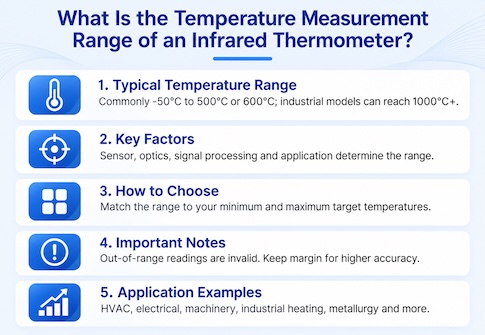
The measurement range defines the temperature interval the infrared thermometer is designed to measure, for example -50°C to 550°C.
The alarm threshold is a user-selected value within the instrument's supported setting range, for example a high-temperature alarm of 100°C.
An infrared thermometer capable of measuring up to 550°C does not mean that 550°C should be used as the alarm threshold. The correct alarm level depends on the target equipment, process, and application requirements.
What Should Be Considered When Using the Alarm Function?
The alarm function is only as reliable as the underlying temperature measurement. The following factors therefore remain important:
● Set emissivity correctly: Different materials emit infrared radiation differently. An incorrect emissivity setting can affect the measured temperature.
● Control measuring distance: Follow the instrument's D:S ratio so that the target fully covers the measurement spot.
● Be careful with reflective metal surfaces: Shiny metals often have low emissivity and can reflect infrared radiation from the surrounding environment.
● Avoid measuring through ordinary glass: In most cases, an infrared thermometer measures the temperature of the glass surface rather than the object behind it.
● Maintain stable measurement conditions: Rapid ambient temperature changes, steam, dust, smoke, or contamination of the optical system can affect measurement results.
● Verify alarm settings: Check the high and low thresholds before use to avoid incorrect judgments caused by settings retained from a previous task.
Is the Alarm Function Suitable for Continuous Temperature Monitoring?
The alarm function on a handheld infrared thermometer is generally intended for spot checks, inspections, and rapid abnormal-temperature screening rather than continuous monitoring.
A handheld infrared thermometer can only evaluate the alarm condition while a measurement is being taken. Applications requiring 24-hour monitoring, automatic data logging, or remote alarm notification normally require fixed infrared temperature sensors, dedicated monitoring systems, or other continuous temperature measurement equipment.
When Is the Alarm Function Particularly Useful?
The function is especially useful when many targets must be checked quickly or when the primary objective is to determine whether a temperature has exceeded an allowable limit.
● Electrical panels and power distribution equipment;
● Motors, bearings, and mechanical equipment;
● HVAC system maintenance;
● Cold rooms and refrigeration systems;
● Heating equipment;
● Industrial production lines;
● Building and facility maintenance;
● Batch inspection where rapid pass/fail temperature assessment is required.
In these applications, operators are often more concerned with whether a temperature is abnormal than with recording every individual temperature value. Alarm functions can therefore improve inspection efficiency.
FAQ
Does an alarm mean the equipment is definitely faulty?
No. An alarm only indicates that the measured temperature has reached or exceeded the preset threshold. The threshold setting, measurement method, and actual operating condition should also be verified before diagnosing a fault.
Can high- and low-temperature alarms be used at the same time?
Some models support both thresholds simultaneously, allowing users to define an acceptable temperature window. Check the instrument specifications for availability.
Can the alarm value be set arbitrarily?
It can normally be adjusted within the supported setting range, but it should be based on equipment operating limits, process requirements, or established temperature criteria.
Why does the thermometer keep alarming even when the temperature appears normal?
Check whether the alarm threshold is set correctly and verify the emissivity setting, measuring distance, target characteristics, and selected alarm mode.
Will disabling the alarm affect temperature measurement?
Normally, no. The alarm is a threshold-evaluation function. The thermometer can continue measuring temperature even when the alarm is disabled.
Are laser aiming and temperature alarm functions the same?
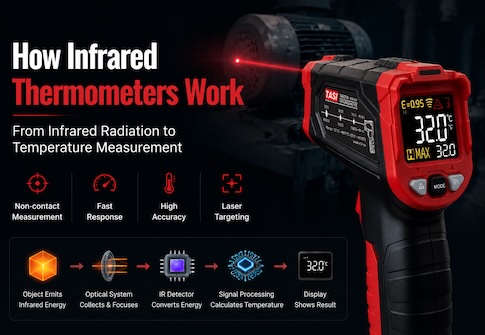
No. The laser helps indicate the measurement location, while the alarm compares the measured temperature with preset thresholds.
Can the alarm function replace a professional temperature monitoring system?
Usually not. Handheld infrared thermometers are designed mainly for spot inspection, while continuous monitoring, data logging, and remote alarms normally require dedicated monitoring equipment.
Conclusion
The alarm function of an infrared thermometer helps users quickly determine whether a measured surface temperature is above or below preset limits. In industrial inspection, equipment maintenance, HVAC, refrigeration, and production applications, it can reduce repetitive manual comparison of readings and improve abnormal-temperature screening efficiency.
However, the alarm function does not improve measurement accuracy. Reliable alarm decisions still depend on correct emissivity settings, suitable measuring distance, adequate target size, and appropriate environmental conditions.
For practical use, accurate infrared temperature measurement should come first. High- and low-temperature alarm thresholds should then be set according to the normal operating range and requirements of the equipment or process.